
Italian Saffron Chicken Breast | Petto di Pollo allo Zafferano con Porri e Vino Bianco

Saffron is the most expensive spice in the world and the easiest one to waste. Drop the threads whole into a hot pan and most of their colour and almost all of their perfume stay locked inside the dried stigma. Bloom them in a little warm liquid and a pinch the size of a fingernail turns a sauce deep amber and fills the kitchen with something between honey, hay and dried orange peel.
The rest is restraint. Chicken breast, dry brined so it holds its juice, seared until the skin takes real colour, then finished in a sauce built on leeks sweated slowly in butter, dry white wine reduced hard and the bloomed saffron stirred in off the heat. The leeks are not a side here. Sweet, soft and almost dissolved, they give the saffron something to cling to and the sauce its body without a spoonful of flour.
Yield: 4 servings. Prep: 25 minutes. Dry brine: 45 minutes minimum. Cook: 30 minutes. Rest: 6 minutes. Total: about 1 hour 45 minutes. Difficulty: intermediate. Course: secondo piatto.
The Story
Italian saffron grows in three places that matter. The oldest is the plain of Navelli in Abruzzo, a high limestone basin at about 2,300 feet (700 metres) where a Dominican friar is said to have brought bulbs back from Spain in the fourteenth century. The altitude and the cold nights concentrate the crocus, and Navelli saffron has carried a DOP since 2005. The second is San Gimignano in Tuscany, where the trade is documented from 1228 and where saffron paid for a good part of the towers that still stand over the town. The third is Sardinia, around San Gavino Monreale, which today produces more by weight than anywhere else in Italy.
What links them is a harvest that has never been mechanised. Crocus sativus flowers for perhaps two weeks in late October, each flower opening at dawn and closing by midday. They are picked by hand in the dark and the three red stigmas pulled out at a kitchen table, flower by flower. It takes roughly 150,000 flowers for one kilogram of dried saffron. That is the whole explanation of the price, and also why Italian saffron is sold in threads: powder is where turmeric and safflower get mixed in.
In Abruzzo and Sardinia the spice was never treated as a luxury at home. It went into risotti, into bread, into fresh pasta dough and into exactly this kind of quiet braise of white meat with wine. The leeks belong to the same logic: the winter allium of the mountain garden, cheap, keeping for weeks in a cold room and sweeter than onion when given time in fat. Pairing the two is what you cook in November with leeks in the cellar and one paper envelope of threads from the autumn harvest.
Ingredients
For the chicken
Boneless chicken breasts, skin on, 4 pieces, 7 oz (200 g) each
Fine sea salt, 1 1/4 tsp (7 g), for the dry brine
Freshly ground black pepper, 1/2 tsp
Extra virgin olive oil, 2 tbsp (30 ml)
Unsalted butter, 1 tbsp (14 g)
For the saffron
Italian saffron threads, 1 generous pinch, about 0.4 g
Hot chicken stock, 3 tbsp (45 ml), for blooming
For the leeks and the sauce
Leeks, white and pale green only, 3 large, 1 1/4 lb (570 g) trimmed
Unsalted butter, 2 tbsp (28 g)
Extra virgin olive oil, 1 tbsp (15 ml)
Garlic clove, lightly crushed, 1
Fresh thyme sprigs, 2
Bay leaf, 1
Dry white wine, 1 cup (240 ml)
Low sodium chicken stock, 1 cup (240 ml)
Heavy cream, 3 tbsp (45 ml), optional
Fine sea salt, to taste
For finishing
Cold unsalted butter, cubed, 1 1/2 tbsp (21 g)
Lemon juice, a few drops
Flat leaf parsley, finely chopped, 1 tbsp
Freshly ground black pepper, to taste
Preparation
Step 1

Dry brine the chicken. Pat the breasts dry and season them all over with the full 1 1/4 tsp (7 g) of salt. Set them on a rack over a tray, uncovered, and refrigerate for at least 45 minutes and up to 8 hours. The salt draws moisture to the surface and then carries it back into the muscle, seasoning the meat through and letting it hold roughly 10 percent more juice. The uncovered rack dries the skin at the same time, the only way it will crisp later. Take them out 20 minutes before cooking.
Step 2

Bloom the saffron. Warm the 3 tbsp (45 ml) of stock to about 150°F (65°C), not boiling, and crumble the threads into it between your fingers. Leave it covered for a full 20 minutes while you deal with the leeks. The liquid should go from clear to a strong orange red. This single step decides whether the dish tastes of saffron or only looks like it: aroma and pigment are both water soluble and both need time and gentle warmth to leave the stigma.
Step 3

Clean and slice the leeks. Trim the roots and cut away the dark green tops. Split each leek lengthwise and fan the layers under cold running water, because grit sits deep between them and a gritty sauce cannot be rescued. Shake them dry, lay them cut side down and slice into half moons about 1/4 inch (6 mm) thick. Keep the slices even, or the sauce ends up half raw and half collapsed.
Step 4

Sweat the leeks slowly. Melt the 2 tbsp (28 g) of butter with the olive oil in a wide sauté pan over low heat, add the leeks with the crushed garlic, thyme, bay leaf and a pinch of salt, and cover. Cook 15 to 18 minutes, stirring often, until completely soft and sweet with no colour at all. Browned leeks turn bitter and that bitterness reads clearly against saffron. Remove the aromatics, scrape the leeks into a bowl and wipe the pan.
Step 5

Sear the chicken. Pat the breasts dry again and grind black pepper over them. Heat the 2 tbsp (30 ml) of olive oil in the same pan over medium high heat until it shimmers, lay the breasts in skin side down and press each one flat for 20 seconds so the whole surface meets the metal. Do not move them for 5 to 6 minutes. When the skin is deep gold and releases on its own, turn them, add the butter and baste for 2 minutes. Take them out at about 150°F (65°C).
Step 6

Build the saffron sauce. Pour off the excess fat, leaving the browned residue, and return the pan to medium heat. Add the wine and scrape the base hard with a wooden spoon while it bubbles, reducing by two thirds, about 4 minutes. Unreduced wine leaves a raw acidic edge that flattens the saffron. Add the stock and the cooked leeks, simmer 5 minutes until the sauce has body, then stir in the bloomed saffron with its soaking liquid and the cream if you are using it.
Step 7

Finish and rest. Slide the breasts back in with any juice they released, spoon sauce over them and cook gently 4 to 6 minutes until a thermometer in the thickest part reads 160°F (71°C). Move them to a warm plate and rest 6 minutes, when carryover takes them to a safe 165°F (74°C) and the juices settle back through the meat. Meanwhile pull the pan off the heat and swirl in the cold cubed butter a piece at a time until glossy, then correct with lemon juice, salt and parsley.
Plating
Warm the plates. A butter mounted sauce dulls within a minute on cold china, in shine and in aroma alike. Ninety seconds in a low oven is enough, warm to the hand rather than hot.
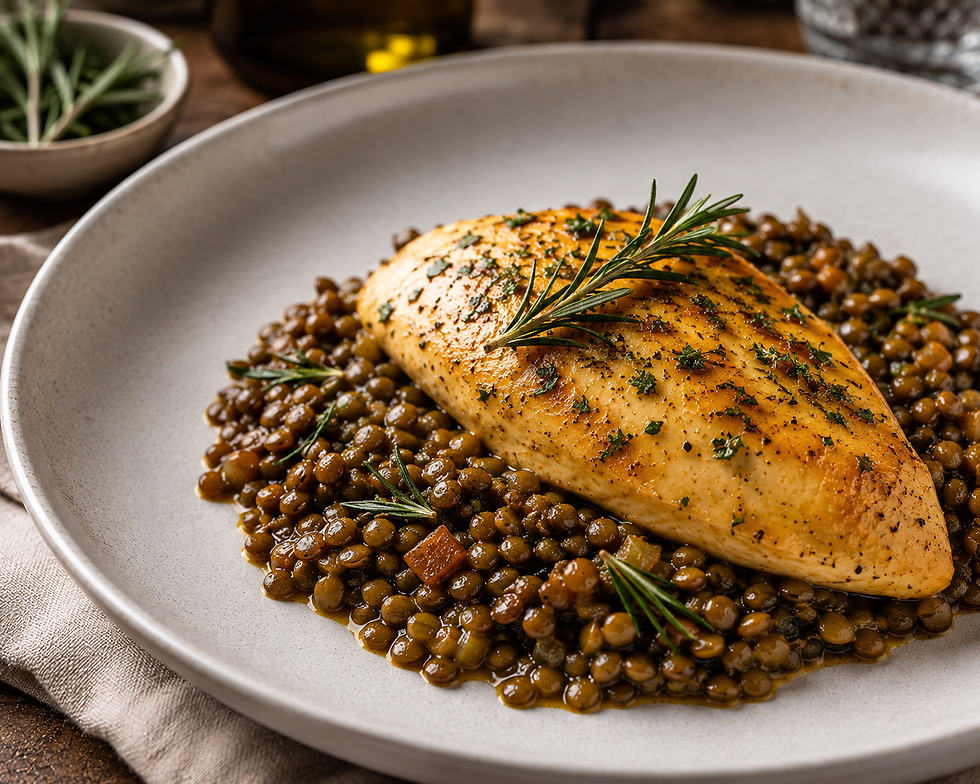
Slice each breast across the grain into four or five thick pieces, cutting at a slight angle so the seared surface stays visible on every slice. Spoon a generous bed of the leeks slightly off centre and lay the sliced breast over them so the pieces overlap and the gold skin faces up. Then spoon the saffron sauce around the meat rather than over it, so the colour is what the diner sees first and the seared surface does not go soft.
Finish with a little parsley over the leeks only and a grind of black pepper, since saffron competes badly with a second aroma. Boiled potatoes, soft polenta or plain rice all belong here if you want a starch.
Professional Technique
The technique that defines this recipe is the infusion of saffron and the timing of when it enters the pan. Saffron carries three compounds that matter: crocin for colour, picrocrocin for the bitter hay note and safranal for the aroma. All three are released by warm liquid, and safranal is volatile enough that prolonged boiling drives it out of the pan and into the extractor hood. That is why the threads are bloomed separately at about 150°F (65°C) and why the infusion goes in near the end. A saffron sauce simmered for twenty minutes will still be yellow and will taste of almost nothing.
Crumbling the threads between the fingers before they hit the liquid roughly doubles the extraction surface. Never use a mortar: dried saffron powders into dust that clings to the walls and you lose part of an expensive pinch to the equipment. Never substitute bought powder either, both because adulteration is common and because powder has already begun losing safranal in storage.
The second technique is the emulsion at the end. Cold butter swirled in off the heat suspends butterfat in the reduction as tiny droplets and gives the sauce its gloss and coating weight. It holds only within a narrow temperature band: back over direct heat the emulsion breaks, the fat pools and the colour goes dull. If it does break, add a tablespoon of cold stock and whisk hard.
Texture and Moisture Control
Chicken breast is the least forgiving cut on the bird: lean, unevenly thick, and its proteins contract hard above 165°F (74°C), squeezing water out of the fibres. Three things protect it here. The dry brine changes the protein structure so the meat retains more of its own moisture. Pulling the breasts from the sear at about 150°F (65°C) and finishing them gently in the sauce stops the outside overcooking while the centre catches up. The 6 minute rest lets carryover finish the job.
The sauce has its own moisture problem: leeks release a surprising amount of water as they soften, and it has to leave before the saffron goes in. If the sauce still tastes thin after the 5 minute simmer, reduce it further before adding the infusion, never after. The optional cream is insurance rather than flavour, stabilising the emulsion if the pan waits on a slow table.
Skin is the one texture that cannot be recovered. It crisps only when the surface is genuinely dry, the second reason for brining uncovered on a rack, and stays crisp only if the sauce goes around the meat.
Professional Mise en Place
One long passive stage, the brine, and one narrow window at the end. Organise around both and it runs calmly.
Equipment and tools
Wide heavy sauté pan with a lid, holding four breasts without crowding
Instant read probe thermometer, the most useful tool here
Rack set over a tray for the dry brine
Small bowl and saucer for blooming the saffron
Prepared ahead
Chicken dry brined on the rack, up to 8 hours ahead, uncovered
Leeks cleaned and sliced, up to 1 day ahead, stored in a sealed box
Leeks sweated and cooled, up to 1 day ahead, refrigerated
Stock warm, saffron blooming 20 minutes before service
Service setup
Cold cubed butter ready in a small dish beside the stove
Plates warming, parsley chopped last
Thermometer within reach of the pan
Saffron infusion kept covered so the aroma stays in the bowl
Chef Tips
Buy threads, never powder, and from a producer who states the harvest year. Good Italian saffron is a deep uniform red with slightly paler trumpet ends and smells strongly through the packet. Threads that are orange throughout, or unusually long and thin, are often safflower.
Do not use more saffron than the recipe says. Past about half a gram for four portions the picrocrocin turns the sauce medicinal and bitter, and nothing you add will correct it. Saffron is one of the few ingredients where the expensive mistake is generosity.
Choose the white wine by acidity rather than price. A crisp dry bottle with real backbone reduces into something bright that lifts the leeks, while an oaked or soft low acid white reduces into something flat and slightly sweet. Use the same wine you intend to drink with the dish.
If your breasts are very thick at one end, butterfly that end rather than pounding the piece flat. Pounding destroys the muscle structure and gives a dry slab, while one cut gives meat that cooks at a single rate.
Common Mistakes
Adding the saffron threads dry to the pan. Without a blooming liquid the stigma releases a fraction of its colour and almost none of its aroma, and an expensive pinch disappears unnoticed. Twenty minutes in warm stock is the whole point.
Boiling the sauce after the saffron goes in. Safranal is volatile and leaves with the steam. Once the infusion is in, the sauce should never go above a lazy simmer, and any reduction must happen before that moment.
Browning the leeks. Colour on leeks means bitterness, and it sits directly on top of the bitter edge saffron already carries. Sweat them covered over low heat and add a spoonful of water if they catch.
Skipping the dry brine. Breast seasoned only at the moment of cooking is salty outside and bland at the centre, and loses noticeably more juice. Forty five minutes is the minimum that makes a difference.
Cooking to temperature by eye. The window between 160°F (71°C) and 175°F (80°C) is the difference between juicy and dry, and it passes in about two minutes. Use a probe and pull the meat early, trusting carryover.
Mounting the butter over direct heat. The emulsion breaks, the fat separates and the sauce turns greasy and dull. Take the pan off the heat first and add the cold butter a cube at a time, swirling.
Wine Pairing
Vernaccia di San Gimignano DOCG: The historical pairing, since San Gimignano grew saffron and this grape side by side for eight centuries. The wine is firmer and more mineral than most Italian whites and finishes on a bitter almond note that meets the faint bitterness of saffron head on rather than covering it, with enough structure to stand against a butter mounted sauce.
Verdicchio dei Castelli di Jesi Classico Riserva DOCG: A Riserva spends time on its lees and arrives with a broad waxy texture that echoes the butter in the pan, while its acidity stays high underneath and keeps each mouthful clean. The saline finish lines up with the sweetness of the sweated leeks.
Offida Pecorino DOCG: High in both acidity and alcohol, with a herbal sage and yellow flower character that runs alongside the thyme in the leeks instead of competing with the saffron. Its weight on the palate is greater than its colour suggests, which lets it carry a sauce with real body.
Greco di Tufo DOCG: Grown on volcanic soil around Tufo, it brings a smoky mineral edge and a stone fruit weight that stands up to the dried hay and honey of bloomed saffron better than a purely citrus white. The tannic grip it develops on the finish is unusual in a white and works well against the seared skin.
Collio Friulano DOC: A drier, more savoury option from the Friulian hills, with pear and white almond fruit and a characteristic bitter close. It has the restraint this dish wants: nothing aromatic to confuse the saffron and just enough body to meet the leeks.
Storage & Reheating
Store the chicken and the sauce together, because the sauce is what keeps the meat from drying out. Transfer everything to an airtight container once cooled, within an hour, and refrigerate up to 3 days. The saffron aroma fades noticeably after the second day.
Reheat gently and never in a microwave, which boils the sauce in patches and turns the breast rubbery. Slice the meat first, put it in a pan with the sauce and a splash of stock, cover and warm over the lowest heat for 6 to 8 minutes. If the emulsion has separated, take the pan off the heat and whisk in a cube of cold butter.
The leek and saffron base freezes well on its own for up to 2 months if you leave out the cream and the finishing butter. Cooked breast does not freeze: it thaws dry and fibrous whatever you do. Freeze the sauce, cook the meat fresh and mount the butter after thawing.
Nutrition
Per serving, based on 4 servings:
Calories: 480 kcal
Total Fat: 26 g
Saturated Fat: 11 g
Trans Fat: 0.4 g
Unsaturated Fat: 13 g
Cholesterol: 160 mg
Sodium: 780 mg
Total Carbohydrates: 14 g
Fiber: 2 g
Total Sugars: 5 g
Added Sugars: 0 g
Protein: 44 g
Lactose: 0.6 g
Principal micronutrients: niacin, vitamin B6, selenium, phosphorus, potassium, manganese, vitamin K
These figures are estimates. Skinless breasts cut the fat by roughly a third, and leaving out the cream and finishing butter brings the total near 380 kcal.




Comments