
Italian Smoked Scamorza Chicken Breast | Petto di Pollo Ripieno di Scamorza Affumicata e Radicchio

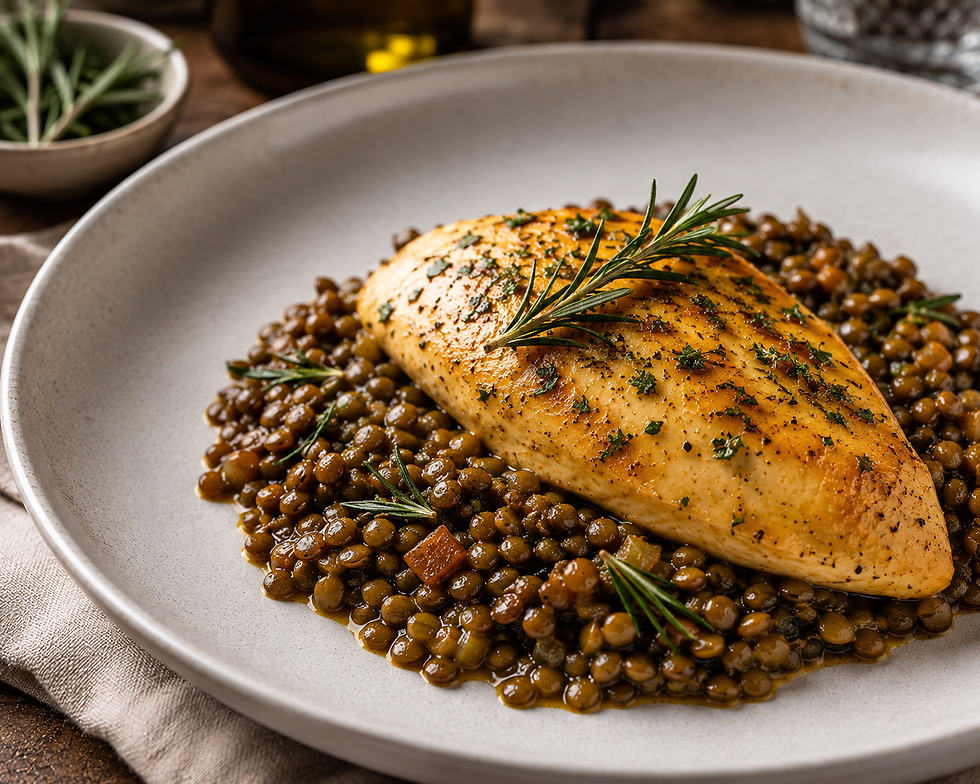
A chicken breast with a pocket cut into it, filled with smoked scamorza and radicchio wilted in a little balsamic, seared and then finished in the oven so the cheese melts without escaping. The sauce is built in the same pan with white wine and stock while the meat rests. What holds the plate together is the cheese: smoked scamorza is the one pasta filata that can sit inside a piece of meat for eighteen minutes and come out stringing rather than flooding.
Yield: 4 servings. Prep: 25 minutes. Cook: 30 minutes. Rest: 5 minutes. Total: about 1 hour. Difficulty: intermediate. Course: secondo. Regions: Abruzzo and Molise for the scamorza, Veneto for the radicchio.
The Story
Scamorza is a southern cheese with a northern vegetable pressed against it here, and both halves of that sentence have a real history. The cheese is made across Abruzzo, Molise, Puglia, Campania and Basilicata from cow's milk, spun in hot water like mozzarella and then tied tightly at the neck with a cord so it can be hung in pairs over a pole to dry. The name comes from the dialect for a lopped head, capa mozza, which is exactly what the tied shape looks like. In Abruzzo and Molise the hung cheeses were traditionally left over a smouldering fire of straw or wood shavings, and that habit is the origin of scamorza affumicata: a farmhouse way of extending the life of a fresh curd in a region with hot summers and no refrigeration.
Radicchio belongs to the Veneto, above all to Treviso, Chioggia and Castelfranco. The Rosso di Treviso Tardivo is still forced in the old way, lifted from the field after the first frosts and stood in running spring water in dark sheds until the new leaves grow pale and crisp. Bitterness is the point of the plant, and in Veneto cooking it is almost always met with fat: lardo, butter, a fatty sausage, or a melting cheese. The instinct to put it against scamorza rather than against something lean is an old one.
The dish itself is not ancient and does not pretend to be. Petto di pollo entered Italian home cooking as a cut only after the war, when poultry became cheap and butchers began selling the breast separately from the bird. Italian cooks treated it the way they had always treated veal: beaten thin, rolled, stuffed, or slit open and filled with whatever cheese was in the house. Stuffing a breast with a smoked cheese and a bitter leaf sits squarely in that family, alongside involtini and the valdostana, and it survives because it solves the real problem of the cut, which is that on its own a chicken breast tastes of very little.
Ingredients
For the chicken
Boneless skinless chicken breasts, 4, 7 oz (200 g) each
Kosher salt, 1 tsp (6 g)
Freshly ground black pepper, 1/2 tsp (1 g)
Extra virgin olive oil, 3 tbsp (45 ml)
Unsalted butter, 2 tbsp (28 g)
For the filling
Smoked scamorza, rind left on, 4 oz (115 g)
Radicchio rosso di Treviso, 1 small head, 8 oz (225 g)
Shallot, finely minced, 1 small, 1 oz (30 g)
Balsamic vinegar, 1 tsp (5 ml)
Fine sea salt, 1 pinch
For the pan sauce
Dry white wine, 1/2 cup (120 ml)
Chicken stock, 3/4 cup (180 ml)
Thyme sprig, 1
Cold unsalted butter, 1 tbsp (14 g), optional
For finishing
Extra virgin olive oil, a few drops per plate
Flaky sea salt, a small pinch
Wooden toothpicks, 4 to 8
Preparation
Step 1

Lay each breast flat with the thicker side towards you and cut a deep horizontal pocket into it with the tip of a sharp knife, stopping short of the far side and of both ends so the filling is enclosed on three sides. Season the outside and the inside of the pocket with salt and pepper. Shred the radicchio into ribbons about half an inch wide and mince the shallot finely.
Step 2

Warm 1 tablespoon of the olive oil in a skillet over medium heat, add the shallot with a pinch of salt and cook for about 2 minutes until soft and translucent. Add the radicchio and cook, stirring, for 4 to 5 minutes, until it has collapsed and the edges have caught a little colour. Pour in the balsamic vinegar and let it cook away for a minute, then take the pan off the heat and spread the filling out to cool.
Step 3

Cut the scamorza into dice of about a third of an inch, rind included, rather than into wide slices. Once the radicchio is cool enough to handle, mix the cheese through it and divide the filling between the four pockets, pushing it towards the closed end and leaving the last inch of the opening empty. Close each pocket with one or two toothpicks pushed in at a shallow angle.
Step 4

Heat the remaining 2 tablespoons of olive oil with the butter in an oven proof skillet over medium high heat until the butter foam subsides. Lay the breasts in seam side up and sear for 3 to 4 minutes, turn them and give the second side another 3 minutes. Slide the pan into a preheated 375°F (190°C) oven for 15 to 18 minutes, until a thermometer pushed into the thickest part of the meat, well away from the filling, reads 160°F (71°C).
Step 5

Lift the breasts onto a warm plate, tent them loosely with foil and rest them for 5 minutes. Carryover heat will carry the centre to 165°F (74°C) during that time, and the rest does a second job here: molten scamorza sets just enough in five minutes to stay inside the meat when the knife goes through it.
Step 6

Put the skillet back over medium heat, pour in the white wine with the thyme sprig and scrape the base with a wooden spoon to lift the browned residue. Let the wine reduce by half, add the stock and simmer for 3 or 4 minutes until the sauce coats the back of a spoon lightly. Take out the thyme, taste for salt, and swirl in the cold butter off the heat if you want more gloss.
Step 7

Pull out the toothpicks and count them. Slice each breast in half on a steep angle so the cut face shows the filling, wiping the blade between cuts. Set the two pieces on the plate with the cut faces towards the diner and spoon the sauce around them rather than over them.
Plating
Warm the plates. The filling is at its best between the moment it stops running and the moment it stiffens, and a cold plate closes that window in under a minute. Slice on the angle rather than straight down, which gives a wider cut face and shows the dark cheese and the red leaf instead of hiding them under the browned surface.
Set the two halves slightly apart with the cut faces turned towards the diner, one leaning on the other. Spoon the sauce in an arc around the meat, never across it, so the seared crust stays dry and audible under the knife. Two or three drops of good olive oil on the sauce, a pinch of flaky salt on the cut face, and nothing else. A spoonful of soft polenta or a few roast potatoes belong beside this, and so does a handful of the raw radicchio dressed only in oil and salt.
Professional Technique
Everything that makes this dish work is a property of smoked scamorza, and it is worth being precise about why. Scamorza is pasta filata, the same family as mozzarella: the curd is spun and stretched in hot water until it becomes elastic. What happens next is the whole difference. The cheese is tied at the neck with a cord, hung in pairs and left to dry for several days, and during those days it loses a large part of the free water that mozzarella still carries. That is the technical reason a dice of scamorza can sit inside a chicken breast for eighteen minutes in the oven and come out stringing, while mozzarella in the same pocket releases whey, steams the meat from the inside and leaves a pale wet channel where the filling was.
The smoke is the second thing to understand, because it is entirely superficial. Smoke compounds deposit on the surface of the cheese and travel only a few millimetres inward, so the flavour lives in the first layer under the rind and the middle of the cheese is close to neutral. Two consequences follow for a filling. Cut the scamorza into small dice rather than wide slices: dicing multiplies the number of smoked edges and spreads them through the radicchio, whereas a few broad slices put all the smoke in two or three places. And keep the dark rind on. It is not a skin to be trimmed away, it is where the guaiacol sits, the phenol that reads as smoke on the palate, and cutting it off removes most of what you paid for.
The third property is the melt. Scamorza softens and flows at around 130°F (55°C) and holds together as it does so, staying elastic instead of breaking into curd and oil the way a young high moisture cheese will when pushed. That tolerance is what allows a second cooking: the cheese is already fully melted long before the meat reaches temperature, and it spends the last ten minutes in the oven simply holding, without separating.
Texture and Moisture Control
The meat is the fragile part, not the filling. A chicken breast holds very little intramuscular fat, its proteins begin to squeeze water out above about 150°F (65°C), and the difference between juicy and dry is roughly four degrees. Take the pan out of the oven at 160°F (71°C) measured in the thickest muscle away from the cheese, and let carryover finish the job to a safe 165°F (74°C) during the rest. A thermometer pushed into the filling instead reads the melted cheese, which runs hotter, and will send you to the table with undercooked meat.
Two other moisture problems are worth naming. The surface must be dry when it meets the fat or it steams instead of browning, so pat the breasts before they go into the pan and season them at the last moment. And the pan sauce is a reduction, not an emulsion: reduce the wine hard to drive off the raw alcohol, then add the stock and stop while the sauce still runs. A tablespoon of cold butter swirled in off the heat gives gloss and body, but boiled after that it splits and turns oily on the plate.
Professional Mise en Place
The filling is made first and must be cold before it goes anywhere near the meat. Everything else happens in one pan, in one run, and the oven has to be up to temperature before the searing starts.
Equipment and tools
Oven proof skillet, heavy, wide enough for four breasts without crowding
Small sharp boning or paring knife for the pockets
Instant read thermometer
Wooden toothpicks, tongs, wooden spoon, small ladle for the sauce
Prepared ahead
Radicchio and shallot filling, cooked and cooled, up to 1 day ahead, refrigerated
Scamorza diced and kept covered in the refrigerator, on the day
Breasts pocketed, filled, closed with toothpicks and held cold, up to 4 hours ahead
Stock measured and warm, wine measured, thyme picked
Service setup
Oven at 375°F (190°C) and fully up to temperature before the sear
Plates warming, foil torn and ready for the rest
Thermometer beside the stove, not in a drawer
Sauce finished during the 5 minute rest and served immediately
Chef Tips
Buy the scamorza in one piece with the rind intact and refuse anything presliced. Presliced smoked cheese has lost most of its rind and with it most of its smoke, and the slices are the wrong shape for a filling anyway.
Weigh the filling into four equal portions before you touch the pockets. It takes twenty seconds and it removes the usual outcome, which is three modest breasts and one overstuffed one that splits in the pan.
Use the outer radicchio leaves for the filling and keep the tight pale heart raw for the side salad. The outer leaves are the more bitter ones, and bitterness is what you want against the cheese.
Count the toothpicks in and count them out, out loud if you are cooking for other people. This is the only genuinely dangerous thing in the recipe.
Common Mistakes
Using mozzarella instead of scamorza. Fresh mozzarella carries far more free water, and inside a closed pocket that water has nowhere to go: it steams the meat, waters down the filling and runs out into the pan. If you cannot find scamorza, use provola or a well dried caciocavallo, never fresh mozzarella.
Trimming off the dark rind. The smoke sits in the rind and the first few millimetres under it. Cut it away and the filling turns into plain melted cheese with a bitter leaf in it.
Cutting the cheese into wide slices. Slices concentrate the smoke in two or three bites and melt into a single sheet. Dice of about a third of an inch spread both the smoke and the melt through the whole pocket.
Overfilling the pocket. A pocket packed to the opening bursts during the sear, and the gap it leaves means the thickest part of the meat is still raw when the outside is done. Leave the last inch empty.
Taking the chicken to 165°F in the oven. Carryover heat adds four or five degrees during the rest, so meat pulled at 165°F arrives at the table nearer 170°F and eats dry. Pull at 160°F and let the rest finish it.
Wine Pairing
Valpolicella Classico DOC: The most natural match and the easiest to find. Light tannin that will not bully white meat, sour cherry fruit that meets the balsamic in the filling, and enough acidity to lift the butter out of the pan sauce. Choose a young Classico rather than a Ripasso, which brings a sweetness and a weight this plate does not need.
Alto Adige DOC Pinot Nero: The bottle to open for the smoke. Alpine Pinot Nero has a cool red fruit and a faint woodland note that runs alongside the guaiacol in the scamorza rather than arguing with it, and its acidity is high while its tannin stays fine, which is exactly the shape a stuffed breast wants.
Cerasuolo d'Abruzzo DOC: The regional answer, since this is where smoked scamorza comes from. A deeply coloured rosato from Montepulciano grapes, with more body than most rosati and a bitter almond twist on the finish that runs directly into the bitterness of the radicchio. Serve it properly cold, around 54°F (12°C).
Alto Adige Santa Maddalena DOC: Schiava from the hills above Bolzano, pale and light and traditionally poured with smoked meats and smoked cheese in that part of the country. Very low tannin, violet and almond aromatics, and a savoury finish that handles both the smoke and the sweetness of the browned butter.
Offida Pecorino DOCG: For a white, and the only one on the list with the structure to cope. Pecorino gives real extract and a slightly bitter herbal edge alongside firm acidity, so it stands up to the melted cheese instead of vanishing under it and echoes the radicchio at the same time.
Storage & Reheating
Cooked stuffed breasts keep refrigerated in an airtight container for up to 3 days, and they keep better whole than sliced, since a cut face dries and the filling loses its shape. Store the pan sauce separately in a small sealed jar for the same 3 days: kept apart it can be brought back to a simmer without harming the meat, and it keeps the crust from going soft overnight.
Reheat covered in a 300°F (150°C) oven for 12 to 15 minutes, with a tablespoon of stock in the dish and the foil on. Never use the microwave, which drives the cheese past melting into a rubbery mass and squeezes the last water out of the breast. Warm the sauce separately in a small pan and spoon it over only once the meat is out. Freezing is not recommended: the melted scamorza turns grainy and the radicchio goes limp and grey on thawing. The raw filling, on the other hand, freezes for up to 1 month before the cheese is added.
Nutrition
Per serving, based on 4 servings:
Calories: 430 kcal
Total Fat: 24 g
Saturated Fat: 9 g
Trans Fat: 0 g
Unsaturated Fat: 13 g
Cholesterol: 135 mg
Sodium: 780 mg
Total Carbohydrates: 6 g
Fiber: 1 g
Total Sugars: 2 g
Added Sugars: 0 g
Protein: 44 g
Lactose: 1 g
Principal micronutrients: calcium 270 mg, vitamin B12, selenium, niacin, phosphorus, potassium
These figures are estimates. Most of the alcohol in the wine cooks off, and the final sodium depends on the salt in the stock and on how much of the pan sauce reaches the plate.


Comments