
Italian Lemon Semifreddo | Semifreddo al Limone
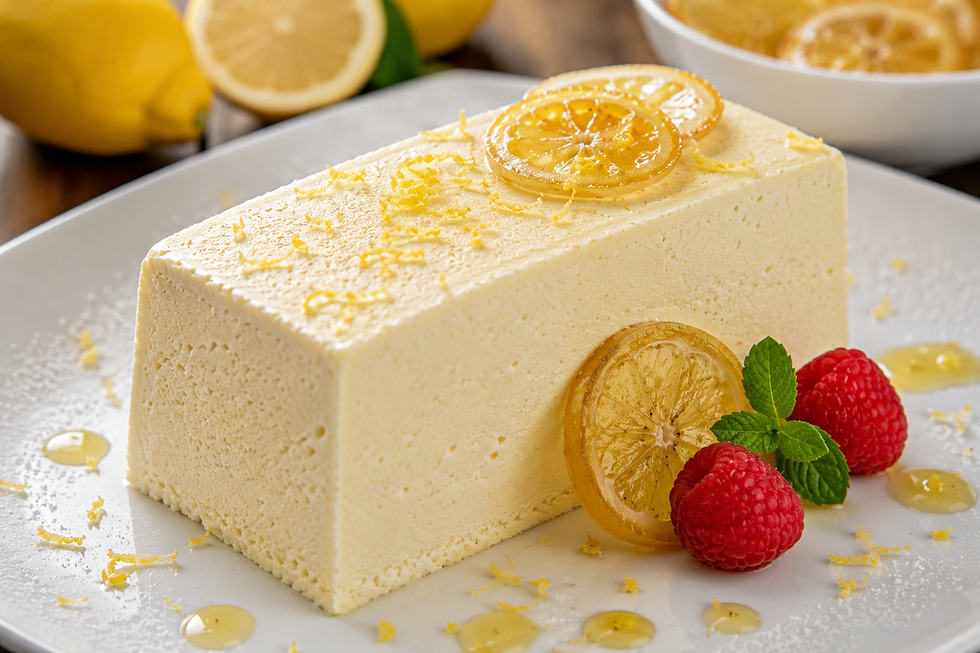
Semifreddo al limone is the dessert that tells you whether a cook understands acid. Everything else about it is generous and forgiving: cooked lemon curd, Italian meringue, whipped cream, a loaf tin and a freezer. The lemon juice is the one element that can destroy the whole thing, and it destroys it at the moment it goes in rather than later.
Yield: 8 servings. Prep: 45 minutes. Cook: 15 minutes. Freeze: at least 6 hours. Total: about 7 hours 30 minutes. Difficulty: intermediate. Course: dolce. Region: Campania, the Amalfi and Sorrento lemon coast.
The Story
Semifreddo means half cold, and the name is a plain description rather than a poetic one. It sits between a frozen dessert and a mousse, served at a temperature where it yields to a spoon instead of resisting it. The form spread through Italian kitchens for a practical reason: it needs no ice cream machine. Air is beaten into egg and cream before freezing, and that trapped air is what keeps the mixture soft in a domestic freezer. Trattorie across the peninsula adopted it for exactly that reason, and a loaf of semifreddo sliced to order became one of the standard house desserts of the postwar decades.
The lemon version belongs to the Campanian coast, where the fruit is not a garnish but an agricultural identity. The sfusato amalfitano grows on the terraces above Amalfi, Minori and Maiori, trained on pergolas of chestnut poles behind stone walls the locals call macere, built by hand on slopes too steep for anything else. Further round the peninsula the femminello di Sorrento covers the hills above the Gulf of Naples. Both carry PGI status, both have thick fragrant skin, low bitterness and a juice that stays perfumed rather than turning sharp. In a dessert built on so little, that difference is the whole flavour.
Campania has been putting these lemons into cold sweets for generations, from delizia al limone in Sorrento to the granite sold along the Amalfi seafront, and semifreddo al limone is the version that suits a restaurant service best because it holds in the freezer and slices clean. What the local pastry tradition also understood, long before anyone wrote it down as chemistry, was the order of the work: the juice is cooked first into a curd, and it never meets the raw egg whites. That habit is not ornamental, and the rest of this recipe explains why.
Ingredients
For the lemon curd
Lemon juice, freshly squeezed and strained, 2/3 cup (160 ml)
Finely grated lemon zest, from 4 lemons
Egg yolks, large, 5
Granulated sugar, 2/3 cup (135 g)
Fine sea salt, 1/8 tsp (0.7 g)
Unsalted butter, cold and cubed, 4 tbsp (57 g)
For the Italian meringue
Egg whites, large, 3, at room temperature
Granulated sugar, 1/2 cup (100 g)
Water, 3 tbsp (45 ml)
Fine sea salt, 1 pinch
For the cream
Heavy cream, at least 35 percent fat, very cold, 1 1/2 cups (360 ml)
Confectioners sugar, 2 tbsp (16 g)
For finishing
Candied lemon peel, finely diced, 2 tbsp (25 g)
Unsalted pistachios, toasted and crushed, 2 tbsp (18 g)
Lemon zest, for grating at the table, from 1 lemon
Preparation
Line the tin and chill everything
Line a 9 by 5 inch (23 by 13 cm) loaf tin with plastic film, leaving a generous overhang on all four sides, and put it in the freezer. Chill the bowl and whisk for the cream, and the cream itself. Set a wide bowl of iced water on the counter. Cold equipment is your insurance against a broken mixture later.
Zest before you cut, then juice
Grate the zest from four lemons on a rasp grater, taking only the yellow layer and stopping at the pith. Zest first, because a squeezed half is impossible to grate cleanly. Strain the juice and measure it exactly. Never round the quantity upward because you have fruit left over.
Cook the curd to 180°F (82°C)
Whisk the yolks, sugar and salt in a heavy saucepan until pale, then whisk in the strained juice and the zest. Over medium low heat, stir constantly with a silicone spatula, reaching into the corners. The mixture thins, then thickens suddenly. Cook it to 180°F (82°C), roughly 8 to 10 minutes, until it coats the spatula and holds a drawn line.
Finish the curd with cold butter and chill it hard
Off the heat, whisk in the cold cubed butter a few pieces at a time, waiting for each addition to disappear. Pass the curd through a fine mesh sieve to remove the zest fibres and any set albumen. Press film onto the surface and chill it over the iced water, then in the refrigerator, to 40°F (4°C) or below.
Cook the syrup to 244°F (118°C)
Put the sugar and water in a small heavy saucepan, stir once to wet the sugar and boil without stirring again, brushing any crystals down the sides with a wet pastry brush. Take it to 244°F (118°C), the firm ball stage. Below that the meringue stays slack and weeps in the freezer; above it the syrup sets into threads.
Build the meringue and beat it until cold
Start whipping the whites with the pinch of salt when the syrup reaches about 230°F (110°C) and take them to soft peaks. With the mixer at medium speed, pour the hot syrup down the inside of the bowl in a thin steady stream, never onto the whisk. Raise the speed and beat a full 8 to 10 minutes, until the bowl feels cool and the meringue holds a firm hooked peak.
Whip the cream to soft peaks only
Whip the cold cream with the confectioners sugar to soft peaks, the stage where the whisk leaves a trail that slumps back within a second or two. Stop there. Cream taken to stiff peaks has already begun to clump its fat and has almost no tolerance left for acid.
Fold the cold curd into the cream first
This is the order that matters. Stir one large spoonful of the semi whipped cream into the cold curd to slacken it, then fold that lightened curd back into the rest of the cream in three additions, cutting down through the middle and turning the bowl a quarter turn each time. The fat buffers the acid. Only when the base is pale and uniform do you fold in the meringue, stopping while faint streaks remain.
Fill the tin and freeze
Scrape the mixture into the frozen lined tin, rap the tin on a folded towel two or three times to release large bubbles and smooth the top. Fold the film overhang across the surface, wrap the tin in a second sheet and freeze at least 6 hours, preferably overnight.
Unmould, slice and temper
Invert the tin onto a chilled board and peel the film away in one movement. Dip a long thin knife in hot water and wipe it dry before every cut, slicing about 1 1/4 inches (3 cm) thick. Hold the slices on a chilled tray in the freezer, then let each one stand 5 to 8 minutes before it goes out.
Plating
Use chilled plates, not frozen ones. A frozen plate holds the slice below serving temperature and the lemon stays locked up; a room temperature plate melts the base edge into a puddle within two minutes.
Set the slice slightly off centre with the cut face towards the diner, so the pale even crumb is what they see. Scatter the candied peel and crushed pistachios in a loose line beside the slice rather than over the top, where they would sink into the softening surface. Grate a little fresh zest over the plate at the last moment and send it out immediately.
Professional Technique
Everything technical here comes down to one decision: where the lemon juice enters. It never touches the egg white foam and it never goes into anything warm. A freshly built Italian meringue is a thin protein film stretched around a very large volume of air, and while it is still warm that film is at its most mobile. Introduce free acid then and the foam collapses in front of you, losing volume and leaking a clear syrupy liquid into the bowl within a minute. Further whipping will not bring it back: the structure that held the air has already drained.
Whipped cream fails differently but just as fast. It is a fat network rather than a protein one, and acid pushes it toward the churning side of that balance: the fat globules stop holding air between them and begin joining each other, the first movement towards butter. Juice added too early, to cream still fluid, means the cream never builds. Juice added at stiff peaks, or to cream that has warmed on the bench, breaks it. That is why the juice is cooked into a curd first, surrounded by sugar, yolk fat and butter, and why the cold curd goes into the cream and not the reverse.
Learn the signal. A mass about to separate loses its gloss and turns matte and slightly grainy, and the whisk starts leaving edges that stay sharp instead of relaxing. Seconds later come tiny yellow flecks and a thin liquid weeping at the base of the bowl. The instinct is to whip harder. That is exactly wrong and finishes the job of making butter. Stop, sit the bowl in iced water and leave it alone for two or three minutes: cold firms the fat and stops the globules coalescing. Then fold in a tablespoon of cold unwhipped cream by hand, with a spatula and no whisk. Caught at the matte stage it comes back almost every time. Once it is weeping it does not.
Texture and Moisture Control
The texture target is a slice that yields to the side of a spoon without smearing, moist but never wet. Three variables govern it: the amount of air folded in, the sugar dissolved in the water phase, and the serving temperature. Sugar is doing structural work here, not only sweetening. The curd sugar and the meringue syrup together keep enough water unfrozen that the loaf stays sliceable and spoonable straight from a domestic freezer, which is why cutting the sugar to make the dessert tarter turns it hard and crystalline instead.
Water is the enemy of a smooth mouthfeel, and the extra juice cooks tend to add is the main source of it. Measure the 2/3 cup (160 ml) exactly and take the rest of the lemon character from zest, which brings aroma with no free water at all. Freeze the loaf fast and wrapped: slow freezing and any exposed surface both grow coarse crystals.
Temperature at service decides what the diner tastes. Straight from the freezer at 0°F (minus 18°C) the fat is rigid and the aromatics are mute. After 5 to 8 minutes on a chilled plate the surface reaches about 14°F (minus 10°C), the fat softens and the lemon arrives fully. Past fifteen minutes the air escapes and the slice slumps.
Professional Mise en Place
This dessert is made entirely in advance. Nothing happens at the pass except slicing, tempering and garnishing.
Equipment and tools
Probe thermometer accurate between 175°F and 250°F (80°C and 121°C)
Stand mixer with whisk, plus a second bowl for the cream
Heavy saucepan for the curd, small heavy saucepan for the syrup
Fine mesh sieve, silicone spatula, offset spatula, rasp grater
9 by 5 inch (23 by 13 cm) loaf tin and plastic film
Prepared ahead
Lemon curd, up to 3 days ahead, refrigerated with film on the surface
The whole semifreddo loaf, up to 3 weeks ahead, double wrapped in the freezer
Candied peel diced and pistachios toasted and crushed, up to 2 days ahead, kept dry
Loaf tin lined and frozen, the day before
Service setup
Slices cut in advance and held on a chilled tray in the freezer, separated by parchment
Jug of hot water and a clean cloth beside the board for the knife
Dessert plates chilled in the refrigerator, never in the freezer
Garnishes in small covered containers away from any steam
Chef Tips
Buy unwaxed lemons and taste one first. Lemons picked underripe give juice that is sour without being fragrant, and in a dessert with four ingredients there is nowhere for that to hide. If you can find sfusato amalfitano or femminello di Sorrento, use them and take the zest from five instead of four.
Weigh the sugar rather than measuring it by volume. The syrup depends on the ratio of sugar to water reaching the firm ball stage at the expected moment, and a loosely packed cup can be ten percent short.
Make the curd the day before. It needs to be properly cold, not merely cool, and rushing that chill is the most common reason an otherwise careful cook watches the mixture go grainy during the fold.
If your freezer runs cold, move the wrapped loaf to the refrigerator for 20 minutes before slicing rather than forcing a knife through it. The slices will be cleaner and the loaf will not crack along the cut.
Common Mistakes
Adding lemon juice to the meringue. The fastest way to ruin this dessert. The warm protein film collapses, the foam drops by half and clear liquid pools in the bowl. The juice belongs in the curd, the curd belongs in the cream.
Folding in curd that is still warm. Warm curd softens the fat in the whipped cream on contact, the mixture goes slack and grainy and the air escapes. Chill the curd to 40°F (4°C) or below.
Whipping the cream to stiff peaks. Stiff cream has already started clumping its fat and has no tolerance left for acid. Soft peaks that slump back within a second or two are what you want.
Whipping harder when it turns grainy. This turns a rescuable mixture into butter. Stop, chill the bowl over iced water for two or three minutes, then fold in a tablespoon of cold unwhipped cream by hand.
Using more juice than the recipe says. Extra juice means extra water and extra acid: coarse crystals, a harder slice and a mixture likelier to break. Take more lemon character from zest instead.
Serving it straight from the freezer. At freezer temperature the fat is rigid and the aroma stays locked in, so the dessert tastes flat. Five to eight minutes on a chilled plate is the whole difference.
Wine Pairing
A sweet wine has to be sweeter than the dessert and at least as acidic, or the lemon will strip it bare. These four manage both.
Moscato d'Asti DOCG: The most reliable match on the list. Around 5 percent alcohol and roughly 100 grams of residual sugar give it enough sweetness to stand against the curd without any spirit heat, and the soft carbon dioxide lifts the cream fat off the palate between spoonfuls. Its grape, sage and elderflower aromatics run in the same direction as the zest rather than across it.
Recioto di Soave DOCG: Garganega dried on the plant keeps unusually high acidity for a passito, which is precisely what a lemon dessert needs: most sweet wines taste flabby beside this and this one does not. Apricot, candied citrus peel and a bitter almond finish pick up the pistachio garnish, and the viscosity meets the meringue on equal terms.
Colli Orientali del Friuli Picolit DOCG: The most restrained choice. Picolit sets very few berries, so the wine arrives concentrated but rarely heavy, with acacia honey, candied peel and a firm acidic spine. Its moderate sweetness will not bury a dessert this delicate, and the long dry finish stops the pairing from turning cloying across a whole slice.
Moscato di Siracusa DOC: A southern counterpoint, richer and warmer, made from Moscato Bianco on the Sicilian coast. Orange blossom, dried apricot and citrus peel meet the lemon directly, and a faint saline note on the finish keeps the sweetness from settling. Serve it well chilled at around 46°F (8°C) and pour a small glass, because its weight can otherwise overtake the semifreddo.
Storage & Reheating
The loaf keeps in the freezer for up to 3 weeks, double wrapped in film and then in foil or a sealed container. Freezer odours pass through a single layer of film and lemon picks them up faster than most desserts, so the second layer is not optional. After 3 weeks the texture coarsens even though the flavour holds.
Never refreeze a slice that has been tempered for service. The air escapes as it softens and what returns to the freezer sets into a dense icy block. Cut only what you need and cover the cut faces with film pressed directly against them.
There is no reheating here. The equivalent step is tempering: 5 to 8 minutes on a chilled plate, or 20 minutes in the refrigerator for a whole loaf you intend to slice. The curd on its own keeps refrigerated for 3 days and freezes well for a month.
Nutrition
Per serving, based on 8 slices:
Calories: 385 kcal
Total Fat: 25 g
Saturated Fat: 15 g
Trans Fat: 0.6 g
Unsaturated Fat: 8 g
Cholesterol: 185 mg
Sodium: 65 mg
Total Carbohydrates: 36 g
Fiber: 0.4 g
Total Sugars: 35 g
Added Sugars: 32 g
Protein: 4 g
Lactose: 1.8 g
Principal micronutrients: vitamin A, vitamin C, vitamin D, calcium, phosphorus, selenium
These figures are estimates and vary with the fat content of your cream.


Comments