
Italian Grandma's Tart with Pastry Cream and Pine Nuts | Torta della Nonna con Crema Pasticcera e Pinoli

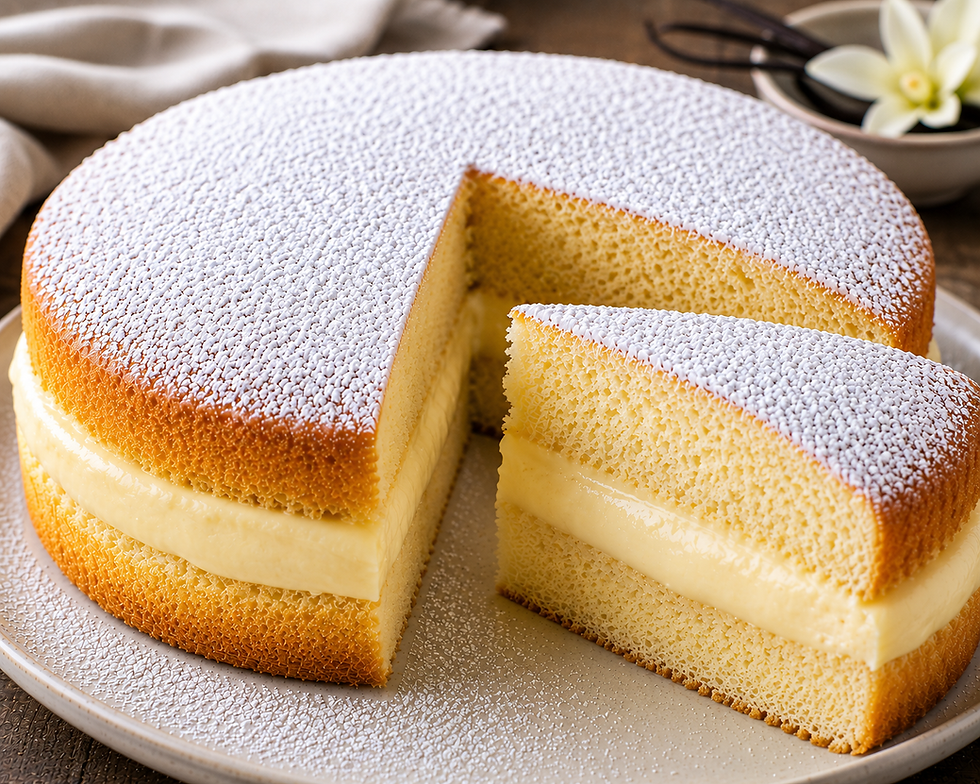
Torta della nonna is the tart every Tuscan family seems to own a version of: a tender lemon scented shortcrust, a thick vanilla pastry cream, a lid of the same dough and a crown of pine nuts. It is never elaborate and never fashionable. It is simply the cake that appears on the table on Sunday, and that people go on ordering in restaurants because nothing newer improves it.
Yield: 8 servings. Prep: 45 minutes. Chill: 1 hour. Bake: 45 minutes. Cool: 2 hours. Pan: 10 inch (25 cm) tart pan with removable base. Difficulty: intermediate. Course: dessert. Region: Tuscany.
The Story
Torta della nonna is Tuscan, and Florence has the strongest claim to it. The story most often told credits a Florentine restaurateur of the twentieth century who named the tart after the grandmother whose recipe it was, and the name stuck because every Italian recognises the woman it points to. Whether or not that account is exact, the dish is documented across Tuscany and Umbria by the middle of the last century, and no one there disputes where it belongs.
Its parts are older than its name. Pasta frolla, the short sweet dough, and crema pasticcera, the yolk and milk custard, are the two pillars of the Italian pastry kitchen, and both were perfected in the great houses of the Renaissance and then quietly inherited by ordinary households. The tart combines them in the most economical way possible: one dough gives both the base and the lid, one pot of custard fills it, and nothing is wasted or bought specially.
The pine nuts are the Tuscan signature. The stone pines of the coast around Pisa and Viareggio, planted along the Tyrrhenian shore for centuries, produce the pinoli that the region's bakers have always used, and gathering the cones is still a winter job. Scattered on the lid, they turn a plain covered tart into something that looks generous, and they carry the only toasted, resinous flavour in a dessert otherwise built on butter, egg and lemon.
In most Tuscan homes the tart is made the day before and left alone. It is eaten at room temperature with a dusting of sugar, sometimes with a small glass of vin santo, and it is expected to be cut cleanly into wedges that stand upright on the plate. That last expectation is what this recipe is built around.
It also sits inside a wider family of Italian tarts. Crostata di crema in Emilia, the pastiera of Naples and the Ligurian torta di mele all share the same instinct: a humble dough, a filling from the larder and a pan that serves the whole table. What separates the Tuscan version is the lemon in both dough and custard and the pine nuts on top, which give the tart a scent that is recognisable from across the room.
Ask ten Tuscan cooks for the recipe and you will hear ten small disagreements. Some add a spoonful of lard to the dough, some use only yolks, some scent the cream with orange, and a few fold in a little ricotta. This version follows the classic bakery proportions.
Ingredients
For the pasta frolla
All purpose flour, 2 1/2 cups (300 g)
Granulated sugar, 2/3 cup (130 g)
Cold unsalted butter, cubed, 10 tbsp (140 g)
Whole egg, 1 large
Egg yolk, 1 large
Lemon zest, finely grated, from 1 lemon
Baking powder, 1/2 tsp (2 g)
Fine sea salt, 1 pinch
For the pastry cream
Whole milk, 2 cups (480 ml)
Egg yolks, 4 large
Granulated sugar, 1/2 cup (100 g)
Cornstarch, 1/4 cup (30 g)
Lemon peel, in 2 wide strips
Vanilla bean, split, 1, or pure vanilla extract, 1 tsp (5 ml)
Fine sea salt, 1 pinch
For finishing
Pine nuts, 1/3 cup (50 g)
Whole milk, for wetting the lid and the nuts, 2 tbsp (30 ml)
Confectioners' sugar, 2 tbsp (15 g)
Butter, for greasing the pan, 1 tsp (5 g)
For serving, optional
Heavy cream, lightly whipped and unsweetened, 1/2 cup (120 ml)
Fresh raspberries or wild strawberries, 1 cup (150 g)
Vin santo, a small glass per guest, 1/4 cup (60 ml)
Use fresh eggs at room temperature and unsalted butter of good quality, since both flavours carry through the finished tart. Choose lemons with unwaxed skin, because only the zest is used and it should taste of fruit rather than of coating.
Preparation
Mixing the pasta frolla
Combine the flour, sugar, baking powder, salt and lemon zest in a large bowl. Rub in the cold butter with your fingertips until the mixture looks like coarse sand with a few pea sized pieces left. Add the whole egg and the yolk and press the dough together with the heel of your hand, stopping the moment it holds. Overworking develops gluten and makes the crust tough instead of sandy.
Chilling and dividing the dough
Flatten the dough into a thick disc, wrap it and chill for 1 hour. Cut off one third and keep it for the lid. Dust the work surface lightly, roll the larger piece to 1/8 inch (3 mm) and roll the smaller piece to the same thickness. Keep both cold. Frolla warms fast, and warm dough tears and shrinks in the oven.
Infusing the milk
Heat the milk with the lemon peel, the vanilla and the salt until steaming at the edges, about 4 minutes. Take it off the heat, cover and leave it to infuse for 10 minutes so the flavour reaches the milk without the custard tasting of raw zest.
Cooking the pastry cream
Whisk the yolks with the sugar and the cornstarch until pale. Pour in the warm milk in a thin stream, whisking, then return everything to the pan. Cook over medium heat, whisking constantly into the corners, until it thickens and a slow bubble breaks the surface. Keep cooking for 1 minute more to cook out the starch, then remove the peel and the vanilla bean.
Cooling the cream flat and fast
Spread the cream on a shallow tray and press plastic wrap directly onto the surface so no skin forms. Cool to room temperature, about 30 minutes, then chill until it is thick enough to hold a spoon upright. Hot cream in raw dough makes the base soggy, so patience here decides the whole tart.
Lining the pan
Butter the tart pan lightly. Drape the larger dough round over your rolling pin, lay it in the pan and press it into the corners without stretching it. Trim the edge flush with the rim and prick the base a few times with a fork. Chill the lined pan for 15 minutes while the oven heats to 350°F (175°C), with the rack on the lowest position.
Filling and sealing
Beat the cold cream briefly to loosen it, then spread it in an even layer over the base, leaving 1/2 inch (1 cm) clear at the edge. Lay the second round on top, press the rims together and trim. Brush the whole lid with milk.
Topping with the pine nuts
Dip the pine nuts in the remaining milk so they are wet all over, then press each one into the lid firmly enough that it sits in the dough rather than on it. Cover the surface evenly from the centre out and leave a narrow bare ring at the edge.
Baking
Slide the tart onto the lowest rack and bake for 40 to 45 minutes, until the lid is deep golden and the edges have pulled slightly from the pan. Check at 25 minutes. If the pine nuts are darkening ahead of the crust, cover the top loosely with foil and finish the bake.
Cooling, unmolding and dusting
Cool the tart in its pan on a wire rack for at least 2 hours. Unmold it only when it is completely cool, because the cream sets as it cools and the crust firms with it. Dust with confectioners' sugar just before serving.
Plating
Serve at room temperature, never straight from the refrigerator. Cut with a thin serrated knife wiped between slices, using a gentle sawing motion so the lid does not crack, and lift each wedge with a flat spatula onto a small plain white plate.
Dust the confectioners' sugar over the tart, not the plate, in a fine even veil. Add a spoonful of unsweetened whipped cream or a few fresh berries beside the wedge if you like, but nothing that competes with the pine nuts. Coffee or a small glass of vin santo is the classic company.
Present the whole tart to the table before you cut it. Cut the first wedge slightly larger to serve as the guide for the rest, and keep each slice narrow enough to hold its shape.
Professional Technique
The technical problem of this tart is the pine nuts, because they sit on an exposed surface for the whole bake. Pine nuts are rich in oil, and that oil makes them brown fast and then burn well before a covered tart has finished cooking through. The crust needs 40 minutes or more to set, while a dry nut on a hot lid can turn bitter in half that time. The technique is entirely about keeping the nuts alive for the length of the bake.
First, wet them. Dipping the nuts in milk gives each one a thin film of moisture that has to evaporate before the surface can scorch, and it also acts as glue. Second, press them into the frolla instead of scattering them. A nut pushed in until it is half buried is protected on one side by the dough and cannot roll off, while a loose nut sits fully exposed to the air and browns first.
Third, control where the heat comes from. Put the pan on the lowest rack, so the base of the tart receives the strongest heat and the top receives the weakest. The dough cooks upward from the bottom and the nuts, far from the element, colour gently at the pace of the crust. Fourth, watch them. If the nuts darken before the lid has turned golden, lay a loose sheet of foil over the top and finish the bake, and the crust and the nuts finish together.
Texture and Moisture Control
The tart lives on a contrast between a crumbly sandy crust and a smooth cream that is firm enough to cut. Both depend on moisture staying where it belongs. Cornstarch in the cream binds water as it gels, which is why the cream must cook for a full minute after it starts to bubble: undercooked starch leaves the filling loose and it weeps into the base.
Cold butter in the frolla is what creates the sandy texture. Small fragments of fat melt in the oven and leave tiny pockets, so the crust shatters instead of chewing. Warm butter blends into the flour and gives a dense, biscuity result. For the same reason the dough should go back into the refrigerator whenever it feels soft.
Cooling the cream completely before it meets the dough is the other moisture rule. Hot cream steams the base from the inside and softens it, while cold cream keeps a dry barrier. Leave the baked tart in its pan until cool, since the filling continues to set as it drops in temperature and a warm tart slumps when cut.
Professional Mise en Place
A tart of this kind rewards planning more than speed. Almost every component can be made a day or two ahead, and the only real work on the day is baking and cooling.
Equipment and tools
10 inch (25 cm) tart pan with removable base, dark metal for a crisper base
Heavy saucepan and balloon whisk for the cream
Rolling pin, bench scraper and fine sieve
Pastry brush, thin serrated knife and foil
Digital scale and an oven thermometer to check the true temperature
Prepared ahead
Frolla, up to 2 days ahead, wrapped and refrigerated, or 1 month frozen
Pastry cream, up to 2 days ahead, with film pressed on the surface
Lemon zest and vanilla infusion, prepared the day before
Baked tart, the day before, cooled and covered loosely
Service setup
Tart at room temperature for 30 minutes before slicing
Sugar shaker and serrated knife at hand
Small plates and a flat spatula ready
Whipped cream and berries chilled until the last minute
Chef Tips
Grate the lemon zest straight into the sugar and rub it in with your fingers before mixing the dough, so the oils spread through every bite. Weigh the flour if you can, since a scooped cup can vary by 30 g and the difference shows in the crust.
If the dough cracks while you line the pan, press the pieces together with your fingers rather than rolling again, and patch thin spots with trimmings. Rework the dough as little as possible and it stays tender.
Make the tart the day before. The cream settles, the lemon deepens and the crust absorbs just enough moisture from the filling to soften its edge without losing the snap.
Let the oven come fully to temperature before the tart goes in. A tart that starts in a cool oven leaks butter from the dough and never gets the crisp base that the cream needs beneath it.
Taste your pine nuts. Pinoli turn rancid quietly, and a stale nut will ruin a delicate cream. Buy them from a shop with turnover and keep them in the freezer.
Common Mistakes
Adding warm cream to the crust. It turns the base soft and gummy. Chill the cream until it is thick before you fill the tart.
Overworking the dough. Kneading builds gluten and gives a hard, shrinking crust. Bring it together just until it holds.
Undercooking the cream. If it has not bubbled for a full minute, the starch is raw and the filling runs when the tart is cut.
Cutting the tart warm. The cream has not set, and the wedge collapses. Wait until it is fully cool.
Rolling the dough too thick. Above 1/4 inch (6 mm) the crust turns heavy and the proportion of cream to pastry is lost.
Skipping the chill. Dough that goes into the oven warm shrinks from the sides of the pan and leaves a gap for the cream to leak into. Chill the lined pan for 15 minutes every time.
Overfilling the tart. Cream spread to the very rim boils out when the lid seals and glues the tart to the pan. Leave a clear edge of 1/2 inch (1 cm).
Leaving the milk in the pot too long. Once the cream thickens, it catches on the bottom of the pan within seconds. Whisk without pause and lift the pan off the heat the moment it is thick.
Wine Pairing
Vin Santo del Chianti Classico DOC: The Tuscan answer and the one grandmothers pour. Long aged in small barrels, it shows caramel, dried apricot and hazelnut over a lively acidity that keeps it from cloying. The nutty tone echoes the pine nuts, and its sweetness matches the vanilla cream instead of overpowering it.
Moscato d'Asti DOCG: Lightly sparkling, low in alcohol and full of peach and orange blossom, this is the freshest partner. The gentle bubbles lift the butter and the cream from the palate after each bite, and the sweetness stays modest, which suits a tart that is already rich.
Malvasia delle Lipari DOC: Golden, aromatic and perfumed with apricot, honey and Mediterranean herbs. Its fragrance meets the lemon zest in the dough directly, and its bright acid finish cuts through the yolk richness of the pastry cream.
Recioto di Soave DOCG: A sweet white from dried Garganega grapes, with almond, candied citrus and honey. The almond note runs alongside the toasted pine nuts, and a clean mineral acidity stops the sweetness from sitting heavy against the butter of the crust.
Ramandolo DOCG: A sweet white from Verduzzo grapes in the hills of Friuli, amber in colour, with apricot, dried fig and a light tannic grip that is rare in dessert wines. That slight grip cleans the buttery crust from the tongue, while the honeyed fruit carries the lemon and the vanilla of the cream.
Storage & Reheating
Keep the tart at cool room temperature under a cake dome for up to 1 day. Because of the custard, refrigerate it after that, loosely covered, for up to 3 days, and take it out 30 minutes before serving so the cream softens and the flavour returns.
Freezing is not recommended, since thawed pastry cream turns watery and grainy. If you wish to freeze something, freeze the unbaked frolla discs for up to 1 month. There is no reheating: warming a custard tart makes the filling loose. If the crust has softened in the refrigerator, crisp a wedge for 5 minutes in a 300°F (150°C) oven and let it cool before eating.
Nutrition
Per serving, based on 8 servings:
Calories: 430 kcal
Total Fat: 20 g
Saturated Fat: 11 g
Trans Fat: 0.5 g
Unsaturated Fat: 8 g
Cholesterol: 150 mg
Sodium: 110 mg
Total Carbohydrates: 55 g
Fiber: 1 g
Total Sugars: 24 g
Added Sugars: 22 g
Protein: 8 g
Lactose: 4 g
Micronutrients: calcium, vitamin A, iron, magnesium
These figures are estimates.




Comments