
Wine Comparison: Verdicchio dei Castelli di Jesi DOC vs Verdicchio di Matelica DOC
Updated: Sep 8

Two Expressions of Italy's Greatest Native White Grape
Few Italian white grape varieties are as versatile and age-worthy as Verdicchio. Grown exclusively in the Marche region for centuries, it produces wines that range from crisp and refreshing to rich, complex, and capable of aging for decades.
The two most prestigious appellations are Verdicchio dei Castelli di Jesi DOC and Verdicchio di Matelica DOC. Although they share the same grape, they offer remarkably different personalities.
Verdicchio dei Castelli di Jesi is generous, floral, and approachable, while Verdicchio di Matelica is more structured, mineral, and intensely concentrated thanks to its unique inland mountain climate.
So which expression of Verdicchio deserves a place in your glass?
The Regions
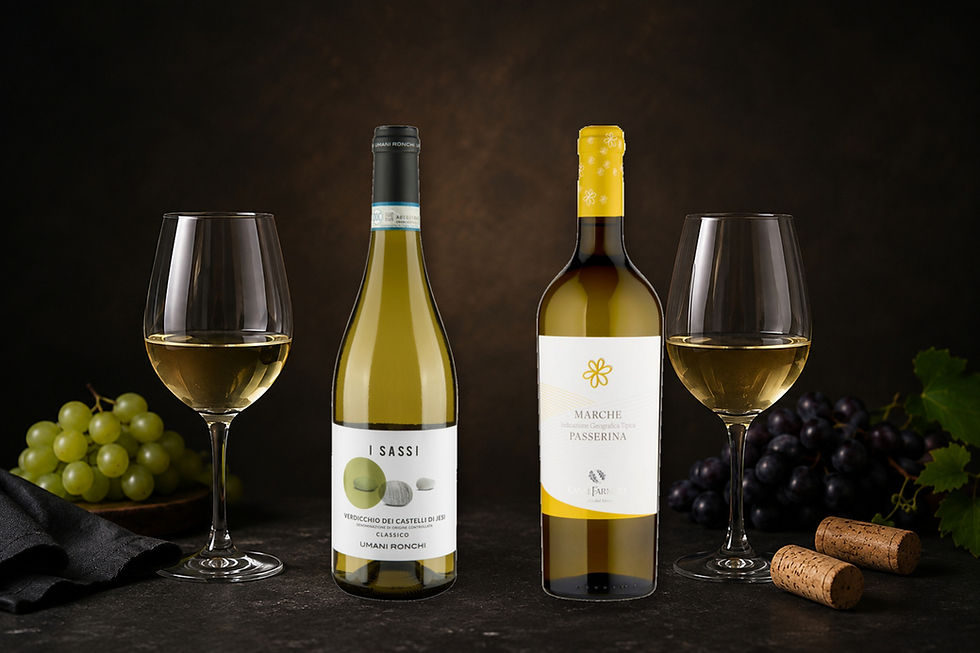
Verdicchio dei Castelli di Jesi DOC
Located in central Marche, between the Adriatic Sea and the Apennine Mountains, Castelli di Jesi is the largest and most famous Verdicchio-producing area.
The vineyards benefit from:
Gentle rolling hills
Limestone and clay soils
Maritime influence from the Adriatic
Mild temperatures
Long growing season
These conditions produce elegant wines with vibrant fruit and balanced acidity.
Verdicchio di Matelica DOC
Matelica lies further inland in a narrow valley surrounded by the Apennine Mountains.
The vineyards feature:
Higher elevations
Limestone-rich soils
Strong day-to-night temperature swings
Continental climate
Excellent sun exposure
The result is a wine with greater concentration, firmer acidity, and remarkable minerality.
The Grape
Both wines are produced from:
100% Verdicchio
Verdicchio is prized for its:
Naturally high acidity
Citrus aromas
Herbal complexity
Mineral character
Excellent aging potential
It is widely regarded as one of Italy's finest indigenous white grape varieties.
Appearance
Verdicchio dei Castelli di Jesi
Pale straw yellow
Green reflections
Brilliant clarity
Verdicchio di Matelica
Bright straw yellow
Slight golden highlights
Greater color intensity
Aromas
Verdicchio dei Castelli di Jesi
Typical aromas include:
Green apple
Pear
White peach
Lemon zest
White flowers
Chamomile
Fresh herbs
Almond
Verdicchio di Matelica
Common aromas include:
Lemon peel
Grapefruit
Yellow apple
Wild herbs
Acacia flowers
Flint
Wet stone
Fennel
Almond
Matelica generally shows greater mineral intensity.
Taste
Verdicchio dei Castelli di Jesi
Known for:
Medium body
Fresh acidity
Soft texture
Elegant fruit
Clean almond finish
Excellent balance
Verdicchio di Matelica
Offers:
Medium to full body
Higher acidity
Pronounced minerality
Greater structure
Long persistent finish
Remarkable complexity
Its mountain climate gives the wine exceptional precision.
Aging Potential
Verdicchio dei Castelli di Jesi
Best enjoyed within:
5–10 years
Premium Riserva bottlings can evolve beautifully for well over a decade.
Verdicchio di Matelica
Typical drinking window:
8–15 years
The finest examples can continue developing notes of honey, toasted almonds, beeswax, and dried herbs for many years.
Food Pairings
Verdicchio dei Castelli di Jesi
Excellent with:
Grilled sea bass
Linguine alle vongole
Shrimp risotto
Fried calamari
Burrata
Roasted chicken
Vegetable risotto
Mild cheeses
Verdicchio di Matelica
Perfect alongside:
Lobster
Turbot
Monkfish
Truffle risotto
Porcini mushrooms
Roast veal
Aged Pecorino
Rich seafood dishes
Its structure allows it to pair with more complex preparations.
Price Comparison
Verdicchio dei Castelli di Jesi
Typical prices:
Excellent bottles: $15–30
Premium Riserva wines: $35–60
Outstanding value among Italy's classic white wines.
Verdicchio di Matelica
Typical prices:
Quality bottles: $20–40
Top producers: $45–80
Often considered one of Italy's best-kept white wine secrets.
Famous Producers
Verdicchio dei Castelli di Jesi
Umani Ronchi
Garofoli
Villa Bucci
Sartarelli
Pievalta
Colonnara
Moncaro
Velenosi
Verdicchio di Matelica
La Monacesca
Belisario
Borgo Paglianetto
ColleStefano
Bisci
Cavalieri
Gagliardi
Provima
Which Wine Should You Choose?
Choose Verdicchio dei Castelli di Jesi if you enjoy:
Fresh fruit
Floral aromas
Softer texture
Everyday versatility
Seafood and light pasta
Elegant, approachable whites
Choose Verdicchio di Matelica if you prefer:
Mineral-driven wines
Higher acidity
More structure
Long aging potential
Rich seafood
Complex white wines
Final Verdict
Both Verdicchio dei Castelli di Jesi DOC and Verdicchio di Matelica DOC showcase the extraordinary versatility of the Verdicchio grape, yet each reflects a very different terroir.
Verdicchio dei Castelli di Jesi is generous, expressive, and immediately inviting. Influenced by the nearby Adriatic Sea, it delivers ripe orchard fruit, floral aromas, refreshing acidity, and the signature almond finish that has made Verdicchio famous around the world.
Verdicchio di Matelica, produced further inland in the cooler mountain valleys of Marche, offers a more concentrated and age-worthy interpretation. Its vibrant acidity, pronounced minerality, and layered complexity make it one of Italy's finest white wines for long-term cellaring.
Neither style is better than the other—they simply highlight two distinct faces of one of Italy's greatest native grapes.
Chef Gianluca's Recommendation
Choose Verdicchio dei Castelli di Jesi for grilled fish, seafood pasta, fried calamari, fresh cheeses, and relaxed summer lunches. Reach for Verdicchio di Matelica when serving lobster, monkfish, porcini mushrooms, truffle risotto, roast veal, or aged Pecorino. Together, they represent the very best of Marche's white wine tradition and deserve a place in every Italian wine lover's collection.
Wine Pairing
Choose an Italian wine with enough acidity to refresh the palate and enough body to match the richness of the dish. Delicate recipes generally benefit from lighter, fresher wines, while roasted, braised, aged-cheese, or deeply savory preparations can support more structured selections. Serve the wine at the correct temperature and avoid pairings that overpower the principal ingredient.


Comments