
Wine Comparison: Vermentino vs Pinot Grigio: Key Differences, Food Pairings and Which One to Choose
Updated: Aug 25

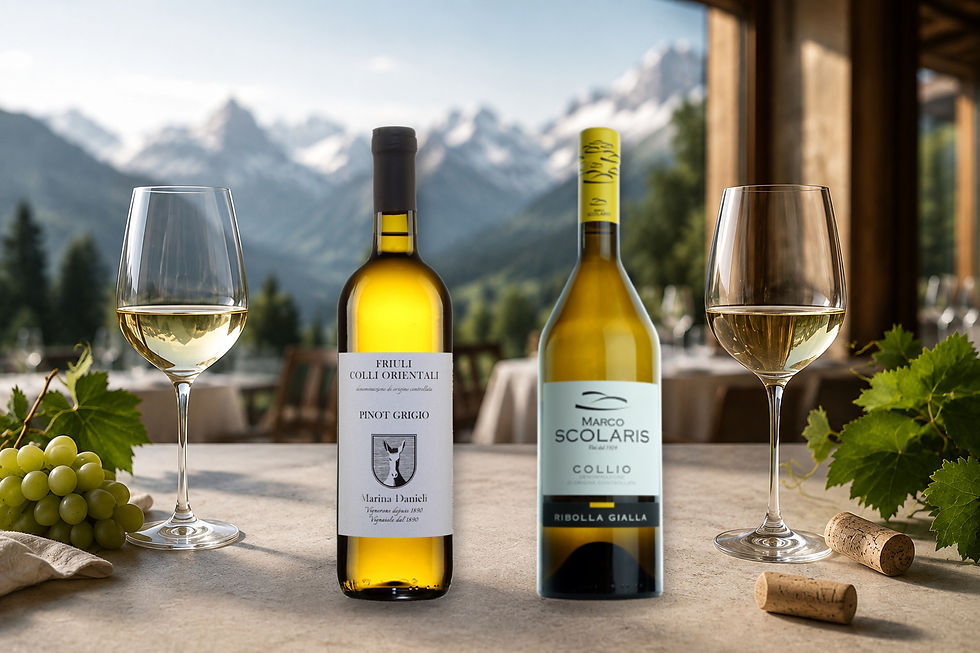
Vermentino and Pinot Grigio are regularly grouped together as crisp Italian white wines, but that shorthand hides two very different personalities. Vermentino is usually more Mediterranean: citrus-driven, herbal, saline, slightly phenolic and built to handle olive oil, grilled seafood, bottarga and aromatic herbs. Pinot Grigio is usually more restrained and linear, emphasizing pear, apple, lemon, freshness and a clean finish.
The comparison becomes more interesting when quality rises. A serious Vermentino di Gallura DOCG can be mineral, structured and age-worthy, while a top Pinot Grigio from Friuli-Venezia Giulia or Alto Adige can have far more depth than the simple, neutral style often associated with the grape. The correct choice therefore depends on origin, producer, food and the kind of white-wine experience you want.
Quick Answer
Choose Vermentino if you want the more aromatic, savory and Mediterranean wine: citrus peel, white peach, herbs, mineral tension, salinity and a lightly bitter finish. It is generally the stronger choice for grilled fish, bottarga, oily seafood, pesto, saffron, garlic, olive oil and Sardinian or Ligurian flavors. Choose Pinot Grigio if you want a lighter, cleaner and more restrained profile with pear, apple, lemon and high refreshment value. It is excellent with crudo, oysters, delicate shellfish, salads, fresh cheeses and simple poultry. At comparable quality and price, Vermentino usually offers more distinctive character; premium Pinot Grigio from Friuli or Alto Adige can be equally serious but expresses itself with more precision and restraint.
Vermentino vs Pinot Grigio at a Glance
Category | Vermentino | Pinot Grigio |
|---|---|---|
Core Italian identity | Mediterranean and coastal | Northeastern and Alpine/continental |
Key regions | Sardinia, Liguria, coastal Tuscany | Friuli-Venezia Giulia, Alto Adige, Trentino, Veneto |
Aroma | Lemon, grapefruit, white flowers, herbs | Pear, apple, lemon, white flowers |
Flavor | Citrus peel, stone fruit, savory herbs | Pear, apple, citrus, subtle almond |
Acidity | Medium-high to high | Medium-high to high |
Body | Light-medium to medium | Light to medium |
Typical alcohol | Often about 12.5–14% ABV | Often about 12–13.5% ABV |
Minerality | Often pronounced | Moderate to pronounced in top sites |
Salinity | Frequently a defining feature | Usually subtler |
Fruit character | Citrus and white/stone fruit | Pear, apple and citrus |
Herbal character | Often clearly present | Usually low to moderate |
Finish | Savory, citrus-peel, almond-like, saline | Clean, crisp, pear-citrus, sometimes almond-mineral |
Complexity | Often expressive even when young | Ranges from simple to highly complex |
Ageability | Best young, but top examples can develop for years | Best young, but top Friuli/Alto Adige examples can age |
Best food direction | Grilled, savory and Mediterranean | Raw, delicate and freshness-driven |
Wine Profile: Vermentino
Vermentino is one of the defining white grapes of Mediterranean Italy. Sardinia gives the grape its most internationally recognizable Italian identity, with Vermentino di Gallura DOCG at the top of the regional hierarchy and Vermentino di Sardegna DOC offering a broader island-wide range of styles. Liguria produces leaner, intensely coastal expressions, while Tuscany often gives the grape a slightly rounder and fruitier profile.
Style: dry, fresh, aromatic and savory
Typical fruit: lemon, grapefruit, white peach and sometimes ripe pear
Non-fruit character: Mediterranean herbs, white flowers, stone, sea-breeze-like salinity and almond
Texture: more phenolic grip and mid-palate weight than many simple Italian whites
Best use at the table: seafood, herbs, olive oil, grilled flavors, bottarga and saffron
Wine Profile: Pinot Grigio
Pinot Grigio is the Italian expression of the gray-skinned Pinot mutation and is most strongly associated with northeastern Italy. Veneto supplies a large share of the easy-drinking market, while Friuli-Venezia Giulia and Alto Adige can produce significantly more serious wines with greater concentration, mineral precision and textural depth. Some producers also make ramato, a traditional copper-colored style created through skin contact.
Style: dry, crisp, restrained and highly refreshing
Typical fruit: pear, green apple, lemon and light stone fruit
Non-fruit character: white flowers, almond, mineral notes and occasional spice
Texture: generally lighter and more linear, though premium examples can be broad and structured
Best use at the table: crudo, shellfish, light pasta, salads, fresh cheeses and delicate poultry
Key Differences: Vermentino vs Pinot Grigio
1. Aroma
Vermentino is normally the more aromatic wine. It can show lemon zest, grapefruit, white peach, wild flowers, fennel, rosemary-like herbs and a distinctly Mediterranean impression. Pinot Grigio is usually more restrained, emphasizing pear, apple, lemon and white flowers. High-quality Pinot Grigio can become more complex, but it rarely has the same overt herbal character as Vermentino.
2. Flavor
On the palate, Vermentino tends to combine citrus and stone fruit with savory flavors. Citrus peel, white peach, mineral notes and a lightly bitter almond-like edge are common reference points. Pinot Grigio is generally cleaner and straighter: pear, apple, lemon and subtle almond. When both wines are well made, Vermentino usually feels more Mediterranean and savory, while Pinot Grigio feels more polished and linear.
3. Acidity
Both wines rely on acidity for freshness and food compatibility. Pinot Grigio often feels immediately crisp because the style is frequently light-bodied and fruit is kept restrained. Vermentino can have equally energetic acidity, but its additional texture and phenolic grip make the freshness feel broader rather than razor-thin. Neither grape should be judged by acidity alone; site, harvest timing and winemaking matter greatly.
4. Body
Most everyday Pinot Grigio is lighter in body than Vermentino. Vermentino often carries more mid-palate weight, particularly in Sardinia and warmer coastal areas, while still finishing dry and fresh. Premium Pinot Grigio from Friuli or Alto Adige can reach medium body and substantial texture, but the average stylistic difference remains clear: Pinot Grigio is usually leaner; Vermentino is usually broader.
5. Alcohol
Vermentino often reaches slightly higher alcohol because it thrives in sunny Mediterranean climates and can achieve full flavor maturity while retaining acidity. Many examples fall around 12.5–14% ABV. Pinot Grigio is often around 12–13.5% ABV, although richer versions can go higher. The practical difference at the table is that Vermentino can feel a little more substantial, while Pinot Grigio often emphasizes lightness and refreshment.
6. Minerality
Minerality can be important in both wines, but it appears differently. Vermentino often gives a stony, rocky or granite-like sensation integrated with citrus and herbs. In top Pinot Grigio from cooler northeastern vineyards, minerality can feel more precise and linear, sometimes almost chalky or flinty. Vermentino tends to express minerality as part of a broader savory profile; Pinot Grigio often expresses it as tension and definition.
7. Salinity
Salinity is one of Vermentino’s strongest comparative advantages. Sardinian and Ligurian wines frequently carry a savory, sea-breeze-like impression that makes the wine particularly effective with shellfish, bottarga and grilled fish. Pinot Grigio can show saline mineral character in strong terroirs, but it is usually less central to the grape’s identity. If salinity is the quality you are specifically seeking, Vermentino is the clearer choice.
8. Fruit Character
Vermentino usually leans toward citrus, white peach and other Mediterranean white or stone fruits. Pinot Grigio more often emphasizes pear and apple, supported by lemon. Warmer-site Pinot Grigio can become riper and softer, while cooler-site versions stay greener and more citrus-driven. Vermentino generally feels less neutral because the fruit is joined by herbs, flowers and savory elements.
9. Herbal Character
This is a major point of separation. Vermentino can show fennel, rosemary-like notes, wild Mediterranean herbs and subtle green bitterness. These aromas make it extremely useful with pesto, artichokes, zucchini, herbs and olive-oil-based seafood dishes. Pinot Grigio is usually much less herbal, which can be an advantage when the goal is a clean, unobtrusive wine that lets delicate ingredients dominate.
10. Finish
Vermentino often finishes with citrus peel, herbs, mineral salinity and a gentle bitter-almond sensation. That slight bitterness is not a flaw; in a balanced wine it gives gastronomic tension. Pinot Grigio generally finishes cleaner and more direct, with pear, lemon and a subtle mineral or almond note. Premium examples can be long, but the finish is usually less overtly savory than Vermentino.
11. Complexity
At entry and mid-level prices, Vermentino often offers more obvious personality because its aromatic, herbal and saline components create multiple layers even in a young wine. Pinot Grigio has a much wider quality range: simple versions can be deliberately neutral, while serious Friuli and Alto Adige wines can be layered, textured and highly sophisticated. Producer and origin therefore matter enormously when evaluating Pinot Grigio.
12. Ageability
Most Vermentino and Pinot Grigio is designed for early drinking, when fruit and freshness are at their brightest. Better Vermentino, especially structured Gallura examples, can develop waxy, nutty, herbal and mineral complexity over several years. Premium Pinot Grigio with concentration, lees work and strong acidity can also age successfully. For both wines, ageability is a producer-and-vineyard question rather than something guaranteed by the grape name.
Terroir Comparison
Sardinia and Gallura: Vermentino at Its Most Distinctive
Northern Sardinia, particularly Gallura, gives Vermentino one of its most recognizable terroir expressions. Wind, intense Mediterranean light and granite-influenced soils help create wines with ripe citrus, flowers, herbs, mineral structure and marked salinity. The best examples have enough body for food but remain dry and energetic. They are especially compelling with the flavors of the Sardinian coast.
Liguria and Coastal Tuscany: Two Other Faces of Vermentino
Liguria often produces a leaner, more vertical and intensely coastal style, with herbs, citrus and savory mineral notes. Coastal Tuscany can produce broader Vermentino with riper fruit and a softer Mediterranean shape. These regional differences show why Vermentino should not be reduced to one flavor profile: the grape changes clearly with climate, exposure and soil.
Friuli and Alto Adige: Where Pinot Grigio Becomes Serious
Pinot Grigio reaches another level in strong sites of Friuli-Venezia Giulia and Alto Adige. Cooler temperatures, hillside vineyards and careful producers can produce wines with sharper definition, greater concentration and a longer mineral finish than basic high-volume Pinot Grigio. Friuli can emphasize texture and depth; Alto Adige often emphasizes Alpine freshness, precision and clean aromatic definition.
Regional Head-to-Head: Gallura vs Friuli/Alto Adige
Question | Vermentino di Gallura | Premium Pinot Grigio from Friuli/Alto Adige |
|---|---|---|
Most distinctive aroma | Herbs, flowers, citrus and saline Mediterranean notes | Pear, apple, citrus, flowers and mineral precision |
More texture | Usually Vermentino | Can be substantial, especially with lees aging |
More salinity | Usually Vermentino | Present in top sites but generally subtler |
More restrained style | Less restrained | Usually Pinot Grigio |
Better with bottarga and oily fish | Vermentino | Good, but usually second choice |
Better with oysters and crudo | Excellent | Usually Pinot Grigio |
Best expression of place | Granite, wind and Mediterranean coast | Altitude, cool climate and northeastern terroir |
Food Pairing Comparison: Which Wine Wins?
Food | Better Choice | Why |
|---|---|---|
Oysters and raw shellfish | Pinot Grigio | Its clean acidity and restrained fruit preserve delicacy |
Crudo and sashimi-style seafood | Pinot Grigio | Lighter body and linear freshness work beautifully |
Grilled branzino, orata or swordfish | Vermentino | Herbs, salinity and texture match smoke and olive oil |
Bottarga, anchovies and sardines | Vermentino | Savory intensity and salinity stand up to umami and oil |
Mussels, clams and octopus | Vermentino / Tie | Vermentino wins with herbs and garlic; Pinot Grigio excels with simpler preparations |
Pesto and herb-driven dishes | Vermentino | Its natural herbal character creates a direct aromatic bridge |
Fresh salads and delicate vegetables | Pinot Grigio | Cleaner flavor and lighter body keep the pairing fresh |
Saffron seafood dishes | Vermentino | Texture and aromatic intensity handle saffron particularly well |
Light poultry | Pinot Grigio | A restrained profile does not overwhelm white meat |
Pecorino and sheep’s-milk cheese | Vermentino | Savory structure and herbal notes are more complementary |
Zafferano & Co. Recipe Pairings
For Vermentino, two especially strong matches are Fregola ai Frutti di Mare e Bottarga and Cozze, Piselli e Pecorino Sardo con Brodo Marino allo Zafferano. Both dishes reward the wine’s saline character, citrus freshness and ability to handle seafood, herbs, saffron and savory ingredients.
For Pinot Grigio, try Paccheri al Sugo d’Aragosta when the sauce remains elegant rather than heavily spiced, or Risotto al Nero di Seppia with a structured Friuli or Alto Adige example. The wine’s acidity and clean fruit keep the seafood flavors focused.
Serving Temperature and Glassware
Serve most Vermentino around 50–54°F (10–12°C). Very light examples can be served slightly cooler, but serious Vermentino should not be over-chilled because excessive cold suppresses its herbal aromas, texture and mineral finish. Serve fresh, simple Pinot Grigio around 46–50°F (8–10°C); premium Friuli or Alto Adige examples show more complexity closer to 50–54°F (10–12°C). A standard white-wine glass works for both, while structured examples benefit from a slightly larger bowl.
Producers to Know
Vermentino Producers
Capichera — Sardinia — ★★★★★ — A benchmark for concentrated, structured and age-worthy Vermentino.
Siddùra — Gallura, Sardinia — ★★★★ — Polished, aromatic wines with strong regional identity.
Vigne Surrau — Gallura, Sardinia — ★★★★ — Precise Vermentino with citrus, flowers and savory minerality.
Argiolas — Sardinia — ★★★★ — Consistent, balanced and highly food-friendly Sardinian whites.
Sella & Mosca — Sardinia — ★★★★ — Historic producer with accessible and regionally expressive Vermentino.
Pinot Grigio Producers
Jermann — Friuli-Venezia Giulia — ★★★★★ — A reference point for serious, textured northeastern Italian white wine.
Livio Felluga — Friuli-Venezia Giulia — ★★★★★ — Refined, structured wines with mineral depth and excellent balance.
Schiopetto — Friuli-Venezia Giulia — ★★★★★ — Precise and elegant wines that show Pinot Grigio’s high-quality potential.
Cantina Terlano — Alto Adige — ★★★★★ — A benchmark cooperative for mineral, age-worthy Alpine white wines.
Elena Walch — Alto Adige — ★★★★ — Clean, precise Pinot Grigio with Alpine freshness and clear varietal definition.
Alois Lageder — Alto Adige — ★★★★ — Restrained, terroir-conscious wines with freshness and balance.
Which One Should You Choose?
Choose Vermentino if you want more aroma, herbs, salinity and Mediterranean personality.
Choose Pinot Grigio if you want a lighter, cleaner and more restrained white.
Choose Vermentino for grilled fish, bottarga, pesto, saffron and olive-oil-driven seafood.
Choose Pinot Grigio for oysters, crudo, delicate shellfish, salads and light poultry.
Choose Vermentino when food is savory and aromatic.
Choose Pinot Grigio when delicacy and refreshment are the priority.
For premium bottles, judge the producer and region before judging the grape.
Final Verdict
Vermentino and Pinot Grigio can both be excellent Italian white wines, but they solve different problems at the table. Pinot Grigio is the more universal refresher: crisp, clean, restrained and easy to pair with delicate food. Vermentino is the more distinctive Mediterranean partner: aromatic, herbal, saline, slightly textured and particularly strong with seafood, olive oil, bottarga, saffron and grilled flavors.
For Zafferano & Co., Vermentino has the edge when the meal is unmistakably coastal Italian because its savory profile creates a deeper connection with Mediterranean ingredients. But premium Pinot Grigio from Friuli or Alto Adige deserves to be judged separately from simple high-volume examples. At its best, it is precise, mineral, complex and one of the most versatile white wines at the Italian table.


Comments