
Italian Caviale Oscietra e Limone Candito | Carpaccio di Polpo, Burrata
Updated: Sep 1

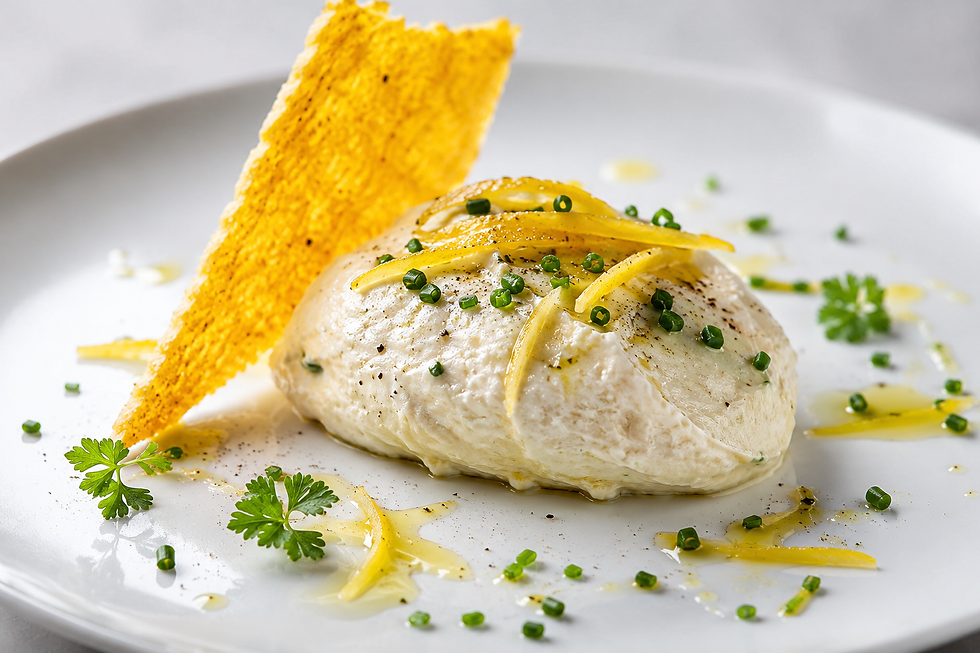
Servings: 4 Prep Time: 45 minutes (plus chilling) Cook Time: 1 hour Few preparations showcase the elegance of octopus better than a perfectly executed carpaccio. Although the technique is modern, it draws inspiration from the Mediterranean traditions of Southern Italy, where octopus has been enjoyed for centuries. The secret lies in pressing the cooked octopus while still warm into a cylindrical mold, then chilling it overnight. Once sliced paper-thin, the octopus reveals a beautiful natural mosaic of white flesh and purple-edged tentacles, becoming the canvas for luxurious Italian ingredients. Creamy burrata from Puglia adds richness, while Oscietra caviar contributes delicate salinity and refined texture. Small cubes of candied Amalfi lemon brighten the dish with sweet citrus notes, perfectly balancing the sweetness of the octopus. Fresh basil oil, micro herbs, and edible flowers complete a composition designed for a Michelin-starred tasting menu. Minimalist yet technically demanding
The Story
Ingredients
For the recipe
2½ lb whole octopus, cleaned
1 lemon, halved
2 bay leaves
1 celery stalk
1 small onion
8 black peppercorns
8 oz fresh burrata
1 oz Oscietra caviar
2 tbsp candied Amalfi lemon, finely diced
Micro basil
Micro shiso
Edible flowers
Maldon sea salt
Freshly ground white pepper
1 cup basil leaves
½ cup extra virgin olive oil
Blend until completely smooth.
Strain through cheesecloth.
Reserve chilled.
3 tbsp extra virgin olive oil
1 tbsp fresh lemon juice
1 tsp champagne vinegar
Sea salt
Whisk until emulsified.
Preparing the Base
Preparing the Main Mixture
Combining the Components
Cooking or Baking
Cooling and Setting
Final Assembly
Plating
Professional Technique
For consistent professional results, work in measured stages and keep the principal ingredient at the center of the preparation. Temperature changes affect seasoning, fat perception, starch behavior, protein texture, and aroma, so the final adjustment should be made only after the dish reaches its service consistency. Use visual and tactile cues throughout the process: observe how moisture evaporates, how sauces coat the spoon, how proteins resist gentle pressure, and how doughs or grains respond as they cook. Keep the cooking vessel appropriately sized so ingredients are not crowded, and allow each component enough contact with heat to develop flavor without drying. If the recipe contains a sauce, reserve a small amount of its cooking liquid or another compatible liquid so texture can be corrected at the end rather than by adding excess fat. Rest components only when the recipe benefits from resting; otherwise move directly to plating so crisp, delicate, or creamy textures remain intact. Before service, taste one complete bite containing the same proportions the guest will receive. Correct salt first, then acidity, then richness, and only then consider aromatic finishing elements. This sequence produces a cleaner and more repeatable result than adjusting several variables at once.
For consistent professional results, work in measured stages and keep the principal ingredient at the center of the preparation. Temperature changes affect seasoning, fat perception, starch behavior, protein texture, and aroma, so the final adjustment should be made only after the dish reaches its service consistency. Use visual and tactile cues throughout the process: observe how moisture evaporates, how sauces coat the spoon, how proteins resist gentle pressure, and how doughs or grains respond as they cook. Keep the cooking vessel appropriately sized so ingredients are not crowded, and allow each component enough contact with heat to develop flavor without drying. If the recipe contains a sauce, reserve a small amount of its cooking liquid or another compatible liquid so texture can be corrected at the end rather than by adding excess fat. Rest components only when the recipe benefits from resting; otherwise move directly to plating so crisp, delicate, or creamy textures remain intact. Before service, taste one complete bite containing the same proportions the guest will receive. Correct salt first, then acidity, then richness, and only then consider aromatic finishing elements. This sequence produces a cleaner and more repeatable result than adjusting several variables at once.
For consistent professional results, work in measured stages and keep the principal ingredient at the center of the preparation. Temperature changes affect seasoning, fat perception, starch behavior, protein texture, and aroma, so the final adjustment should be made only after the dish reaches its service consistency. Use visual and tactile cues throughout the process: observe how moisture evaporates, how sauces coat the spoon, how proteins resist gentle pressure, and how doughs or grains respond as they cook. Keep the cooking vessel appropriately sized so ingredients are not crowded, and allow each component enough contact with heat to develop flavor without drying. If the recipe contains a sauce, reserve a small amount of its cooking liquid or another compatible liquid so texture can be corrected at the end rather than by adding excess fat. Rest components only when the recipe benefits from resting; otherwise move directly to plating so crisp, delicate, or creamy textures remain intact. Before service, taste one complete bite containing the same proportions the guest will receive. Correct salt first, then acidity, then richness, and only then consider aromatic finishing elements. This sequence produces a cleaner and more repeatable result than adjusting several variables at once.
For consistent professional results, work in measured stages and keep the principal ingredient at the center of the preparation. Temperature changes affect seasoning, fat perception, starch behavior, protein texture, and aroma, so the final adjustment should be made only after the dish reaches its service consistency. Use visual and tactile cues throughout the process: observe how moisture evaporates, how sauces coat the spoon, how proteins resist gentle pressure, and how doughs or grains respond as they cook. Keep the cooking vessel appropriately sized so ingredients are not crowded, and allow each component enough contact with heat to develop flavor without drying. If the recipe contains a sauce, reserve a small amount of its cooking liquid or another compatible liquid so texture can be corrected at the end rather than by adding excess fat. Rest components only when the recipe benefits from resting; otherwise move directly to plating so crisp, delicate, or creamy textures remain intact. Before service, taste one complete bite containing the same proportions the guest will receive. Correct salt first, then acidity, then richness, and only then consider aromatic finishing elements. This sequence produces a cleaner and more repeatable result than adjusting several variables at once.
For consistent professional results, work in measured stages and keep the principal ingredient at the center of the preparation. Temperature changes affect seasoning, fat perception, starch behavior, protein texture, and aroma, so the final adjustment should be made only after the dish reaches its service consistency. Use visual and tactile cues throughout the process: observe how moisture evaporates, how sauces coat the spoon, how proteins resist gentle pressure, and how doughs or grains respond as they cook. Keep the cooking vessel appropriately sized so ingredients are not crowded, and allow each component enough contact with heat to develop flavor without drying. If the recipe contains a sauce, reserve a small amount of its cooking liquid or another compatible liquid so texture can be corrected at the end rather than by adding excess fat. Rest components only when the recipe benefits from resting; otherwise move directly to plating so crisp, delicate, or creamy textures remain intact. Before service, taste one complete bite containing the same proportions the guest will receive. Correct salt first, then acidity, then richness, and only then consider aromatic finishing elements. This sequence produces a cleaner and more repeatable result than adjusting several variables at once.
For consistent professional results, work in measured stages and keep the principal ingredient at the center of the preparation. Temperature changes affect seasoning, fat perception, starch behavior, protein texture, and aroma, so the final adjustment should be made only after the dish reaches its service consistency. Use visual and tactile cues throughout the process: observe how moisture evaporates, how sauces coat the spoon, how proteins resist gentle pressure, and how doughs or grains respond as they cook. Keep the cooking vessel appropriately sized so ingredients are not crowded, and allow each component enough contact with heat to develop flavor without drying. If the recipe contains a sauce, reserve a small amount of its cooking liquid or another compatible liquid so texture can be corrected at the end rather than by adding excess fat. Rest components only when the recipe benefits from resting; otherwise move directly to plating so crisp, delicate, or creamy textures remain intact. Before service, taste one complete bite containing the same proportions the guest will receive. Correct salt first, then acidity, then richness, and only then consider aromatic finishing elements. This sequence produces a cleaner and more repeatable result than adjusting several variables at once.



Comments