
Italian Roasted Cauliflower with Crispy Chickpeas, Capers and Lemon | Cavolfiore Arrosto con Ceci Croccanti, Capperi e Limone

Cauliflower is usually treated as a side vegetable, and usually treated badly, boiled or scattered as florets on an overcrowded tray where it steams itself grey. It becomes a serious appetiser the moment heat and moisture are properly controlled. This is a completely vegan plate that earns its place through texture rather than through substitution: nothing here is standing in for meat or cheese.
The head is roasted whole at high heat so the outside caramelises deeply while the core steams itself tender from within, then cut into substantial wedges through the stem so each portion holds together on the plate. Around it go three separate crisp elements, roasted chickpeas, fried capers and garlic breadcrumbs, and a raw lemon parsley dressing that arrives only at the last second, when it can still taste of lemon.
Yield: 4 servings. Prep: 20 minutes. Cook: 55 minutes. Rest: 5 minutes. Total: about 1 hour 20 minutes.
The Story
Cauliflower reached Italy from the eastern Mediterranean and was known for a long time as cavolo di Cipro, the cabbage of Cyprus, which is where Italian gardeners believed it came from. It was Italian growers who then did most of the work of turning it into the vegetable we recognise: by the sixteenth century detailed descriptions of cultivated cavolfiore appear in Italian herbals, and Italy exported both the seed and the technique across Europe. Sicily still grows the violet and green varieties that most of the continent has forgotten, and southern Italian markets sell cauliflower through the whole cold half of the year.
The garnishes are all southern Italian, and none of them is decorative. Capers are the flower buds of Capparis spinosa, a shrub that grows out of dry stone walls and volcanic rock; the finest come from Pantelleria and from Salina in the Aeolian islands, salt packed rather than brined, and they were historically the way an island kitchen with no meat added savour to a plate of vegetables. Chickpeas played the same role from Puglia to Sicily, the cheapest reliable protein in a cucina povera larder.
The toasted breadcrumbs are the most explicitly poor element of the four. Mollica atturrata in Sicily, pangrattato in the north, they are stale bread fried in oil with garlic and used exactly where a wealthier kitchen would grate cheese, which is why they were nicknamed the poor man's parmesan. Putting them on this plate is not a vegan workaround invented for the occasion; it is the oldest way Italians have of finishing a dish that has no cheese on it, and it is the reason this composition tastes like something from the south rather than like a modern restaurant vegetable course.
Ingredients
For the cauliflower
1 large head cauliflower, about 2 to 2 1/2 lb (900 g to 1.1 kg)
3 tbsp (45 ml) extra virgin olive oil
1 tsp (6 g) kosher salt
1/2 tsp (1 g) black pepper
1/2 tsp (1 g) crushed fennel seeds
1/4 tsp (0.5 g) red pepper flakes
2 garlic cloves, crushed
4 thyme sprigs
For the crispy chickpeas
1 1/2 cups (250 g) cooked chickpeas, thoroughly drained
1 1/2 tbsp (22 ml) extra virgin olive oil
1/2 tsp (3 g) kosher salt
1/4 tsp (0.5 g) smoked paprika
1/4 tsp (0.5 g) black pepper
For the fried capers
3 tbsp (30 g) capers, rinsed and dried
2 tbsp (30 ml) extra virgin olive oil
For the lemon parsley dressing
1/3 cup (80 ml) extra virgin olive oil
2 tbsp (30 ml) fresh lemon juice
1 tsp (2 g) finely grated lemon zest
1/3 cup (20 g) chopped flat leaf parsley
1 small garlic clove, finely grated
1/4 tsp (1.5 g) kosher salt
Black pepper, as needed
For the toasted breadcrumbs
1/2 cup (45 g) coarse breadcrumbs
1 tbsp (15 ml) extra virgin olive oil
1 garlic clove
1 tbsp (4 g) chopped flat leaf parsley
Fine sea salt, as needed
Preparation
Step 1

Trim the cauliflower but leave the head whole. Rub it with olive oil, salt, pepper, fennel seeds and chile, then tuck garlic and thyme into the crevices.
Step 2
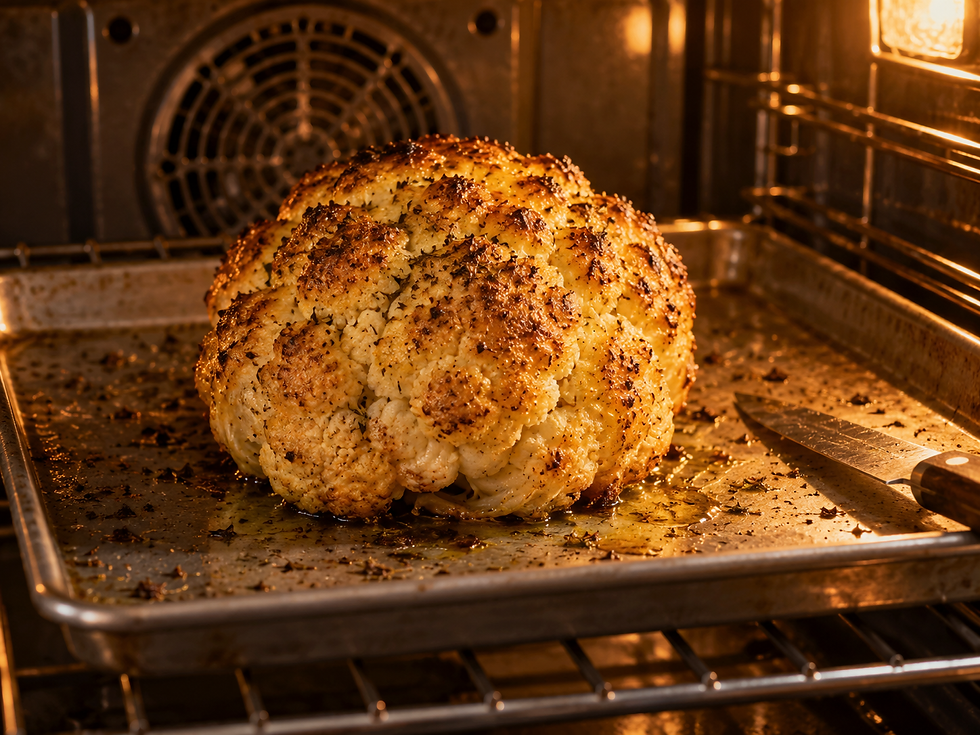
Roast the whole cauliflower at 425°F (220°C) for 45 to 55 minutes, until deeply golden and tender at the center.
Step 3

Pat the chickpeas thoroughly dry, season them with olive oil, salt, smoked paprika and pepper, and roast separately for the final 20 to 25 minutes.
Step 4

Pat the capers completely dry and fry them briefly in hot oil until they bloom and turn crisp, then drain them on paper towels.
Step 5

Whisk together the olive oil, lemon juice, zest, parsley, garlic, salt and pepper to make the bright lemon dressing.
Step 6

Toast the breadcrumbs with olive oil, garlic and parsley. Rest and slice the cauliflower, then plate with chickpeas, capers, dressing and breadcrumbs.
Plating
Set one wedge on each warm plate with the cut face turned toward the diner, so the contrast between the browned exterior and the pale tender interior is the first thing visible. Stand it slightly on the stem rather than laying it flat, which keeps the roasted top from being buried under everything that follows.
Spoon the lemon dressing over and around the wedge, letting a little pool on the plate but not enough to sit in. Scatter the chickpeas around the base rather than on top, where they would slide off, then the fried capers over the cauliflower itself, and finally the breadcrumbs across the whole plate in a broad sweep. That order matters: breadcrumbs go on last and dry, so they stay audible.
Finish with a thread of raw olive oil and a little more lemon zest grated directly over the plate. Add no extra salt at the pass, since the capers, the seasoned chickpeas and the breadcrumbs have already contributed a great deal, and add no further garnish. Send it immediately, while the cauliflower is still hot and the crisp elements have not yet met the dressing.
Professional Technique
Roasting the head whole is a deliberate choice with a physical justification. A head cut into florets exposes an enormous amount of wet surface to the oven, and all of it releases water at once; the tray fills with steam and browning stalls. Left intact, the cauliflower presents a limited outer surface that can caramelise while the interior effectively steams itself in its own trapped moisture. The result is a genuine contrast between a dark, savoury exterior and a soft, sweet centre, something scattered florets cannot deliver at any temperature.
Cauliflower browning is not solely a Maillard reaction. The vegetable's glucosinolates break down under sustained dry heat into the nutty, faintly sulphurous compounds that make roasted cauliflower taste nothing like boiled cauliflower, and that transformation needs both time and a genuinely hot oven. At 375°F (190°C) the head goes soft before it goes brown; at 425°F (220°C) the two arrive together. Preheating the pan as well as the oven is what secures the bottom crust.
The three crisp garnishes each fail in a different way and so are cooked separately. Chickpeas need dry heat and space and take 20 to 25 minutes; capers take 60 seconds in hot oil and burn at 90; breadcrumbs take 2 to 3 minutes and carry on darkening in a hot pan after the heat is off. Trying to consolidate any two of these into one pan guarantees that one of them is wrong.
Acid goes on at the end, never during. Lemon juice added to the roasting tray lowers the surface temperature, introduces water and actively inhibits browning, and its volatile aromatics are largely gone within a minute of contact with a hot pan. The dressing is therefore built cold and applied at the moment of service, where its sharpness cuts the roasted sweetness and the olive oil carries the aroma. Taste the finished plate before reaching for salt: between salt packed capers, seasoned chickpeas and salted breadcrumbs, the seasoning is usually already complete.
Texture and Moisture Control
Cauliflower is roughly ninety two percent water, and every failure of this dish traces back to that number. Surface water must be gone before the head enters the oven, which means drying a washed head thoroughly rather than shaking it and hoping. The internal water is an asset, not a problem: sealed inside the intact head it cooks the core through while the exterior browns, which is exactly why the head is not cut until after roasting.
The chickpeas need to be dry twice over. Drain and dry them before oiling, and then roast them long enough that the interior loses moisture too: a chickpea that is crisp on the outside and damp within will go soft within five minutes on a warm plate. They should rattle on the tray and shatter rather than squash when pressed. Rubbing off the loose skins during drying accelerates this considerably.
The finished plate should have no standing liquid on it at all. If a pool of dressing collects at the base, the crisp elements sitting in it will be soft within two minutes and the entire point of the composition is lost. Dress lightly, dress late, and keep the breadcrumbs and capers strictly out of the dressing until they are scattered over the assembled plate. Four textures should be identifiable in a single mouthful: yielding cauliflower core, caramelised edge, shattering chickpea, and the fine sandy crunch of the breadcrumbs.
Professional Mise en Place
The cauliflower dictates the timeline because it takes the longest, so it goes into the oven first and everything else is scheduled backwards from it. Trim, season and load the head, then set a timer for the 25 minute mark, which is when the chickpea tray joins it. Everything else happens during that window.
Ahead of service: the breadcrumbs can be toasted several hours in advance and held uncovered at room temperature, and the capers can be fried an hour ahead and held on paper. The dressing can be built up to two hours ahead, though the parsley is better stirred in shortly before use so it stays green. Store all three separately and none of them covered, since a lid traps steam and softens everything under it.
À la minute: rest, cut, plate, dress, scatter, send. Hold plates warm but not hot. If the cauliflower must wait, keep it uncovered in a low oven rather than under foil, and cut it only when the order comes, since a cut head loses heat and moisture from the exposed faces immediately. Assemble no more than sixty seconds before the plate leaves the pass.
Chef Tips
Use cast iron or a heavy roasting pan and preheat it with the oven, since it will give the cauliflower a noticeably darker base than a thin sheet tray ever manages. Test doneness with a thin knife pushed right through the stem, not into a floret, since the core is always the last part to give. Buy salt packed capers rather than brined ones if you can find them: they fry cleaner, bloom more dramatically and taste of caper rather than of vinegar. Keep every crisp component on its own tray or plate right up to the moment of assembly, and if you are cooking for more than four, roast two smaller heads rather than one enormous one, which will brown long before its centre is tender.
Common Mistakes
Pulling the cauliflower when it looks done. A well browned exterior tells you nothing about the core. Push a thin knife through the stem: if it meets resistance, give it another 10 minutes regardless of the colour.
Frying capers that are not fully dry. Residual water in hot oil spits dangerously and the capers steam instead of blooming. Dry them completely on paper first, and stand back as they go in.
Roasting the chickpeas on the cauliflower's tray. Their moisture softens the cauliflower's crust and they crisp unevenly in the shadow of the head. Use two trays, always.
Adding lemon juice before or during roasting. It cools the surface, adds water and stalls browning, and its aroma is gone in under a minute of heat. All acid goes on at the plate.
Cutting the head into florets before roasting. The exposed surfaces release water simultaneously, the tray steams, and you get pale, limp cauliflower. Roast whole, cut after.
Salting at the pass out of habit. Capers, chickpeas and breadcrumbs are all already salted. Taste one complete forkful before adding anything.
Tossing the breadcrumbs and capers through the dressing. They go soft on contact. Scatter them dry over the already dressed plate as the very last action.
Wine Pairing
Verdicchio dei Castelli di Jesi Classico Riserva DOCG: the classic bitter almond finish of Verdicchio meets the faintly sulphurous, nutty edge of deeply roasted cauliflower and reads as a continuation of it rather than a contrast. The Riserva's extra body stands up to the olive oil and the chickpeas, while its lemon pith acidity matches the dressing almost exactly.
Etna Bianco DOC: Carricante from volcanic soil brings a smoky, saline tension that picks up both the capers and the char on the cauliflower's edges. Its very high acidity keeps the palate clean between forkfuls of oil rich chickpeas, and the flinty finish stops the plate from ever feeling heavy. The most precise of these five pairings.
Falanghina del Sannio DOC: a Campanian white with green apple fruit, a distinct herbal lift and moderate acidity. That herbaceous note runs directly alongside the raw parsley in the dressing, and the wine's softer edges suit the sweetness of the caramelised cauliflower better than a very austere white would. Serve it at 50 to 54°F (10 to 12°C).
Offida Pecorino DOCG: aromatic and full bodied for a Marche white, with sage and aniseed notes that connect straight to the crushed fennel seed in the cauliflower's rub. It has enough weight to handle the smoked paprika on the chickpeas, which lighter whites simply disappear against, and its firm structure holds through the salinity of the capers.
Vernaccia di San Gimignano DOCG: Tuscany's historic white, dry and lightly bitter on the finish with a mineral, almost saline core. That bitterness is the key here: it meets the brassica bitterness of the cauliflower head on instead of trying to sweeten it, which is why it works where a fruitier wine would clash. A good choice when the dish is served as an antipasto before a longer meal.
Storage & Reheating
Refrigerator: store every component separately, which is the whole discipline of this dish. The roasted cauliflower keeps in a covered container for up to 3 days. The chickpeas and breadcrumbs keep for up to 3 days in an airtight container at room temperature, never in the refrigerator, where they absorb moisture and go soft overnight. The dressing keeps 2 days refrigerated, though the parsley will darken; the fried capers are best the day they are made.
Freezer: not recommended for any component. Cauliflower's high water content means ice crystals rupture the cell walls and it thaws limp and watery, with none of the roasted texture left. Chickpeas lose their crispness permanently. If you want to work ahead, roast the cauliflower the same day and prepare the dry garnishes in advance instead.
Reheating: return the cauliflower to a hot oven at 425°F (220°C) for 8 to 10 minutes, uncovered and on a preheated tray, which drives off the moisture it absorbed in the refrigerator and restores some of the crust. Never use a microwave, which steams it into softness. Refresh the chickpeas and breadcrumbs for 3 to 4 minutes in the same oven, fry the capers fresh, and dress only after everything is out and hot.
Nutrition
Estimated nutrition per serving, based on 4 servings:
Calories: 260 kcal
Total Fat: 16 g
Saturated Fat: 2 g
Trans Fat: 0 g
Unsaturated Fat: 14 g
Cholesterol: 0 mg
Sodium: 620 mg
Total Carbohydrates: 24 g
Fiber: 7 g
Total Sugars: 5 g
Added Sugars: 0 g
Protein: 9 g
Lactose: 0 g
Main micronutrients: vitamin C 75 mg; folate 130 mcg; iron 3 mg; potassium 780 mg; vitamin K 60 mcg; magnesium 55 mg
Values are estimates and vary with the exact ingredient brands, the size of the cauliflower, cooking loss and portioning.


Comments