Vegan Orange Ring Cake with Orange Glaze, Reinterpreted | Ciambella Vegana all'Arancia con Glassa Rivisitata

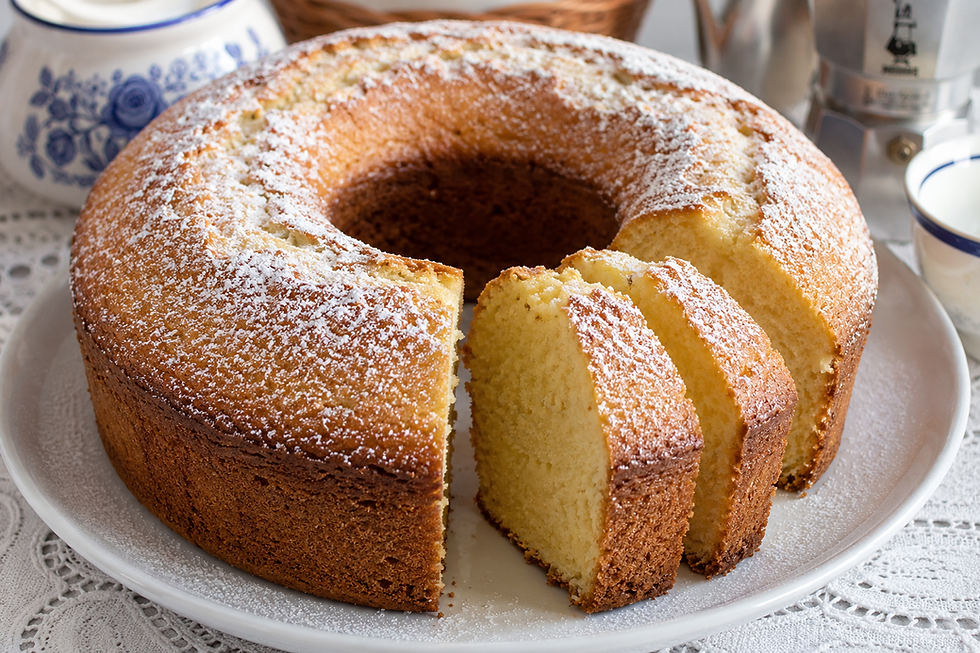
The ciambella is the ring cake of the Italian home: tall, soft, simple, baked on a Sunday morning and kept under a glass dome for breakfast and afternoon coffee all week. The classic ciambellone is made with eggs, milk and butter or seed oil; this version is a vegan reinterpretation that replaces them with plant ingredients. It is built on fresh orange juice, plenty of zest and a mild extra virgin olive oil, which together give a moist, fragrant crumb, and it is finished with the true subject of this recipe: a thin, glossy orange glaze, the glassa, that sets into a crisp, translucent shell. Every element of the classic is replaced with a plant ingredient chosen for a technical reason, so the cake keeps its height, its tenderness and its clean citrus flavor.
Yield: 10 servings. Prep: 25 minutes. Cook: 45 minutes. Rest: 2 hours cooling and setting. Course: dessert. Region: all of Italy.
The Story
Ring cakes are among the oldest sweets of Italy. The name ciambella describes the shape, a ring with a hole in the center, and the form is found in breads, biscuits and cakes from the Alps to Sicily. The hole is not decoration: it lets heat reach the middle of a tall cake, so the center bakes at the same pace as the edges. In central Italy, especially in Romagna, Marche and Lazio, the large version called ciambellone is the classic cake of family kitchens, and almost every household has its own recipe written on a card or remembered by heart.
The traditional ciambellone is made with sugar, flour, milk and either butter or seed oil, leavened with baking powder, and it is not vegan. It is a cake of the cupboard, made with what is always in the house, and its many variations follow the season: lemon in spring, cocoa swirls in winter and orange from the end of autumn, when the citrus of southern Italy reaches the markets. In Sicily, the blood oranges grown on the plain of Catania are protected as Arancia Rossa di Sicilia IGP, and Sicilian oranges in general are prized for their aromatic peel.
The glassa is the Italian name for a simple icing of powdered sugar and liquid. The plainest version, glassa all'acqua, is made with sugar and water, and replacing the water with citrus juice turns it into glassa all'arancia or al limone, used on ciambelle, biscuits and festive sweets. It is naturally plant based. The other classic white icing of Italian pastry, the ghiaccia reale, is not vegan and is not used here: the juice glaze is lighter, sharper and better suited to a citrus cake.
This recipe keeps the spirit of the home ciambella and adds precision. Orange juice and oat milk replace the milk, olive oil replaces the butter, and a small amount of vinegar with baking soda adds lift instead of the eggs, while potato starch gives the soft, fine crumb of the original. The glaze is calibrated by weight, so it flows evenly over the cake, sets in thin drips and never turns opaque or runny.
Ingredients
Use fresh, untreated oranges with a firm, glossy peel, because the zest carries most of the aroma and is used in both the cake and the glaze; Sicilian oranges in season are ideal, navel oranges work well. Choose a mild, fruity extra virgin olive oil, never a bitter, very peppery one. Some refined cane sugar is processed with bone char, so for a fully vegan cake choose beet sugar or sugar labeled as certified vegan, and do the same for the powdered sugar. Weigh the flour and the powdered sugar: in baking, cups are never precise enough.
For the cake
All-purpose flour, 2 1/2 cups (300 g)
Potato starch, 1/3 cup (50 g)
Baking powder, 1 tbsp (12 g)
Baking soda, 1/4 tsp (1.5 g)
Fine sea salt, 1/4 tsp (1.5 g)
Granulated sugar, vegan, 1 cup (200 g)
Orange zest, finely grated, from 2 oranges
Fresh orange juice, strained, 1 cup (240 ml), from about 3 oranges
Unsweetened oat milk, 1/2 cup (120 ml), at room temperature
Mild extra virgin olive oil, 1/2 cup (120 ml), plus 1 tsp for the pan
Apple cider vinegar, 1 tsp (5 ml)
Pure vanilla extract, 1 tsp (5 ml)
For the orange glaze
Powdered sugar, vegan, 1 1/2 cups (180 g), sifted
Fresh orange juice, strained, 2 to 3 tbsp (30 to 45 ml)
Orange zest, very finely grated, 1/2 tsp
Fresh lemon juice, 1/2 tsp (2.5 ml)
For the finish
Candied orange peel, thin strips, 1 oz (30 g), optional
Flour, 1 tbsp (8 g), for the pan
Preparation
Step 1

Prepare the pan and the oranges. Heat the oven to 350°F (175°C) with the rack in the lower third. Brush a 10 inch (25 cm) ring or bundt pan with olive oil, reaching every curve, then dust it with flour and tap out the excess. Wash and dry the oranges, grate the zest of two of them with a fine rasp, stopping before the white pith, and squeeze and strain the juice. The pith is bitter and the rasp should touch only the colored outer layer, where the aromatic oils are concentrated. A cake sticks to a ring pan at the slightest bare spot, so the coating must be complete.
Step 2

Rub the zest into the sugar. Put the sugar and the orange zest in a large bowl and rub them together with your fingertips for 1 to 2 minutes, until the sugar is damp, pale orange and intensely fragrant. The sharp sugar crystals break the zest's oil cells and the sugar absorbs the essential oils, which then spread through the whole batter instead of staying in small pieces of peel. This simple step doubles the orange aroma of the finished cake.
Step 3

Mix the dry ingredients. In a second bowl, whisk together the flour, potato starch, baking powder, baking soda and salt, then sift them, or whisk thoroughly for 30 seconds so the leaveners are evenly distributed. Uneven baking powder leaves bitter pockets and large holes in the crumb. Potato starch lowers the protein content of the mixture, which limits gluten and gives the light, fine, tender crumb typical of the Italian ciambellone.
Step 4

Make the batter. Add the orange juice, oat milk, olive oil, vinegar and vanilla to the orange sugar and whisk for 1 minute, until the sugar is mostly dissolved and the mixture looks slightly emulsified. Add the dry ingredients in two additions and fold them in with a spatula or whisk gently, stopping as soon as no dry flour is visible; a few small lumps are fine. The batter should be thick but pourable, like a soft pancake batter. The vinegar starts reacting with the baking soda the moment they meet, so the batter must go into the oven within 5 minutes; overmixing develops gluten and makes the cake tough and tunneled.
Step 5

Bake. Pour the batter into the pan, smooth the top and tap the pan twice on the counter to release large air bubbles. Bake for 40 to 45 minutes, without opening the oven for the first 30, until the top is golden, the cake has risen well above the rim and a skewer inserted in the thickest part comes out clean. The internal temperature should be 205 to 210°F (96 to 99°C). Opening the oven too early lets the steam escape before the structure has set, and the cake sinks in the middle.
Step 6

Cool and unmold. Let the cake rest in the pan on a rack for 15 minutes, then run a thin knife around the edges and the central tube and turn it out onto the rack. Leave it to cool completely, at least 1 1/2 hours. A plant-based cake is fragile when hot, because its structure relies on starch, which firms up only as it cools; unmolding too early can break it, and waiting too long lets steam condense in the pan and makes the crust stick and turn soggy.
Step 7

Make the glaze. Put the sifted powdered sugar in a bowl with the zest and lemon juice, add 2 tbsp (30 ml) of orange juice and stir with a small spatula until smooth. Add more juice a few drops at a time until the glaze falls from the spatula in a thick ribbon that disappears back into the surface in about 8 to 10 seconds. The right consistency is everything: too thin and the glaze slides off the cake and soaks into the crumb; too thick and it sits in heavy, opaque lumps. Cover the bowl with a damp cloth if you are not using it at once, because the surface crusts in minutes.
Step 8

Glaze and set. Place the cooled cake on the rack over a sheet of parchment. Spoon the glaze around the top of the ring in a slow, continuous circle, letting it run down the sides in natural drips, and lay the candied orange strips on the wet glaze. Leave the cake at room temperature for at least 30 minutes, until the glaze is dry to the touch. The cake must be completely cold: on a warm cake the sugar dissolves and the glaze turns transparent and sticky instead of setting into a crisp, shiny shell.
Plating
Serve the ciambella whole on a flat cake stand, so the guests see the ring and the white drips against the golden crust, then cut it at the table with a long serrated knife in slices about 1 1/4 inches (3 cm) thick at the outer edge. Use a clean, dry knife and wipe it between slices, so the glaze breaks cleanly instead of cracking into shards.
Lay each slice on its side on a small room-temperature plate, glazed edge up, with a strip of candied peel and, if you like, a spoonful of whipped coconut cream or a few segments of fresh orange. In Italy it is served with coffee in the morning or in the afternoon. The guest should taste first the sharp, sweet snap of the glaze, then the soft, moist crumb scented with orange and olive oil.
Professional Technique
The key ratio is liquid to flour. For 12 1/3 oz (350 g) of flour and starch, about 1 1/2 cups (360 ml) of liquid plus 1/2 cup (120 ml) of oil gives a moist cake that slices cleanly. Without eggs to bind and set the crumb, a wetter batter would collapse, while a drier one would bake into a dense, crumbly cake. Measuring by weight is the only way to reproduce the result.
The hidden variable is acidity. Orange juice is acidic, and together with the vinegar it reacts with the baking soda to produce carbon dioxide at once, while the baking powder works mostly in the oven. This double leavening provides the lift that a traditional ciambellone gets from whipping. The balance is precise: too much baking soda leaves a soapy taste and a dark crumb, too little gives a flat, heavy cake.
The doneness test is double: a skewer in the thickest part must come out clean and dry, and the internal temperature must reach 205°F (96°C). The top should spring back when pressed lightly, and the sides should start to pull away from the pan.
Glaze Consistency Control
The glaze is a saturated sugar solution, and its behavior depends almost entirely on the ratio of sugar to liquid. For 1 1/2 cups (180 g) of powdered sugar, between 2 and 3 tbsp (30 to 45 ml) of juice gives a glaze that flows, covers and sets. Add the liquid a few drops at a time at the end, because a single extra teaspoon can turn a perfect glaze into a runny one.
The ribbon test is the professional check. Lift the spatula and let the glaze fall back into the bowl: the ribbon should hold its shape on the surface for 8 to 10 seconds before disappearing. Faster means the glaze is too thin and will soak into the cake; slower means it is too thick and will not drip. Correct with a spoonful of sifted sugar or a few drops of juice.
Temperature controls the finish. A cold cake and a glaze at room temperature give the best result: the glaze stays on the surface, the water evaporates and the sugar recrystallizes into a thin, shiny, crisp shell. Humidity slows the setting, so in a humid kitchen allow up to an hour and avoid refrigerating the cake, which makes the glaze sweat.
Professional Mise en Place
The cake can be baked the day before and glazed on the day, so the glaze is fresh and crisp at service. Weigh every ingredient before starting, because the batter must go into the oven within minutes of mixing.
Equipment and tools
10 inch (25 cm) ring or bundt pan, pastry brush
Digital scale, fine rasp grater, citrus juicer, fine strainer
Two large bowls, balloon whisk, flexible spatula, sifter
Wire rack, long thin knife, skewer, instant-read thermometer
Prepared ahead
Pan oiled and floured
Oranges zested and juiced, juice strained
Dry ingredients weighed and sifted
Cake baked and cooled, up to 1 day ahead, wrapped at room temperature
Service setup
Glaze made just before use, covered with a damp cloth
Cake on a rack over parchment
Candied orange strips ready
Cake stand and long serrated knife
Chef Tips
Use juice from freshly squeezed oranges, never from a carton. Fresh juice has more acidity and aroma, and its acidity is part of the leavening. If your oranges are very sweet, replace 2 tbsp (30 ml) of the juice with lemon juice to keep the balance.
For a blood orange version in winter, use Sicilian blood oranges for both the cake and the glaze. The glaze turns a natural pale pink, and the cake takes on a light berry note. Strain the juice carefully, as blood orange pulp can make the glaze grainy.
Wrap the unglazed cake in plastic as soon as it is cold if you bake it a day ahead. Olive oil cakes stay moist for days, and the crumb is often more tender and fragrant the next morning, when the citrus aroma has spread through it.
For a sharper, more transparent glaze, replace one tablespoon of orange juice with lemon juice. The lemon adds acidity that balances the sweetness of the powdered sugar and makes the glaze set slightly harder and shinier.
Common Mistakes
Grating the white pith. The pith is bitter and gives the cake an unpleasant aftertaste. Grate only the colored outer zest with a fine rasp.
Overmixing the batter. Too much mixing develops gluten and gives a tough cake with tunnels. Fold until the flour just disappears.
Leaving the batter to wait. The vinegar and baking soda react at once, and the gas escapes if the batter sits. Bake within 5 minutes of mixing.
Opening the oven too early. A sudden drop in temperature before the structure sets makes the cake sink. Wait at least 30 minutes before checking.
Unmolding a hot cake. A plant-based cake is fragile when hot and breaks easily. Rest it 15 minutes in the pan, then cool it completely on a rack.
Glazing a warm cake. The heat melts the sugar and the glaze turns sticky and transparent. Wait until the cake is completely cold.
Adding all the juice to the glaze at once. A runny glaze cannot set and slides off the cake. Add the liquid gradually and use the ribbon test.
Wine Pairing
Moscato d'Asti DOCG: The gently sparkling, low-alcohol Moscato of Piedmont, with notes of orange blossom, peach and sage. Its natural sweetness matches the glaze, and its delicate bubbles lighten the olive oil crumb. Serve it at about 43°F (6°C).
Passito di Pantelleria DOC: The sweet wine of the island of Pantelleria, made from Zibibbo grapes dried in the sun, with apricot, candied orange and Mediterranean herbs. Its candied citrus aromas mirror the orange peel. Serve it at about 54°F (12°C).
Malvasia delle Lipari DOC: A sweet wine of the Aeolian Islands, with notes of dried apricot, orange zest and almond and a fresh, saline finish. It accompanies the cake with elegance and never overwhelms the citrus. Serve it at about 54°F (12°C).
Recioto di Soave DOCG: The sweet white of the Soave hills in Veneto, made from dried Garganega grapes, with notes of dried apricot, almond and citrus and a bright acidity. Its freshness balances the sugar of the glaze. Serve it at about 50°F (10°C).
Storage & Reheating
Room temperature: keep the glazed ciambella under a cake dome or loosely covered at room temperature for up to 4 days. The olive oil keeps the crumb moist, and the glaze stays crisp in a dry kitchen. Avoid the refrigerator, which dries the crumb and makes the glaze sweat and turn sticky. Freezer: the unglazed cake freezes well for up to 2 months, wrapped tightly in plastic and then in foil; thaw it wrapped at room temperature for 3 hours and glaze it on the day.
The ciambella is served at room temperature and is not reheated, since heat would melt the glaze. An unglazed slice can be warmed in a 300°F (150°C) oven for 5 minutes or toasted lightly in a dry pan, which brings back the aroma of orange and olive oil; serve it with fresh orange segments or a spoonful of orange marmalade.
Nutrition
Per serving, based on 10 servings:
Calories: 390 kcal
Total Fat: 12 g
Saturated Fat: 2 g
Trans Fat: 0 g
Unsaturated Fat: 10 g
Cholesterol: 0 mg
Sodium: 230 mg
Total Carbohydrates: 68 g
Fiber: 1 g
Total Sugars: 40 g
Added Sugars: 38 g
Protein: 4 g
Principal micronutrients: vitamin C, vitamin E, folate, iron, thiamin, calcium
These figures are estimates, calculated on the quantities listed and rounded to the nearest whole number, including the glaze and without the candied peel. They vary with the size of the slices and the amount of glaze used.


Comments