
Italian Marche Crostini | Crostini con Prosciutto di Carpegna e Casciotta di Urbino
Updated: Sep 13
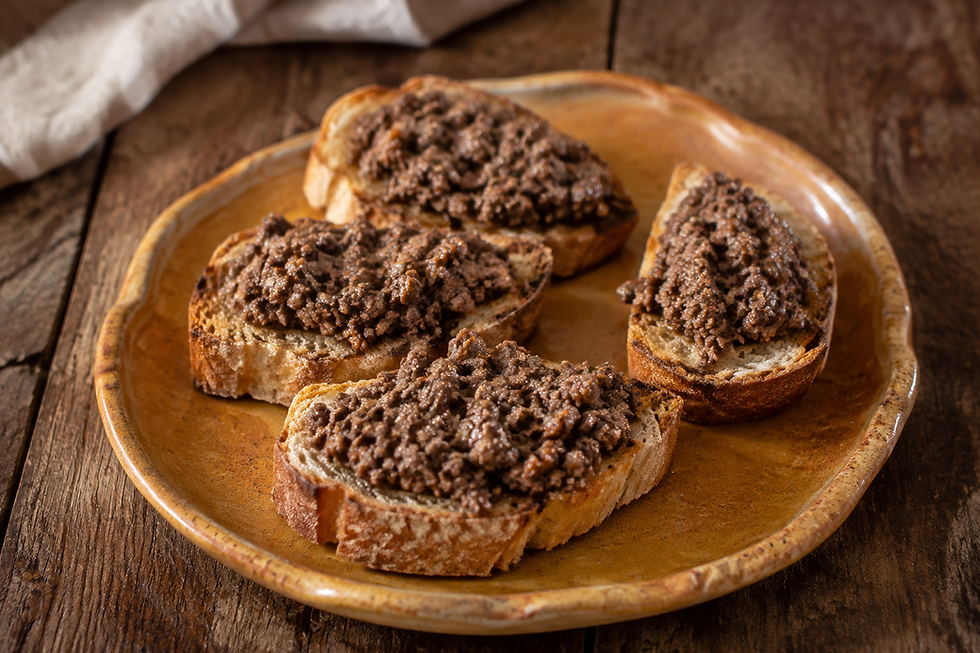
This crostino brings together two products strongly associated with the northern Marche: Prosciutto di Carpegna and Casciotta d’Urbino. The recipe is deliberately simple because both ingredients already carry their own mature flavor.
The bread is toasted first, the cheese is warmed just until soft, and the prosciutto is added after the crostino leaves the oven. Direct high heat would tighten the cured ham and flatten its aroma.
A small amount of bitter greens or fresh herbs can be used as contrast, but the core should remain bread, cheese and prosciutto in balanced proportions.
Recipe Information
Servings: 6. Prep Time: 15 minutes. Cook Time: 8 minutes. Resting Time: None. Total Time: 23 minutes. Difficulty: Easy. Course: Appetizer. Cuisine and Region: Italian, Marche. Service Temperature: Warm.
Ingredients
12 slices country bread, about 1/2 inch (1.25 cm) thick
8 oz Casciotta d’Urbino (225 g), thinly sliced
6 oz Prosciutto di Carpegna (170 g), very thinly sliced
3 tbsp extra virgin olive oil (45 ml)
1 garlic clove, halved
2 cups baby arugula (60 g), optional
1 tsp white wine vinegar (5 ml), optional
Freshly ground black pepper
Step-by-Step Preparation
1. Heat the oven to 425°F (220°C).
2. Brush the bread lightly with olive oil and toast 4 to 5 minutes until the edges begin to crisp.
3. Rub the warm bread very lightly with the cut garlic.
4. Top each slice with enough Casciotta to cover most of the surface without hanging over the edges.
5. Return to the oven 2 to 3 minutes, only until the cheese softens and begins to melt.
6. Remove from the oven and immediately drape Prosciutto di Carpegna over each crostino.
7. Add black pepper and, if desired, a few arugula leaves dressed with a drop of vinegar.
8. Serve at once while the bread is crisp and the cheese remains warm.
Professional Technique
Separate the heating stages. Bread needs dry heat for crispness; cheese needs only brief heat to soften; prosciutto needs no direct heat at all. Treating all three ingredients identically gives an inferior result.
Choose bread with enough structure to carry melted cheese without becoming floppy. A medium crumb and crisp crust are more important than using an excessively thick slice.
The professional objective is control rather than complication. With crisp bread, warm cheese and delicate cured ham, the decisive variables are surface moisture, pan temperature, seasoning timing, and reduction. Keep the cooking vessel large enough to avoid steaming, build color before adding liquid, and reduce cooking juices until they coat the ingredient rather than flooding it. This produces a cleaner flavor and a restaurant-quality finish while remaining faithful to Marche home cooking.
Use visual and tactile cues instead of relying only on the clock. The food should show crisp edges, melted but not separated cheese, and prosciutto warmed only by residual heat. If the pan is drying before the main ingredient is tender, add only a few tablespoons of hot stock or water. If the sauce is loose when the ingredient is ready, remove the ingredient temporarily and reduce the liquid separately. That separation of doneness from sauce concentration is one of the simplest professional habits to adopt at home.
Professional Kitchen Notes
Crostini con Prosciutto di Carpegna e Casciotta di Urbino becomes much more consistent when the cook separates preparation from heat application. With bread, soft cheese and cured ham, mise en place should be finished before the pan, griddle, fryer or oven reaches working temperature. Measure seasonings, prepare the cooking vessel, dry the principal ingredient when required, and have any finishing liquid ready. This prevents the common pattern of leaving food on heat while searching for the next ingredient. In professional cooking, timing begins before the first ingredient enters the pan. The objective here is clear: The bread should stay crisp, the cheese should soften without separating, and the prosciutto should never be cooked directly.
Temperature management is equally important. For Crostini con Prosciutto di Carpegna e Casciotta di Urbino, the most useful habit is to think about heat as something that can be increased, reduced or temporarily removed rather than as one fixed setting. The method depends on separate heating stages and moisture control. When browning is required, the surface of the food should be dry enough to color instead of steam. When gentle cooking is required, the heat should be low enough that moisture remains inside the ingredient. A thermometer is valuable for frying and roasting, but visual signs still matter: listen to the intensity of the sizzle, watch how quickly liquid evaporates, and observe whether the surface is coloring evenly or darkening too fast.
Seasoning should also be built in stages. Salt has a different effect before cooking, during reduction and at the finish. Ingredients such as cured pork, shellfish, aged cheese and salt cod already carry substantial salinity, so tasting before the final adjustment is essential. Acidity has a similar role: wine, vinegar or lemon should sharpen the dish, not dominate it. When wine is used, allow the raw alcoholic aroma to cook away before judging the balance. When lemon is served with fried food, keep it at the table so the crust stays crisp until the diner chooses to add it.
Resting and service are part of the recipe rather than afterthoughts. Hot fried foods need a rack so steam can escape. Roasted or griddled foods benefit from a short rest so juices and internal heat redistribute. Warm breads should not be sealed in plastic while hot because trapped steam softens the surface. The serving plate should match the intended temperature of the dish: warm for roasted meat and fried preparations, cool for marinated seafood. These small controls preserve the texture that the cooking process worked to create.
Finally, judge the finished dish by texture and concentration rather than by appearance alone. A glossy sauce should coat rather than pool excessively, fried coatings should sound crisp when touched, bread should flex without feeling raw, and seafood should remain tender. If the main ingredient reaches ideal doneness before the sauce is ready, remove it and finish the sauce separately. If the sauce is ready first, reduce the heat rather than forcing the ingredient to catch up. This independence between sauce management and doneness is a fundamental professional principle and makes the home cook far more precise.
One additional professional check before service is consistency from portion to portion. Taste and inspect a representative piece before plating the entire batch. Confirm salt, acidity, interior doneness, exterior texture and serving temperature. If several pieces are cooked together, remember that size and position in the pan can create small differences, so remove finished pieces individually rather than waiting for every piece to reach the same stage at once. Keep garnishes functional and restrained: fresh herbs should add aroma, lemon or vinegar should add brightness, and olive oil should add gloss without making the plate greasy. Wipe the rim, serve promptly, and keep the main ingredient visually dominant. This last quality-control step separates technically correct cooking from consistent professional cooking, and it is especially important in simple regional recipes where there is no heavy sauce or decoration to hide an error.
Chef Tips
• Slice cheese thinly for rapid, even melting.
• Add prosciutto after baking.
• Use garlic with restraint.
• Dress greens lightly so they do not wet the bread.
• Serve as soon as assembled.
Common Mistakes
• Baking the prosciutto makes it leathery.
• Using too much cheese overwhelms the cured ham.
• Over-oiling the bread prevents crispness.
• Assembling far ahead makes the crostini soggy.
Serving and Presentation
Arrange two crostini per person on warm plates. Keep the cured ham loosely folded rather than pressed flat so its texture and aroma remain evident.
A few bitter greens can be placed beside the crostini for freshness.
Wine Pairing
Vermentino di Gallura DOCG — saline freshness and citrus-driven acidity support seafood while keeping the palate clean.
Fiano di Avellino DOCG — structure and mineral acidity stand up to richer seafood preparations and aromatic sauces.
Etna Bianco DOC — volcanic minerality and firm acidity work especially well with briny, grilled or roasted seafood.
Storage and Reheating
Crostini should not be stored assembled. Keep bread, cheese and prosciutto separately. Toasted bread can be held airtight at room temperature for several hours; rewarm briefly before finishing.
Nutrition per Serving
Approximate per serving: 420 calories; Protein 21 g; Carbohydrates 35 g; Fat 22 g; Saturated Fat 8 g; Fiber 2 g; Sugars 2 g; Sodium 1,090 mg; Cholesterol 55 mg.
Final Note
This dish is about sequencing. Toast the bread, soften the Casciotta, then let the residual heat warm the Prosciutto di Carpegna. That preserves every ingredient at its best.




Comments