
Italian Marche Chicken Liver Crostini | Crostini con Fegatini alla Marchigiana
Updated: Sep 13

Chicken liver crostini belong to the practical inland cooking of central Italy, where bread, poultry offal, aromatic vegetables and wine were used with very little waste. In the Marche, versions vary from household to household, but the central idea is consistent: the livers are cooked gently with onion and herbs, deglazed, then worked into a spread that is savory and supple rather than dry or aggressively bitter. This recipe treats that tradition as a technique, not as a fixed legend, and keeps the flavor profile firmly in the regional pantry.
The success of the dish depends on controlling three things: the freshness and trimming of the livers, the temperature of the pan, and the final balance between richness and acidity. Overcooked liver becomes grainy and metallic; under-seasoned liver tastes flat. The bread matters equally. A sturdy country loaf, toasted until crisp at the edges but still able to absorb a little warm spread, gives the contrast that makes the crostino work as an antipasto.
Recipe Information
Servings: 6 as an antipasto, about 18 crostini. Prep time: 25 minutes. Cooking time: 25 minutes. Total time: about 50 minutes. Difficulty: Intermediate. Course: Antipasto. Cuisine: Marche, Italy. Best season: fall through spring, although the dish can be served year round. Service temperature: warm or room temperature, never refrigerator cold.
Ingredients
1 lb (454 g) fresh chicken livers, trimmed of connective tissue and any green bile-stained sections
3 tbsp extra virgin olive oil
1 medium yellow onion, finely sliced
1 small celery stalk, finely diced
1 small carrot, finely diced
2 fresh sage leaves, finely chopped
1 small rosemary sprig
1/2 cup (120 ml) dry white wine
1 tbsp capers, rinsed and finely chopped
2 anchovy fillets in oil, drained
2 tbsp unsalted butter, softened
1 tsp red wine vinegar, plus more only if needed
3/4 tsp fine sea salt, divided
1/2 tsp freshly ground black pepper
18 slices rustic country bread, about 1/2 inch thick
1 garlic clove, halved, for lightly rubbing the toast
Step-by-Step Preparation
Trim the chicken livers carefully. Separate the lobes, remove visible sinew, connective tissue and dark clots, and discard any piece touched by green bile because that bitterness cannot be corrected later. Rinse only if necessary, then dry the livers thoroughly with paper towels. Moisture left on the surface will make the pan steam and will prevent the light browning needed for depth of flavor.
Heat 2 tablespoons of olive oil in a wide skillet over medium heat. Add onion, celery, carrot, sage and the rosemary sprig with a pinch of salt. Cook slowly for 8 to 10 minutes, stirring often, until the vegetables are tender and lightly golden. Do not rush this soffritto. The natural sweetness of the vegetables is what rounds the mineral character of the liver without turning the finished spread sweet.
Increase the heat to medium high. Push the vegetables to the side and add the dried chicken livers in a single layer. Season lightly with salt and black pepper. Sear for about 90 seconds on the first side and 60 to 90 seconds on the second. The outside should color while the centers remain slightly pink. If the pan is crowded, brown the liver in two batches rather than allowing it to boil in released juices.
Remove the rosemary sprig. Add the anchovies and capers and stir for about 30 seconds, allowing the anchovies to dissolve into the hot fat. Pour in the white wine and scrape the browned deposits from the pan. Simmer for 3 to 4 minutes, just until the wine has reduced and the alcohol aroma disappears. Do not continue cooking until the pan is dry; a small amount of concentrated liquid is needed for a creamy texture.
Transfer the liver mixture to a food processor while still warm. Add the butter and 1 teaspoon of red wine vinegar. Pulse several times, then process only until the mixture is spreadable. For a more rustic Marchigiano texture, stop while a little structure remains instead of making a completely smooth mousse. Taste and correct salt, pepper or acidity in very small increments.
Heat the oven to 400°F (205°C) or prepare a grill pan. Brush the bread lightly with the remaining olive oil and toast until golden on both sides, about 6 to 8 minutes in the oven, turning once. The slices need a crisp surface but should not become hard all the way through. Rub only one side very lightly with the cut garlic clove while the bread is hot.
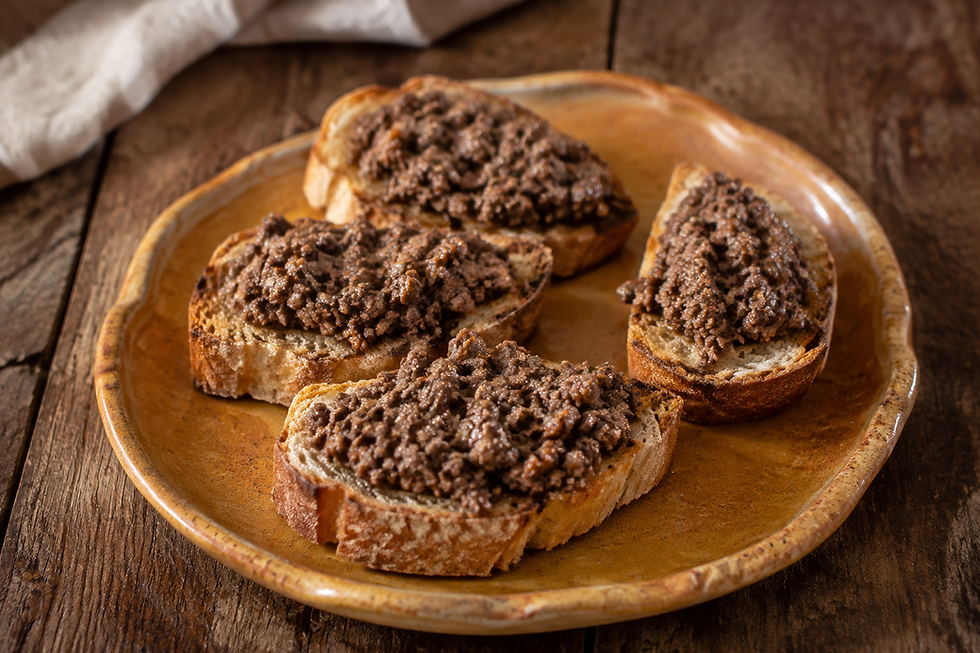
Spoon the warm liver mixture over the toasted bread just before service. Use enough to cover the surface without creating a heavy mound. If the mixture has tightened while standing, loosen it with a teaspoon of warm water or a small drizzle of olive oil rather than adding more butter. Finish with a few turns of black pepper.
Serve within 10 to 15 minutes of assembling. The ideal bite combines a crisp edge, a slightly yielding bread center and a warm, savory liver spread. If preparing for a larger service, keep the toast and liver mixture separate and assemble in small batches so the bread does not soften prematurely.
Professional Technique
The professional control point is liver doneness. Chicken liver should be cooked safely while avoiding prolonged high heat that creates a dry, sandy texture. Cutting the largest lobe after the initial sear is a practical way to judge progress. The interior can retain a faint blush before the wine reduction because it continues cooking in the hot pan and again during processing. The goal is a moist final mixture with no raw, cool center.
Acidity must be treated as seasoning. Wine gives aromatic acidity during cooking, while the small quantity of vinegar added at the end sharpens the finished flavor. Add the final vinegar only after tasting. Capers and anchovies already contribute salt and savory intensity, so the final salt adjustment should also happen after processing, not before.
Professional Kitchen Notes
For restaurant service, the liver base can be prepared several hours in advance and held refrigerated, but its texture and aroma are best when it is allowed to lose the refrigerator chill before serving. Rewarm it gently in a small pan over low heat with a teaspoon of water; direct high heat can split the butter and toughen the liver particles.
Bread thickness is not cosmetic. Very thin toast becomes brittle and very thick bread overwhelms the topping. A slice around 1/2 inch provides enough interior crumb to receive the warm mixture while maintaining a toasted shell. Day old country bread often performs better than very fresh bread because it browns evenly and absorbs less fat.
Chef Tips
Buy livers that smell clean and look glossy, never dull or sticky.
Trim every trace of bile-stained tissue; one bitter piece can affect the entire batch.
Brown in a wide pan and avoid crowding.
Add the anchovy as seasoning, not as a dominant flavor.
Keep a little pan liquid before processing so the spread stays supple.
Toast the bread close to service and assemble at the last moment.
Common Mistakes
Cooking the livers until hard before adding the wine.
Using excessive garlic, which can dominate the delicate liver flavor.
Adding salt aggressively before accounting for anchovies and capers.
Processing a completely dry pan mixture and compensating with too much butter.
Spreading the crostini too early and serving soggy bread.
Serving and Presentation
Arrange three crostini per guest on a warm plate or serve them on a shared wooden board lined with a clean napkin. Keep the presentation restrained: a few tender herb leaves or a tiny amount of chopped parsley is enough. The brown color of the liver should look natural; bright garnishes or sweet reductions are unnecessary and change the character of the dish.
These crostini work best at the beginning of a meal with other Marche antipasti such as cured meats, grilled vegetables or fried specialties. Because the topping is rich, portions should remain small and the following courses should not repeat the same heavy flavors.
Wine Pairing
Moscato d’Asti DOCG — aromatic sweetness and fresh acidity match the dessert without making the finish heavy.
Vin Santo del Chianti Classico DOC — oxidative complexity and balanced sweetness complement baked, nutty and pastry flavors.
Brachetto d’Acqui DOCG — red-fruit perfume and gentle sparkle refresh the palate between sweet bites.
Storage and Reheating
Refrigerate the liver spread in a covered container for up to 2 days. Press parchment directly onto the surface if you want to limit oxidation. Store toasted bread separately at room temperature in an airtight container for up to 1 day. Never refrigerate assembled crostini because condensation destroys the texture of the bread.
To reheat, place only the liver mixture in a small saucepan over low heat and stir gently with 1 to 2 teaspoons of water until just warm. Do not boil it. Toast can be refreshed for 2 to 3 minutes in a 350°F (175°C) oven. Assemble only after both components have reached the proper serving condition.
Nutrition per Serving
Approximate per serving, assuming 3 crostini: 355 calories; Protein 20 g; Carbohydrates 29 g; Fat 17 g; Saturated Fat 6 g; Fiber 2 g; Sugars 4 g; Sodium 690 mg; Cholesterol 330 mg. Values are estimates and vary with bread size, liver trimming and the salt content of anchovies and capers.
Final Note
This dish rewards restraint. The liver needs enough heat to develop flavor, but not enough to lose its tenderness; the wine must reduce, but not disappear; the bread must become crisp, but not dry. When those details are controlled, a humble mixture of liver, vegetables and country bread becomes a precise expression of the Marche table.
The final standard is simple: the spread should taste savory, gently herbal and balanced, with no raw alcohol, no harsh bitterness and no greasy finish. The crostino should crack lightly at the edge and then yield under the topping.


Comments