
Italian Tuscan Chicken Liver Crostini | Crostini Toscani ai Fegatini
Updated: Sep 13

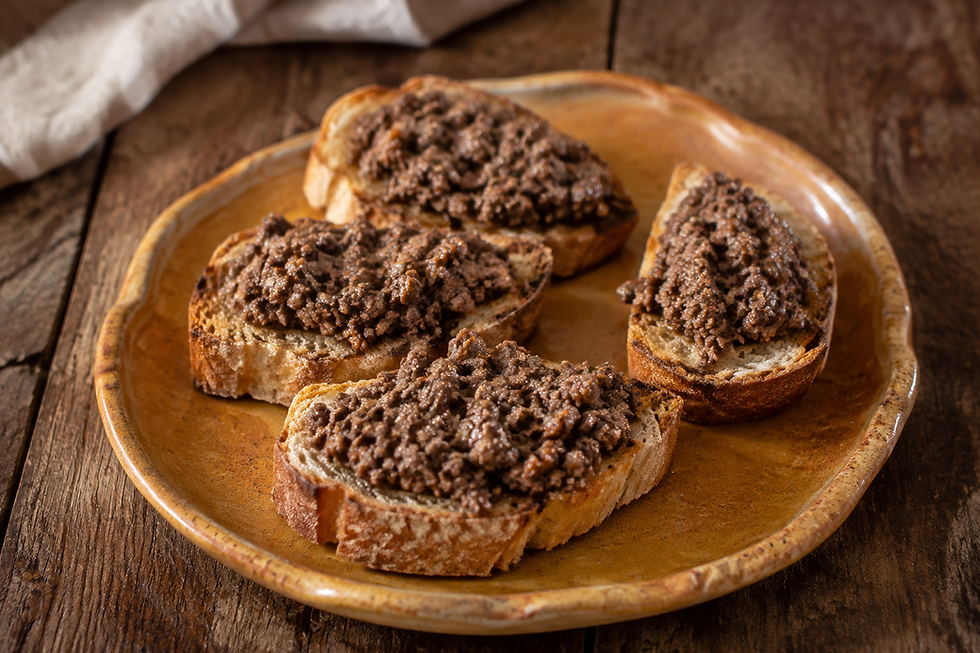
Crostini Toscani ai fegatini, often called crostini neri, are the dark, intensely savory liver crostini that open countless Tuscan meals. Chicken livers are cooked with a gentle soffritto and bay, then balanced with capers, anchovy, and butter before being chopped into a warm, rustic spread for slices of unsalted Tuscan bread.
The spread should be rich but not metallic, salty but not harsh, and fine enough to sit neatly on bread while retaining a little texture. It is not pâté de foie, it does not require cream, and it should not be pulverized into an aerated mousse. Capers and anchovy season the livers from within, so additional salt is added only after tasting.
This recipe makes about 24 small crostini, serving six to eight as an antipasto. The topping takes roughly 35 minutes and can be made a day ahead, though the bread should be toasted and topped shortly before service. Some Tuscan households lightly moisten the bread with broth; that traditional option should soften the crumb without making it soggy.
Ingredients
• 1 pound chicken livers (450 g), trimmed of connective tissue and any green bile-stained areas
• 3 tablespoons extra-virgin olive oil (45 ml)
• 1 small red onion, finely diced (about 4 ounces or 115 g)
• 1 small carrot, finely diced (about 2 ounces or 55 g)
• 1 celery stalk, finely diced (about 2 ounces or 55 g)
• 1 bay leaf
• 1/3 cup dry white wine or Vin Santo secco (80 ml)
• 2 tablespoons rinsed capers, squeezed dry (about 25 g)
• 4 anchovy fillets in oil, drained, or 1 tablespoon anchovy paste (about 20 to 30 g)
• 4 tablespoons unsalted butter (60 g), cold and cubed
• 1/4 teaspoon freshly ground black pepper
• Fine sea salt, only if needed
• 1 long loaf unsalted Tuscan-style bread or country bread, cut into 24 slices about 1/2 inch (1.25 cm) thick
• 1 cup hot unsalted chicken broth (240 ml), optional, for lightly moistening the bread
Preparation
1. Inspect the chicken livers carefully. Remove sinew, fat, and any green areas, which are bitter from bile and must be discarded. Rinse only if necessary, then dry completely with paper towels and cut large lobes into even pieces.
2. Heat the olive oil in a wide skillet over medium-low heat. Add onion, carrot, celery, and bay with a small pinch of salt. Cook for 10 to 12 minutes until very soft and sweet but not browned. A patient soffritto provides the spread’s aromatic foundation.
3. Increase the heat to medium-high and add the dry livers in one layer. Let them color before stirring, then cook for 4 to 5 minutes until browned outside but still faintly pink at the center. Crowding or constant stirring makes them release water and turn gray.
4. Add the wine and scrape the pan. Simmer until almost completely evaporated and the raw alcohol aroma is gone, about 3 minutes. Remove the bay leaf.
5. Lower the heat. Add capers and anchovies and stir until the anchovies dissolve. Cook for 1 minute, then remove the pan from the heat. The residual warmth is enough to integrate the seasonings without making the livers dry.
6. Transfer the mixture to a board and chop repeatedly with a chef’s knife until it becomes a coarse, cohesive paste. Alternatively, pulse briefly in a food processor. Stop before it is completely smooth; small pieces create the traditional texture.
7. Return the mixture to the warm pan over very low heat. Fold in the cold butter a few cubes at a time until glossy. Taste only after the butter is incorporated, then adjust with pepper and salt if genuinely necessary.
8. Toast the bread at 375°F (190°C) for 7 to 9 minutes, turning once, until crisp at the edges but still tender inside. For the broth-dipped style, touch one face of each warm slice very briefly to hot unsalted broth; do not immerse it.
9. Spread about 1 heaping tablespoon of warm liver mixture on each crostino, taking the topping to the edges. Arrange in a single layer and serve at once. If the topping has been chilled, reheat it slowly with a tablespoon of broth before adding the butter sheen.
10. For a formal platter, alternate broth-moistened and fully crisp slices so guests can experience both traditional textures. Keep portions small because the spread is concentrated.
Professional Technique
Chicken livers become grainy when overheated. Brown them decisively, deglaze, and stop while the centers retain slight blush; carryover heat and the final low-temperature finish complete cooking. If they are cooked until dry before chopping, butter cannot restore tenderness.
Hand chopping gives the most authentic texture and makes it easy to remove any missed connective tissue. A food processor is acceptable only in very short pulses. Continuous processing heats the livers, smears the fat, and creates a dense paste.
For service, prepare the spread through chopping up to one day in advance. Rewarm it gently with a small amount of broth, then emulsify in cold butter immediately before topping the bread. Never hold finished crostini under a cover, where steam destroys the toast.
Trim the chicken livers carefully, removing connective tissue and any green-stained portions, then dry them before they enter the pan. Moisture prevents proper sautéing and dilutes the aromatic base. Cook the onion slowly until translucent, raise the heat, and add the livers in a single layer. Their exterior should color while the center finishes gently in the reduced liquid.
Anchovy and capers function as seasoning rather than identifiable toppings. Rinse the capers when heavily salted and add both ingredients in measured amounts after the livers have browned. Deglaze thoroughly, reduce until the alcohol aroma disappears, and allow the mixture to remain slightly moist. Over-reduction produces a dry, crumbly spread that separates when reheated.
Process or chop the mixture while warm, stopping before it becomes completely uniform. Traditional crostini benefit from a fine but perceptible texture. Adjust consistency with a spoonful of warm stock, never excess butter or cream. Toast the bread just before service, moisten it only if the recipe specifies broth, and spread the fegatini generously while warm so the crust stays crisp beneath the savory topping.
Chef Tips
• Buy uniformly dark, glossy livers and use them promptly. Pale, dry-edged, or strongly odorous livers will not improve in the pan.
• Rinse salt-packed capers thoroughly and squeeze them dry. Residual brine can make the spread aggressively salty.
• Add anchovy before adding salt; it should disappear as a seasoning rather than remain identifiable as fish.
• Use unsalted or lightly salted bread. Traditional Tuscan bread balances the concentrated topping without adding another layer of salt.
• Serve warm, not refrigerator-cold. Butter and liver aromas open at a gentle warmth and feel cleaner on the palate.
Common Mistakes
• Leaving green bile marks on the liver: even a small contaminated piece can make an entire batch bitter.
• Boiling the livers in their own liquid: poor drying and a crowded pan prevent browning and create a muddy flavor.
• Processing until completely smooth: crostini neri should retain rustic body rather than resemble industrial pâté.
• Adding cream or excessive butter: richness must support the liver, capers, and anchovy, not erase them.
• Topping bread too early: moisture migrates into the toast and removes the essential contrast.
Wine Pairing
Chianti Classico DOCG — Bright Sangiovese acidity and savory cherry notes cut through liver and butter, while herbal complexity suits the soffritto and bay.
Vino Nobile di Montepulciano DOCG — Its rounded structure and earthy profile work with the deeper flavor of liver, particularly when the crostini begin a winter menu.
Barbera d’Asti DOCG — High acidity and modest tannin provide an agile alternative that refreshes after capers, anchovy, and butter without creating a metallic clash.
Storage & Reheating
Refrigerate the liver spread in a shallow airtight container for up to 2 days. Press parchment directly against the surface to limit oxidation. Reheat only the amount needed over very low heat with a spoonful of unsalted broth; finish with a small cube of fresh butter if the mixture appears dry.
Do not store assembled crostini. Toasted bread may be kept airtight for one day and refreshed briefly in the oven. Freezing the spread is possible for up to 1 month, but the texture becomes slightly grainier; thaw under refrigeration and re-emulsify gently, never at a boil.
Nutrition
Approximate nutrition per serving of four crostini: 420 calories, 19 g protein, 22 g fat, 35 g carbohydrate, and 720 mg sodium. Sodium depends heavily on anchovy, capers, bread, and broth, so taste-driven seasoning remains essential.


Comments