
Italian Chicken Liver Crostini | Crostini Neri Toscani
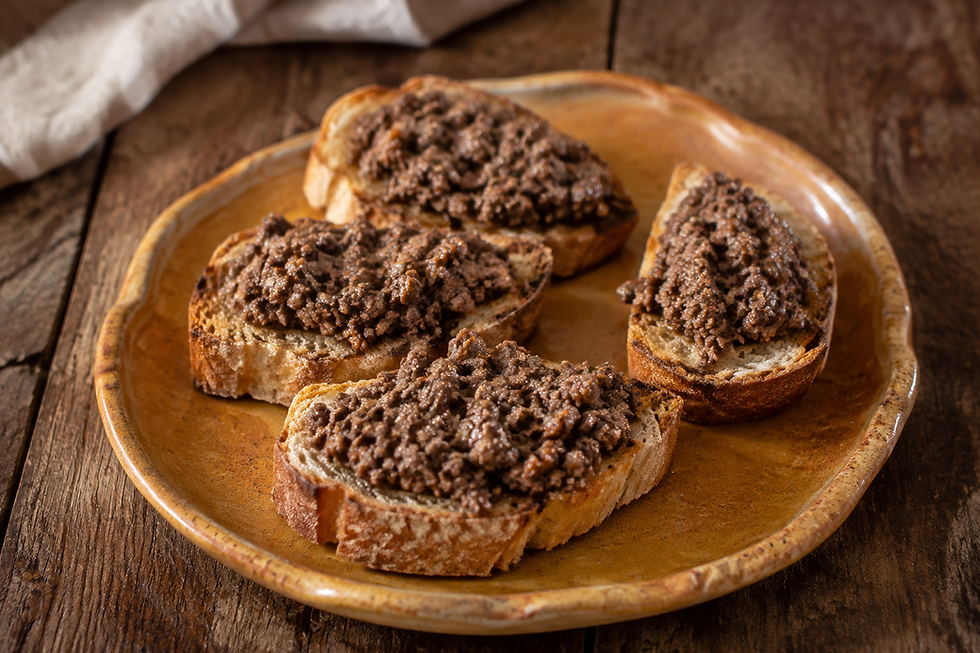
Crostini neri are the first thing set on a Tuscan table: a warm, savory, faintly sweet spread of chicken livers, capers and anchovy, piled on toasted country bread. This version keeps the rustic soul and adds the precision of a professional kitchen, so the livers stay rosy, tender and never bitter.
Yield: 16 crostini, 8 antipasto servings. Prep: 30 minutes. Cook: 25 minutes. Total: 55 minutes. Difficulty: intermediate. Region: Tuscany.
The Story
Crostini neri, the black crostini, are among the oldest antipasti of Tuscany and the one that every family cooks a little differently. The name comes from the dark color of the spread, made from chicken livers, and in some households spleen, cooked with onion, capers and anchovy and finished with a splash of wine. In Florence, Siena and Arezzo no festive lunch and no trattoria menu begins without a basket of them, still warm, set down beside a glass of Chianti. They appear at weddings, at the olive harvest and at the long Sunday tables of the Chianti hills, always on the same unsalted Tuscan loaf.
The dish belongs to the cucina povera of the farms and the mezzadria households, where nothing from the animal was wasted. A farm woman who killed a chicken or a capon for the feast set the liver aside, and a few pantry items turned it into something worth serving to guests: capers from the barrel, an anchovy from the tin, an onion from the garden, a little wine from the cellar. Tuscan bread, baked without salt because, as local tradition tells it, salt was heavily taxed in the Middle Ages, was the ideal partner. Its neutral, dry crumb soaks up an intense, salty spread without competing with it, and that pairing of a bland base and a powerful topping is the logic of the whole antipasto.
Recipes differ from valley to valley. Older versions finish with a few drops of Vin Santo or a spoonful of vinegar to cut the richness. Some cooks stir in a little tomato paste for color, others a knob of butter for gloss, and the argument over whether spleen or lemon belongs in the pan has never been settled and never will be. Some serve the bread toasted and crisp, while the old style dips the slices in warm broth so the crostino arrives soft and fragrant. What every good version shares is a coarse texture, a savory sweetness from slowly softened onion, and livers that were cooked for minutes rather than boiled into submission.
Understanding that tradition is what lets a cook change the method without losing the dish, and it is why this recipe respects the old flavors so closely. The flavors here are the ones a Tuscan grandmother would recognize. The only difference is a more exact control of heat and texture, which is where most homemade versions fall short.
Ingredients
For the livers
Fresh chicken livers, 1 lb (450 g), the pale, plump kind, not dark or dry
Dry white wine, 1/2 cup (120 ml)
Extra virgin olive oil, 3 tbsp (45 ml)
Unsalted butter, 2 tbsp (28 g)
Fine sea salt, 1/2 tsp (3 g)
Freshly ground black pepper, to taste
Ice cold water, for rinsing the livers, 4 cups (950 ml)
For the soffritto
Yellow onion, finely chopped, 1 medium (7 oz, 200 g)
Celery stalk, finely chopped, 1 small
Carrot, finely chopped, 1 small
Fresh sage leaves, 6
Garlic clove, whole, lightly crushed, 1
For the flavor
Salt packed capers, rinsed and soaked, 2 tbsp (18 g)
Anchovy fillets in olive oil, 4
Warm chicken stock, 1/2 cup (120 ml)
Red wine vinegar, 1 tsp (5 ml)
Tomato paste, 1 tsp (5 g), optional, for deeper color
Aged Vin Santo, 1 tsp (5 ml), optional, stirred in at the very end
Fresh flat leaf parsley, finely chopped, 1 tbsp
For the crostini
Unsalted Tuscan bread, sliced 1/2 inch (1.25 cm) thick, 16 slices, about 12 oz (340 g)
Extra virgin olive oil, for brushing, 2 tbsp (30 ml)
Warm chicken stock, for dipping, 1/3 cup (80 ml)
For finishing
Whole capers, 1 tbsp (9 g)
Small sage leaves, 16
Finely grated lemon zest, from 1/2 lemon
Preparation
Clean and rinse the livers
Lay the livers on a board and trim away every green or yellowish stain left by the gall, the white connective canals, and any hard fat or membrane. Halve the lobes where they join. Rinse the pieces under cold running water until the water runs clear, then dry them completely on paper towels. Wet livers steam in the pan instead of searing, so this drying matters. Season with the salt and pepper only at the last moment, because salt drawn onto wet surface pulls out more moisture. Work quickly and keep the trimmed livers cold until the pan is ready.
Soften the soffritto
Heat 2 tablespoons of the olive oil and the butter in a wide heavy skillet over medium low heat. Add the onion, celery, carrot, sage and the garlic clove. Cook for 12 to 15 minutes, stirring often, until everything is soft, sweet and golden, with no browned edges. Add the rinsed capers and the anchovies for the last 2 minutes and stir until the anchovies melt into the oil. Remove the garlic clove and slide the mixture to the side. Stir in the tomato paste now if you are using it, and cook it for 30 seconds so its raw edge disappears.
Sear the livers over high heat
Raise the heat to high and add the remaining tablespoon of oil. When the fat shimmers, add the livers in a single layer, working in two batches if the pan is crowded. Sear for 60 to 90 seconds without moving them, turn, and sear for another 60 seconds. The outside should be browned and the center still rosy. Take the pan off the heat the moment the surface turns opaque.
Deglaze and finish off the heat
Off the heat, pour in the white wine and scrape up the browned bits. Return the pan to medium heat for 1 minute so the alcohol cooks off, then add the warm stock and the vinegar. Simmer for 2 minutes only, until the liquid is glossy and reduced by half. Tip everything onto a cutting board. Do not keep the livers on the heat, since they continue cooking in the hot pan and in their own residual heat, and a minute too long is the difference between creamy and chalky.
Chop by hand and season
Let the mixture rest for 5 minutes, then chop it with a sharp knife or a mezzaluna to a coarse, spreadable texture with small visible pieces, not a purée. Return it to the warm pan with its juices, taste, and adjust with pepper and a few drops of vinegar. Salt rarely needs correcting because of the capers and anchovy. Keep the spread warm and loose over the lowest heat, adding a spoonful of warm stock if it tightens. Stir in the parsley and the optional Vin Santo now, off the heat.
Toast the bread and assemble
Heat the oven to 400°F (200°C). Brush the bread slices lightly with olive oil and toast on a tray for 6 to 8 minutes until pale gold at the edges and dry throughout. For the old style, dip the untoasted side of each slice quickly in warm stock. Spoon about 2 tablespoons of warm spread over each crostino, pressing it gently into the surface, and finish with a sage leaf, a few capers and a little lemon zest. Serve within minutes so the bread keeps its bite.
Plating
Serve the crostini warm, never hot, on a wooden board or a wide plate at room temperature. Arrange them in slightly overlapping rows so the dark spread and the golden bread edges both show. Set 2 crostini per guest as an antipasto, 3 if this is the first course of a Tuscan lunch.
Finish each piece at the last second with a sage leaf, 2 or 3 capers and a whisper of lemon zest, which brings a bright green note against the deep brown. Add a few drops of your best olive oil. Set out a small bowl of extra spread and a few radishes or pickled onions beside the board for freshness. Guests should be able to pick the crostini up with their fingers, so keep each piece no larger than two bites.
Professional Technique
The whole dish depends on one rule: the liver is cooked briefly and chopped, never blended. Above roughly 160°F (70°C) the proteins of liver tighten hard and squeeze out their moisture. The flavor turns metallic and bitter, and the paste becomes grainy and dry. That is why the livers are seared over high heat, only until the surface is browned and the center is still rosy, and then finished off the heat, where the residual warmth carries them just past pink without going gray.
Cleaning comes before all of it. Chicken livers arrive with the gall attached in places, and even a small greenish stain leaves a bitter taste that no capers can hide. Cut away every green or yellow patch completely, remove the white connective canals that run through the lobes, and trim off hard fat and membranes. Then rinse the pieces in cold water until it runs clear. The rinse removes surface blood, which would otherwise cook into gray foam in the pan and taste of iron. Do not soak in milk here, because the rinse and the trim already do the work and milk only dilutes the flavor.
The final step is cutting by hand. A knife or a mezzaluna cuts the cooked liver into small distinct pieces and keeps the color deep brown. A blender or food processor whips air into the paste, lightens the color to a pale putty and heats it by friction. The result is a rubbery, gummy cream, not the coarse, rustic spread that Tuscan cooks want to press into bread. The visible texture is not a flaw, it is the point of the dish, and it is also what makes the flavor taste layered instead of flat.
Texture and Moisture Control
The spread must be moist enough to hold together and loose enough to press into the bread, without turning to liquid. The moisture comes from three places: the soffritto, which releases sugar and water as it softens, the wine and stock, which are reduced to a glaze, and the butter, which carries flavor and adds gloss. If the mixture is dry, warm stock loosens it in small spoonfuls. If it is too wet, the bread turns soggy in minutes.
The livers themselves are a moisture risk. Wet livers steam and toughen, and overcooked livers go dry and crumbly. Drying them thoroughly before they touch the pan encourages Maillard browning, and keeping the searing time to about 2 minutes in total holds the center creamy. Cooling briefly before chopping lets the juices redistribute, so the knife cuts clean pieces instead of smearing.
The bread controls the final texture. Toast it dry and pale so it stays crisp under the warm spread for 10 to 15 minutes. Serve the spread warm, around 130°F (55°C), because cold liver spread stiffens into a paste, while a spread that is too hot sinks into the bread and softens it at once.
Professional Mise en Place
Most of this antipasto can be organized ahead of time, leaving only the searing and the assembly for the last minutes before service. The sequence below keeps the livers cold and the bread crisp until the final moment.
Equipment and tools
Wide heavy skillet, 12 inches (30 cm), for a single layer sear
Sharp chef's knife or mezzaluna and a large cutting board
Baking tray, pastry brush and a small ladle for the stock
Fine mesh sieve for rinsing the capers and paper towels for drying the livers
Prepared ahead
Livers cleaned, rinsed and dried, refrigerated uncovered on paper towels up to 4 hours
Soffritto cooked and held, up to 1 day ahead
Bread sliced, ready for toasting, capers rinsed, sage leaves picked
Garnish of whole capers, sage and lemon zest prepared and covered with a damp cloth
Service setup
Stock kept warm in a small pot beside the stove
Sear and deglaze last, then chop and assemble within 10 minutes
Bread toasted just before plating, garnishes set in small bowls
Chef Tips
Buy livers that are pale brown, plump and glossy, with no green tinge and no sour smell, and cook them within a day of purchase. Frozen livers release far more liquid, so thaw them in the refrigerator and dry them twice.
Soak the capers in cold water for 10 minutes if they are salt packed, and taste one before adding, since the amount of salt in a batch varies widely. Anchovies should melt into the oil, not sit in pieces.
Cook the soffritto slowly for a full 12 minutes. Its natural sweetness is what balances the mineral edge of the liver, and rushing it leaves the spread sharp and thin.
Taste the spread only after it has rested for 5 minutes, when the flavors have merged, and adjust with vinegar drop by drop. A little acidity at the end is what makes the spread taste bright, and the difference is easy to notice with a spoonful before and after.
Common Mistakes
Cooking the livers until gray. Overcooked liver turns dry, grainy and metallic. Sear for no more than 2 minutes in total and finish off the heat.
Blending the spread. A processor whips in air, lightens the color and makes the paste gummy. Chop by hand for a coarse, savory texture.
Skipping the trim and rinse. Left on the liver, gall stains and canals turn the whole batch bitter. Trim every green patch and rinse away the blood.
Crowding the pan. Too many livers cool the pan and release steam, so they boil instead of browning. Work in two batches over high heat.
Using salted bread or heavy toast. Salty bread doubles the salt of the capers, and hard, dark toast fights the soft spread. Use unsalted country bread toasted pale.
Letting the spread go cold before serving. A cold spread stiffens and tears the bread, and the flavor goes flat. Keep it warm, about 130°F (55°C), and loosen it with a spoonful of warm stock.
Wine Pairing
Chianti Classico DOCG: The natural Tuscan companion. Its bright cherry fruit and lively acidity cut through the richness of the liver, while firm but polished tannins refresh the palate between bites. Sangiovese's savory, earthy notes echo the sage and the capers on the crostino, and the wine finishes dry enough to leave the palate clean for the next piece.
Vernaccia di San Gimignano DOCG: A dry Tuscan white with crisp acidity and a slightly bitter almond finish. That freshness lifts the fat of the butter and the sweetness of the onion, while its mineral, saline edge meets the anchovy and the capers without adding weight. It is also the best choice for guests who prefer white wine with a rich antipasto.
Carmignano DOCG: A Sangiovese blend with a little Cabernet, medium bodied and fragrant with dark cherry and spice. Its supple tannins match the density of the liver, and a touch of savory herbs mirrors the sage in the soffritto.
Rosso di Montalcino DOC: A younger, more approachable Sangiovese with vivid red fruit, firm acidity and gentle tannin. It carries enough structure for the mineral depth of the liver but stays light enough for an antipasto.
Trento DOC: A dry metodo classico sparkling wine from the Alps. The fine bubbles and the high, clean acidity scrub the buttery richness of the liver and the oil from the palate, while the toasty, yeasty notes of long lees aging suit the browned edges of the bread. It is a refreshing opening bottle for a whole antipasto table.
Storage & Reheating
Keep the spread in an airtight container in the refrigerator for up to 3 days. Press a piece of parchment against the surface to prevent a dark crust. Store the bread separately in a dry tin, toasted only on the day, since it turns soft within hours under the spread.
The spread freezes well for up to 2 months in a sealed container. Thaw overnight in the refrigerator, then warm it gently in a small pan over low heat with a spoonful of stock, stirring until just warm, about 130°F (55°C). Never boil it, which toughens the liver again and turns the paste grainy. Assemble on freshly toasted bread. If the spread has separated, a small spoonful of warm stock whisked in briefly brings the fat and juices back together.
Nutrition
Per serving, based on 8 antipasto portions of 2 crostini:
Calories: 290 kcal
Total Fat: 14 g
Saturated Fat: 4 g
Trans Fat: 0 g
Unsaturated Fat: 10 g
Cholesterol: 210 mg
Sodium: 480 mg
Total Carbohydrates: 26 g
Fiber: 2 g
Total Sugars: 3 g
Added Sugars: 0 g
Protein: 15 g
Lactose: 0.2 g
Principal micronutrients: vitamin A, vitamin B12, folate, iron, selenium
These figures are estimates and vary with the bread and the exact amount of oil.


Comments