
Italian Ascoli Mixed Fry | Fritto Misto all’Ascolana
Updated: Sep 1
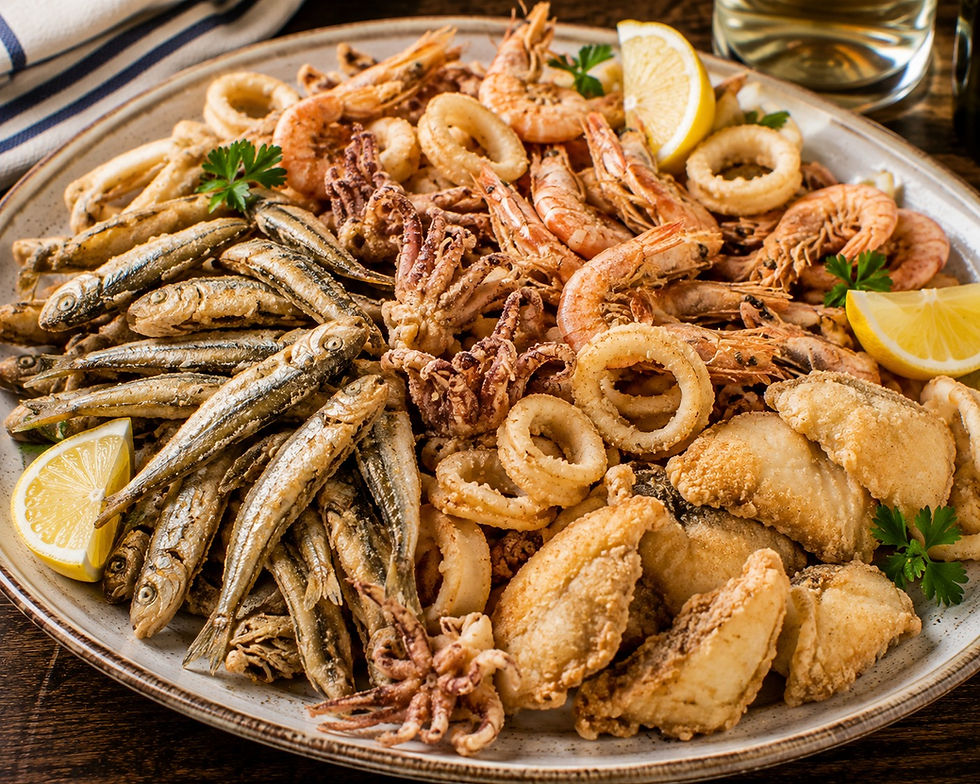
The mixed fry associated with Ascoli Piceno is a celebratory expression of the local frying tradition. Rather than one ingredient, the platter can combine savory stuffed olives, sweet cremini, small meat pieces and seasonal vegetables. The pleasure is in contrast: salty and sweet, tender and crisp, meat and vegetable. A professional version depends on organization because each component has a different cooking time and releases a different amount of moisture into the oil. This recipe treats fritto misto as a service method. The olives and cremini should be assembled and chilled before the fryer is heated; vegetables are blanched or dried as needed; lamb is breaded last. Fry the mildest vegetable components first, then olives and cremini, and meat last. That order keeps the oil clean and prevents lamb fat or dark crumbs from flavoring delicate pieces.
The Story
Ingredients
For the recipe
12 large green olives, pitted carefully in a spiral if possible4 oz (115 g) mixed ground beef and pork for olive filling1 tbsp finely minced onion2 tbsp dry white wine2 tbsp grated Parmigiano Reggiano1 egg, divided between filling and breading as needed1/8 tsp nutmeg1 cup (240 ml) whole milk for cremini3 tbsp all purpose flour for cremini custard2 tbsp granulated sugar1 egg yolk for cremini1 strip lemon zest8 small lamb rib chops or boneless lamb pieces, about 2 oz each1 small cauliflower, cut into florets and blanched 3 minutes2 artichokes, cleaned and cut into wedges1 small zucchini, cut into thick batons and patted dry12 sage leaves1 cup (125 g) all purpose flour for dredging4 large eggs, beaten for breading2 cups (160 g) fine dry breadcrumbs1/2 cup (45 g) grated Parmigiano Reggiano for breadcrumbsFine sea salt and black pepper8 cups (1.9 L) refined peanut or sunflower oil for frying2 lemons, cut into wedges
Preparing the Base
Preparing the Main Mixture
Combining the Components
Cooking or Baking
Cooling and Setting
Final Assembly
Plating
Professional Technique
For consistent professional results, work in measured stages and keep the principal ingredient at the center of the preparation. Temperature changes affect seasoning, fat perception, starch behavior, protein texture, and aroma, so the final adjustment should be made only after the dish reaches its service consistency. Use visual and tactile cues throughout the process: observe how moisture evaporates, how sauces coat the spoon, how proteins resist gentle pressure, and how doughs or grains respond as they cook. Keep the cooking vessel appropriately sized so ingredients are not crowded, and allow each component enough contact with heat to develop flavor without drying. If the recipe contains a sauce, reserve a small amount of its cooking liquid or another compatible liquid so texture can be corrected at the end rather than by adding excess fat. Rest components only when the recipe benefits from resting; otherwise move directly to plating so crisp, delicate, or creamy textures remain intact. Before service, taste one complete bite containing the same proportions the guest will receive. Correct salt first, then acidity, then richness, and only then consider aromatic finishing elements. This sequence produces a cleaner and more repeatable result than adjusting several variables at once.
For consistent professional results, work in measured stages and keep the principal ingredient at the center of the preparation. Temperature changes affect seasoning, fat perception, starch behavior, protein texture, and aroma, so the final adjustment should be made only after the dish reaches its service consistency. Use visual and tactile cues throughout the process: observe how moisture evaporates, how sauces coat the spoon, how proteins resist gentle pressure, and how doughs or grains respond as they cook. Keep the cooking vessel appropriately sized so ingredients are not crowded, and allow each component enough contact with heat to develop flavor without drying. If the recipe contains a sauce, reserve a small amount of its cooking liquid or another compatible liquid so texture can be corrected at the end rather than by adding excess fat. Rest components only when the recipe benefits from resting; otherwise move directly to plating so crisp, delicate, or creamy textures remain intact. Before service, taste one complete bite containing the same proportions the guest will receive. Correct salt first, then acidity, then richness, and only then consider aromatic finishing elements. This sequence produces a cleaner and more repeatable result than adjusting several variables at once.
For consistent professional results, work in measured stages and keep the principal ingredient at the center of the preparation. Temperature changes affect seasoning, fat perception, starch behavior, protein texture, and aroma, so the final adjustment should be made only after the dish reaches its service consistency. Use visual and tactile cues throughout the process: observe how moisture evaporates, how sauces coat the spoon, how proteins resist gentle pressure, and how doughs or grains respond as they cook. Keep the cooking vessel appropriately sized so ingredients are not crowded, and allow each component enough contact with heat to develop flavor without drying. If the recipe contains a sauce, reserve a small amount of its cooking liquid or another compatible liquid so texture can be corrected at the end rather than by adding excess fat. Rest components only when the recipe benefits from resting; otherwise move directly to plating so crisp, delicate, or creamy textures remain intact. Before service, taste one complete bite containing the same proportions the guest will receive. Correct salt first, then acidity, then richness, and only then consider aromatic finishing elements. This sequence produces a cleaner and more repeatable result than adjusting several variables at once.
For consistent professional results, work in measured stages and keep the principal ingredient at the center of the preparation. Temperature changes affect seasoning, fat perception, starch behavior, protein texture, and aroma, so the final adjustment should be made only after the dish reaches its service consistency. Use visual and tactile cues throughout the process: observe how moisture evaporates, how sauces coat the spoon, how proteins resist gentle pressure, and how doughs or grains respond as they cook. Keep the cooking vessel appropriately sized so ingredients are not crowded, and allow each component enough contact with heat to develop flavor without drying. If the recipe contains a sauce, reserve a small amount of its cooking liquid or another compatible liquid so texture can be corrected at the end rather than by adding excess fat. Rest components only when the recipe benefits from resting; otherwise move directly to plating so crisp, delicate, or creamy textures remain intact. Before service, taste one complete bite containing the same proportions the guest will receive. Correct salt first, then acidity, then richness, and only then consider aromatic finishing elements. This sequence produces a cleaner and more repeatable result than adjusting several variables at once.
For consistent professional results, work in measured stages and keep the principal ingredient at the center of the preparation. Temperature changes affect seasoning, fat perception, starch behavior, protein texture, and aroma, so the final adjustment should be made only after the dish reaches its service consistency. Use visual and tactile cues throughout the process: observe how moisture evaporates, how sauces coat the spoon, how proteins resist gentle pressure, and how doughs or grains respond as they cook. Keep the cooking vessel appropriately sized so ingredients are not crowded, and allow each component enough contact with heat to develop flavor without drying. If the recipe contains a sauce, reserve a small amount of its cooking liquid or another compatible liquid so texture can be corrected at the end rather than by adding excess fat. Rest components only when the recipe benefits from resting; otherwise move directly to plating so crisp, delicate, or creamy textures remain intact. Before service, taste one complete bite containing the same proportions the guest will receive. Correct salt first, then acidity, then richness, and only then consider aromatic finishing elements. This sequence produces a cleaner and more repeatable result than adjusting several variables at once.
For consistent professional results, work in measured stages and keep the principal ingredient at the center of the preparation. Temperature changes affect seasoning, fat perception, starch behavior, protein texture, and aroma, so the final adjustment should be made only after the dish reaches its service consistency. Use visual and tactile cues throughout the process: observe how moisture evaporates, how sauces coat the spoon, how proteins resist gentle pressure, and how doughs or grains respond as they cook. Keep the cooking vessel appropriately sized so ingredients are not crowded, and allow each component enough contact with heat to develop flavor without drying. If the recipe contains a sauce, reserve a small amount of its cooking liquid or another compatible liquid so texture can be corrected at the end rather than by adding excess fat. Rest components only when the recipe benefits from resting; otherwise move directly to plating so crisp, delicate, or creamy textures remain intact. Before service, taste one complete bite containing the same proportions the guest will receive. Correct salt first, then acidity, then richness, and only then consider aromatic finishing elements. This sequence produces a cleaner and more repeatable result than adjusting several variables at once.




Comments