
Italian Mixology: Gin Sour al Limoncello
Updated: Sep 9

Gin Sour al Limoncello is a sour built on two lemons that behave in completely opposite ways. One is fresh lemon juice, which brings sharp acidity, a little pulp and the bite that defines the whole sour family. The other is limoncello, which brings almost no acidity at all: it carries sugar, alcohol and the perfumed oil pressed out of the yellow skin of the fruit during maceration. Understanding that the two are not interchangeable is the entire lesson of this drink. Limoncello is not lemon juice with sugar already added. It is a sweetener that happens to smell like lemon.
Once you accept that, the recipe organises itself. Gin supplies the spine, the juniper and the botanical lift. Limoncello takes over the job normally done by simple syrup, contributing sweetness plus an aromatic layer no syrup can produce. Fresh lemon juice stays exactly where it always was, supplying the acid that keeps the glass from turning into liqueur. Egg white or aquafaba binds all of it into a fine, silky foam that carries the citrus oil straight to the nose.
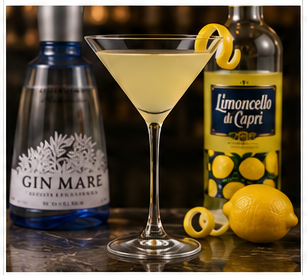
The result is a cocktail that reads as bright and slightly creamy rather than sweet. It is pale yellow, capped with a dense white foam, and it drinks best cold, in the late afternoon or as the opening of an evening. It is easier to make than a classic Gin Sour because part of the sugar arrives already dissolved, and harder to make well, because that same sugar hides inside a bottle whose sweetness changes from producer to producer.
Makes 1 cocktail. Prep: 3 minutes. Glass: chilled coupe or Nick & Nora. Ice: hard cubes for shaking, no ice in the glass. ABV: about 18 percent.
The Story
The sour is one of the oldest documented families in mixed drinks. Jerry Thomas printed gin sour and brandy sour formulas in his 1862 Bar Tender's Guide, and the shape he described, spirit plus citrus plus sugar, was already the standard way sailors, doctors and innkeepers had been softening raw spirit for well over a century. The addition of egg white came later and spread through the late nineteenth and early twentieth century bar, giving the drink the foam collar we now expect on a Whiskey Sour or a Pisco Sour. None of that is Italian.
Limoncello arrives from a completely separate tradition. It belongs to the Gulf of Naples, to Sorrento, to the Amalfi coast and to Capri, where large thick skinned lemons such as the Sfusato Amalfitano and the Ovale di Sorrento have been grown on terraced slopes for centuries. The liqueur itself is made by steeping only the yellow zest, never the white pith, in neutral alcohol, then blending that infusion with sugar syrup. Families along that coast made it at home long before anyone bottled it commercially, and several producers around Sorrento and Capri claim the first commercial version in the early twentieth century. The honest answer is that the origin is contested and no single inventor can be proven.
What is certain is that limoncello was designed to be drunk ice cold at the end of a meal, as a digestivo, in a small glass straight from the freezer. Its move into the shaker is recent. Italian bartenders started treating it as a working ingredient rather than a souvenir bottle during the same period that saw Italy reclaim its own aperitivo culture, roughly from the late nineteen nineties onward, when bar teams in Milan, Naples and Rome began rebuilding classic templates with domestic products: mirto instead of imported herbal liqueurs, Italian vermouth given proper respect, amari used as modifiers rather than after dinner curiosities.
Gin Sour al Limoncello sits exactly in that movement. It is not a historic drink with a named creator and a dated first appearance, and it would be dishonest to invent one. It is a contemporary Italian reading of a very old formula, in which a regional product replaces a neutral industrial one and, in doing so, brings the smell of a Sorrento lemon grove into a template that was originally built around nothing more aromatic than dissolved sugar.
Ingredients
Main Components
Italian gin, 1 1/2 oz (45 ml)
Limoncello, 3/4 oz (22 ml)
Fresh lemon juice, 3/4 oz (22 ml)
Pasteurized egg white, 1/2 oz (15 ml)
Additional Ingredients
Hard ice cubes for shaking, about 5 cubes
Chilled coupe or Nick & Nora glass, 5 to 6 oz (150 to 180 ml) capacity
Fresh lemon peel for expressing, 1 strip about 2 inches (5 cm)
Optional Components
Simple syrup 1:1, up to 1/4 oz (7 ml), only if the limoncello is on the dry side
Aquafaba, 3/4 oz (22 ml), as a plant based replacement for egg white
Angostura bitters, 2 drops on the foam for aroma and contrast
Thin dried lemon slice, 1 piece, laid at the edge of the glass instead of a peel
Preparation: Building the Drink
Start with the glass, not the shaker. Put the coupe in the freezer, or fill it with ice and cold water and leave it standing while you work. A sour poured into a room temperature glass loses its edge within a minute and the foam begins to break at the rim.
Cut and squeeze the lemons to order. Juice that has been sitting for a few hours turns flat and slightly bitter, and in a drink where acidity is doing structural work you will taste that immediately. Strain the juice through a small sieve to catch seeds and heavy pulp, then measure it into the shaker rather than pouring by eye. Three quarters of an ounce is the target and a quarter ounce either way changes the whole balance.
Before you commit, taste the limoncello on its own. Commercial bottles run anywhere from roughly 20 to 32 percent alcohol and their sugar load varies just as widely. A rich, syrupy bottle carries the entire sweet side of the drink by itself. A leaner, more alcoholic bottle leaves a gap that the optional simple syrup is there to fill. This single taste decides whether you use the syrup at all.
Now build. Add gin, limoncello, lemon juice, the syrup if you decided you need it, and the egg white to the shaker tin with no ice in it. Adding the ice at this stage is the classic error: cold water thins the protein film before it has had a chance to form, and the foam that follows is coarse and short lived.
Preparation: Mixing and Dilution
Seal the tin and shake it dry, without ice, for about 15 seconds. You are not chilling anything yet. You are whipping the egg white proteins so they unfold and trap air, and dispersing the limoncello sugar evenly through the mixture. The sound is soft and sloshing rather than sharp. If you are using aquafaba, extend this stage to about 20 seconds, because the chickpea proteins need more work to reach the same density.
Open the tin, add four or five hard cubes, close it again and shake hard for 12 to 15 seconds. This second shake is where the drink actually happens. The mixture drops from room temperature to roughly 20 to 22 degrees Fahrenheit below where it started, and the ice gives up water as it goes, delivering somewhere near 22 to 27 percent dilution by volume. The tin should frost over completely and feel painful to hold by the end.
Do not be tempted to fill the tin with ice. A shaker packed solid cannot move, and a liquid that cannot move cannot aerate. Fewer, larger, colder cubes travel further inside the tin and hit harder, which is what builds a fine bubble structure. Cubes straight from a warm freezer drawer, wet and rounded at the edges, melt too quickly and give you a watery drink long before it is properly cold.
Preparation: Finishing and Garnish
Strain through the shaker strainer and again through a fine mesh sieve held over the glass. This double straining step is not cosmetic. Small ice shards left in a foamed sour keep melting in the glass, thinning the drink from underneath and puncturing the surface as they go. Pour steadily from a low height, close to the glass, so the foam settles into an even layer instead of piling up in peaks.
Let the glass rest for about 20 seconds. The foam separates naturally into a dense white cap sitting on pale yellow liquid, and this short pause is what gives a sour its finished look. Rushing the garnish onto a moving surface breaks the cap.
Take the strip of lemon peel, hold it skin side down about two inches above the glass and squeeze it once. A fine mist of oil lands on the foam and doubles the citrus aroma without adding a drop of juice or sugar. Then either discard the peel or lay it against the inside rim. If you want a contrast marker, drop two drops of Angostura on the surface. Do not hang a thick lemon wheel on the rim: its weight collapses the foam where it touches and its juice runs into the drink unmeasured.
Final Presentation and Glassware
A coupe is the right glass. Its wide, shallow bowl gives the foam the largest possible surface, which is where the whole aromatic effect of this drink lives: you smell the expressed lemon oil and the limoncello perfume before the liquid ever reaches your lips. A Nick & Nora works almost as well and holds the temperature slightly longer because the bowl is narrower and less exposed. A rocks glass is wrong here, since the foam layer becomes thick and small and the drink loses its aroma.
Serve the cocktail up, with no ice in the glass. The dilution has already been done in the tin, and a cube floating in a finished sour keeps working, flattening the acidity within a few minutes and pushing the foam sideways. Size matters too. A glass of 5 to 6 oz (150 to 180 ml) leaves the finished drink sitting comfortably below the rim with a clean band of foam on top. In an oversized bowl the same volume looks lost and the foam spreads too thin to hold together.
Wipe the outside of the glass before it leaves the bar. Condensation and stray drips read as carelessness on a drink whose whole appeal is precision. Serve immediately: a sour is at its best in the first three or four minutes, and no amount of technique rescues one that has been standing.
Professional Technique
This drink is shaken, never stirred, and the reason is not tradition. Shaking does three jobs at once here, and only one of them is chilling. It aerates the egg white into a stable foam, it emulsifies that foam evenly through a liquid that contains both a viscous liqueur and a thin juice, and it delivers dilution fast enough that the acidity never has time to sit exposed on the palate. A stirred version of this recipe is technically possible and tastes broken: flat, syrupy and sharply sour at the same time.
The two stage shake is the core skill. Stage one, dry and without ice, is where the protein network is built. Stage two, with ice, is where temperature and water arrive. Reversing the order gives you a cold drink with a thin, bubbly, disappointing head. Some bartenders use a reverse dry shake instead, shaking with ice first, straining out the ice, then shaking the strained liquid again. It produces a slightly denser foam and it costs an extra step; both methods are legitimate and the standard order is more forgiving during service.
Pour order inside the tin matters more than people expect. Put the egg white in last, on top of the acid and the sugar, so it is not sitting alone against raw spirit while you measure the rest. High proof alcohol in direct contact with egg protein for a long time starts to set it, and you get small firm specks that survive the shake and appear on the surface of the finished drink. Target temperature at the moment of straining is around 21 to 23 degrees Fahrenheit (minus 6 to minus 5 degrees Celsius) in the liquid, with total dilution near 25 percent.
Balance and Dilution Control
A sour is a three way argument between sugar, acid and alcohol. In the classic gin version the sugar side is a known quantity, because simple syrup is simply sugar and water. Here the sugar arrives inside limoncello, which brings its own alcohol and its own aroma along with it, so changing the sweetness also changes the strength and the smell. That is why the limoncello measure is fixed at 3/4 oz (22 ml) and the syrup is treated as an adjustment rather than a fixed ingredient.
If the finished drink tastes cloying, the usual culprit is a rich bottle of limoncello plus a full measure of syrup on top of it. Remove the syrup entirely and, if it is still heavy, push the lemon juice up to a scant 7/8 oz (26 ml). If instead the drink is aggressive and thin, the limoncello is probably a dry, high proof style: add the syrup in quarter ounce steps, tasting each time. A useful reference is total sweetness roughly equal to total acidity, with the gin still clearly readable as juniper underneath both.
Dilution behaves differently in a sour than in a stirred drink because the foam insulates the surface. The cocktail holds its temperature reasonably well for a few minutes, but the liquid underneath keeps releasing water from any ice fragments that got through the strainer, which is the real argument for straining twice. As the drink warms, perceived sweetness rises and perceived acidity falls, so a sour that tasted balanced at the moment of pouring will read sweeter at minute six. Build it very slightly on the tart side of perfect and it will land correctly by the time it is halfway drunk.
Professional Mise en Place
A sour is a fast drink to serve and a slow drink to set up. Everything that can be measured, chilled or squeezed in advance should be, because the only steps that genuinely belong to the moment of service are the shake and the pour. Organise the station so that a single order takes three movements and no searching.
Bar Equipment and Tools
Boston shaker, two piece, tin on tin for a tight seal and fast chilling
Japanese jigger marked in both ounces and millilitres
Hawthorne strainer with a tight spring
Fine mesh conical sieve for the second strain
Hand press or lever citrus juicer for the lemons
Small sieve and a lidded bottle for the strained juice
Bar spoon for the optional syrup and for skimming stray bubbles
Peeler or sharp paring knife for clean strips of zest
Advance Preparation Steps
Squeeze the lemons at the start of service and keep the juice covered and refrigerated, never longer than one shift
Taste the limoncello and decide whether syrup is needed, then note the decision for the whole night
Make simple syrup 1:1 by dissolving sugar in warm water, cool it fully and refrigerate
Separate and strain the pasteurized egg white into a small pouring bottle, or open the aquafaba and keep it chilled
Cut the lemon peel strips ahead, lay them on a damp cloth and cover so the oil stays in the skin
Move a batch of coupes into the freezer at least 30 minutes before opening
Service Setup
Gin and limoncello standing together on the speed rail, not on the back shelf
Chilled glasses within arm's reach of the shaking position
Fresh hard ice in a dedicated well, kept for shaking only
Juice bottle, egg white bottle and syrup bottle lined up in build order
Clean cloth for the outside of the glass and a second one for the tins
Sieve rinsed between drinks so no dried foam contaminates the next round
Bartender Tips
Taste every new bottle of limoncello before you serve from it. Sugar and alcohol vary enormously between producers and that single taste tells you whether the syrup goes in tonight.
Add the egg white last, on top of the juice, so it never sits against neat gin while you measure. This is the simplest way to avoid firm white specks in the finished foam.
Use fewer, larger and drier ice cubes than instinct suggests. A tin packed full cannot move, and movement is what builds a fine foam.
Pour from low and close to the glass, then wait 20 seconds before garnishing. Foam poured from height piles into peaks and collapses unevenly.
Common Mistakes
Replacing fresh lemon juice with limoncello: this is the mistake the drink is named around. Limoncello smells intensely of lemon but contains almost no citric acid, so a version built on liqueur alone comes out sweet, perfumed and structureless, with nothing to cut the sugar. Keep both. The limoncello is the sweetener, the juice is the acid, and neither can do the other's job.
Adding a full measure of syrup on top of a full measure of limoncello: the classic sour ratio assumes the sugar comes from syrup only. Stack both at full strength and the glass turns cloying and heavy. Treat the syrup as a correction, add it only after tasting the liqueur, and add it in quarter ounce steps.
Shaking with ice from the start: the cold water thins the egg white before the proteins have unfolded, and the foam that results is coarse, bubbly and gone within a minute. Shake dry first for about 15 seconds, then add ice and shake again. The order is what makes the texture.
Skipping the second strain and garnishing too heavily: ice chips that slip past the Hawthorne keep melting in the glass, watering the drink and breaking the surface from below, while a thick lemon wheel on the rim crushes the foam where it rests and drips unmeasured juice into a balance you spent three minutes setting. Strain through a fine sieve and garnish with expressed oil instead.
Food Pairing and Aperitivo
The natural place for this drink is the aperitivo hour, and the food that suits it is everything fried and everything salty. Its acidity and its foam do the job carbonation does elsewhere: they scrub fat off the palate between bites. Serve it with fritto misto, calamari, small anchovies fried in a light flour coating, zucchini blossoms, arancini or potato croquettes. The lemon oil sitting on top of the glass echoes the wedge of lemon that arrives beside every plate of fried seafood in Italy, which is why the match feels obvious the moment you try it.
Salt is the second ally. Taralli, salted almonds, Nocellara olives and good potato chips all sharpen the drink by contrast, pushing the perception of sugar down and letting the juniper come forward. Cured meats work if they are on the delicate side: prosciutto crudo, mortadella, bresaola. Heavily spiced salami such as nduja fights the citrus rather than complementing it.
Among cheeses, stay fresh and lactic. Burrata, buffalo mozzarella, young ricotta and a soft goat cheese all sit beautifully against lemon acidity, and a drizzle of olive oil on the cheese bridges the two. Aged, salty, crystalline cheeses are less successful because their intensity swamps a drink whose alcohol is moderate.
Avoid dessert. It is tempting, since limoncello belongs to the end of the meal in its home region, but the drink already carries its own sugar and a sweet plate beside it flattens everything. If you must finish with it, choose something almost unsweetened: plain biscotti, a slice of taralli dolci, or nothing at all.
Storage and Batch Preparation
You can prepare part of this drink in advance and you must not prepare all of it. Gin and limoncello batch perfectly together: mix them at two parts gin to one part limoncello, bottle the blend and keep it in the freezer, where the alcohol keeps it liquid and it holds its character for several weeks. That single bottle removes two measuring steps from every order.
Fresh lemon juice does not batch beyond a shift. Squeezed juice keeps its bright character for roughly 4 to 6 hours refrigerated in a sealed bottle, after which it turns flat and faintly bitter. Simple syrup at 1:1 keeps about one month in the refrigerator in a clean sealed bottle, and adding a small splash of neutral spirit extends that further. Egg white and aquafaba are the strict cases: keep them cold, use pasteurized egg white for guests, discard any that has been out of refrigeration during a long service, and never hold them mixed with the acid.
Nothing about a finished sour survives storage. The foam collapses within minutes, the drink warms and the dilution keeps moving. Never pre shake a round and hold it. Add juice, egg white and any syrup to order, shake, strain and serve. This drink does not freeze as a finished cocktail either, since the foam and the low alcohol content after dilution make it separate rather than set.
Nutrition Information
Per cocktail, made with 1 1/2 oz (45 ml) gin at 43 percent, 3/4 oz (22 ml) limoncello, 3/4 oz (22 ml) fresh lemon juice, 1/4 oz (7 ml) simple syrup and 1/2 oz (15 ml) egg white.
Calories, about 195
Alcohol, about 20 g
Total Carbohydrates, about 11 g
Total Sugars, about 10 g
Added Sugars, about 9 g
Total Fat, 0 g
Saturated Fat, 0 g
Cholesterol, 0 mg
Protein, about 1.8 g
Sodium, about 30 mg
Fiber, 0 g
Vitamin C, about 7 mg from the fresh lemon juice
Allergens: contains egg when made with egg white. The aquafaba version is free from egg and suitable for a plant based diet, though it contains legume protein. Check the limoncello label, since a small number of liqueurs are clarified with animal derived agents.
These figures are estimates. They shift with the sugar content of the limoncello, the proof of the gin, the ripeness of the lemons and how much water the ice gives up during shaking.
About the Recipe
This version is written for a bar that cares about structure rather than novelty. It fixes the limoncello measure at 3/4 oz (22 ml) so the liqueur carries most of the sweetness, keeps fresh lemon juice at full strength so the acid stays intact, and makes simple syrup optional because commercial limoncello sweetness is unpredictable. The egg white is measured rather than guessed, which is the difference between a fine even foam and a thick meringue cap. Every quantity is given in US measures first with metric in parentheses, and every step assumes ordinary bar equipment rather than specialist gear.
Summary
Gin Sour al Limoncello works because each ingredient keeps a clearly defined job. Gin gives the drink its backbone and its juniper. Limoncello replaces the syrup and brings the perfume of Sorrento lemon peel that no syrup can imitate. Fresh lemon juice supplies the acidity that limoncello cannot, and it stays indispensable for exactly that reason. Egg white or aquafaba turns the whole thing into a silky, aromatic foam.
Get the sequence right and the rest follows: taste the liqueur, decide on the syrup, build with the egg white last, shake dry, shake with ice, strain twice, wait, then express the peel. Serve it cold, up, in a chilled coupe, alongside something fried and salty. Made this way it drinks bright, clean and unmistakably Italian rather than sweet.


Comments