

Liquor & Spirits: Italian Lemon Verbena Liqueur | Liquore all’Erba Cedrina
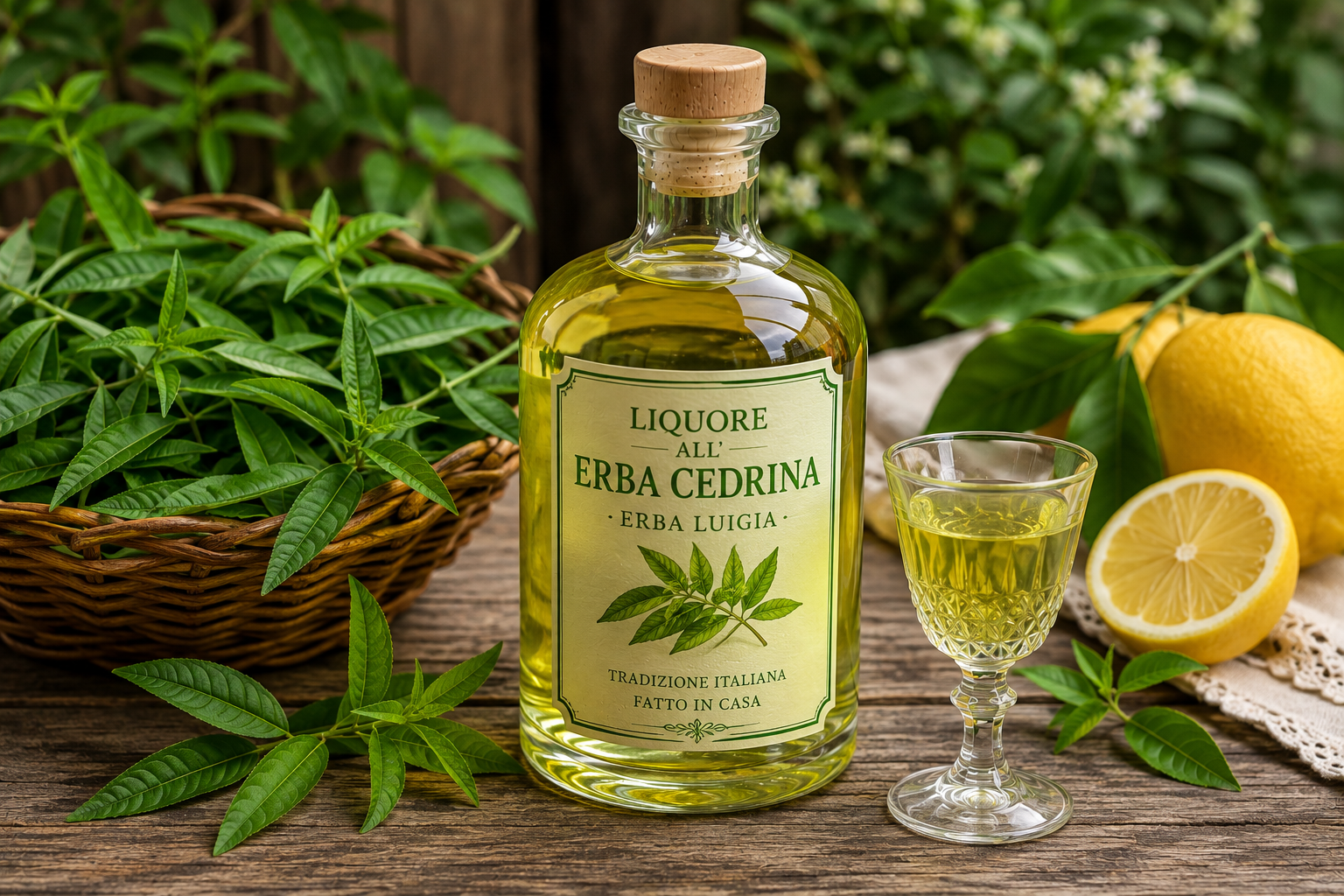
Liquore all’Erba Cedrina — traditional Italian lemon verbena digestivo.
Liquore all’Erba Cedrina, also known as Liquore all’Erba Luigia, Erba Luisa, Limoncina or Verbena Odorosa, is one of the most elegant homemade herbal digestivi in the Italian tradition. The plant is commonly identified as Aloysia citrodora and is cultivated throughout Italy for its intensely aromatic leaves, which naturally release a fragrance reminiscent of lemon, melissa and fresh herbs. The leaves have traditionally been used for infusions and liqueurs, making cedrina particularly suited to a clean, highly aromatic digestivo. Unlike limoncello, this is not fundamentally a citrus-peel liqueur. Its lemon character comes primarily from the leaves themselves. A well-made cedrina liqueur should smell fresh and botanical, with lemon verbena, green herbs and delicate floral notes rather than tasting simply of lemon zest.
Ingredients
120–150 fresh food-grade lemon verbena leaves 4 1/4 cups (1 L) food-grade neutral alcohol, approximately 190 proof where legally available 4 cups (950 ml) filtered water 3 1/2 cups (700 g) granulated sugar Zest of 1 untreated lemon, yellow portion only 1 tiny pinch fine sea salt
Choosing the Cedrina
The quality of the leaves determines almost everything. Use healthy, mature green leaves with a powerful natural fragrance. Rub one gently between your fingers: it should immediately release a clean lemon-herbal aroma. Leaves that smell weak, dusty or stale will produce a flat liqueur regardless of how long they remain in alcohol. Avoid yellowed, damaged or diseased leaves. If harvesting from your own plant, use only material that has not been treated with pesticides or chemicals unsuitable for edible crops. Ornamental plants from garden centers should not automatically be assumed safe for culinary use.
Understanding the Botanical
Cedrina is known by several names throughout Italy, including erba Luigia, erba Luisa, limoncina and verbena odorosa. The plant originated in South America but became widely cultivated in Italian gardens because of its extraordinarily fragrant foliage. Its aroma is much more complex than lemon alone. Depending on the plant and season, the leaves can suggest lemon zest, citronella, melissa, green tea, fresh herbs and delicate flowers. Alcohol extracts these compounds extremely efficiently, which is why quantity and maceration time must be controlled carefully.
Professional Mise en Place
Inspect every leaf individually. Remove stems that are excessively woody. Wash the leaves briefly under cold running water only if necessary. Dry completely with clean kitchen towels and allow them to air-dry until there is no visible surface moisture. Prepare a sterilized glass jar with an airtight lid, a digital scale if available, a fine stainless-steel strainer, food-grade cheesecloth, coffee filters and perfectly clean bottles.
Preparation
1. Prepare the Leaves — Leave the cedrina leaves whole. Do not chop, grind or blend them. Lightly bruise only a few leaves between your fingers to release the first aromatic oils. 2. Prepare the Lemon — Remove several very thin strips of zest from one untreated lemon. Take only the yellow external portion and leave the white pith behind. 3. Build the Infusion — Place the leaves and lemon zest in the sterilized jar. 4. Add the Alcohol — Pour in 4 1/4 cups (1 L) food-grade neutral alcohol and make sure the botanical material is thoroughly wet. 5. Seal — Close the jar immediately and rotate it gently. 6. Macerate — Store in a cool, dark environment for approximately 12–15 days. 7. Agitate — Rotate the jar gently once daily during the first week. Afterward, every two days is enough. 8. Begin Tasting — Start tasting a properly diluted sample after approximately seven days. 9. Stop at Balance — Filter when the infusion is intensely aromatic, fresh and green-herbal without becoming vegetal or bitter.
Why the Maceration Should Remain Relatively Short
Cedrina leaves contain powerful aromatic oils. They do not require the long maceration used for walnuts, roots or dense fruits. During the first stage, alcohol extracts the most attractive volatile aromas. With excessive time, the infusion can become increasingly vegetal, chlorophyll-heavy and slightly bitter. The goal is not to extract every possible compound from the plant. The goal is to stop when the best compounds dominate.
Controlling the Lemon Peel
Lemon zest is optional but useful when kept under control. Its purpose is to reinforce the natural citrus character of the cedrina. It should never become the primary flavor. Taste the infusion around day three or four. If recognizable lemon-peel aroma begins overtaking the herb, remove the zest immediately and continue the leaf extraction alone. A properly made Erba Cedrina liqueur should not be mistaken for limoncello.
First Filtration
At the end of the maceration, pour the infusion through a fine stainless-steel strainer. Allow the leaves to drain naturally. Do not aggressively squeeze them. Heavy pressing releases additional chlorophyll and fine vegetable particles that can make the liqueur more bitter and cloudier. Discard the spent leaves and lemon zest.
Settling and Fine Filtration
Allow the filtered infusion to rest undisturbed for approximately 12–24 hours. Fine particles will naturally settle. Carefully decant the clearer liquid into another clean container, leaving the sediment behind. Pass the infusion through food-grade cheesecloth. If greater clarity is desired, finish through a coffee filter. Do not force the liquid through. A slight natural haze can remain because aromatic oils may become less soluble when the alcohol is later diluted with syrup. This is not automatically a defect.
Preparing the Syrup
Combine 4 cups (950 ml) filtered water, 3 1/2 cups (700 g) granulated sugar and one tiny pinch fine sea salt. Heat gently while stirring until the sugar dissolves completely. Do not caramelize, reduce or allow the syrup to become thick. Remove from the heat and cool completely to room temperature. Never combine hot syrup with high-proof alcohol.
Balancing the Liqueur
Begin by adding approximately 70–75% of the syrup to the filtered infusion. Mix gently and allow the mixture to rest for about fifteen minutes. Taste again. The ideal progression should be fresh cedrina on the nose, bright lemon-herbal character, soft sweetness, clean alcohol warmth, delicate floral notes and a dry, persistent botanical finish. Add more syrup gradually only if necessary. Do not automatically add all the syrup.
Why Cedrina Should Not Be Overly Sweet
Cedrina is naturally aromatic and refreshing. Too much sugar turns a precise herbal digestivo into a heavy cordial. The sugar should soften the alcohol and provide texture, but the drink should remain fresh enough that another small sip is inviting. The leaves, not the sugar, must remain the protagonist.
Natural Color
The infusion may begin as a bright yellow-green and gradually develop toward green-gold, straw or pale amber. Do not add artificial green coloring. A neon-green bottle does not indicate better extraction. Natural chlorophyll changes with oxygen, light and time. Some color loss during maturation is normal. Protecting the bottle from sunlight helps preserve the freshest appearance and aroma.
Avoiding Excessive Bitterness
The most common causes of bitterness are excessive leaf quantity, long maceration, crushing the leaves, incorporating too many stems or pressing the botanical material heavily during filtration. Once a batch has become severely over-extracted, adding more sugar does not truly fix it. The sweetness simply sits on top of the bitterness. Better technique begins with shorter extraction and frequent tasting.
Maturation
Bottle the finished liqueur in perfectly clean glass bottles and seal tightly. Allow it to mature for at least 3–4 weeks before final evaluation. Six weeks is better. Immediately after blending, the alcohol, sugar and botanical aroma can seem separate. During resting, the components become more integrated and the liqueur becomes noticeably smoother. Cedrina is best enjoyed while its fresh aromatic character is still vivid, so extremely long aging is unnecessary.
Professional Batch Control
Record the number or weight of leaves, harvest date, botanical source, alcohol strength, alcohol volume, maceration start date, filtration date, number of days the lemon zest remained, sugar quantity, water quantity, actual syrup incorporated, final bottled volume and tasting notes. These records matter because aromatic intensity changes significantly according to season, plant maturity and growing conditions.
Fresh Leaves vs. Dried Leaves
Fresh cedrina leaves are strongly preferred for this style. They provide a vivid green, citrus and floral profile. Dried leaves can produce a useful infusion, but the result is generally warmer, less fresh and more tea-like. Do not replace fresh leaves gram-for-gram with dried material. Dried botanicals are concentrated and require substantially lower quantities. For a classic homemade Italian-style cedrina liqueur, fresh leaves remain the better choice.
Professional Sensory Evaluation
Taste at approximately 50–55°F (10–13°C). The nose should immediately communicate fresh lemon verbena. The palate should be soft but not syrupy. The center should reveal herbs, lemon and slight floral complexity. Alcohol should carry the aroma without creating harsh burning. The finish should remain clean and relatively dry. There should be no dominant lemon peel, cooked sugar, aggressive vegetal bitterness or artificial citrus aroma.
Chef Tips
Use only correctly identified food-grade cedrina. Choose intensely fragrant fresh leaves. Dry the leaves completely. Keep most leaves whole. Do not grind them. Use very little lemon zest. Taste before the planned maceration ends. Do not extract simply for darker color. Filter gently. Cool syrup completely before blending. Add syrup gradually. Keep sweetness moderate. Allow at least three weeks of maturation. Protect the bottle from direct sunlight.
Common Mistakes
Using chemically treated ornamental leaves. Using yellow or damaged foliage. Grinding the leaves. Adding too much lemon peel. Leaving the infusion for several weeks without tasting. Pressing the leaves aggressively. Trying to make the liqueur artificially dark green. Adding all the syrup automatically. Making the finished drink excessively sweet. Judging the liqueur immediately after blending. Serving it frozen solid.
How to Serve
Serve Liquore all’Erba Cedrina cool at approximately 46–52°F (8–11°C) in a small digestivo glass. It is excellent after rich meals because its aromatic freshness creates a lighter finish than walnut or coffee-based liqueurs. It pairs particularly well with lemon cakes, almond biscuits, panna cotta, vanilla gelato, ricotta desserts, white chocolate, fresh berries and delicate fruit pastries. Its floral-citrus profile also works beautifully beside simple butter cookies and dry Italian biscotti.
Cocktail Use
Cedrina is particularly useful in mixology because it provides citrus character without relying exclusively on citrus juice. Use approximately 1/4–1/2 oz (7–15 ml) with gin, vodka, dry vermouth, sparkling wine or grappa. It can add an aromatic lemon layer to a spritz without excessive acidity. With gin, it emphasizes botanical notes. With sparkling wine, it creates a light and elegant Italian-style aperitivo. Use it carefully because its aroma is concentrated.
Storage
Store the bottles tightly sealed in a cool, dark place. Refrigeration after opening is recommended if you want to preserve the brightest herbal character. For optimum quality, consume within approximately 9–12 months. A small natural sediment or slight cloudiness may appear. Allow it to settle and filter again if desired.
Nutrition
Approximate values per 1.5 fl oz (45 ml): 95–130 calories; 0 g protein; 9–15 g carbohydrates; 9–15 g sugars; 0 g fat; 0 g saturated fat; 0 g fiber; trace sodium. Actual values depend on the quantity of syrup incorporated and final alcohol strength.
Final Quality Check
The finished Liquore all’Erba Cedrina should smell intensely fresh and naturally lemony without tasting like limoncello. The herbal character must remain obvious. Sweetness should soften the alcohol without covering the plant. The color should remain natural, ranging from green-gold to pale amber. The finish should be clean, aromatic and refreshing rather than bitter or syrupy. When properly balanced, this is one of the most elegant handmade Italian herbal liqueurs: simple ingredients, precise extraction and a fragrance that immediately explains why cedrina has remained a favorite plant for homemade infusions and digestivi.


Comments