
Wine Comparison: Passerina Marche IGT vs Pecorino Abruzzo DOC: Key Differences, Food Pairings and Which Italian White Wine to Choose
Updated: Aug 25

Quick Answer
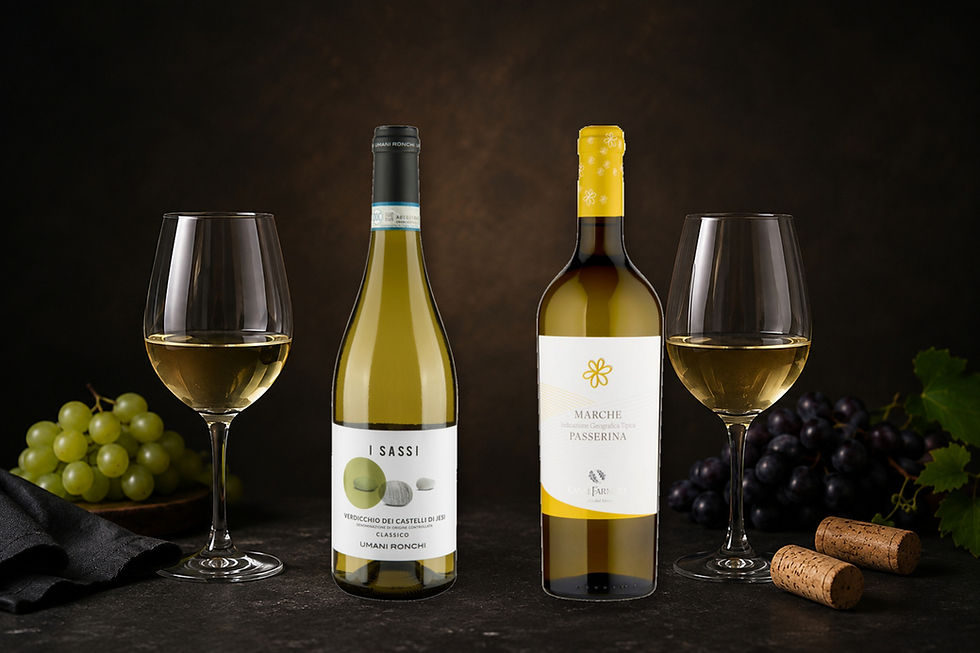
Passerina Marche IGT and Pecorino Abruzzo DOC are both compelling Italian white wines, but they solve different problems at the table. Passerina Marche IGT, from Marche, is built around Passerina and is generally fresh, floral and easy drinking. Pecorino Abruzzo DOC, from Abruzzo, is based on Pecorino and tends to be structured, vivid and savory. Choose Passerina Marche IGT when you want a wine emphasizing lemon, white flowers, apple and herbs; choose Pecorino Abruzzo DOC when you want a profile centered on citrus, peach, herbs and saline notes.
Zafferano & Co. Comparative Score
This denomination-level score evaluates the representative style of Passerina Marche IGT and Pecorino Abruzzo DOC; it does not claim that every producer or every bottle performs identically. The five categories total 100 points and make the judgment transparent.
Aroma and Flavor Complexity (20 points): Passerina Marche IGT 18/20; Pecorino Abruzzo DOC 19/20. Category Winner: Pecorino Abruzzo DOC.
Structure and Balance (20 points): Passerina Marche IGT 18/20; Pecorino Abruzzo DOC 18/20. Category Winner: Tie.
Regional Identity (20 points): Passerina Marche IGT 17/20; Pecorino Abruzzo DOC 18/20. Category Winner: Pecorino Abruzzo DOC.
Food-Pairing Versatility (25 points): Passerina Marche IGT 21/25; Pecorino Abruzzo DOC 22/25. Category Winner: Pecorino Abruzzo DOC.
Value (15 points): Passerina Marche IGT 12/15; Pecorino Abruzzo DOC 13/15. Category Winner: Pecorino Abruzzo DOC.
Comparative Total: Passerina Marche IGT 86/100; Pecorino Abruzzo DOC 90/100. Overall leader at denomination level: Pecorino Abruzzo DOC.
Understanding Passerina Marche IGT
Passerina Marche IGT comes from Marche and is based on Passerina. Its typical body is light to medium, with high acidity. In the glass, expect lemon, white flowers, apple and herbs. The important point is not simply aroma but structure: the combination of body, acidity, alcohol and savory character determines whether the wine behaves as an aperitivo, a seafood partner, or a bottle capable of accompanying more substantial dishes.
The best examples of Passerina Marche IGT are fresh, floral and easy drinking. That personality explains why the wine has earned a place at the Italian table. Its regional identity matters: climate, altitude, soil, wind exposure and local cellar traditions shape the finished wine as much as the grape name itself.
Understanding Pecorino Abruzzo DOC
Pecorino Abruzzo DOC represents a different expression of Italian white wine. Produced in Abruzzo from Pecorino, it is normally medium to full in body with high acidity. Aromatically, it commonly shows citrus, peach, herbs and saline notes.
Where Passerina Marche IGT is best understood as fresh, floral and easy drinking, Pecorino Abruzzo DOC is more accurately described as structured, vivid and savory. This distinction becomes obvious once food enters the picture, because acidity determines refreshment, body determines how much richness the wine can carry, and aromatic intensity determines whether the wine supports or dominates the dish.
Key Differences at a Glance
Body: Passerina Marche IGT is generally light to medium, while Pecorino Abruzzo DOC is medium to full. Acidity: Passerina Marche IGT typically shows high acidity compared with high for Pecorino Abruzzo DOC. Aromas: Passerina Marche IGT emphasizes lemon, white flowers, apple and herbs, while Pecorino Abruzzo DOC leans toward citrus, peach, herbs and saline notes. Overall style: Passerina Marche IGT is fresh, floral and easy drinking; Pecorino Abruzzo DOC is structured, vivid and savory.
Aroma, Flavor and Texture
The aromatic contrast between these wines is one of the easiest ways to understand them. Passerina Marche IGT commonly presents lemon, white flowers, apple and herbs. Pecorino Abruzzo DOC answers with citrus, peach, herbs and saline notes. Neither profile is inherently better; the more useful question is which profile matches the food, season and occasion.
Texture is equally important. A light to medium wine such as Passerina Marche IGT behaves differently from a medium to full wine such as Pecorino Abruzzo DOC. Richer textures can absorb sauces, cheese and shellfish reductions, while lighter textures are often more successful with raw seafood, delicate fish and simple vegetable preparations.
Acidity, Minerality and Salinity
Acidity is the backbone of white wine. Passerina Marche IGT has high acidity; Pecorino Abruzzo DOC has high acidity. Higher acidity sharpens citrus flavors, refreshes the palate after olive oil or fried foods, and makes salty seafood feel cleaner. Moderate acidity can create a broader and softer impression, particularly when the wine carries ripe orchard fruit or aromatic intensity.
Minerality and salinity are often used loosely, but at the table they describe a practical sensation: a dry, stony or sea-spray character that makes a wine particularly convincing with shellfish, anchovies, grilled fish and dishes seasoned with capers or olives.
Food Pairing: Which Wine Wins?
The correct answer depends on the dish. Rather than declaring one wine universally superior, compare the weight and dominant flavors of the food with the structure of each bottle. The pairings below use recipes already published on Zafferano & Co.
1. Lagane e Ceci alla Calabrese
Lagane e Ceci alla Calabrese works especially well with Passerina Marche IGT. The dish centers on pasta and chickpeas, and Passerina Marche IGT's high acidity and fresh, floral and easy drinking profile create the cleaner, more coherent match. The wine should refresh the palate while leaving the character of the food intact.
2. Spigola al Sale con Agrumi, Asparagi e Mandorle
Spigola al Sale con Agrumi, Asparagi e Mandorle works especially well with Pecorino Abruzzo DOC. The dish centers on salt baked sea bass, and Pecorino Abruzzo DOC's high acidity and structured, vivid and savory profile create the cleaner, more coherent match. The wine should refresh the palate while leaving the character of the food intact.
3. Fregola Sarda Risottata con Gambero Rosso, Bisque, Burrata e Limone
Fregola Sarda Risottata con Gambero Rosso, Bisque, Burrata e Limone works especially well with Passerina Marche IGT. The dish centers on rich shellfish and burrata, and Passerina Marche IGT's high acidity and fresh, floral and easy drinking profile create the cleaner, more coherent match. The wine should refresh the palate while leaving the character of the food intact.
4. Baccalà Confit con Crema di Ceci, Rosmarino e Olio al Peperoncino
Baccalà Confit con Crema di Ceci, Rosmarino e Olio al Peperoncino works especially well with Pecorino Abruzzo DOC. The dish centers on salt cod and chickpeas, and Pecorino Abruzzo DOC's high acidity and structured, vivid and savory profile create the cleaner, more coherent match. The wine should refresh the palate while leaving the character of the food intact.
Seafood and Shellfish
For shellfish, clams, mussels, prawns and delicate white fish, the decision usually comes down to acidity and aromatic intensity. Passerina Marche IGT is the better option when the dish benefits from fresh, floral and easy drinking character. Pecorino Abruzzo DOC becomes more persuasive when structured, vivid and savory character is needed. Lemon, herbs, olive oil, tomato and light shellfish broths can shift the balance dramatically.
Pasta, Risotto and Richer Dishes
Pasta and risotto require attention to sauce rather than pasta shape. A seafood pasta with lemon and herbs may favor the more energetic wine; a risotto with butter, cheese or bisque may favor the fuller wine. Compare the texture directly: Passerina Marche IGT is light to medium, while Pecorino Abruzzo DOC is medium to full. That single difference can decide the pairing before aroma is even considered.
Cheese and Vegetable Pairings
Fresh cheeses such as ricotta, burrata and stracciatella usually need acidity more than tannin. Mature cheeses require additional body and savory depth. Vegetables such as asparagus, artichokes, zucchini and fava beans can expose bitterness in poorly chosen wines, so herbal, mineral and citrus driven whites often perform best.
Serving Temperature and Glassware
Serve both wines cool rather than ice cold. Lighter examples generally show best around 46 to 50°F (8 to 10°C), while broader or more structured bottles can be allowed to rise toward 50 to 54°F (10 to 12°C). Use a medium white wine glass so aromas can open without sacrificing freshness.
Aging Potential
Aging potential depends on producer, vintage and winemaking, but structure gives useful clues. Wines with high acidity, concentration and mineral depth generally evolve more convincingly. Passerina Marche IGT has high acidity and a light to medium frame; Pecorino Abruzzo DOC has high acidity and a medium to full frame. The more structured of the two is usually the safer cellar candidate, although many bottles are deliberately made for early drinking.
Buyer’s Decision Guide
Choose Passerina Marche IGT if you want fresh, floral and easy drinking character, a profile of lemon, white flowers, apple and herbs, and a wine from Marche built around Passerina. Choose Pecorino Abruzzo DOC if your priority is structured, vivid and savory character, aromas of citrus, peach, herbs and saline notes, and the personality of Pecorino from Abruzzo. For seafood, favor whichever wine has the sharper acidity and more saline finish. For richer sauces, choose the fuller bodied option. For aromatic dishes, match intensity rather than simply choosing the more famous denomination.
FAQ
Is Passerina Marche IGT better than Pecorino Abruzzo DOC?
Not universally. Passerina Marche IGT is stronger when its fresh, floral and easy drinking personality matches the dish; Pecorino Abruzzo DOC is better when a structured, vivid and savory style is more appropriate.
Which wine is better with seafood?
Look first at acidity and salinity. The wine with the brighter structure will usually be stronger with raw shellfish, fried seafood and lemon driven preparations.
Which wine is more aromatic?
Compare the typical profiles directly: Passerina Marche IGT shows lemon, white flowers, apple and herbs, while Pecorino Abruzzo DOC shows citrus, peach, herbs and saline notes. The second wine may be more aromatic in some vintages, but producer style matters.
Which wine should I buy for a dinner party?
Choose based on the menu. If several courses include fish, vegetables and fresh cheese, the more balanced and versatile wine is usually preferable to the most powerful bottle.
Terroir and Regional Identity
Passerina Marche IGT and Pecorino Abruzzo DOC should be compared as products of place, not simply as grape names. The practical terroir question is how site, elevation, exposure, soil drainage and the growing season influence acidity, aromatic lift, body, salinity and finish. Those factors determine whether the wine feels linear and lifted, broad and ripe, herbal and mineral, or driven by fruit. The denomination-level comparison used here evaluates the representative style; individual producers, vintages and vineyard sites can move beyond that baseline.
Taste the wines side by side at the same temperature and in identical glasses. First compare aromatic intensity, then the attack, mid-palate, acidity, texture and finish. Pecorino Abruzzo DOC earns the higher overall score because its representative profile delivers the stronger combination of identity, balance and table performance in this matchup. That judgment does not make the other wine inferior; it identifies which denomination offers the more complete comparative package.
Price and Value
Price varies by producer, vintage, vineyard source, import market and cellar treatment, so a denomination should never be reduced to one shelf price. Value means more than being inexpensive: it measures regional character, balance, food usefulness and drinking satisfaction relative to cost. In this comparison, Passerina Marche IGT is the Value Winner because its typical style provides the more persuasive return for the buyer without requiring the highest-priced example.
When buying, prioritize a trustworthy producer, a recent storage history and a bottle whose style matches the meal. Entry-level examples are usually best for immediate drinking, while more concentrated or site-specific releases justify a higher price only when additional complexity, length or aging potential is evident. A famous denomination is not automatically the better purchase; suitability and condition matter more than prestige.
When to Choose Each Wine
Choose Passerina Marche IGT when its balance of aroma, structure and regional character better fits the menu and the desired pace of the meal. It is the more convincing option when the dish benefits from the specific profile described in its section above, especially when the wine must remain articulate from the first glass through the main course.
Choose Pecorino Abruzzo DOC when the food calls for its contrasting weight, aromatic direction or finish. For a mixed dinner table, compare the dominant sauce and cooking method rather than the protein alone. The correct decision is the wine that refreshes after each bite, matches the dish's intensity and leaves both food and wine clearer on the finish.
Final Verdict
Passerina Marche IGT and Pecorino Abruzzo DOC illustrate why Italian white wine cannot be reduced to a simple ranking. They come from different territories, grapes and traditions, and each wins in a different context. Passerina Marche IGT should be chosen for its fresh, floral and easy drinking personality and lemon, white flowers, apple and herbs. Pecorino Abruzzo DOC should be chosen for its structured, vivid and savory profile and citrus, peach, herbs and saline notes. The best bottle is the one whose structure fits the food.
Zafferano & Co. Final Score
Passerina Marche IGT: 86/100 — ★★★
Pecorino Abruzzo DOC: 90/100 — ★★★★
Overall Winner: Pecorino Abruzzo DOC.
Value Winner: Passerina Marche IGT.


Comments