
Italian Saffron Tuscan Pici with Garlic, Lemon and Herb Breadcrumbs | Pici Toscani allo Zafferano con Aglio, Limone e Pangrattato alle Erbe
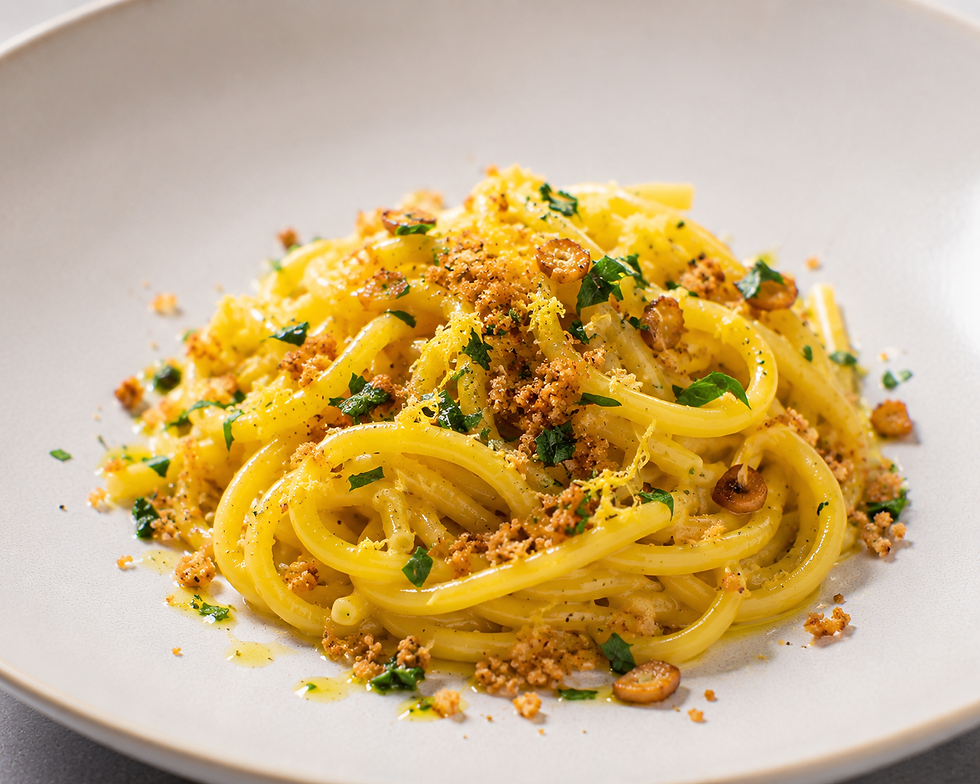
Pici are the fattest hand rolled pasta in Tuscany and the only one shaped entirely between two open palms. Flour, water and salt go into them and nothing else does: no egg, no machine, no metal rod. What comes off the board is a thick crooked cord that is never twice the same width along its own length, and that unevenness is the reason the sauce behaves differently in every mouthful.
The saffron never touches the dough. It is steeped in warm water, then beaten into Tuscan olive oil and starchy cooking water until the condiment turns opaque and orange. Around it sit three things and no fourth: garlic taken slowly to pale gold, lemon used at two separate moments for two separate reasons, and toasted herb breadcrumbs thrown over the plate at the last second.
There is no cheese in it and none is missing. The pangrattata does the work grated pecorino would do in a richer kitchen, with salt, fat and noise instead of dairy.
Yield: 4 servings. Prep: 40 minutes. Rest: 30 minutes. Cook: 25 minutes. Total: about 1 hour 35 minutes. Difficulty: intermediate. Course: primo piatto. Region: Tuscany, Siena and the hills of San Gimignano.
The Story
In the Trecento, San Gimignano was not a picturesque hill town but a commodity centre, and the commodity was saffron. Merchants pooled capital into compagnie, trading partnerships of a few families and a notary, and those companies bought the crocus harvest of the contado before the flowers had opened. The dried stigmas went down to Pisa in sealed boxes and out of Porto Pisano to Genoa, Marseilles, Tunis and Alexandria, where a pound of San Gimignano saffron settled debts silver could not.
The comune protected the trade the way a modern state protects a currency. Weighing happened at the public scales and nowhere else, and adulteration, usually safflower or marigold among the stigmas, carried heavy fines. Saffron paid municipal taxes, was written into dowries and stood as collateral against loans to the town when a war with Volterra or Siena had to be funded. The towers on that skyline were built with money from a flower that blooms two weeks in October.
The compagnie faded with the plague and the loss of independence to Florence, and by the nineteenth century the crocus had vanished from these hills. Growers brought it back in the 1990s and Zafferano di San Gimignano was recognised as DOP in 2005, still picked at dawn, plucked by hand the same morning and dried over embers. The pangrattata comes from the opposite end of the same table: stale unsalted bread, olive oil, and whatever herb grew by the door.
Ingredients
For the pici
Italian 00 flour, 2 cups (250 g)
Fine durum wheat semola, 3/4 cup (120 g)
Warm water, 3/4 cup (180 ml), plus a little more as needed
Fine sea salt, 3/4 tsp (4 g)
Extra virgin olive oil, 1 tbsp (15 ml), for the dough
Extra virgin olive oil, 1 tbsp (15 ml), for the work surface
Fine semola, 1/4 cup (40 g), for the holding tray
For the saffron infusion
Zafferano di San Gimignano DOP threads, 1/4 tsp (0.15 g)
Water or light vegetable broth, 1/2 cup (120 ml), held at 150°F (65°C)
For the garlic and lemon condiment
Garlic cloves, thinly sliced, 5 large
Extra virgin olive oil, 1/3 cup (80 ml)
Crushed red pepper flakes, 1/4 tsp (0.5 g), optional
Lemon zest, finely grated, 2 tsp (4 g)
Lemon juice, freshly squeezed, 1 tbsp (15 ml)
Flat leaf parsley, chopped, 1/4 cup (10 g)
Reserved pasta cooking water, 1 to 1 1/2 cups (240 to 360 ml)
Fine sea salt and freshly ground black pepper, to taste
For the pangrattata
Coarse breadcrumbs from stale Tuscan bread, 1 cup (60 g)
Extra virgin olive oil, 2 tbsp (30 ml)
Rosemary, finely chopped, 1 tsp (1 g)
Flat leaf parsley, finely chopped, 1 tbsp (4 g)
Lemon zest, finely grated, 1/2 tsp (1 g)
Fine sea salt, 1 pinch
Preparation
Steep the saffron threads in water
Bring the water or broth to a boil, pull it off the heat and let it fall to about 150°F (65°C), two or three minutes in the pan. Crumble the threads between bone dry fingers and drop them in, cover, and leave 20 minutes. Crocin, the pigment, is water soluble and not fat soluble, which is why the spice goes into liquid and never straight into hot oil. The infusion is ready when it smells of hay and honey and has gone deep amber.
Knead a dough of flour and water only
Mix the 00 flour, the semola and the salt on a board and open a well. Pour in the warm water, the tablespoon of oil and two tablespoons of the infusion, keeping the rest for the condiment. Draw the flour in until it gathers, then knead a full 10 minutes without stopping. A dough with no egg has only water with which to hydrate its gluten, so it fights back at the start and turns smooth only at the end. Wrap it and rest it 30 minutes.
Roll the pici by appiciatura
Wipe the work surface with a film of olive oil and keep flour off it completely. Roll the rested dough to about 1/4 inch (6 mm) and cut it into strips of equal width. Set both palms flat on the centre of a strip and roll forward while your hands travel apart, so the cord lengthens from the middle outwards. Work each strand to about 1/8 inch (3 mm) thick and 12 inches (30 cm) long, then lay it on a tray dusted with semola.
Toast the pangrattata and cool it flat
Warm the oil in a wide skillet over medium heat and add the breadcrumbs in one layer. Stir almost without pause for 4 to 5 minutes, until they take the colour of a toasted hazelnut and rattle against the metal. Off the heat, fold in the rosemary, parsley, lemon zest and salt, so the herbs perfume the crumbs instead of burning. Tip them onto a cold plate at once: crumbs left in a hot pan keep cooking and turn bitter within a minute.
Cook the garlic slowly to pale gold
Put the sliced garlic and the olive oil into a cold wide pan and bring them up together over the lowest flame you have. In 6 to 8 minutes the slices go soft, sweet and pale gold. The cold start is not fussiness: garlic dropped into hot oil colours outside while the centre stays raw. Add the pepper flakes for the last 30 seconds and take the pan off the heat.
Boil the pici in a tight pot of salted water
Use less water than you would give dried pasta, about 3 quarts (3 L), salted until it tastes like a good broth. Shake the semola off the strands and drop them in. Fresh pici need 4 to 5 minutes and float up when close. Taste one at four minutes: the centre should be tender with the faintest resistance left. Reserve a mug of the cloudy water before anything else happens.
Build the emulsion and toss hard
Return the garlic oil to medium heat, pour in the remaining infusion and swirl until the fat turns opaque and orange. Lift the pici across with a spider, add a ladle of cooking water and toss continuously for a minute. The sauce goes from loose and slicked to glossy and clinging. If it looks greasy it wants more water and more movement, never more oil. Off the heat, finish with lemon juice and parsley.
Plating
Warm the plates, do not heat them: around 120°F (50°C) is right. A plate hot enough to sting the fingers keeps driving the emulsion apart, and by the time the dish reaches the table the sauce has broken into oil and a watery ring. Wide shallow bowls suit pici better than flat plates, because the strands are heavy and want something to lean against.
Twist each portion into a loose nest with a carving fork against a ladle, lifting from the middle of the pile so the strands stand upright rather than lying flat. Height lets the diner see how irregular the cords are, which is the point of rolling them by hand. Spoon over whatever sauce is left in the pan: most of the colour is in that last spoonful.
The pangrattata goes on last and is never stirred in: a tablespoon per plate, scattered from a height so it lands across the surface rather than in a heap. Finish with a thread of raw olive oil, black pepper and a few parsley leaves. Send it out at once, because the crumbs soften the moment they meet the steam.
Professional Technique
Appiciatura, the palm rolling that gives pici their name, is the technique this dish stands on, and the hardest part of teaching it is persuading a cook to take the flour away. Flour under the dough turns the board into a bearing: the strip skids, the palms slide without stretching anything, and the cord snaps into short lengths. A film of oil gives exactly the friction the dough needs to lengthen without sticking.
The second rule is where the hands start. Both palms go down together at the centre and travel outwards as they roll, so tension spreads along the whole cord at once. Rolling from one end loads all the stretch into a single point, which thins and tears. Pressure matters more than speed: heavy hands flatten the cord into a ribbon, and a ribbon never rounds out again.
The third technique is the saffron, and it is chemistry rather than craft. Colour and most of the aroma sit in crocin and safranal, which move readily into water and poorly into fat, so threads dropped into hot oil give up almost nothing. Steeping at 150°F (65°C) extracts nearly all of it, and the pigment then arrives already dissolved and travels with the water phase of the emulsion onto every strand.
Texture and Moisture Control
A flour and water dough has no fat and no egg to seal its surface, so it sheds starch into the pot far more freely than dried pasta does. That is a resource: the water goes cloudy and slightly viscous within three minutes and becomes the binding agent of the whole plate. Use a smaller pot so the starch concentrates, and never drain it before taking a mug aside.
Olive oil and water will not stay combined by themselves. They stay combined because starch granules gather at the boundary between the two phases and hold them apart, and because agitation keeps breaking the oil into small droplets. This is why the final toss must be brisk, over heat and continuous for the best part of a minute, and why a splash of cooking water rescues a sauce that has separated.
Doneness is judged short. Fresh pici are thick, hold heat and go on absorbing sauce in the pan for another minute, so pull them while the centre still has a trace of resistance. The pangrattata runs the opposite way: crisp only while bone dry, stored open to the air and kept away from the stove.
Professional Mise en Place
Everything except the boiling and the final toss can be staged. Dough and crumbs first, garlic oil waiting off the flame, and only the pasta and the emulsion at the pass.
Equipment and tools
Unfloured board wiped with a film of olive oil
Bench scraper and a tray dusted with fine semola
Wide skillet for the crumbs, second wide pan for the emulsion
Spider skimmer, microplane, small lidded jar for the infusion
Prepared ahead
Pici rolled and dusted with semola, under a cloth up to 3 hours
Saffron infusion made 20 minutes ahead and kept covered so the aroma stays in the jar
Pangrattata toasted, cooled flat, held open to the air, never sealed or chilled
Garlic cooked to pale gold in its oil, warmed 30 seconds at the order
Lemon zest grated ahead, lemon juice squeezed a la minute and never before
Service setup
Pasta water at a steady boil, salted like broth, kept deliberately low in volume
A mug of cooking water reserved before every plate goes out
Plates warmed to around 120°F (50°C), never hotter
Crumbs, parsley, pepper mill and finishing oil lined up dry at the pass
Chef Tips
Grate the zest before you cut the lemon. A juiced half is almost impossible to zest cleanly, and the peel matters most here: its oils carry citrus through the fat, while the juice only lifts the top of the dish.
If the garlic colours faster than pale gold, slide the pan half off the burner rather than turning the flame down. Heavy steel holds more heat than the stove does, so lowering the gas takes a minute to reach the food while moving the pan takes a second.
Buy saffron in threads, never in powder. Powder is where adulteration hides, exactly as it did in the Trecento, and it loses aroma within weeks of grinding. Whole stigmas are trumpet shaped, deep red with a lighter tail, and stain wet fingers at once.
Taste the pangrattata on its own before service. It should read slightly too salty by the spoonful, because a tablespoon of it seasons a whole portion of pasta that carries almost no salt beyond what came out of the pot.
Common Mistakes
Flouring the board instead of oiling it. Flour makes the strip skid under the palms, so the dough never stretches and the cord breaks into stubby pieces. Oil the surface and keep the semola for the tray.
Putting the saffron threads into hot oil. The pigment is water soluble, so the oil extracts almost nothing and the sauce stays pale. Steep in water or broth first, then pour the infusion into the pan.
Boiling the infusion water. A full boil drives off the volatile aromatics and leaves a flat, faintly bitter note. Take the pan off the heat and wait until it stops steaming hard, around 150°F (65°C).
Stirring the breadcrumbs into the pan. On contact with the sauce they soften in ten seconds and the contrast the dish is built on disappears. They go on the plate at the last moment, never in the skillet.
Drowning the pici in a stockpot of water. Too much water dilutes the starch that binds the condiment, and the sauce will not come together however hard you toss. Use a smaller pot and salt it properly.
Wine Pairing
Verdicchio di Matelica DOC: Grown in a cool inland valley of the Marche rather than on the coast, which gives it more nerve and less flesh than its better known cousin. The high acidity meets the lemon on equal terms, and the bitter almond finish runs alongside the toasted breadcrumbs. There is enough body to sit under an olive oil emulsion without disappearing.
Offida Pecorino DOCG: A thicker, more aromatic white with real weight and a herbal, almost sage like top note that picks up the rosemary in the crumbs. Its ripe yellow fruit gives the saffron something sweet to lean against, since the spice is bitter rather than sweet on its own. Serve it at 50°F (10°C).
Erbaluce di Caluso DOCG: Sharp, dry and unusually mineral, from the glacial moraine north of Turin. It brings almost no aromatic interference of its own, and that neutrality is the point, since the plate already carries saffron, garlic, lemon and rosemary. What it brings is acidity that scrubs olive oil off the palate.
Cerasuolo d'Abruzzo DOC: A serious dry rosato rather than a pale summer wine, made from Montepulciano with short skin contact and real structure. The sour cherry fruit handles the sweetness of slow cooked garlic, and there is just enough tannic grip for the fried crumbs. Serve it at about 54°F (12°C).
Bardolino DOC: The choice for anyone who wants a red with a dish this light. Corvina from the moraine hills by Lake Garda gives a pale, low tannin wine with sour cherry and dried herb, and at 57°F (14°C) it refreshes rather than weighs. Heavier reds bury the saffron completely.
Storage & Reheating
Dressed pici do not keep. The emulsion separates within an hour in the refrigerator and the pasta goes on drinking the sauce until there is none left, so cook only what is going to the table.
Uncooked pici hold on a semola dusted tray under a cloth up to 3 hours at room temperature, or 24 hours uncovered in the refrigerator, which dries the surface slightly and helps them keep their shape. They freeze well: open freeze on the tray, bag them once solid, keep 2 months and cook from frozen with a minute more.
To reheat a dressed portion, put it in a pan with 2 tablespoons (30 ml) of water over medium heat and toss constantly for about 90 seconds until the sauce comes back together. Never use a microwave, which drives the oil out and leaves the strands rubbery. Add fresh crumbs: the pangrattata keeps 5 days in an open jar and recrisps in 2 minutes in a dry pan.
Nutrition
Per serving, based on 4 portions:
Calories: 612 kcal
Total Fat: 27 g
Saturated Fat: 4 g
Trans Fat: 0 g
Unsaturated Fat: 22 g
Cholesterol: 0 mg
Sodium: 690 mg
Total Carbohydrates: 79 g
Fiber: 4 g
Total Sugars: 3 g
Added Sugars: 0 g
Protein: 14 g
Lactose: 0 g
Principal micronutrients: iron 4 mg, calcium 60 mg, vitamin C 9 mg, potassium 250 mg, manganese, folate
Allergens: wheat and gluten from the flour, the semola and the breadcrumbs. As written the recipe has no egg, no dairy and no lactose. These figures are estimates and shift with the oil, the bread and how heavily the pot was salted, since much of that salt stays in the water.


Comments