Roasted Octopus with Chickpeas, 'Nduja and Escarole | Polpo Arrosto con Ceci, 'Nduja e Scarola
Updated: Oct 24

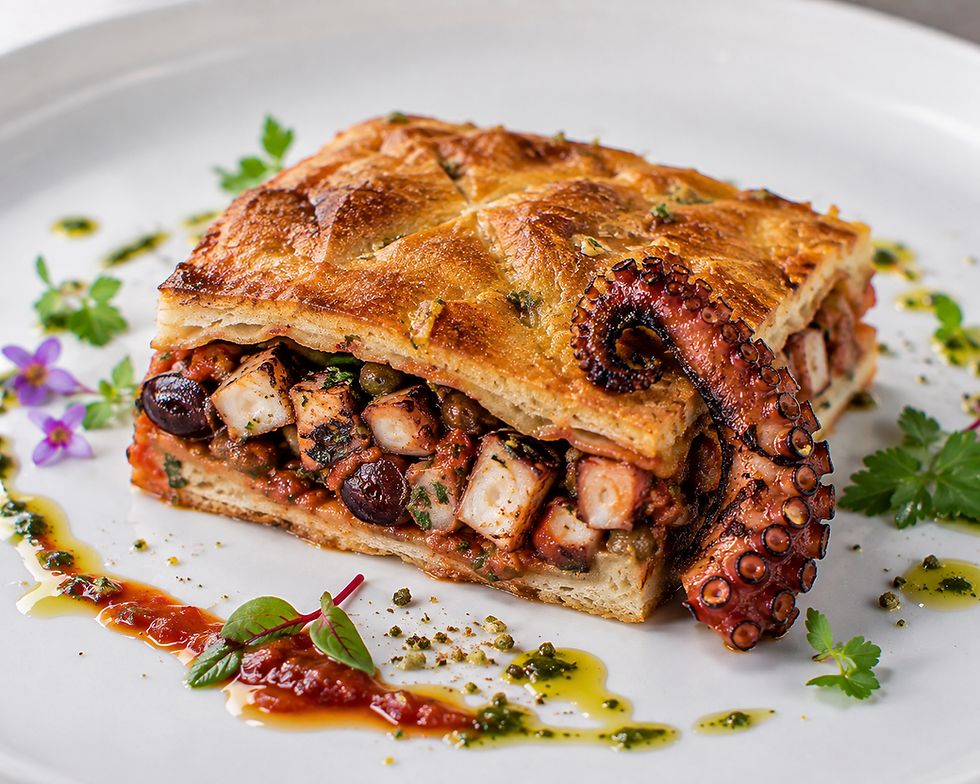
Roasted octopus with chickpeas, 'nduja and escarole is a Calabrian plate built on one ingredient behaving in two ways at once. The 'nduja is not a condiment stirred in at the end. Melted slowly into the chickpeas and their starchy cooking liquid, it becomes the sauce itself: fat, acidity, salt and colour in one spoonful.
The octopus is cooked twice. It braises gently under a lid in the liquid it releases by itself, which makes it tender, then it is dried, separated into tentacles and roasted hard in a very hot oven for the caramelized edges and the crackle at the sucker rims that a braise alone never gives.
The escarole is blanched and finished in the pan, and it stays deliberately bitter. Everything else here is rich, so the one green element is there to cut that richness rather than decorate it.
Yield: 4 main course servings. Prep: 30 minutes plus overnight soaking. Cook: 2 hours 15 minutes. Difficulty: intermediate. Course: secondo piatto. Region: Calabria.
The Story
This is not an old recipe with a village attached to it. It is a plate built from four things that have belonged to the same stretch of Calabria for a very long time, and what is interesting is how long they were kept apart. The octopus came from the Tyrrhenian side, below Scilla and Bagnara Calabra where the coast drops almost vertically into the sea, worked for centuries with weighted terracotta pots lowered onto the rocky bottom, a trap that catches octopus because the animal wants shelter, not bait. The chickpeas came from the dry interior. The escarole came from the winter kitchen garden. The 'nduja came from a single hill town.
That town is Spilinga, in the province of Vibo Valentia, on the slopes of Monte Poro above the Costa degli Dei, and the salume that carries its name is stranger than its reputation. 'Nduja is made from the parts of the pig that prosciutto and capocollo leave behind: back fat, jowl, belly and trimmings, minced fine and worked with salt and a very large quantity of dried Calabrian pepper, both sweet and hot. The mixture is packed into a wide pork casing, smoked lightly over oak or chestnut, and hung to mature for months. The name is usually traced to the French andouille, carried south during the Napoleonic years.
The chilli reached Calabria from the Americas by way of Spanish Naples, and it found a region that needed it: in a kitchen with no refrigeration and a great deal of pork fat, a preservative that also tasted of something was worth more than luxury. The pig was killed in the cold months and nothing was thrown away, the only reason 'nduja exists at all. The other three elements of this plate are its counterweight. Chickpeas were the protein of the inland poor and still taste of that thrift. Escarole is the bitter winter chicory of every southern kitchen garden, and it is here for one reason: it is the only thing on the plate that fights back.
Ingredients
For the chickpeas
Dried chickpeas, 1 1/2 cups (300 g)
Cold water for soaking, 6 cups (1.4 L)
Baking soda, 1/2 tsp (3 g), for the soaking water
Garlic cloves, unpeeled, 3
Rosemary sprig, 1
Bay leaf, 1
Extra virgin olive oil, 2 tbsp (30 ml)
Fine sea salt, 1 tsp (6 g), added at the end of cooking
For the octopus
Whole octopus, cleaned, 3 1/4 lb (1.5 kg)
Yellow onion, halved, 1
Bay leaves, 2
Black peppercorns, 1 tsp (3 g)
Flat leaf parsley stems, 5
Dry white wine, 1/2 cup (120 ml)
Extra virgin olive oil, 3 tbsp (45 ml)
For the chickpea and 'nduja base
'Nduja di Spilinga, 2 oz (55 g)
Extra virgin olive oil, 2 tbsp (30 ml)
Shallot, finely chopped, 1
Reserved chickpea cooking liquid, 1 cup (240 ml)
For the escarole
Escarole, 1 large head, about 1 lb (450 g)
Garlic clove, thinly sliced, 1
Salted capers, rinsed, 1 tbsp (10 g)
Extra virgin olive oil, 2 tbsp (30 ml)
Fine sea salt and freshly ground black pepper, to taste
For finishing
Extra virgin olive oil, a few drops per plate
Finely grated lemon zest, from 1/2 lemon
Flat leaf parsley leaves, small, 8 to 12
Toasted breadcrumbs, 2 tbsp (14 g), optional
Fine sea salt, only if the sauce needs it
Preparation
Soaking and cooking the chickpeas
Cover the chickpeas with 6 cups (1.4 L) of cold water, stir in the baking soda and leave them overnight. The soda raises the pH and softens the pectin in the skins, the difference between creamy chickpeas and chalky ones. Drain, rinse, then simmer them very gently in fresh water to cover by two fingers with the garlic, rosemary, bay leaf and olive oil. Allow 1 hour 15 minutes to 1 hour 45 minutes depending on their age, never a rolling boil, and salt in the last 10 minutes. Reserve 1 cup (240 ml) of the liquid: thick with dissolved starch, it is the body of the sauce.
Braising the octopus under a lid
Rinse the octopus and set it in a heavy pot that only just holds it, with the onion, bay leaves, peppercorns, parsley stems and white wine. Cover tightly and set it over low heat. Within 15 minutes it will have released a surprising amount of liquid and sit half submerged in it. Keep it at the barest simmer 50 to 70 minutes, turning once, until a thin knife slides into the thickest part of a tentacle with no resistance. Let it cool off the heat in its own liquid for 20 minutes.
Separating and drying the tentacles
Cut the tentacles from the head where they join, keeping each whole. Open the head, discard what you do not want and cut the rest into wide strips. Lay everything on a rack and leave it 15 minutes, turning once, until the surface is dry to the touch. Roasting a wet tentacle steams it: the skin goes slack and slides, the edges never colour, and the flesh loses the tension the braise gave it.
Blanching and finishing the escarole
Separate the escarole leaves, wash them well and drop them into boiling salted water for 2 minutes only. Lift them out, press the water out firmly with the back of a ladle and chop coarsely. Warm the olive oil with the sliced garlic until the garlic is pale gold, add the capers, then the escarole, and toss over medium heat for 3 minutes. Keep it noticeably bitter and keep it dry.
Melting the 'nduja into the chickpeas
Warm the olive oil in a wide saucepan over the lowest heat and sweat the shallot 4 minutes without letting it colour. Crumble in the 'nduja and let it dissolve slowly, stirring, about 3 minutes. It must never sizzle. Add 1 cup (240 ml) of the reserved chickpea liquid and two thirds of the drained chickpeas, and simmer for 8 minutes. Crush a ladleful against the side of the pan and stir them back in to thicken the base, then fold in the remaining whole ones. Taste before you reach for salt.
Roasting the octopus
Heat the oven to 475°F (245°C) with a heavy roasting pan inside. Toss the dried tentacles with 2 tablespoons of olive oil, lay them in the hot pan in a single layer and roast 8 to 10 minutes, turning once halfway. The suckers should darken and crisp at the rims and the surface should look lacquered rather than wet. Do not salt them before roasting: salt pulls moisture back to the surface you spent 15 minutes drying.
Plating
Serve this warm rather than hot, on plates warmed only slightly. Spoon the chickpeas and their sauce into a shallow bowl or wide plate and spread them into a loose circle, not a neat disc. The sauce should be fluid enough to settle by itself and thick enough to hold a tentacle upright.
Set a small heap of escarole off centre and on top of the chickpeas rather than beside them, so its bitterness arrives in the same mouthful as the fat. Lay one whole tentacle across the plate, curled, with the underside facing up where the suckers show. Finish with a few drops of raw olive oil, the lemon zest, two or three parsley leaves and the breadcrumbs if you are using them. Nothing else, and no sauce over the octopus: that roasted surface is the point of the dish.
Professional Technique
Everything technical here turns on understanding what 'nduja actually is, because almost everybody treats it as a chilli paste. It is not a paste. It is a salume: a cased, fermented, matured pork product soft enough to spread. The fat content of a traditional 'nduja di Spilinga runs above fifty per cent, and the acidity you taste under the heat is not an acid somebody added. It comes from lactic fermentation during maturing, exactly as it does in a salame, where bacteria in the meat convert sugars into lactic acid and the pH falls.
That makes 'nduja a single ingredient with two functions, and this recipe is built to use both. The fat emulsifies into the starchy chickpea liquid and gives the sauce its body and its colour with no cream, no butter and no roux. The fermentation acidity does the work a squeeze of lemon would otherwise do, cutting the richness from inside the sauce instead of on top of it. Nothing else on the ingredient list carries both properties, which is why the 'nduja belongs in the base and not over the finished plate.
It also means heat destroys it. Melt 'nduja over anything more than the lowest flame and three things go wrong at once: the fat breaks out of suspension and floats as an orange slick, the lean meat seizes into hard granules that will not dissolve again, and the dried sweet pepper scorches and turns flatly bitter. Keep it below 140°F (60°C), stir it, and give it three unhurried minutes. Remember too that a cured product carries a great deal of salt, so this dish is seasoned only after the sauce is finished, never before. And the bitter escarole exists for the fat that survives all this: it is the only element on the plate that cuts that fat from the outside.
Texture and Moisture Control
The body of this sauce is starch rather than fat, and must be managed deliberately. Chickpea cooking liquid holds dissolved starch that will carry the 'nduja fat into a stable emulsion if the two meet over gentle heat and are stirred together. Crushing a ladleful of cooked chickpeas into the pan adds more of the same starch in a form that keeps thickening as the pan sits. If the sauce tightens, loosen it with more of the reserved liquid and never with plain water, which dilutes flavour and thickening power at once.
Moisture on the octopus works the opposite way: after the braise every drop is an enemy. A dry surface lets the oven work directly on the skin, and what you want is a lacquered finish with crisp sucker rims rather than a steamed one. The escarole is the third moisture problem, since blanched greens hold water in their ribs and bleed it into the sauce within a minute. Press them hard, keep them dry, and set them onto the chickpeas at the last moment.
Professional Mise en Place
The braise and the chickpeas can be done a day ahead, which turns this into a fifteen minute service.
Equipment and tools
Heavy pot with a tight lid, just wide enough for the octopus
Heavy roasting pan or cast iron skillet, preheated in the oven
Wide saucepan for the chickpea and 'nduja base
Wide sauté pan for the escarole
Fine mesh sieve, ladle, rack for drying the tentacles
Prepared ahead
Chickpeas cooked and held in their liquid, up to 2 days refrigerated
Octopus braised, cooled and refrigerated whole, up to 2 days
Escarole blanched, pressed dry and refrigerated, up to 1 day
Chickpea cooking liquid strained into a jar, 1 cup minimum
'Nduja weighed out and left at room temperature so it melts evenly
Service setup
Oven and roasting pan at 475°F (245°C), well before service
Chickpea and 'nduja base warm over the lowest heat
Tentacles drying on a rack, oiled only at the last moment
Escarole rewarmed in its pan, kept dry, held off the heat
Lemon zest grated, parsley picked, breadcrumbs toasted, plates barely warm
Chef Tips
Buy a frozen octopus without apology. Freezing ruptures the muscle fibres and gives a head start on tenderness that no beating against a rock will improve on. Thaw it overnight in the refrigerator.
Taste your 'nduja on bread before you cook with it. Producers vary enormously in heat and salt, and 2 oz (55 g) of a fierce artisan one can carry as much punch as double that of a supermarket version. Adjust the amount, never the method.
Save every drop of the octopus braising liquid. Strained and reduced by half it becomes an intense seasoning, and a spoonful stirred into the chickpea base ties the two halves of the plate together better than salt does.
Old chickpeas never soften. If a bag has sat in the cupboard a year, no soaking or baking soda will rescue it and you will still be simmering at two hours with chalky centres. Check the harvest year if the packet gives one.
Common Mistakes
Frying the 'nduja. Over any real heat the fat separates as an orange slick, the lean part hardens into granules and the pepper turns bitter. The lowest flame, three minutes, constant stirring.
Salting before tasting. 'Nduja is a cured salume and brings a great deal of salt, as do the capers. Season the sauce only once the 'nduja has dissolved into it, and often not at all.
Adding water to the octopus. A tightly covered pot over low heat gives tender flesh and a concentrated braising liquid worth keeping. Water dilutes everything the octopus released and buys nothing in tenderness.
Roasting a wet tentacle. The surface steams instead of colouring, the skin loosens and slides, and you lose the contrast the dish is built on. Those 15 minutes on a rack are not optional.
Treating the escarole as a garnish. Sweetened, overcooked or reduced to two decorative leaves, it stops doing its job. It is the bitter counterweight to a rich sauce and has to be present in real volume.
Wine Pairing
Cirò Bianco DOC: The local white, Greco Bianco grown on the Ionian side of the region, and the bottle a Calabrian reaches for without thinking. Its saline finish meets the roasted octopus directly while a firm citrus acidity cuts the 'nduja fat, and it carries no oak or residual sugar to blunt the pepper.
Melissa Bianco DOC: A second Calabrian option from just north of Cirò, lighter and more floral, Greco Bianco with Trebbiano behind it. Its modest alcohol is the point, because alcohol amplifies heat on the palate: a restrained wine leaves the pepper where it belongs and refreshes between spoonfuls of chickpea.
Cerasuolo d'Abruzzo DOC: A deeply coloured dry rosé of Montepulciano and the most forgiving choice against the heat. Red fruit and a light tannic grip answer the caramelized surface, there is acidity enough for the fat, and served at 50°F (10°C) it settles the pepper instead of feeding it.
Cirò Rosso Classico DOC: For anyone who wants a red with octopus, Gaglioppo is the one that works: pale, high in acidity, with fine dusty tannin rather than a grippy structure. Poured at 57°F (14°C) it handles the roasted edges and the pork fat without flattening the sweetness underneath.
Etna Bianco DOC: Carricante from volcanic soil, and the most structured white on this list. Its salty minerality and taut acidity stand up to the starch and fat of the chickpea base better than a lighter wine manages, and the faint bitter almond on the finish runs alongside the escarole rather than against it.
Storage & Reheating
The components keep far better apart than assembled. The chickpeas in their 'nduja sauce keep refrigerated in a sealed container for 3 days and improve on the second, as the pepper settles and the starch sets. Braised octopus keeps refrigerated for 2 days, whole and covered in a little of its liquid, and should not be roasted until the day you serve. The escarole keeps 1 day.
Rewarm the chickpea base over low heat with a splash of the reserved liquid, stirring, and stop the moment it is hot through: pushed hard, the 'nduja fat separates the same way it does when melted too fast in the first place. Roasted octopus does not reheat and turns rubbery in a microwave. The chickpea base freezes up to 2 months, the cooked octopus never.
Nutrition
Per serving, based on 4 main course portions:
Calories: 610 kcal
Total Fat: 31 g
Saturated Fat: 7 g
Trans Fat: 0 g
Unsaturated Fat: 23 g
Cholesterol: 115 mg
Sodium: 890 mg
Total Carbohydrates: 42 g
Fiber: 11 g
Total Sugars: 7 g
Added Sugars: 0 g
Protein: 44 g
Lactose: 0 g
Principal micronutrients: iron, copper, selenium, vitamin B12, folate, magnesium, potassium, vitamin K
These figures are estimates. Sodium depends almost entirely on the 'nduja and the capers, and both vary widely between producers.




Comments