

Italian Wild Boar Ragù | Ragù di Cinghiale
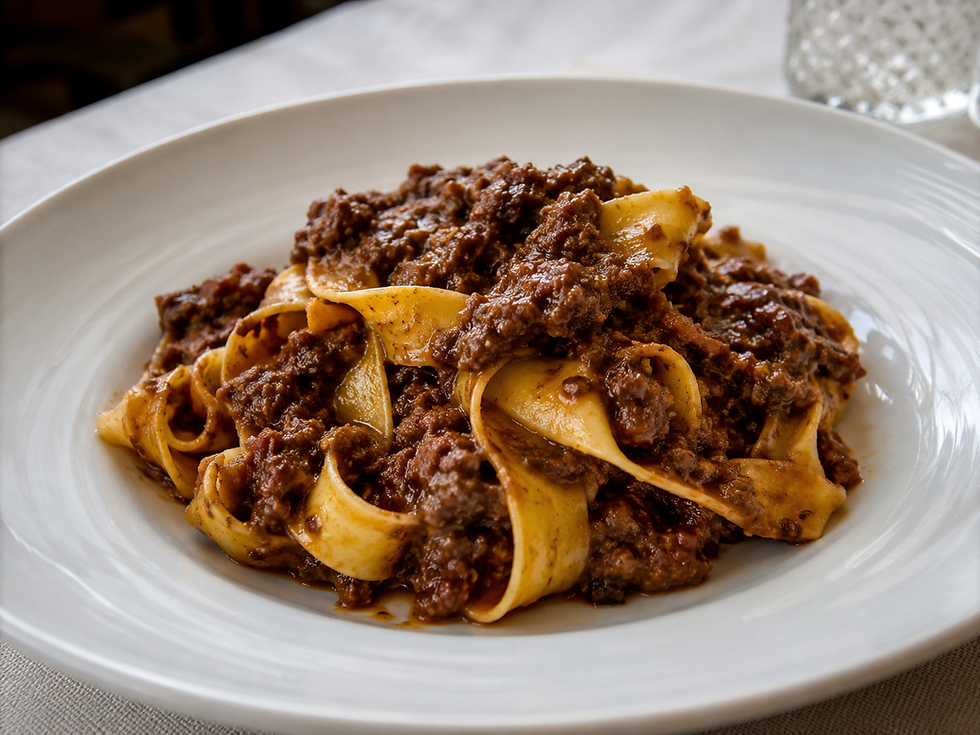
A ragù is not a stew served over pasta. The difference is the size of the meat, and with wild boar that difference decides everything. A stew wants large pieces that stay whole and are eaten with a fork. A ragù wants meat cut small enough that every ribbon of pappardelle carries some of it, so sauce and pasta arrive as one thing rather than two.
That is why the boar is cut by hand into pieces the size of a hazelnut rather than ground or cubed large. Ground boar turns to paste. Large cubes slide off the pasta and leave the sauce behind. Hand cut meat holds its shape through the first hour, then relaxes and shreds into fine threads over the next three, which is the texture a ragù needs.
The second decision is the marinade, and with boar it is not optional. Wild boar is lean, dark and strongly flavoured, and untreated it can taste aggressively of the animal. A night in red wine with juniper and bay does not disguise that character, it moderates it, drawing out blood and softening the muscle. The third decision is fat. Boar has almost none of its own, so pancetta and olive oil supply what the meat cannot, and the wine must reduce far enough for that fat to hold in the sauce instead of splitting out.
Yield: 6 servings as a pasta sauce. Prep: 45 minutes. Marinate: 12 to 24 hours. Cook: 4 hours. Total: about 2 days with the marinade. Difficulty: intermediate. Course: sauce for fresh pasta. Region: Tuscany, Umbria and the wooded hills of central Italy.
The Story
Ragù di cinghiale exists because of how a boar is divided. In the wooded country of central Italy the autumn hunt is collective: a squadra works a stretch of oak and chestnut wood with dogs, and whatever is taken belongs to the whole group. The animal is butchered together and shared out, and the sharing follows a strict logic. Loin and haunch go to the roast or the grill. Shoulder and neck go into the long braises. What is left is trimmings, flap, the muscle around the ribs and everything cut away while boning out, and that is what becomes ragù.
This is why the sauce was minced rather than cubed in the first place. Nobody chose to chop good meat small. The pieces were already small and irregular, and the sensible thing was to cook them down into something that would dress the pasta a household ate every week. Pappardelle, wide and made with egg, is the traditional partner because a broad ribbon has the surface area to carry a heavy meat sauce.
The marinade came from necessity rather than refinement. Boar taken in November was not hung in a chilled room and was often an older animal with a pronounced flavour, so a night in wine was both preservative and correction. Juniper grows wild in the same scrub the boar feeds in, and its resinous bitterness is the best foil for game there is. That pairing is not a chef's invention. It grew within walking distance of the pot.
Ingredients
For the marinade
Boneless wild boar shoulder and trimmings, 2 1/2 lb (1.15 kg)
Dry red wine, 3 cups (720 ml)
Yellow onion, sliced, 1 small
Carrot, sliced, 1
Celery stalk, sliced, 1
Juniper berries, lightly crushed, 10
Bay leaves, 3
Black peppercorns, 1 tsp
Fresh rosemary sprig, 1
For the ragù
Pancetta or unsmoked guanciale, finely diced, 4 oz (115 g)
Extra virgin olive oil, 3 tbsp (45 ml)
Yellow onion, finely diced, 1 large (7 oz, 200 g)
Carrot, finely diced, 1 medium (3 oz, 85 g)
Celery stalk, finely diced, 1 (2 oz, 60 g)
Garlic cloves, finely chopped, 3
Tomato paste, 2 tbsp (32 g)
Canned peeled tomatoes, crushed by hand, 1 1/2 cups (360 g)
Dry red wine, fresh, 1 1/2 cups (360 ml)
Unsalted meat stock, hot, 2 to 3 cups (480 to 720 ml)
Fresh sage leaves, 4
Fine sea salt, 2 tsp (12 g), plus more to taste
Freshly ground black pepper, to taste
For serving
Fresh egg pappardelle, 1 1/2 lb (680 g)
Pecorino Toscano, grated, 3 oz (85 g)
Extra virgin olive oil, for finishing
Preparation
Step 1: Cutting the boar by hand
Trim away silverskin and hard fat, then cut the meat by hand into irregular pieces of about 1/4 inch (6 mm). Use a heavy knife and chop rather than slice, working through the pile twice. Do not use a grinder: grinding ruptures the fibres and the ragù turns pasty and uniform. Irregular hand cut pieces are what shred into fine threads later.
Step 2: Marinating overnight
Put the chopped meat in a nonreactive bowl with the wine, sliced vegetables, juniper, bay, peppercorns and rosemary, pressing it down so everything is submerged. Cover and refrigerate 12 to 24 hours. The wine draws residual blood out of the muscle, where most of the gamey note lives, and its acidity loosens the connective tissue. Past 24 hours the acid makes the surface of the meat mealy.
Step 3: Draining and drying
Drain the meat in a colander set over a bowl and keep the liquid. Discard the marinade vegetables, which have given everything they have. Spread the meat on a tray lined with absorbent paper and blot it properly dry, turning it once. Meat that goes into the pot wet will never brown, and marinated boar holds a surprising amount of liquid.
Step 4: Boiling and straining the marinade
Pour the reserved marinade into a small saucepan, bring it to a boil and let it bubble 5 minutes. A grey scum rises: skim it off and discard it. Strain through a fine mesh sieve and set aside. Raw marinade poured into the pot later carries that scum and a raw alcoholic edge into the finished sauce.
Step 5: Rendering the pancetta and building the soffritto
Put the pancetta and olive oil in a heavy casserole over medium low heat and cook about 8 minutes until the fat has run and the dice begin to colour. This is the fat the boar does not have. Add the onion, carrot and celery and cook gently 12 to 15 minutes until soft and sweet, then add the garlic for the last minute. A rushed soffritto leaves the sauce thin and sharp.
Step 6: Browning the meat in batches
Raise the heat and add the boar in three or four batches, never more than a single layer. Each batch needs 5 to 6 minutes, left alone until it releases from the base, then stirred. Crowd the pot and the meat stews grey, costing the ragù the toasted depth that makes it worth four hours. Return every batch once the last is done.
Step 7: Tomato, wine and the long simmer
Stir in the tomato paste and fry it for 90 seconds until it darkens to brick, then pour in the fresh wine and let it reduce hard until the pot is almost dry and smells of fruit rather than alcohol. Add the strained marinade, the crushed tomatoes, the sage and the salt, bring to a bare simmer, then set the lid slightly ajar and hold it at the gentlest possible movement for 3 hours 30 minutes.
Step 8: Feeding the pot and finishing
Every 30 minutes stir from the base and add a ladle of hot stock if the surface looks dry, keeping the meat just barely covered. Cold stock or too much at once stops the reduction and washes out the flavour. In the final 20 minutes take the lid off and let the sauce tighten. It is done when the meat has shredded into fine threads, the fat sits on the surface as a thin orange film rather than a pool, and a spoon drawn through the pot leaves a track.
Plating
Cook the pappardelle in well salted water and pull it out a minute before it is ready, then finish it in a wide pan with two thirds of the ragù and a ladle of the pasta water. Toss it hard over medium heat for a minute so the starch binds the fat in the sauce to the pasta. Ragù served in a pool on plain pasta is a worse dish: the meat stays on the surface and the pasta underneath stays naked.
Serve in warmed shallow bowls, twisting each portion into a loose nest so the ribbons keep some height. Spoon a little reserved ragù over the top so the meat is visible, since a sauce this dark disappears once tossed through. Finish with grated Pecorino Toscano and a thread of olive oil. Parmigiano is not wrong, but the sheep milk saltiness of a Tuscan pecorino is the traditional and better answer against game.
Professional Technique
The technical heart of this sauce is the fat and wine relationship, and it is where most wild boar ragù goes wrong. Boar carries almost no intramuscular fat, perhaps a third of what pork shoulder has, so all the fat in the finished sauce arrives from the pancetta and the olive oil. That fat has to be held in suspension by the gelatin drawn out of the boar plus the reduced wine and tomato around it. If the wine is not reduced hard before the stock goes in, the sauce never concentrates enough to carry the fat and splits into a greasy layer over a watery base.
The second technique is batch browning. Two and a half pounds of boar dropped into a casserole at once will not brown at all, because the water it releases boils off at 212°F (100°C) and holds the pan far below the temperature browning needs. Four batches in a single layer, each left undisturbed until it lets go of the base, give four separate deposits of fond that dissolve into the wine and build the depth of the finished ragù.
Texture and Moisture Control
The texture target is fine threads, not cubes and not paste. Hand cut pieces pass through three stages: firm and separate for the first hour, tightening and slightly tough through the second as the fibres contract, then relaxing from the third hour on as collagen converts to gelatin and the pieces fall apart along their grain. That tough middle stage is where impatient cooks give up. Push through it, because the meat only turns tender after the collagen has gone.
Moisture is managed by feeding the pot in small amounts rather than filling it. The meat stays just barely covered for three hours, which means a ladle of hot stock roughly every half hour as the liquid reduces. That cycle of reduction and replenishment concentrates the sauce a little more each time. The final 20 minutes uncovered set the consistency: correctly finished, the ragù holds a track when a spoon is drawn through it and shows a thin film of orange fat, never a pool.
Professional Mise en Place
This is a two day preparation with a long passive stretch, and the sauce is better on day three than on day one. Organise around the marinade.
Equipment and tools
Heavy casserole of 6 quarts (5.7 litres) or more, wide rather than tall
Sharp heavy knife and a large board for the hand chopping
Nonreactive bowl, fine mesh sieve, ladle, wide saute pan for finishing the pasta
Prepared ahead
Meat chopped and marinating, 12 to 24 hours before cooking
Marinade boiled, skimmed and strained while the soffritto cooks
Soffritto diced small and evenly, up to 1 day ahead, refrigerated
The whole ragù cooked 1 to 2 days ahead, which improves it markedly
Service setup
Stock hot in a saucepan beside the casserole throughout the simmer
Ragù held just under a simmer, a ladle reserved for the top of each bowl
Pasta water salted and at a rolling boil, bowls warming, pecorino grated last
Chef Tips
Make it two days before you serve it. A wild boar ragù eaten straight from the pot tastes of its separate parts, while the same sauce after 48 hours tastes of one thing. The fat also sets on top and can be lifted off, letting you decide how rich the sauce will be.
Smell the boar before you commit. Animals vary enormously: a young autumn boar is mild and almost like good pork, an older one dark and assertive. If the raw meat smells strong, give it the full 24 hours and two extra juniper berries. If it smells mild, 12 hours is plenty.
Never let the pot boil once the long simmer has started. Boar is leaner than beef or pork, and boiling pushes the fibres past tender into dry and stringy, from which no amount of extra stock recovers them. If you cannot hold a bare simmer on your smallest burner, move the covered pot into a 285°F (140°C) oven.
If you can only get farmed boar, cut the marinade to 8 hours. Farmed animals eat a controlled diet and have far less of the wild character the marinade exists to moderate, so a full night in wine will simply strip them. Everything else in the method stays exactly the same.
Common Mistakes
Grinding the meat instead of chopping it. A grinder crushes the fibres and gives a uniform paste that reads as cheap sausage once cooked down. Hand chopped pieces of about 1/4 inch (6 mm) keep their identity, then shred into threads.
Pouring the marinade in raw. It carries dissolved blood proteins that coagulate into grey scum, and a raw alcoholic sharpness that never cooks out. Boil it 5 minutes, skim and strain before it goes near the ragù.
Browning the meat all at once. The pot floods with released water, the temperature drops and the boar stews grey. That lost fond cannot be recreated, and the sauce stays pale however long it cooks.
Cutting the cooking time short. At two hours the meat is at its toughest, not its most tender, because the collagen has only started converting. Another two and a half hours at a bare simmer is what turns it.
Adding too much stock at once. Filling the pot halts the reduction and dilutes everything built so far. One ladle of hot stock every half hour keeps the meat barely covered and the concentration climbing.
Serving the sauce on top of the pasta. Ragù spooned over plain pappardelle leaves the pasta underneath undressed. Finish it in the pan with the sauce and a little starchy water so the fat binds to the ribbons.
Wine Pairing
Carmignano DOCG: Sangiovese with a legal measure of Cabernet, grown west of Florence, and a shrewd match for game. The Cabernet adds a leafy herbal edge that meets the juniper directly, while the Sangiovese acidity cuts the pancetta fat in the sauce. More structure than a simple Tuscan red, without the weight that would bury the pasta.
Montefalco Sagrantino DOCG: The most tannic red in Italy and the boldest choice here. Its enormous tannin needs fat and protein to soften against, and four hours of rendered pancetta and shredded boar give it exactly that. Use an aged bottle, since a young Sagrantino strips the palate raw.
Torgiano Rosso Riserva DOCG: Umbrian Sangiovese from the hills near Perugia, aged three years before release, and the most balanced wine here. Bottle age gives it dried fig, leather and sweet spice that run alongside the long reduction in the pot, and the acidity stays lively enough to reset the palate between forkfuls.
Cesanese del Piglio DOCG: The red of the hills southeast of Rome, an unusual partner worth seeking out. Cesanese has a dark spice and dried rose character with softer tannin than Sangiovese, which lets the wild flavour of the boar come forward instead of being scrubbed away. Best when the meat is from a milder young animal.
Romagna Sangiovese DOC: The everyday bottle, for when the ragù is a weeknight plate of pappardelle rather than an occasion. Brighter and less austere than its Tuscan cousins, with red cherry fruit and a clean sour finish that lifts a sauce this rich. Serve it slightly cool, at around 61°F (16°C).
Storage & Reheating
This is a sauce built for keeping. Cool it quickly, transfer it to an airtight container and refrigerate up to 4 days, and expect it to taste distinctly better on day two and three than on the day it was made. The fat sets into a firm layer that seals the sauce and lifts off in one piece if you want it leaner. It freezes extremely well in portions for up to 3 months, since a meat sauce with no dairy and no starch suffers nothing from freezing.
Reheat gently in a wide pan over low heat with a splash of stock or water, stirring, never in a microwave, which boils the edges while the centre is still cold. Once hot, bring it to a simmer for two minutes before it meets the pasta so the fat re emulsifies. Never cook fresh pasta in the sauce itself: boil it separately and finish it in the pan.
Nutrition
Per serving, based on 6 servings of sauce with pasta and cheese:
Calories: 690 kcal
Total Fat: 26 g
Saturated Fat: 9 g
Trans Fat: 0 g
Unsaturated Fat: 15 g
Cholesterol: 185 mg
Sodium: 940 mg
Total Carbohydrates: 62 g
Fiber: 4 g
Total Sugars: 6 g
Added Sugars: 0 g
Protein: 48 g
Lactose: 0.4 g
Principal micronutrients: iron, zinc, vitamin B12, niacin, selenium, phosphorus
These figures are estimates. Wild boar varies widely in fat content between animals and seasons, and lifting the set fat off a chilled ragù removes a considerable share of the total.


Comments