Vegan Porcini Risotto with Thyme, Reinterpreted | Risotto ai Funghi Porcini Vegano Rivisitato

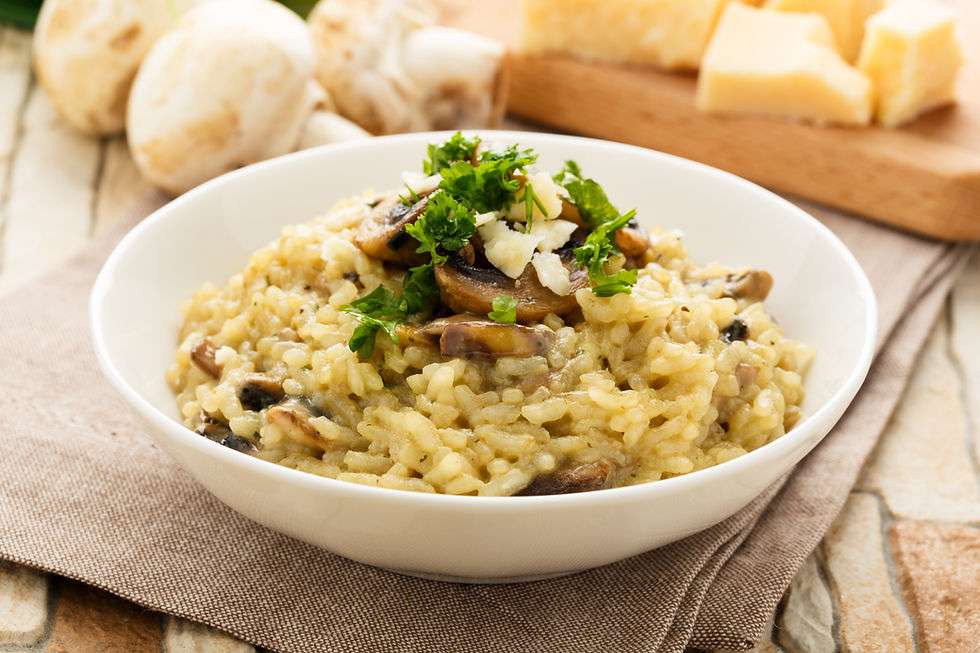
Risotto ai funghi porcini is the autumn risotto of Italy, the dish that fills trattorias from the Alps to the Apennines when the woods give their most prized mushroom. Its depth comes from the porcini used twice: dried, to make a dark, savory broth, and fresh, sliced and seared until golden. The classic is cooked in meat broth and finished with butter and grated Parmigiano Reggiano; this vegan version is a reinterpretation that keeps the traditional method and replaces them with a silky cream of cannellini beans blended with the porcini soaking liquid and extra virgin olive oil. The result is a risotto that is deeply savory, glossy and fragrant with thyme, in which the mushroom remains the absolute protagonist.
Yield: 4 servings. Prep: 30 minutes, plus 30 minutes soaking. Cook: 45 minutes. Rest: 2 minutes. Course: primo piatto. Region: the porcini woods of northern and central Italy.
The Story
The porcino, Boletus edulis and its close relatives, is the king of Italian mushrooms. Its name means little pig, a nod to its plump, rounded shape, and it grows in symbiosis with chestnuts, beeches, oaks and conifers in the woods of the Alps and the Apennines. From late summer to autumn, after rain and warm days, foragers go out at dawn to find them, and in many mountain towns the porcini season is still a social event, with markets, fairs and menus built around the mushroom.
Some porcini areas have earned protection. The Fungo di Borgotaro IGP covers porcini gathered in the woods of the upper Taro and Ceno valleys in the province of Parma and in nearby areas of Tuscany, around Pontremoli, where porcini have long been gathered, dried and traded. Drying is an ancient way to keep the harvest through the year: sliced and dried in the sun or in warm air, porcini concentrate their aroma and their savory compounds, so a small handful of dried mushrooms flavors a whole pot.
The pairing with rice is natural in the north, where risotto is the everyday first course. Every family that picks porcini has its own risotto: with fresh mushrooms in season, with dried ones in winter, with both when the larder allows. The best cooks of the mountain valleys use the soaking water of the dried porcini in the broth, because it carries most of their flavor, and they add the fresh mushrooms in two stages, part cooked with the rice and part seared for the top.
The classic risotto ai porcini is finished with butter and grated Parmigiano Reggiano and often cooked in a meat broth. This version is a reinterpretation, not the traditional recipe, and none of them are used here. The broth is a vegetable broth enriched with the dried porcini and their soaking liquid, the fat is extra virgin olive oil, and the creamy finish comes from cannellini beans blended into a smooth, neutral cream that carries the mushroom flavor instead of covering it. The method stays faithful to the tradition, and every step is measured so the rice keeps its bite and the porcini keep their texture and their scent of the woods.
Ingredients
Fresh porcini should be firm, with a tight, pale pore surface under the cap and a solid, heavy stem; avoid mushrooms with soft, greenish pores or small holes, signs of age or insects. Buy wild mushrooms only from a trusted seller: in Italy, foraged mushrooms are checked by public mycological inspectors before sale, and wherever you are, never cook mushrooms you cannot identify with certainty. Out of season, use frozen porcini, or replace the fresh porcini with a mix of cremini and king oyster mushrooms and increase the dried porcini slightly. Choose dried porcini in large, pale slices with few crumbs, which indicate a good grade. Use Carnaroli rice, good canned or home-cooked cannellini beans, and a fruity extra virgin olive oil. The white wine should be dry and unoaked; choose one labeled vegan, since some wineries clarify their wines with animal-derived fining agents.
For the porcini broth
Dried porcini, 1 oz (30 g)
Warm water, for soaking, 2 cups (475 ml)
Cold water, 1 1/2 quarts (1.4 l)
Yellow onion, 1, halved
Celery, 2 stalks
Carrot, 1
Fresh thyme, 2 sprigs
Bay leaf, 1
Fine sea salt, 1 1/2 tsp (9 g)
For the cannellini cream
Cooked cannellini beans, drained and rinsed, 3/4 cup (150 g)
Strained porcini soaking liquid, 1/4 cup (60 ml)
Extra virgin olive oil, 1 tbsp (15 ml)
Fine sea salt, 1 pinch
For the risotto
Fresh porcini, 14 oz (400 g)
Carnaroli rice, 1 2/3 cups (320 g)
Extra virgin olive oil, 3 tbsp (45 ml), divided
Shallot, 1 large, finely chopped, about 2 oz (60 g)
Garlic, 1 clove, peeled and lightly crushed
Dry white wine, 1/2 cup (120 ml)
Fresh thyme leaves, 1 tsp (1 g)
Fine sea salt and freshly ground black pepper, to taste
For the finish and the garnish
Extra virgin olive oil, fruity, 1 tbsp (15 ml)
Flat-leaf parsley, finely chopped, 1 tbsp (4 g)
Fresh thyme leaves, 1/2 tsp
Flaky sea salt, 1 pinch
Preparation
Step 1

Soak the dried porcini. Rinse the dried porcini quickly under cold water to remove dust, then cover them with 2 cups (475 ml) of warm water at about 104°F (40°C) and leave them for 30 minutes, until soft. Lift them out with your fingers, squeezing them gently over the bowl, and chop them finely. Strain the soaking liquid through a sieve lined with a paper towel or coffee filter. Warm water rehydrates the mushrooms and extracts their savory compounds without cooking them; the filter removes the fine grit that always settles at the bottom of the bowl.
Step 2

Make the porcini broth. Put the cold water, onion, celery, carrot, thyme, bay leaf and salt in a pot, add all but 1/4 cup (60 ml) of the strained soaking liquid and half of the chopped dried porcini, and bring it slowly to a simmer. Cook gently, uncovered, for 40 minutes, then strain it into a saucepan and keep it just below a simmer, at about 190°F (88°C). The soaking liquid holds most of the flavor of the dried mushrooms, and simmering it with the vegetables gives a dark, savory broth that replaces the meat stock of the classic recipe.
Step 3

Clean and slice the fresh porcini. Scrape the earth from the base of the stems with a small knife and wipe the caps with a damp cloth; never soak fresh porcini, because they absorb water like a sponge. Cut the four most beautiful mushrooms lengthwise into slices 1/4 inch (6 mm) thick for the garnish, and cut the rest into 1/2 inch (1 cm) dice. Lengthwise slices show the classic porcino silhouette on the plate, while the dice cook evenly with the rice and spread the mushroom through every bite.
Step 4

Make the cannellini cream. Blend the cannellini with the reserved 1/4 cup (60 ml) of soaking liquid, 1 tbsp (15 ml) of olive oil and a pinch of salt for 2 minutes, until perfectly smooth; add a spoonful of broth if it is too thick. It should pour slowly, like thick cream. Cannellini have a thin skin, a delicate flavor and a creamy texture when blended, which makes them an ideal base for a vegan mantecatura: they bind with the rice starch and carry the porcini flavor without adding a taste of their own.
Step 5

Sear the porcini. Heat 1 tbsp (15 ml) of olive oil in a large skillet over high heat with the crushed garlic until it shimmers. Sear the garnish slices in a single layer for 1 to 2 minutes per side, until deep golden, season with salt and lift them onto a plate. In the same pan, cook the diced porcini for 3 to 4 minutes, tossing, until golden and their juices have evaporated, then add the thyme, remove the garlic and set them aside. High heat browns the mushrooms quickly and develops roasted, nutty flavors; low heat would make them release water and stew.
Step 6

Toast the rice and cook the risotto. In a wide, heavy pan, warm 2 tbsp (30 ml) of olive oil over medium low heat and cook the shallot with a pinch of salt for 3 to 4 minutes, until translucent. Add the remaining chopped dried porcini and the rice, raise the heat to medium and stir for 2 to 3 minutes, until the grains are very hot and translucent at the edges. Pour in the wine and let it evaporate. Add hot broth a ladle at a time, about 3/4 cup (180 ml), stirring often. After 10 minutes, stir in the sautéed diced porcini. Carnaroli needs 16 to 18 minutes and about 4 1/2 to 5 cups (1.1 to 1.2 l) of broth.
Step 7

Finish the mantecatura. When the rice is tender but still slightly firm at the center and the risotto is loose, take the pan off the heat. Add the cannellini cream and 1 tbsp (15 ml) of fruity olive oil and beat vigorously with a wooden spoon for 30 to 40 seconds, until the risotto turns glossy and flows in a slow wave when you shake the pan. Season with salt and pepper, cover and leave for 2 minutes. The bean cream and the oil emulsify with the rice starch into a smooth sauce, playing the role of butter and cheese in the classic dish.
Plating
Serve in warm, wide, shallow plates, heated to about 140°F (60°C). Spoon about 1 1/3 cups (300 g) of risotto into the center of each plate and tap the plate gently on a folded towel so it spreads into a flat, even disk with a glossy surface.
Arrange two or three seared porcini slices on top of each portion, cut side up, sprinkle with chopped parsley and thyme leaves, and finish with a thin thread of olive oil and a few flakes of salt. The guest eats it with a fork or a spoon, and the first impression should be the scent of the woods: the seared slices on top, the savory risotto below.
Professional Technique
The key ratio is the mushroom balance: 1 oz (30 g) of dried porcini for depth and 14 oz (400 g) of fresh porcini for texture, for 1 2/3 cups (320 g) of rice. The dried mushrooms carry most of the savory intensity, the fresh ones give the meaty bite and the visual identity of the dish. Using only fresh porcini gives a delicate but shallow risotto; using only dried ones gives a deep flavor but no texture.
The hidden variable is the soaking liquid. It contains the water-soluble compounds that give dried porcini their savory depth, and it is the most valuable ingredient in the recipe. Filter it carefully, use it in the broth and in the bean cream, and never pour it away. The fine grit at the bottom, on the other hand, must stay in the filter: a single grain of sand ruins a spoonful of risotto.
The doneness test is the grain. Bite a grain of rice: it should be tender, with a small firm point at the center. Shake the pan: the risotto should ripple and settle flat. Stop 1 minute before you think it is ready, because the rice keeps cooking during the mantecatura and the rest.
Mushroom Moisture Control
Fresh porcini contain about 90 percent water, and how you manage it decides their texture. In a hot, uncrowded pan, the surface water evaporates at once and the mushrooms brown, developing roasted flavors through the Maillard reaction. In a crowded or lukewarm pan, the water escapes into the pan, the mushrooms simmer in their own juices and turn soft and gray. Cook them in batches if needed, and salt them only once they are golden, because salt draws water out.
Cleaning matters for the same reason. Porcini washed under running water or soaked absorb water that they release later in the pan, and they never brown properly. A damp cloth for the caps and a knife for the stems are enough. If a mushroom is very dirty, rinse it quickly and dry it at once with a towel.
The two-stage cooking protects the texture. The diced porcini, browned first and added halfway through the cooking, share their flavor with the rice and keep a pleasant bite. The garnish slices, seared separately and placed on top at the end, stay golden outside and juicy inside, giving the dish its contrast.
Professional Mise en Place
A porcini risotto rewards careful preparation: the broth, the cream and the mushrooms are ready before the rice goes into the pan, so the last 20 minutes are only stirring. Start the risotto about 25 minutes before service.
Equipment and tools
Bowl for soaking, sieve and paper filter
Pot for the broth and a saucepan with a ladle to keep it hot
Large heavy skillet for the porcini
Wide, heavy pan, 11 inches (28 cm), with low sides
Blender, small paring knife, damp cloth, wooden spoon
Prepared ahead
Dried porcini soaked, chopped and the liquid filtered, up to 1 day ahead, refrigerated
Porcini broth, up to 3 days ahead, refrigerated
Cannellini cream, up to 2 days ahead, refrigerated
Fresh porcini cleaned, within 4 hours of service; seared within 30 minutes of service
Service setup
Broth hot at about 190°F (88°C) beside the pan
Seared porcini slices warm on a plate near the stove
Plates warmed to about 140°F (60°C)
Cannellini cream at room temperature, olive oil, parsley, thyme and flaky salt on the pass
Chef Tips
Grind a few pieces of dried porcini to a powder in a spice grinder and keep it in a closed jar. A pinch stirred into the risotto at the end, or dusted over the plate, intensifies the porcini aroma at almost no cost.
For a deeper savory note close to that of aged cheese, blend 1 tsp (5 g) of white miso into the cannellini cream. It adds roundness and depth without a recognizable taste. Taste for salt afterwards, because both miso and porcini broth are savory.
Avoid synthetic truffle oils: they often contain artificial aroma and cover the real scent of porcini. If you want truffle, shave a little fresh black truffle over the plate in season.
In restaurant service, cook the risotto for the first 10 minutes, spread it on a tray and cool it quickly. At service, finish each portion in a small pan with hot broth, the diced porcini and the cream in 7 to 8 minutes. The result is very close to a risotto made from start to finish.
Common Mistakes
Soaking fresh porcini. They absorb water and never brown. Clean them with a damp cloth and a knife.
Throwing away the soaking liquid. It holds most of the flavor of the dried porcini. Filter it and use it in the broth and the cream.
Leaving grit in the liquid. Sand from dried mushrooms ruins the dish. Strain the liquid through a paper filter.
Crowding the pan. Crowded mushrooms stew in their own water and turn gray. Sear them in a single layer, in batches if needed.
Salting the mushrooms too early. Salt draws out water and prevents browning. Season them once they are golden.
Using a heavy dark broth with too many dried porcini. Too much dried mushroom turns the risotto bitter and muddy. Stay close to 1 oz (30 g) for 4 servings.
Overcooking the rice. A soft, mushy risotto loses its elegance. Stop when the center still has a slight firmness.
Wine Pairing
Nebbiolo d'Alba DOC: A Piedmontese red from the hills around Alba, with notes of red fruit, rose, dried herbs and a light earthy touch over firm, refined tannins. Its forest floor aromas mirror the porcini and its acidity cleans the creamy texture. Serve it at about 61°F (16°C).
Barbera d'Asti DOCG: A red from the hills of Asti, with ripe cherry fruit, high acidity and soft tannins. The acidity lifts the savory richness of the mushrooms, and the gentle tannins never clash with the risotto. Serve it at about 61°F (16°C).
Valtellina Superiore DOCG: A mountain Nebbiolo, locally called Chiavennasca, from the terraced slopes of Valtellina in Lombardy, with notes of small red fruit, herbs and a fine, slightly austere structure. Its alpine freshness suits a dish of mountain mushrooms. Serve it at about 61°F (16°C).
Roero Arneis DOCG: A Piedmontese white from the sandy hills of Roero, with notes of pear, almond and white flowers and a soft texture. For those who prefer white, it accompanies the delicate side of the porcini and the bean cream. Serve it at about 50°F (10°C).
Storage & Reheating
Refrigerator: keep leftover risotto in an airtight container for up to 2 days. The rice keeps absorbing liquid and the risotto becomes firm; the seared porcini slices are best kept apart. Freezer: not recommended for the finished risotto, because the rice turns grainy on thawing. The porcini broth freezes very well for up to 3 months, and so does the cannellini cream.
Reheat in a pan over medium low heat with about 1/4 cup (60 ml) of hot broth or water per portion, stirring until creamy and steaming, about 4 minutes. In the microwave, add the same liquid, cover and heat at 70 percent power for 2 minutes, stir, then heat 1 minute more. Warm the porcini slices in a hot pan for 30 seconds per side and place them on top before serving.
Nutrition
Per serving, based on 4 servings:
Calories: 525 kcal
Total Fat: 19 g
Saturated Fat: 2.5 g
Trans Fat: 0 g
Unsaturated Fat: 16 g
Cholesterol: 0 mg
Sodium: 690 mg
Total Carbohydrates: 74 g
Fiber: 7 g
Total Sugars: 4 g
Added Sugars: 0 g
Protein: 14 g
Principal micronutrients: selenium, copper, riboflavin, niacin, potassium, manganese
These figures are estimates, calculated on the quantities listed and rounded to the nearest whole number, assuming that about 4 1/2 cups (1.1 l) of broth are absorbed and that the alcohol of the wine evaporates during cooking. They vary with the water content of the fresh porcini.



Comments