
Italian Porcini Mushroom Risotto | Risotto ai Funghi Porcini
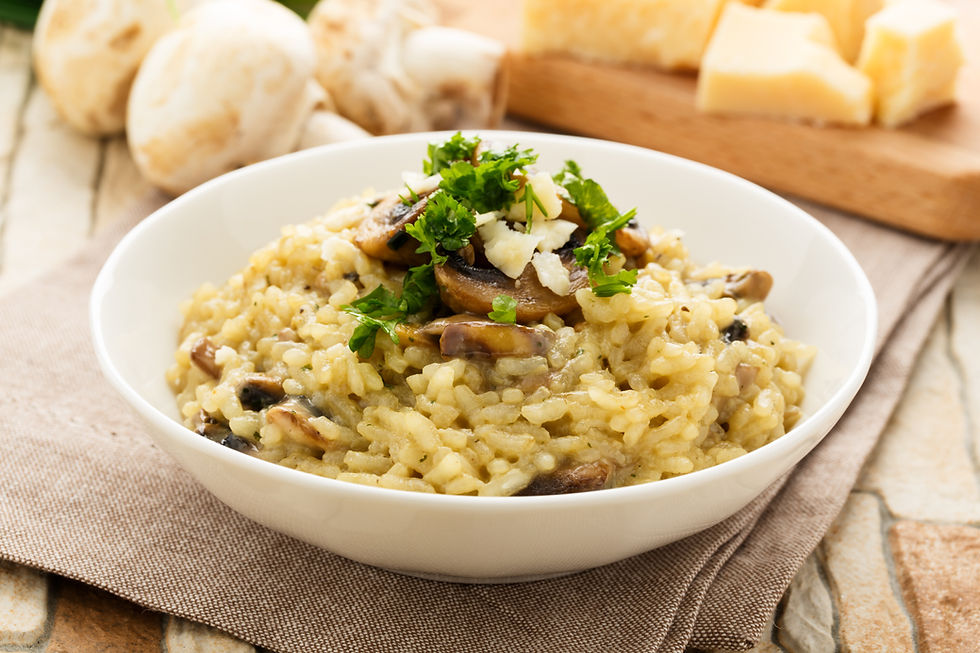
A risotto ai porcini is not a mushroom risotto with better mushrooms. The porcino changes how the whole dish is built: the broth is made from the mushroom itself, the rice is seasoned lightly because that broth is already savoury, and the caps are kept back and cooked separately so something on the plate still has a bite.
Two forms of the mushroom do two different jobs. Dried porcini, soaked and their liquid saved, give the concentrated woodland depth that carries through every grain. Fresh porcini give perfume and texture, and they are split again: the diced stems go into the base at the start, the sliced caps are seared at the end. That is how the dish holds three levels of one flavour at once.
The rest is the risotto method done honestly. Carnaroli, a proper tostatura, hot broth in controlled amounts, constant attention for eighteen minutes and a mantecatura off the heat with cold butter and Parmigiano. No cream, ever: the creaminess comes from starch and emulsion, and cream would flatten the porcini it was meant to support.
Yield: 4 servings. Prep: 30 minutes. Cook: 35 minutes. Rest: 2 minutes. Total: about 1 hour 10 minutes. Difficulty: intermediate. Course: primo. Region: Piedmont and Lombardy, the rice plain and the wooded foothills above it.
The Story
The porcino is a wild ingredient with a legal calendar. In Piedmont, Lombardy, Trentino and Veneto anyone gathering mushrooms needs a permit from the region or the mountain community, and it sets a daily ceiling, usually around 3 kilograms per person, plus the minimum cap size and the days the woods are closed. Boletus edulis grows in partnership with living tree roots, and a wood that is raked over stops fruiting. The season runs from late August to the first hard frost.
What makes this a Piedmontese and Lombard dish is geography. The rice paddies of Vercelli, Novara and the Lomellina sit directly below the chestnut and beech slopes of the Biellese, the Valsesia and the Ossola, so the two ingredients came from an afternoon apart. Carnaroli, bred in 1945 by crossing Vialone and Lencino, was selected on that plain, and its high amylose content is why it holds its shape through a long cooking while still releasing starch.
Drying turned a two month mushroom into a dish cooked all year. Sliced caps were strung above the stove in the valleys, and the dried porcino became a pantry staple with a shelf life measured in years. The soaking liquid was the point as much as the mushroom: heavily flavoured, faintly bitter, and used as part of the broth rather than discarded.
Ingredients
For the porcini
Fresh porcini, firm and dry, 14 oz (400 g)
Dried porcini, 3/4 oz (20 g)
Warm water for soaking, 1 1/2 cups (360 ml)
Extra virgin olive oil, 2 tbsp (30 ml)
Unsalted butter, 1 tbsp (14 g)
Garlic clove, whole, 1
Fresh thyme leaves, 1 tsp (1 g)
Fine sea salt, 1/2 tsp (3 g)
For the risotto
Carnaroli rice, 1 3/4 cups (350 g)
Light chicken or vegetable stock, 5 cups (1.2 L)
Shallot, very finely chopped, 1 small
Unsalted butter, 2 tbsp (28 g)
Dry white wine, 1/2 cup (120 ml)
Fine sea salt, 1 tsp (6 g)
For the mantecatura
Cold unsalted butter, cubed, 4 tbsp (56 g)
Parmigiano Reggiano, grated, 3/4 cup (70 g)
Freshly ground black pepper, to taste
For finishing
Reserved porcini caps, 4 slices about 1/3 inch (8 mm) thick
Extra virgin olive oil, 1 tbsp (15 ml)
Flat leaf parsley, chopped, 1 tbsp (3 g)
Thyme sprigs, 4 small
Preparation
Soaking the dried porcini and building the broth
Cover the dried porcini with the warm water for 30 minutes. Lift them out by hand so the grit stays behind, squeeze them over the bowl and chop them finely. Strain the liquid through a sieve lined with a damp paper filter and add it to the stock. Bring that broth to a bare simmer and hold it there for the whole cook.
Cleaning and dividing the fresh porcini
Never put porcini under the tap. Scrape the stems, brush the caps and wipe them with a barely damp cloth. Cut four slices about 1/3 inch (8 mm) thick from the firmest caps and set them on a rack. Dice the rest, stems and all, into pieces the size of a fingernail, since stems carry more flavour and hold their shape better.
Browning the diced porcini
Heat the oil and the tablespoon of butter in a wide pan over high heat with the whole garlic clove. Add the diced porcini in one layer and leave them undisturbed for two minutes. Salt only once they have colour, because salt at the start draws water out and they stew. Cook until the pan sizzles quietly, add the thyme and the chopped rehydrated porcini, then take it off the heat and discard the garlic.
Sweating the shallot and toasting the rice
In a wide heavy pan melt the 2 tablespoons of butter over medium heat and sweat the shallot 3 minutes without letting it colour. Add the dry rice and raise the heat. Stir constantly for 2 to 3 minutes until the grains are hot to the touch and the edges turn translucent with a white core still visible. Rice that has not been toasted properly breaks down into porridge in the last five minutes.
Deglazing with the wine
Pour in the white wine and keep stirring until the pan is dry and the sharp smell of alcohol has gone, about 2 minutes. It has to be fully evaporated before any broth goes in, or its acidity stays raw and fights the mushroom. Use a wine you would drink: a thin bottle leaves a sour edge that eighteen minutes will not soften.
Adding the broth and folding in the mushrooms
Add hot broth a ladle at a time, enough to just cover the rice, and stir steadily, waiting for each addition to be almost absorbed before the next. After about 8 minutes stir in two thirds of the browned porcini, keeping the rest for the finish. Taste for salt now: the broth is already savoury and the Parmigiano is still to come.
Judging the last five minutes
From minute 13 stop working to the clock and taste every minute. Carnaroli is ready at around 17 to 18 minutes, when the grain gives under the tooth with a firm centre that is cooked through but not soft. Make the last ladle a small one: the risotto should be slightly looser than you mean to serve it, because it tightens while you finish it.
The mantecatura off the heat
Take the pan off the heat entirely and wait 30 seconds. Add the cold cubed butter first, beating it through with a wooden spoon, then the Parmigiano, then a grind of pepper. Beating off direct heat emulsifies the fat with the rice starch into a glossy cream; over a flame the same butter and cheese simply break.
Resting and checking the wave
Cover the pan and let it stand 2 minutes, then beat it once more. Tip the pan and the risotto should move in a slow wave, all'onda, settling flat within a couple of seconds. If it holds a mound it needs a spoonful of hot broth; if it leaves liquid at the edge it needs another 30 seconds of beating. While it rests, sear the cap slices in the tablespoon of oil, 90 seconds a side.
Plating
Use wide flat plates warmed to around 140°F (60°C), never bowls. A bowl keeps the heat too long, so the risotto goes on cooking and tightens before the plate is finished. Spoon it into the centre, then tap the underside of the plate once with the flat of your hand: the wave spreads itself into an even round.
Lay two seared porcini slices slightly off centre, scatter the reserved browned mushrooms around them, add a thyme sprig and the parsley, and finish with black pepper. A last dusting of Parmigiano at the table is traditional. Carry the plates immediately: risotto is the one primo that will not wait, and two minutes on a pass costs it the wave.
Professional Technique
The technique that defines this dish is treating the broth as an ingredient rather than a cooking medium. Soaking liquid from dried porcini is intensely savoury, slightly bitter and dark, and blending it into a light stock rather than using it neat gives a broth that seasons the rice from the inside. That is why the stock is a light one: the porcini liquid is the flavour, and a heavy meat broth would bury it.
The second technique is dividing one mushroom into three roles. Diced stems browned hard at the start give the caramelised base note and fold into the body of the rice. Rehydrated dried porcini give the concentrated register fresh mushrooms never reach. Seared cap slices give perfume and resistance under the tooth, and they go on at the very end, because a porcino stirred into risotto loses its texture within a minute.
Mantecatura is the third and it is pure physics. Rice starch released during cooking is suspended in the liquid, and beating cold butter into that suspension off the heat creates a stable emulsion of fat, starch and water. Cold butter is essential because it melts slowly enough to disperse before it separates.
Texture and Moisture Control
Everything depends on the rate at which starch leaves the grain. Carnaroli has a high amylose content and a firm outer structure, so it releases starch slowly and keeps a defined core. Arborio releases faster and turns sticky sooner; Vialone Nano works but cooks in about 14 minutes. Never rinse the rice: rinsing washes away the surface starch the whole method is designed to collect.
The broth must stay just below a simmer and go in in small amounts. Flooding the pan turns absorption into boiling, and the liquid never reduces enough to hold the starch. Stirring abrades the surface of the grain and puts that starch into suspension, so it should be steady and unhurried rather than violent.
Moisture is finished, not cooked out. Serve it slightly wetter than looks correct, because residual heat keeps working on the plate and it tightens between kitchen and table. Fresh porcini folded in while still releasing water will thin the rice unpredictably, which is why they are browned dry first.
Professional Mise en Place
Risotto punishes poor organisation, because once the rice is toasted there is no free moment.
Equipment and tools
Wide heavy pan or rondeau, about 11 inches (28 cm), low sided
Separate saucepan holding the broth just under a simmer, with a ladle in it
Wide saute pan for browning the mushrooms and searing the caps
Wooden spoon for stirring and a second one for the mantecatura
Fine mesh sieve and a paper filter for the soaking liquid
Microplane for the Parmigiano, soft brush for the mushrooms
Prepared ahead
Porcini soaked, liquid strained and blended into the stock, up to 1 day ahead
Diced porcini browned and cooled, up to 1 day ahead, refrigerated
Cap slices cut and held dry on a rack, on the day
Shallot chopped, Parmigiano grated, butter cubed and returned to the refrigerator
Everything weighed out and set beside the stove before the rice is toasted
Service setup
Broth hot and within arm's reach, tasted for salt before service starts
Plates warm at around 140°F (60°C), never hot bowls
Cold butter and Parmigiano together in one bowl for the mantecatura
Searing pan hot for the final 2 minutes, parsley and thyme cut
Nothing else on the stove: the rice needs the whole eighteen minutes
Chef Tips
Buy dried porcini in whole slices rather than pieces, with pale cream flesh and a thin brown edge. Dark crumbled bags are the sweepings: more grit, and a soaking liquid that turns bitter rather than deep. Good ones are expensive for a reason, and 3/4 oz (20 g) is enough for four.
Taste the broth before the first ladle and salt it there, not the rice. Seasoning the liquid salts the grains evenly from the inside as they absorb, while salt added late sits on the surface. Remember the Parmigiano brings salt of its own at the end.
If the porcini are young and perfect, shave one raw over the finished plate instead of searing it. A raw porcino has a clean nutty sweetness that cooking removes entirely. Slice it on a mandolin and dress it only with olive oil.
Cook in a wide low pan rather than a deep one. A wide base gives more contact with the heat and a shallower layer of rice, so the grains cook evenly. In a tall saucepan the bottom overcooks while the top is still chalky.
Common Mistakes
Washing the rice before cooking. Rinsing removes the surface starch that creates the creaminess, and no amount of butter at the end replaces it. Carnaroli goes into the pan dry.
Adding cold or lukewarm broth. Each cold ladle drops the pan temperature and interrupts the absorption, which gives unevenly cooked grains with a chalky centre. Keep the broth just under a simmer throughout.
Skipping or rushing the tostatura. Rice not toasted until the grains are hot and the edges translucent loses its structure and collapses before it is cooked through. Two to three minutes of constant stirring is the minimum.
Doing the mantecatura over the heat. The butter breaks instead of emulsifying, the cheese goes stringy and the surface turns oily. Take the pan off the flame and wait half a minute first.
Adding cream. It masks the porcini, dulls the Parmigiano and produces a heavy sauce instead of an emulsion. Everything a risotto needs is already in the starch, the butter and the cheese.
Serving it stiff. A risotto that holds a mound has been cooked too dry or left standing too long. It should move in a slow wave and settle flat.
Wine Pairing
Barbaresco DOCG: Nebbiolo from the Tanaro side of the Langhe, softer and earlier to open than Barolo, with dried rose, truffle and forest floor aromatics that meet the mushroom directly. The high acidity and fine tannin cut the butter and the Parmigiano of the mantecatura without stripping the dish.
Valpolicella Ripasso DOC: Refermented on the skins left from Amarone, it gains depth, dried cherry and a warm savoury edge while keeping the freshness of the base wine. That handles a rich risotto better than a plain Valpolicella and stays lighter than a full Amarone. Serve it at 61°F (16°C).
Verdicchio dei Castelli di Jesi Classico Riserva DOCG: Riserva bottlings spend longer on the lees and gain a broad, faintly saline texture that stands up to butter and cheese, while the bitter almond finish typical of Verdicchio answers the woodland note of the dried porcini.
Etna Bianco DOC: Carricante grown on volcanic ash gives a taut, smoky white with unusually high acidity for the south. That acidity slices through the emulsion of fat and starch, and the flinty character sits beside the mushroom rather than echoing it. A pairing by contrast.
Refosco dal Peduncolo Rosso Friuli DOC: A dark Friulian red with sour cherry fruit, a herbal note and a bitter almond finish that keeps it from tasting sweet against the rice. High acidity and moderate tannin refresh a buttery dish rather than weighing on it. Serve it at 59°F (15°C).
Storage & Reheating
Risotto is a dish to eat at once, and leftovers should be treated as a different dish. Spread what is left in a thin layer on a tray so it cools quickly, then refrigerate it in an airtight container for up to 2 days. Cooling it fast matters: cooked rice left warm for hours is a real food safety risk.
The correct way to bring it back is risotto al salto. Press the cold risotto into a thin disc, about 1/2 inch (12 mm), and fry it in butter in a nonstick pan over medium heat for 4 to 5 minutes a side until a crisp golden crust forms. To reheat it as risotto instead, warm it gently with a ladle of hot broth, beating it back to a wave, and accept a softer grain.
Freezing costs texture. Freeze single portions for up to 1 month, thaw overnight in the refrigerator and use them for risotto al salto or arancini rather than serving them loose. The browned porcini freeze well for 3 months and the broth for 6 months.
Nutrition
Per serving, based on 4 servings:
Calories: 640 kcal
Total Fat: 28 g
Saturated Fat: 16 g
Trans Fat: 0.8 g
Unsaturated Fat: 10 g
Cholesterol: 70 mg
Sodium: 890 mg
Total Carbohydrates: 78 g
Fiber: 3 g
Total Sugars: 3 g
Added Sugars: 0 g
Protein: 17 g
Lactose: 1.5 g
Principal micronutrients: selenium, copper, potassium, phosphorus, calcium, niacin, riboflavin, vitamin D
These figures are estimates. Sodium depends almost entirely on how the broth is salted and on the Parmigiano, and the fat figure moves with how generous the mantecatura is.


Comments