
Italian Calabrian Bergamot Sorbet | Sorbetto al Bergamotto di Calabria
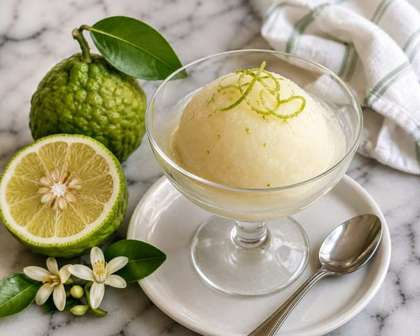
Bergamot smells like the most beautiful citrus in Italy and tastes like the most difficult one. Its juice is fiercely bitter, far more aggressive than lemon, and a sorbet built on juice alone is not pleasant to eat. The flavour has to arrive from somewhere else.
So this sorbet is built the other way round. A syrup infused with the perfumed peel carries almost all of the aroma, and the juice enters in a small measured dose, purely for lift and acidity.
Yield: 6 servings, about 1 quart (950 ml). Prep: 25 minutes. Infusion: 40 minutes. Chill: 6 hours. Churn: 25 minutes. Final freeze: 4 hours. Difficulty: intermediate. Course: dolce. Region: Calabria, the Ionian coast of Reggio.
The Story
Almost the entire world supply of bergamot grows on one narrow coastal strip in the province of Reggio Calabria, running from Villa San Giovanni round the toe of Italy to Monasterace along the Costa dei Gelsomini. The tree exists elsewhere, but it fruits properly only there, where sea humidity, mild winters and the alluvial soils of the fiumare meet. Commercial planting began in the late eighteenth century, and the three cultivars still grown, Femminello, Castagnaro and Fantastico, were selected on those same few kilometres. Calabrians call it the green gold of the coast, and for two centuries that gold was sold by the drop rather than by the kilo.
The reason is perfume. Bergamot essence, pressed from the rind, is the opening note of Eau de Cologne and of Earl Grey tea, and for generations the peel was the crop while the juice was simply run off as waste. Old presses in Reggio were built to scrape the flavedo and nothing else. Cooks along the coast knew better and used what the factories discarded, turning the sharp juice into granite, sorbetti and marmellata, and candying the spent peel in sugar. That domestic habit is the direct ancestor of this recipe: a frozen dessert invented around a fruit nobody was supposed to eat.
Recognition arrived late. Bergamotto di Reggio Calabria became the first DOP granted to an essential oil, and the juice has since found its way onto serious Italian menus, usually frozen, because cold is the state in which its bitterness becomes interesting instead of punishing. Served in a small chilled glass at the end of a long summer meal, it smells of flowers and tea and resin, finishes clean and faintly bitter, and tastes unmistakably of one stretch of Calabrian coast.
Ingredients
Buy bergamot with unwaxed skin, since the peel is the main flavour source here. Four fruits give plenty of zest and more juice than the recipe needs, which is useful because the juice dose is set by tasting rather than by the measuring jug.
For the zest infused syrup
Water, 2 1/2 cups (600 ml)
Granulated sugar, 1 1/4 cups (250 g)
Glucose syrup or mild acacia honey, 2 tbsp (40 g)
Pared zest of bergamot, from 4 unwaxed fruits, no white pith
Fine sea salt, 1/8 tsp (0.7 g)
For the base
Fresh bergamot juice, 1/4 to 1/3 cup (60 to 80 ml), strained
Fresh lemon juice, 1 tbsp (15 ml)
Cold still water, up to 1/2 cup (120 ml), for adjusting
For finishing, optional
Candied bergamot peel, finely diced, 2 tbsp (25 g)
Extra virgin olive oil, a few drops per glass
Flaky sea salt, one small pinch per serving
The lemon juice is not there for lemon flavour. It supplies plain clean acidity so that the bergamot dose can stay low, and one tablespoon is the most you should ever need. The glucose keeps the finished sorbetto scoopable straight from the freezer; honey works but leaves its own aroma behind.
Preparation
Choose and wash the fruit
Pick fruits that feel heavy and smell strongly through the skin, with no soft patches at the stem. Because you are using the peel, scrub each one under warm running water with a clean brush, then dry them completely. Wet skin will not release its oil cleanly and water dripping into the syrup dilutes the infusion before it starts. Let the fruit come to room temperature before you pare it, since cold peel is stiff and tears.
Pare the zest away from the pith
Using a swivel peeler or a very sharp small knife, take the coloured outer layer only, in wide thin strips. Hold each strip up to the light: if you can see white on the back, scrape it off with the knife. That white pith carries harsh bitterness with no perfume in it, and in a fruit this bitter already you cannot afford any. You want roughly 1 1/2 oz (40 g) of clean coloured peel.
Infuse the zest in a hot syrup
Combine the water, sugar, glucose and salt in a saucepan and heat gently, stirring, just until the sugar dissolves and the liquid is steaming but not boiling, around 175°F (80°C). Take the pan off the heat, drop in all the peel at once, press it under the surface and cover tightly. Leave it to infuse for 40 minutes as it cools. Do not boil the syrup with the peel in it: a rolling boil drives the volatile top notes into the kitchen instead of into the liquid.
Strain the syrup and chill it hard
Lift out the peel and press it lightly against a fine mesh sieve to release the last of the oil, then discard it or set it aside for candying. Strain the syrup through the sieve into a clean container, cover it and refrigerate until it is properly cold, at least 2 hours. Do not taste it for balance while it is warm, and do not add any juice yet. The next step depends entirely on this syrup being cold.
Juice the fruit and build the base cold
Halve the fruit and squeeze it by hand rather than reaming it hard, which drags bitter compounds out of the membranes, then strain the juice. Add the lemon juice and half of the bergamot juice to the cold syrup, stir, and taste. Keep adding bergamot a teaspoon at a time until the aroma is loud and the bitter finish is present but short. Stop while it is still slightly sweeter than you want, then loosen with cold water only if the perfume has turned soapy or heavy.
Rest the base, then churn
Cover the finished base and leave it in the coldest part of the refrigerator for at least 4 hours, ideally overnight. This rest lets the sugar hydrate fully and rounds the edge off the aroma. Churn it in a machine with a properly frozen bowl for 20 to 25 minutes, until it climbs into soft ridges and holds a line drawn with a spatula. It will still be too soft to serve, and that is correct.
Freeze flat, then temper before serving
Scrape the sorbetto into a shallow metal tray or a wide container, spread it no deeper than about 1 1/2 in (4 cm), press a sheet of parchment directly onto the surface and freeze for 4 hours. A shallow layer freezes through quickly and keeps the crystals fine, while a deep tub freezes slowly from the outside in. Move the container to the refrigerator for 10 minutes before serving so it softens evenly rather than melting at the edges.
Plating
Serve it in small glasses that have been in the freezer for at least an hour, never on a plate and never in a warm bowl. A coppetta of about 4 oz (120 ml) is right, filled two thirds, because the pleasure of this sorbetto is concentrated and a large portion turns the bitterness tiring. Use a warmed spoon dipped in hot water and dried, and shape two small quenelles rather than one round scoop.
Finish with restraint. A few grains of diced candied peel on top give a chew and a sweet counterpoint, three drops of green olive oil add weight and a peppery echo of the resin in the fruit, and a single pinch of flaky salt sharpens the whole thing. Take the glasses to the table immediately. This dessert has a window of about two minutes before it begins to slump.
Professional Technique
The governing idea of this recipe is that bergamot cannot be treated as a lemon. With a lemon sorbet you build volume out of juice and the flavour follows the quantity. Bergamot juice is too bitter and too aggressive to work that way: push it to lemon proportions and the result is harsh, medicinal and impossible to finish. So the two jobs that juice usually does are split. Aroma comes from the peel, infused into the syrup, and juice is reduced to a small measured dose whose only task is acidity and lift.
That is why the infusion runs hot but never boils. At around 175°F (80°C) the sugar solution pulls the aromatic oils out of the coloured flavedo generously, and the sugar then holds them in solution as the syrup cools. A boil does the opposite: the lightest and most floral molecules, the ones that make bergamot recognisable, leave with the steam, and what stays behind is the heavier resinous end of the spectrum. Off the heat, covered, for 40 minutes gives a fuller extraction than an hour of simmering.
The calibration of the juice is the part that separates a good bergamot sorbetto from a failure, and it has to happen cold. Heat suppresses the perception of bitterness and flattens aromatics, so a warm syrup always tastes rounder and more forgiving than it truly is. Judge the dose on a warm syrup and you will add far too much juice, then discover the mistake only once the sorbetto is frozen and unfixable. Chill the syrup first, taste at refrigerator temperature, and add juice by the teaspoon.
Texture and Moisture Control
Crystal size is decided in two places: the churn and the shape of the container. A machine bowl that is only partly frozen churns slowly, and slow freezing grows long coarse crystals that read as gritty on the tongue. Freeze the bowl for a full 24 hours and stop the machine as soon as the mixture holds soft ridges, since churning past that point warms the base through friction and costs you texture. Then spread it shallow: a layer of about 1 1/2 in (4 cm) in a metal tray passes through the critical zone fast, while the same volume in a deep tub sits for hours half frozen.
Serving temperature controls how the bitterness reads, and this is specific to bergamot. Very cold, the sorbetto is hard and its bitter finish arrives sharp and slightly metallic. Too soft, the perfume dominates and turns soapy. The window is narrow, around 8°F to 12°F (minus 13°C to minus 11°C), which in practice means 10 minutes in the refrigerator and no longer. Keep the parchment pressed to the surface between services, since exposed sorbetto dries, forms a crust and picks up freezer odours within a day.
Professional Mise en Place
Equipment and tools
Ice cream machine with the bowl frozen 24 hours, or a shallow metal tray for the still frozen method
Swivel peeler, small sharp paring knife, fine mesh sieve
Heavy saucepan and a tight lid for the infusion
Digital thermometer, so the syrup stays under a boil
Shallow metal tray, parchment, small glasses in the freezer
Prepared ahead
Syrup infused, strained and chilled, up to 3 days ahead, refrigerated
Bergamot juiced and strained on the day it is used, kept covered and cold
Base built, tasted and rested overnight, which improves it
Candied peel diced and held in a sealed jar at room temperature
Service setup
Sorbetto churned and frozen flat, parchment on the surface
Glasses and spoons in the freezer, a jug of hot water for the shaping spoon
Container moved to the refrigerator exactly 10 minutes before plating
Olive oil, salt and peel lined up so each glass is finished in seconds
Chef Tips
Keep any bergamot juice you do not use. It freezes perfectly in an ice cube tray and a single cube is enough to finish a fish crudo, a granita or a vinaigrette, which means you are never tempted to overdose the sorbetto simply because there is juice left in the jug.
Without a machine, freeze the base in a shallow metal tray and scrape it thoroughly with a fork every 30 minutes for about 3 hours. You will get a granita texture rather than a smooth sorbetto, which suits bergamot extremely well and is closer to what is actually eaten in Reggio.
Taste the strained syrup on its own before you add anything. If the peel has given you a flat or woody smell rather than a floral one, the fruit was old or the syrup boiled. Start again with fresh peel, because no amount of juice or sugar will put the top notes back.
If bergamot is genuinely out of season, do not fake it with lemon and Earl Grey tea. Make a different citrus sorbetto and wait. The season runs from late autumn into early spring, and whole fruit frozen in a sealed bag keeps its peel oil well for a couple of months.
Common Mistakes
Using bergamot juice like lemon juice. Matching the quantity you would use in a lemon sorbet produces something harsh and medicinal that nobody finishes. The juice is a seasoning here, not the body, and the aroma is supposed to come from the infused peel.
Boiling the syrup with the peel in it. The floral top notes leave with the steam and the sorbetto ends up smelling resinous and dull. Heat the syrup to about 175°F (80°C), take it off the heat, then infuse covered for 40 minutes.
Tasting the base while it is warm. Heat hides bitterness, so a warm syrup tastes balanced when it is not. Chill it completely, taste it at refrigerator temperature, and add the juice a teaspoon at a time from there.
Taking pith along with the zest. White pith brings hard bitterness and no perfume at all, and this fruit has bitterness to spare. Pare thin coloured strips and scrape the back of any that show white.
Freezing the finished sorbetto in a deep tub. A deep container freezes slowly from the outside in and the centre grows coarse crystals. Spread it no deeper than about 1 1/2 in (4 cm) in a metal tray instead.
Wine Pairing
Greco di Bianco DOC: The exact geographical answer, made from part dried Greco grapes a short drive along the same Ionian coast where the bergamot grows. Its aromas of orange peel, bergamot itself and honeyed herbs echo the sorbetto rather than argue with it, and its residual sugar sits comfortably above the dessert so the fruit never makes the wine taste thin. The gentle bitterness on its finish is the real link.
Moscato d'Asti DOCG: The lightest partner on this list and the easiest one. Low alcohol, soft sweetness and a fine sparkle refresh the palate between spoonfuls, while the grapey and orange blossom aromatics run alongside the peel infusion instead of competing with it. The carbon dioxide also lifts the cold weight of a frozen dessert, which still wines cannot do. Serve it very cold and freshly opened.
Malvasia delle Lipari DOC: An Aeolian passito with dried apricot, candied citrus and a touch of iodine from the islands. It has more concentration than the sorbetto, which is exactly what you want after something this sharp, and its candied peel character is a direct bridge to the diced bergamot on top. Its acidity stays high enough that the pairing never becomes cloying.
Recioto di Soave DOCG: Garganega dried on the vine gives quince, almond and white flowers with a notably firm acid spine for a sweet wine. That acidity is the point here: it meets the bergamot on equal terms rather than being stripped bare by it, and the almond note on the finish picks up the faint bitterness the dessert leaves behind. Pour it at around 50°F (10°C).
Storage & Reheating
The infused syrup keeps refrigerated in a sealed jar for 3 days and freezes for a month with no loss, so it is the component worth making ahead. The finished base is best churned within 24 hours of being built. Once frozen, the sorbetto holds its quality for about 5 days in a sealed container with parchment pressed onto the surface, and remains safe for a month while slowly going coarse and losing perfume.
Nothing here is reheated, but a sorbetto that has been in the freezer too long can be rescued once. Let it thaw in the refrigerator until it is a thick liquid, never at room temperature, then churn it again and freeze it flat. Do that a single time only, since every cycle costs aroma. Never refreeze a portion already served, and keep the container away from anything strongly scented: frozen citrus absorbs freezer smells fast.
Nutrition
Per serving, based on 6 servings:
Calories: 185 kcal
Total Fat: 0 g
Saturated Fat: 0 g
Trans Fat: 0 g
Unsaturated Fat: 0 g
Cholesterol: 0 mg
Sodium: 30 mg
Total Carbohydrates: 47 g
Fiber: 0 g
Total Sugars: 46 g
Added Sugars: 44 g
Protein: 0 g
Lactose: 0 g
Principal micronutrients: vitamin C, potassium, small amounts of citrus flavonoids
These are estimates and shift with the final juice dose.


Comments