
Italian Tropea Onion Tartlet with Goat Cheese, ’Nduja and Honey | Tartelletta di Cipolla di Tropea, Caprino, ’Nduja e Miele
Updated: Sep 1
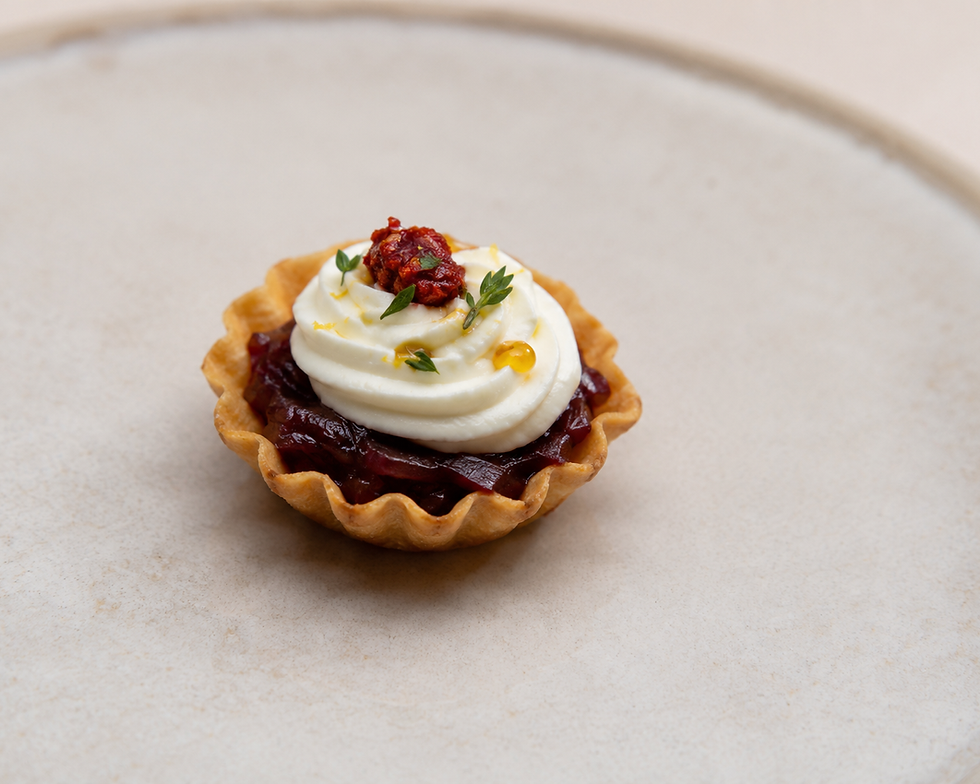
This tartlet combines several flavors strongly associated with Calabria: Tropea red onion, ’nduja, and the sweet-savory tension that often works beautifully with fresh cheese. The onion is cooked slowly into a savory confit, not a sugary jam. Fresh goat cheese provides acidity and creaminess. ’Nduja is used as a small controlled accent, while honey appears only at the finish so the bite never becomes dessert-like. Tartelletta di Cipolla di Tropea, Caprino, ’Nduja e Miele Tartelletta di Cipolla di Tropea, Caprino, ’Nduja e Miele (Italian Tropea Onion Tartlet with Goat Cheese, ’Nduja and Honey)
The Story
Ingredients
For the Tartlet Shells
1 cup all-purpose flour
5 tablespoons cold unsalted butter, diced
1/3 cup finely grated Pecorino
1 large egg yolk
2 tablespoons ice water
1/4 teaspoon fine sea salt
Fresh black pepper
For the Tropea Onion Confit
3 medium Tropea red onions, thinly sliced
2 tablespoons extra-virgin olive oil
1 tablespoon unsalted butter
1/4 teaspoon fine sea salt
1 teaspoon brown sugar
2 tablespoons red wine vinegar
1/4 cup dry red wine
Fresh black pepper
For the Goat Cheese Cream
5 ounces fresh goat cheese
3 tablespoons whole-milk ricotta
2 tablespoons heavy cream
1 teaspoon extra-virgin olive oil
1 teaspoon lemon juice
White pepper
Salt only if needed
For the ’Nduja
3 ounces ’nduja
1 tablespoon warm extra-virgin olive oil
For the Honey Finish
2 tablespoons mild Italian honey
1 teaspoon warm water
1/2 teaspoon red wine vinegar
For Finishing
Fresh thyme leaves
Finely grated lemon zest
Extra-virgin olive oil
Recipe Overview
Make the Tartlet Dough
Cook the Tropea Onions
Prepare the Goat Cheese Cream
Prepare the Honey
Add Cheese and ’Nduja
Plating
Professional Technique
For consistent professional results, work in measured stages and keep the principal ingredient at the center of the preparation. Temperature changes affect seasoning, fat perception, starch behavior, protein texture, and aroma, so the final adjustment should be made only after the dish reaches its service consistency. Use visual and tactile cues throughout the process: observe how moisture evaporates, how sauces coat the spoon, how proteins resist gentle pressure, and how doughs or grains respond as they cook. Keep the cooking vessel appropriately sized so ingredients are not crowded, and allow each component enough contact with heat to develop flavor without drying. If the recipe contains a sauce, reserve a small amount of its cooking liquid or another compatible liquid so texture can be corrected at the end rather than by adding excess fat. Rest components only when the recipe benefits from resting; otherwise move directly to plating so crisp, delicate, or creamy textures remain intact. Before service, taste one complete bite containing the same proportions the guest will receive. Correct salt first, then acidity, then richness, and only then consider aromatic finishing elements. This sequence produces a cleaner and more repeatable result than adjusting several variables at once.
For consistent professional results, work in measured stages and keep the principal ingredient at the center of the preparation. Temperature changes affect seasoning, fat perception, starch behavior, protein texture, and aroma, so the final adjustment should be made only after the dish reaches its service consistency. Use visual and tactile cues throughout the process: observe how moisture evaporates, how sauces coat the spoon, how proteins resist gentle pressure, and how doughs or grains respond as they cook. Keep the cooking vessel appropriately sized so ingredients are not crowded, and allow each component enough contact with heat to develop flavor without drying. If the recipe contains a sauce, reserve a small amount of its cooking liquid or another compatible liquid so texture can be corrected at the end rather than by adding excess fat. Rest components only when the recipe benefits from resting; otherwise move directly to plating so crisp, delicate, or creamy textures remain intact. Before service, taste one complete bite containing the same proportions the guest will receive. Correct salt first, then acidity, then richness, and only then consider aromatic finishing elements. This sequence produces a cleaner and more repeatable result than adjusting several variables at once.
For consistent professional results, work in measured stages and keep the principal ingredient at the center of the preparation. Temperature changes affect seasoning, fat perception, starch behavior, protein texture, and aroma, so the final adjustment should be made only after the dish reaches its service consistency. Use visual and tactile cues throughout the process: observe how moisture evaporates, how sauces coat the spoon, how proteins resist gentle pressure, and how doughs or grains respond as they cook. Keep the cooking vessel appropriately sized so ingredients are not crowded, and allow each component enough contact with heat to develop flavor without drying. If the recipe contains a sauce, reserve a small amount of its cooking liquid or another compatible liquid so texture can be corrected at the end rather than by adding excess fat. Rest components only when the recipe benefits from resting; otherwise move directly to plating so crisp, delicate, or creamy textures remain intact. Before service, taste one complete bite containing the same proportions the guest will receive. Correct salt first, then acidity, then richness, and only then consider aromatic finishing elements. This sequence produces a cleaner and more repeatable result than adjusting several variables at once.
For consistent professional results, work in measured stages and keep the principal ingredient at the center of the preparation. Temperature changes affect seasoning, fat perception, starch behavior, protein texture, and aroma, so the final adjustment should be made only after the dish reaches its service consistency. Use visual and tactile cues throughout the process: observe how moisture evaporates, how sauces coat the spoon, how proteins resist gentle pressure, and how doughs or grains respond as they cook. Keep the cooking vessel appropriately sized so ingredients are not crowded, and allow each component enough contact with heat to develop flavor without drying. If the recipe contains a sauce, reserve a small amount of its cooking liquid or another compatible liquid so texture can be corrected at the end rather than by adding excess fat. Rest components only when the recipe benefits from resting; otherwise move directly to plating so crisp, delicate, or creamy textures remain intact. Before service, taste one complete bite containing the same proportions the guest will receive. Correct salt first, then acidity, then richness, and only then consider aromatic finishing elements. This sequence produces a cleaner and more repeatable result than adjusting several variables at once.
For consistent professional results, work in measured stages and keep the principal ingredient at the center of the preparation. Temperature changes affect seasoning, fat perception, starch behavior, protein texture, and aroma, so the final adjustment should be made only after the dish reaches its service consistency. Use visual and tactile cues throughout the process: observe how moisture evaporates, how sauces coat the spoon, how proteins resist gentle pressure, and how doughs or grains respond as they cook. Keep the cooking vessel appropriately sized so ingredients are not crowded, and allow each component enough contact with heat to develop flavor without drying. If the recipe contains a sauce, reserve a small amount of its cooking liquid or another compatible liquid so texture can be corrected at the end rather than by adding excess fat. Rest components only when the recipe benefits from resting; otherwise move directly to plating so crisp, delicate, or creamy textures remain intact. Before service, taste one complete bite containing the same proportions the guest will receive. Correct salt first, then acidity, then richness, and only then consider aromatic finishing elements. This sequence produces a cleaner and more repeatable result than adjusting several variables at once.
For consistent professional results, work in measured stages and keep the principal ingredient at the center of the preparation. Temperature changes affect seasoning, fat perception, starch behavior, protein texture, and aroma, so the final adjustment should be made only after the dish reaches its service consistency. Use visual and tactile cues throughout the process: observe how moisture evaporates, how sauces coat the spoon, how proteins resist gentle pressure, and how doughs or grains respond as they cook. Keep the cooking vessel appropriately sized so ingredients are not crowded, and allow each component enough contact with heat to develop flavor without drying. If the recipe contains a sauce, reserve a small amount of its cooking liquid or another compatible liquid so texture can be corrected at the end rather than by adding excess fat. Rest components only when the recipe benefits from resting; otherwise move directly to plating so crisp, delicate, or creamy textures remain intact. Before service, taste one complete bite containing the same proportions the guest will receive. Correct salt first, then acidity, then richness, and only then consider aromatic finishing elements. This sequence produces a cleaner and more repeatable result than adjusting several variables at once.


Comments