
Italian Spaghetti with Garlic, Olive Oil and Chile | Spaghetti aglio, olio e peperoncino
Updated: Sep 8

Spaghetti aglio, olio e peperoncino is one of the clearest tests of Italian pasta technique. The ingredient list is short, but the margin for error is equally small: garlic can turn bitter in seconds, chile can dominate the plate, olive oil can separate into a greasy pool, and spaghetti can lose its texture while the cook is trying to build the sauce. The finished dish should be glossy rather than oily, fragrant rather than aggressively garlicky, warm from peperoncino rather than painfully hot, and unmistakably driven by the flavor of good durum-wheat pasta and extra-virgin olive oil.
The key is emulsification. Starchy pasta water and olive oil do not become a sauce simply because they are in the same pan. They must be brought together at the correct temperature while the spaghetti is tossed and finished in the pan. When this is done correctly, a thin emulsion coats every strand and gives the dish the impression of richness without butter, cream or cheese.
History
Spaghetti aglio, olio e peperoncino is strongly associated with Naples and the broader cooking traditions of Campania. It belongs to the family of pantry-driven pasta preparations that depend on inexpensive, durable ingredients: dried pasta, garlic, olive oil and dried chile. These ingredients could be kept on hand and turned into a complete plate quickly, which helps explain why the dish became deeply rooted in home cooking and late-night cooking as well as restaurant culture.
Calling it a simple dish is accurate only if “simple” refers to the number of ingredients. Its culinary logic is highly disciplined. Southern Italian cooking repeatedly demonstrates that a short ingredient list places more responsibility on technique, not less. There is no tomato, ragù, cream or heavy garnish to mask overcooked pasta or burned garlic. Every decision is exposed.
Modern versions sometimes add parsley, breadcrumbs, anchovy or grated cheese. Those can be legitimate variations, but the reference version remains focused on spaghetti, garlic, extra-virgin olive oil and peperoncino. Parsley is used here only as a restrained finishing element. Cheese is deliberately omitted because it changes the identity and balance of the classic preparation.
Ingredients
For 4 servings
12 oz (340 g) spaghetti
1/3 cup (80 ml) extra-virgin olive oil, plus a few drops only if needed at the finish
5 medium garlic cloves, peeled and sliced very thinly
1–2 dried Italian peperoncini, or 1/2–1 tsp crushed red pepper, adjusted to heat level
2 tbsp (8 g) finely chopped flat-leaf parsley, optional but recommended in a restrained quantity
Fine sea salt, for the pasta water
1–1 1/2 cups (240–360 ml) reserved starchy pasta water; only part will normally be used
Ingredient Notes
Use spaghetti made from good durum-wheat semolina with a rough enough surface to carry the emulsion. The olive oil should taste fresh and balanced; an extremely bitter or aggressively peppery oil can overpower the garlic and peperoncino. Garlic cloves should be firm and sliced as evenly as possible so they cook at the same rate. Uneven slices are one of the easiest ways to end up with some garlic still raw while thinner pieces are already burned.
Italian dried peperoncino varies dramatically in intensity. Start conservatively and build heat. Capsaicin cannot be removed once it is dispersed through the oil, and excessive chile makes both the pasta and the wine pairing more difficult. The pasta water is an ingredient, not waste: starch concentration and salinity are central to the final texture.
Preparation
Step 1

Place the sliced garlic in a wide sauté pan with the measured extra-virgin olive oil while the pan is still cool. Set it over low to medium-low heat. Let the garlic warm gradually so its aroma and sweetness infuse the oil. Stir or swirl frequently. The target is pale blond garlic with no dark brown edges. Once the garlic is fragrant and beginning to soften, add the peperoncino and cook for only 20–30 seconds. Remove the pan from direct heat if the garlic is coloring too quickly.
Step 2
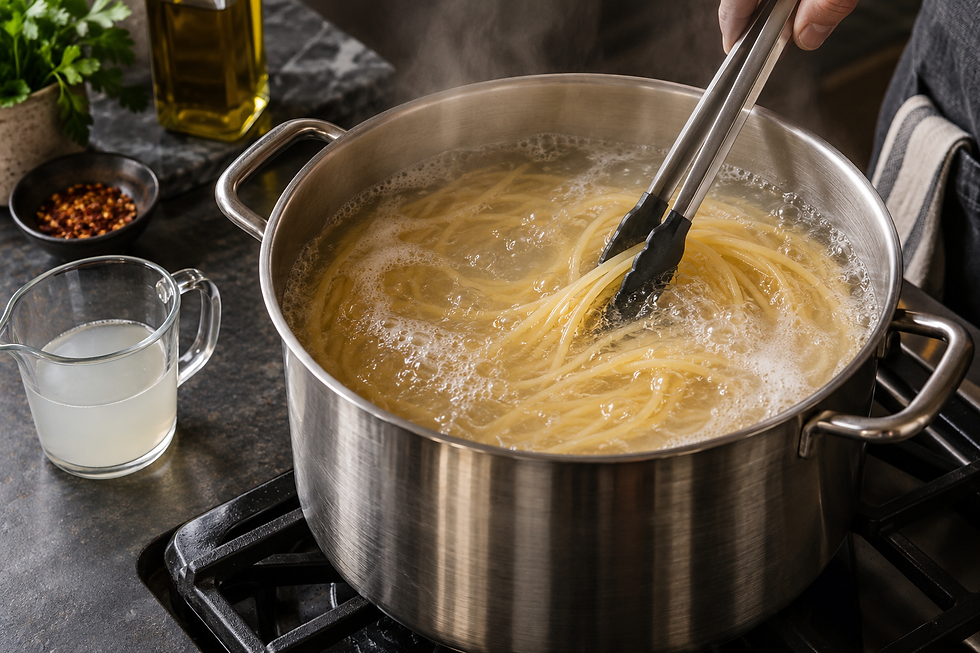
Bring a large pot of water to a rolling boil and season it with fine sea salt. Add the spaghetti and stir immediately so the strands do not stick together. Cook until approximately 2 minutes before the package’s stated al dente time. Before removing the pasta, reserve at least 1 1/2 cups (360 ml) of cooking water. It should look slightly cloudy from the starch released by the pasta.
Step 3

Return the garlic-and-chile pan to low heat. Add about 1/4 cup (60 ml) of pasta water. Swirl the pan. The water should simmer gently and combine with the oil rather than evaporate violently. Transfer the spaghetti directly into the pan while it is still undercooked.
Step 4

Raise the heat to medium and toss continuously. Add reserved pasta water a tablespoon or two at a time. The movement of the pasta releases additional starch and disperses the olive oil into tiny droplets, gradually forming a glossy emulsion. Continue until the spaghetti reaches a firm al dente texture. The sauce should cling to the strands; there should be no visible pool of oil underneath them.
Step 5

Remove the pan from direct heat. Add the parsley, if using, and toss again. Taste before adding any additional salt because the pasta water has already contributed seasoning. If the aroma needs a lift, add only a few drops of fresh extra-virgin olive oil. Serve immediately on warm plates.
Professional Technique
There are two technical controls that determine the success of this dish: garlic temperature and emulsion stability. Starting the garlic in cool oil gives the cook time to extract flavor before browning begins. Garlic that turns dark develops acrid, bitter compounds that dominate a preparation with so few ingredients. If a slice becomes deeply brown, remove it rather than allowing that bitterness to spread through the oil.
The second control is the relationship among oil, starch and water. Olive oil and water naturally separate. Pasta starch helps stabilize the mixture, while vigorous tossing provides the mechanical action that disperses the oil. The sauce should therefore be built while the pasta is moving in the pan. Simply pouring oil over drained spaghetti produces lubrication, not emulsification.
Water should be added gradually. Too much at once dilutes flavor and leaves a watery plate; too little allows the oil to separate and the pasta to dry. The correct finishing consistency is slightly looser in the pan than on the plate because spaghetti continues absorbing moisture during the final seconds before service.
Chef Tips
Slice the garlic to an even thickness; consistency matters more than extreme thinness.
Start the garlic in cool oil and raise the temperature gradually.
Keep peperoncino below the level where heat masks the flavor of the olive oil and pasta.
Reserve more pasta water than you think you need. You cannot rebuild the same starch concentration with plain water later.
Move the spaghetti to the sauté pan before it is fully cooked so the final two minutes happen inside the sauce.
Toss aggressively enough to emulsify, but do not break or crush the spaghetti.
Finish off direct heat before adding fresh parsley or the final drops of olive oil.
Warm the plates. A thin olive-oil emulsion loses its ideal texture quickly on a cold plate.
Do not automatically add Parmigiano or Pecorino. The classic balance does not require cheese.
Common Mistakes
Burning the garlic. Dark brown garlic makes the entire dish bitter.
Using so much garlic that it overwhelms the pasta and olive oil.
Adding excessive chile. More heat is not the same as more flavor.
Cooking the spaghetti completely in the boiling water and only dressing it afterward.
Discarding the pasta water before the sauce is finished.
Adding a large quantity of water at once instead of adjusting the emulsion gradually.
Leaving free oil at the bottom of the plate. The oil should be incorporated into the emulsion.
Holding the finished pasta too long before service. This preparation deteriorates quickly as it sits.
Plating and Service
Use a warm, wide plate. With long tongs and a large spoon or ladle, rotate the spaghetti into a compact nest and place it in the center. Allow a few pale-golden garlic slices and restrained pieces of peperoncino to remain visible. The plate should look glossy but never wet or greasy. If a final spoonful of emulsion is needed, use only enough to coat the outer strands. Serve at once; this is not a pasta that benefits from waiting under a heat lamp.
Wine Pairing
The pairing problem is specific: extra-virgin olive oil brings richness, garlic brings aromatic intensity, and peperoncino introduces capsaicin, which can make high alcohol feel hotter and coarse tannin feel harsher. The best wines therefore combine freshness, low or no tannin, moderate alcohol, and enough aromatic or saline character to remain present beside garlic and chile. These five wines offer five distinct solutions rather than five versions of the same idea.
Fiano di Avellino is the most natural regional choice because it comes from Campania and has enough structure to stand beside olive oil without becoming heavy. Fiano typically combines firm acidity with citrus, orchard fruit, herbs and a subtle nutty or waxy character. That texture matters here: a very thin white can disappear against the oil, while Fiano has sufficient mid-palate weight to stay connected to the pasta. Its acidity cleans the palate after each olive-oil-coated bite, and its herbal notes create a bridge to garlic and parsley. Choose a dry, restrained example rather than an overtly oaked style. Serve around 48–52°F (9–11°C), cool enough to refresh the chile but not so cold that the wine loses texture.
Etna Bianco, commonly driven by Carricante, is the highest-tension pairing in the group. Its naturally bright acidity, citrus profile and pronounced saline-mineral impression cut through the olive oil and reset the palate without competing with the dish. That is especially useful when the peperoncino is noticeable: freshness is more valuable than alcohol or sweetness when capsaicin is present. Carricante’s restrained aromatics also allow the garlic to remain part of the food rather than creating an aromatic collision. The wine’s leaner profile makes this an excellent choice when the pasta is prepared with a precise, light emulsion rather than an excessive amount of oil. Serve about 46–50°F (8–10°C).
Vermentino di Gallura works through Mediterranean continuity. Vermentino can deliver citrus, white flowers, herbs, a saline edge and a lightly bitter or phenolic finish. Those characteristics mirror the ingredients on the plate: herbal notes connect with parsley, salinity sharpens the pasta, and the subtle bitter edge can echo good extra-virgin olive oil without turning the combination harsh. Gallura examples often have enough body to match the oil while retaining the freshness needed for chile. This is the pairing to choose when the olive oil itself is especially expressive and central to the dish. Keep the wine dry and avoid heavily oaked versions. Serve around 46–50°F (8–10°C).
Cinque Terre DOC offers a coastal, savory interpretation of the pairing. Traditionally based on Bosco with varieties such as Albarola and Vermentino, the wine is typically dry, fresh and marked more by salinity, citrus and Mediterranean character than by overt perfume. That makes it particularly good with a minimalist pasta: it gives the olive oil and garlic room to speak while providing enough acidity to prevent the plate from feeling heavy. The saline impression reinforces the savory side of the spaghetti, and the absence of tannin avoids the metallic or bitter sensation that chile can create with structured reds. Choose this when you want the wine to frame the dish rather than dominate it. Serve around 46–50°F (8–10°C).
Alta Langa DOCG is the sparkling alternative and works for a different reason. Traditional-method bubbles and high acidity physically refresh the palate after olive oil, while the wine’s lees-derived bread and pastry notes provide enough texture to keep the pairing from feeling sharp or empty. Pinot Nero and Chardonnay also bring more structural depth than a simple sparkling aperitif wine. With chile, choose Brut or Extra Brut and avoid a warm, high-alcohol serving temperature; the wine should refresh rather than intensify heat. The bubbles are especially effective when the garlic is aromatic and the emulsion is rich. Serve approximately 43–46°F (6–8°C) in a white-wine glass rather than an extremely narrow flute so the wine can show both texture and aroma.
What to avoid: heavily tannic reds, high-alcohol reds and noticeably sweet wines are generally less convincing here. Tannin can become more aggressive beside chile, while alcohol amplifies the perception of capsaicin. The dish is better served by acidity, salinity and moderate body than by power.
Storage & Reheating
Spaghetti aglio, olio e peperoncino is best eaten immediately because the emulsion tightens as the pasta cools and the spaghetti continues absorbing moisture. If necessary, refrigerate leftovers in an airtight container for up to 2 days.
To reheat, place the spaghetti in a wide sauté pan with 1–2 tablespoons (15–30 ml) of water. Warm gently over medium-low heat while tossing until the strands loosen and the sauce becomes glossy again. Add only a few drops of fresh olive oil after reheating if the aroma needs refreshing. Do not flood the pasta with new oil. Freezing is not recommended because the texture of the spaghetti and the emulsion deteriorate significantly after thawing.
Nutrition per Serving
Estimated values per serving, based on four servings and assuming most of the measured olive oil remains in the finished dish:
Calories: approximately 480 kcal
Protein: approximately 11 g
Carbohydrates: approximately 64 g
Fat: approximately 20 g
Saturated fat: approximately 3 g
Fiber: approximately 3 g
Sugars: approximately 2 g
Sodium: varies substantially with the amount of salt used in the pasta water
Nutrition values are estimates and change with pasta brand, olive-oil quantity, serving size and seasoning.
Final Note
Spaghetti aglio, olio e peperoncino is a lesson in control. The garlic must be cooked enough to perfume the oil but not enough to become bitter. The chile must bring warmth without erasing the other ingredients. The pasta must leave the boiling water early enough to finish inside the sauce. And the olive oil must be emulsified with starch and water rather than simply poured over the spaghetti. When those elements are controlled, four pantry ingredients become a complete, precise Italian pasta dish.


Comments