
Italian Trout with Turin Breadstick Crust | Trota in Crosta di Grissini Torinesi e Nocciole
Updated: 3 days ago

Trota in crosta di grissini is a Piedmontese fillet of trout under a thin roof of crushed Turin breadsticks and toasted hazelnuts. The crust crackles, the fish underneath stays pearly and just set, and lemon and parsley keep the plate clean.
It is a main course that tastes of the alpine valleys around Turin: cold river fish, the local hazelnut and the bread the city gave to the world.
Yield: 4 servings. Prep: 30 minutes. Cook: 16 minutes. Total: about 50 minutes. Difficulty: intermediate. Course: main course. Region: Piedmont, Turin.
The Story
Every Turin table has a basket of grissini, and the city claims them with good reason. According to local tradition, they were first baked in 1679 by Antonio Brunero, a baker at the court of the Savoy, on the advice of the physician Teobaldo Pecchio, who wanted a bread with more crust and less crumb for the fragile young duke Vittorio Amedeo II. The story is told with different details in different households, but the shape is real: a thin rod of dough, stretched by hand, baked until it snaps. Napoleon is said to have admired them so much that he had them sent to Paris, calling them the little sticks of Turin.
Piedmont is also trout country. The rivers that fall from the Alps toward the Po plain, the Pellice, the Chisone, the Stura and their neighbors, run cold and fast, and for generations the valleys west of Turin have farmed rainbow trout and fished wild brown trout in the same water. Trout is Sunday food there, usually fried, grilled or dressed in butter and sage. Beside the rivers the Langhe hills grow the Tonda Gentile hazelnut, a round, sweet, oily nut protected as an IGP, which turns up in Piedmontese cooking from gianduja to the sauces served with boiled meats.
Two kinds of grissini matter to a cook. The stirati are stretched by hand and vary in thickness, with an open, floury crumb inside a crisp shell. The rubatà are rolled thinner and bake almost glassy. Either works here, as long as they are plain, because the seasoning of the crust should come from parsley, lemon and hazelnut and not from a packet of flavored sticks. The Turin habit of eating grissini with everything, from prosciutto to the table of bagna cauda, means there is always a stale handful at the bottom of the basket, and that handful is where this dish begins.
Putting breadsticks and hazelnuts on trout is the natural next step for a kitchen that wastes nothing. Stale grissini are dry, seasoned and already toasted, so they behave like breadcrumbs with more character, and the hazelnut adds the fat and perfume that a river fish lacks. The dish is not ancient, but every element is local, and that is how Piedmont builds its classics: by asking what lies within a day's walk of the stove and putting it on one plate.
Ingredients
For the trout
Rainbow trout fillets, skin on, pin bones removed, four 6 oz (170 g) pieces
Fine sea salt, 1 tsp (6 g)
Ground white pepper, 1/4 tsp (0.5 g)
Lemon juice, 1 tbsp (15 ml)
Extra virgin olive oil, for the rack, 1 tsp (5 ml)
For the crust
Plain grissini torinesi, 3 oz (85 g), about 12 thin sticks
Toasted Tonda Gentile hazelnuts, 2 oz (55 g)
Flat leaf parsley, finely chopped, 2 tbsp (8 g)
Lemon zest, finely grated, from 1 lemon
Fine sea salt, 1/4 tsp (1.5 g)
For the binder
Unsalted butter, melted, 3 tbsp (42 g)
Hazelnut oil, 1 tbsp (15 ml)
Dijon mustard, 1 tbsp (15 g)
For the brown butter sauce
Unsalted butter, 4 tbsp (57 g)
Fresh sage leaves, 6
Lemon juice, 1 tbsp (15 ml)
For the buttered spinach
Fresh spinach, washed, 1 lb (450 g)
Unsalted butter, 1 tbsp (14 g)
Garlic clove, small, 1
Fine sea salt, 1 pinch
For finishing
Toasted hazelnuts, crushed, 1 tbsp (10 g), reserved from the crust
Flaky sea salt, 1 pinch
Flat leaf parsley leaves, 12 small
Lemon wedges, 4
Preparation
Step 1
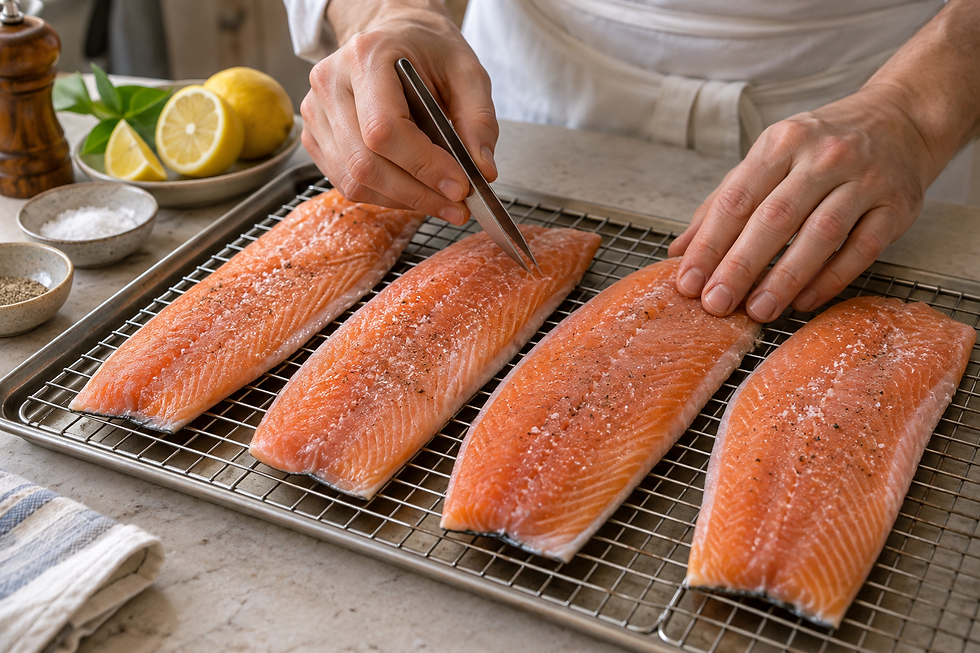
Run a fingertip along each fillet and pull any pin bones with tweezers. Pat the fish completely dry, season the flesh with the salt and white pepper, and sprinkle over the lemon juice. Set the fillets skin side down on a rack in the refrigerator for 10 minutes, then blot them again. A dry surface is what lets the binder grip, and a salted fillet firms slightly, which keeps it from tearing when you press on the crust.
Step 2
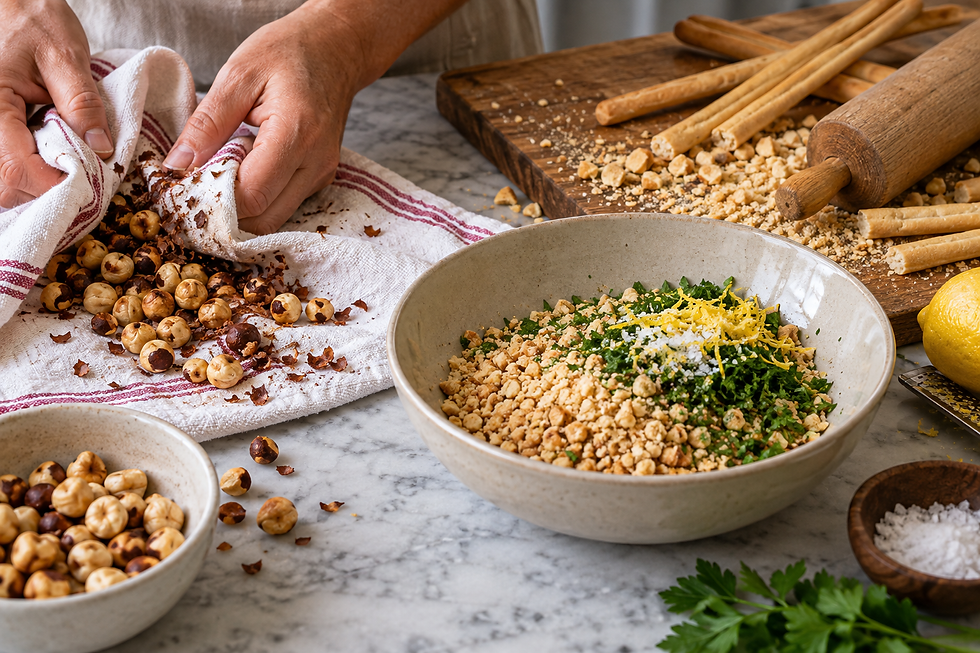
Heat the oven to 325°F (165°C). Toast the hazelnuts on a tray for 8 minutes, until fragrant, then rub them in a towel to shed the loose skins. Break the grissini into a freezer bag and crush them with a rolling pin to coarse crumbs the size of couscous. Chop the nuts to the size of rice grains. Toss both with the parsley, lemon zest and salt. Do not toast the crumbs, because grissini are already baked dry.
Step 3
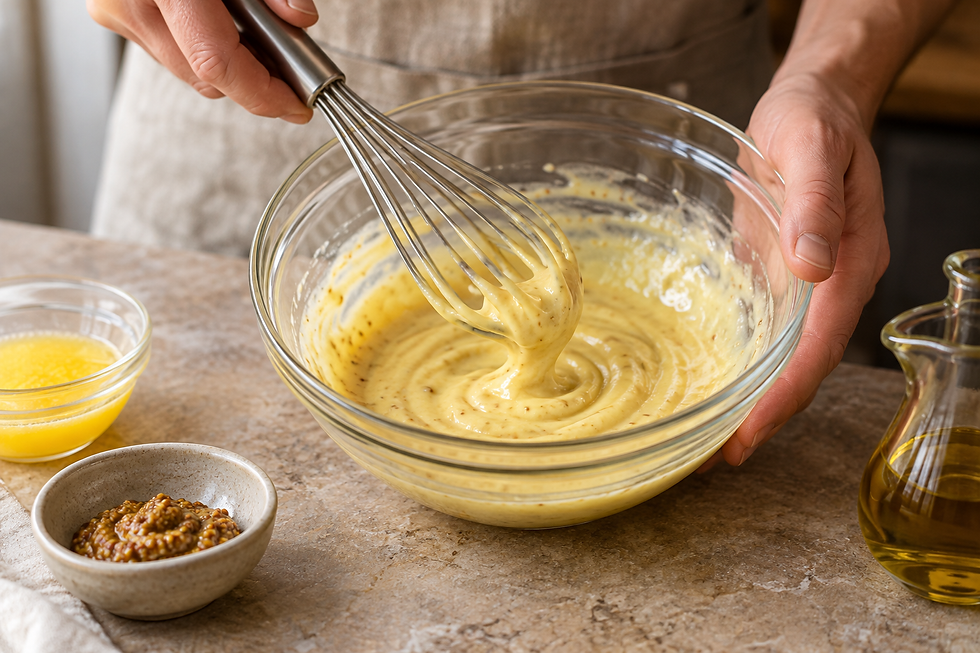
Whisk the melted butter, hazelnut oil and mustard in a small bowl until glossy and thick, like a loose mayonnaise. It should feel tacky on a spoon, not runny. If the butter has cooled and set, warm the bowl briefly in your hand. The mustard is there for grip and a quiet bite, and the fat carries heat into the crumbs.
Step 4
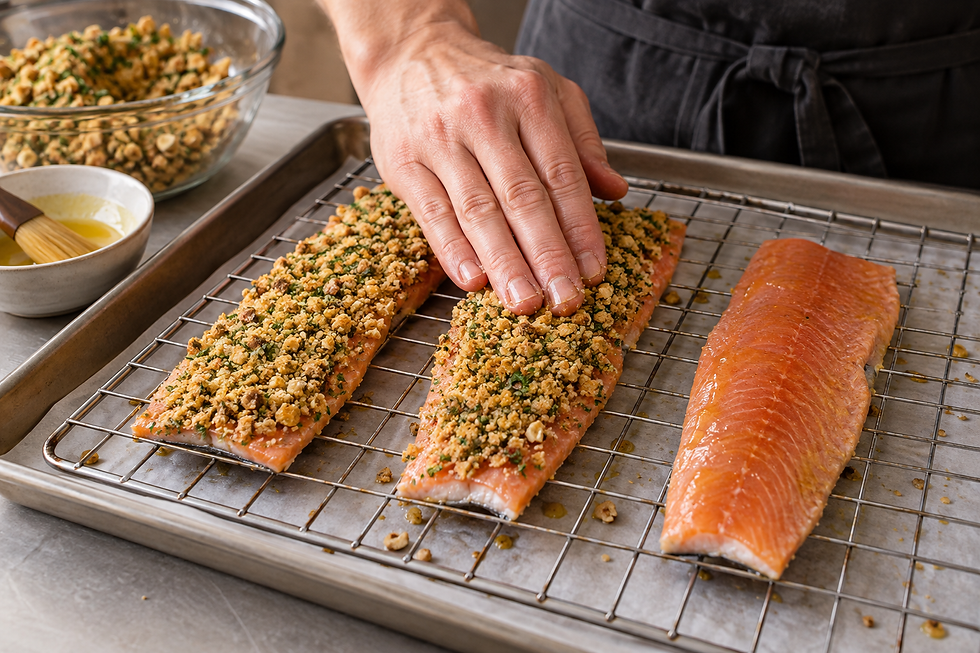
Set the fillets skin side down on a lightly oiled wire rack over a parchment lined tray. Brush a thin coat of binder over the flesh. Spread about 1/3 cup (35 g) of crumb mixture on each fillet and press it down firmly with your palm, so it forms one layer no thicker than 1/8 inch (3 mm). Shake off anything that does not stick. Refrigerate for 10 minutes so the butter firms and holds the crust in place.
Step 5
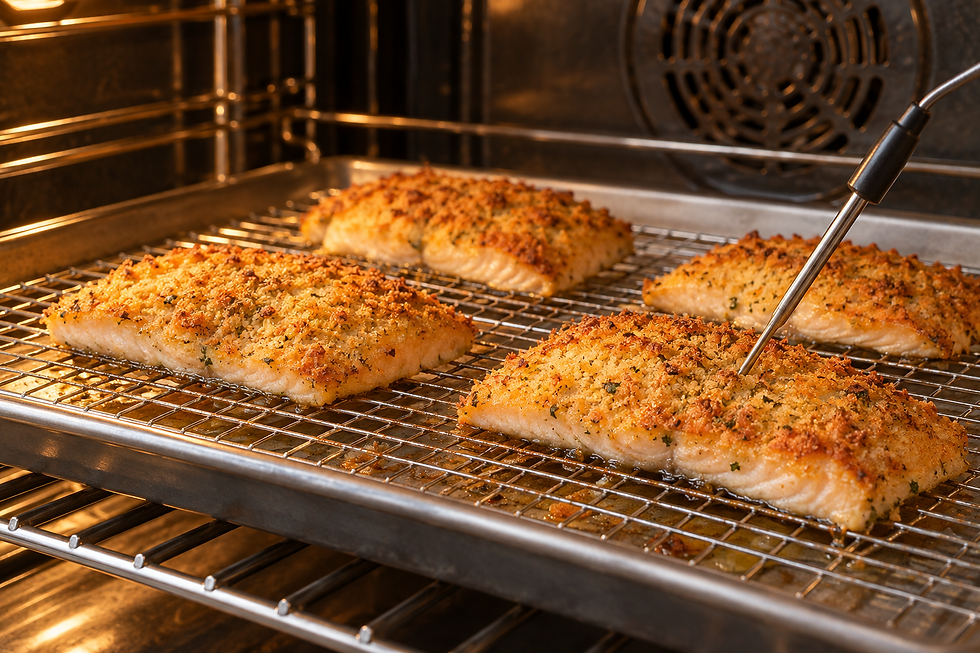
Slide the tray onto the middle rack of the 325°F (165°C) oven. Bake 14 to 16 minutes, until the crust is deep gold and a probe thermometer in the thickest part of the fillet reads 118°F (48°C). Do not use the broiler and do not raise the heat to hurry the fish. If the crust colors before the probe is ready, tent the tray loosely with foil.
Step 6
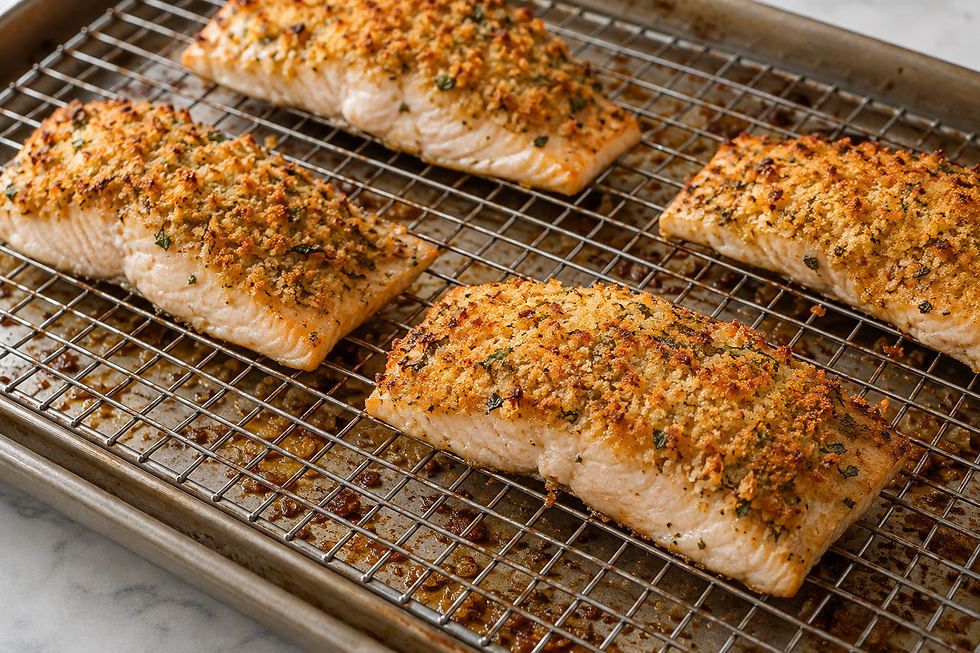
Lift the tray out and rest the fillets on the rack for 3 minutes. Carryover heat brings the center to about 125°F (52°C), which is perfectly cooked trout, opaque and silky. Meanwhile the crust dries and firms.
Step 7
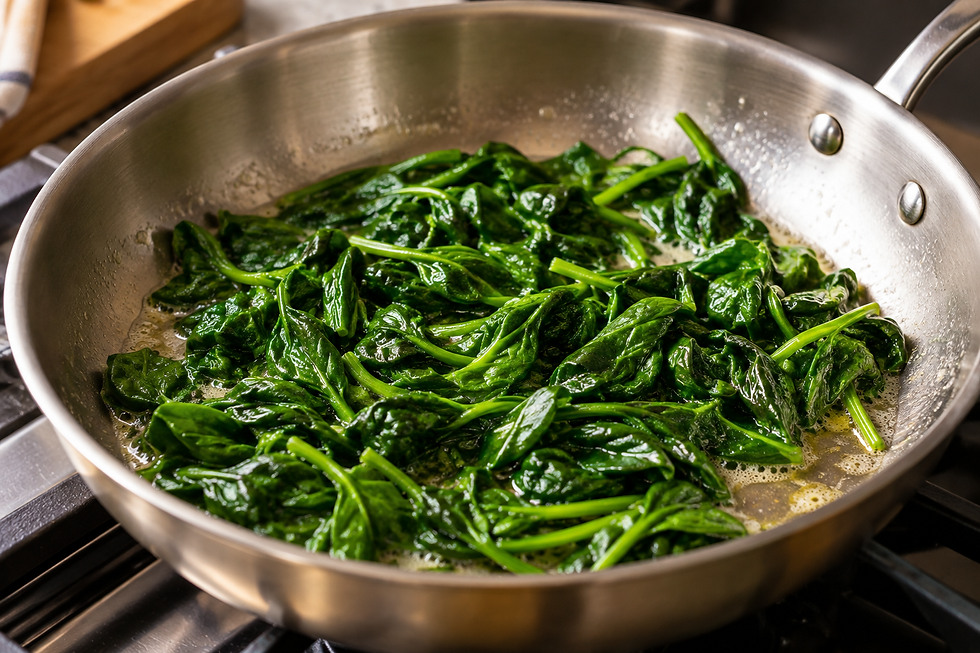
In a wide pan, warm the 1 tbsp butter with the smashed garlic clove over medium heat for 1 minute, then remove the garlic. Add the spinach in handfuls, season with a pinch of salt and toss for about 2 minutes, until just wilted and still bright green. Drain briefly and keep warm, covered, off the heat.
Step 8
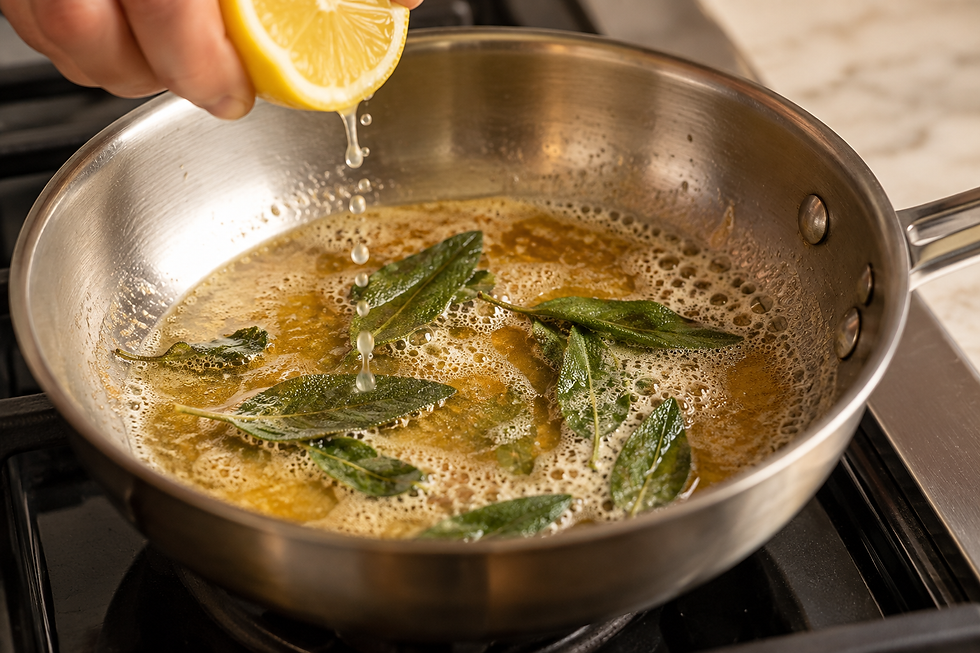
While the fish rests, melt the 4 tbsp butter in a small pan over medium heat. Let it foam, add the sage and swirl until the milk solids turn hazelnut brown and smell nutty, about 3 minutes. Pull the pan off the heat and add the lemon juice, which will sputter. Keep it warm. The sauce should be fluid, fragrant and only just golden, never dark.
Plating
Warm the plates lightly, around 120°F (50°C), so the butter stays fluid without steaming the crust. Spoon about 1 tablespoon of brown butter and a few sage leaves onto each plate. Set a fillet beside it, never in it, so the crust stays dry. Nest a small mound of spinach beside the fillet, and scatter the crushed hazelnuts over the plate rather than over the crust, where they would dull the crunch.
Finish with a pinch of flaky salt, a few parsley leaves and a lemon wedge. Serve with buttered spinach, roasted new potatoes or a salad of bitter leaves. The fillet needs no knife: a fork breaks the crust and lifts the flesh from the skin.
Professional Technique
The whole recipe turns on one fact: a crust of breadsticks and hazelnuts is not raw dough that needs baking, it is a finished material. Grissini are baked drier than bread and toasted hazelnuts hold almost no water, so under oven heat the crumbs have nothing to evaporate and go straight to color. Ordinary breading is wet and slow to brown, which is why cooks reach for high heat. Here that instinct is a trap, and this recipe has to be cooked against habit.
The crust also insulates. A layer of dry crumbs traps air and slows the heat on its way into the fillet, so the fish under it always lags behind the surface. The obvious fix, raising the oven until the trout is done, burns the crust to bitterness long before the flesh is ready. The professional answer is to work backward: set the crust to finish at the same moment as a fish that is deliberately cooked to a low core temperature.
So the oven stays at 325°F (165°C) and never goes above 350°F (175°C). The crust is pressed thin, 1/8 inch (3 mm) at the very most, over a fat binder of butter, hazelnut oil and mustard, because fat conducts heat into the crumbs evenly and glues them so the layer stays thin without cracking. The fillet leaves the oven when a probe in its thickest part reads 118°F (48°C), and a 3 minute rest carries it to 125°F (52°C), the point where trout is opaque, silky and moist. A thicker crust needs more time, and more time is exactly what turns hazelnuts bitter.
Texture and Moisture Control
Three textures must coexist: a crackling crust, a moist and barely set fillet, and a soft skin. Moisture is the enemy of the first. A trout fillet holds about 75 percent water, and as it heats, steam pushes up toward the crust. Salting and drying the fish first removes surface water, and the butter binder waterproofs the joint between flesh and crumbs so steam escapes at the edges rather than turning the crust to paste.
Air circulation matters as much as temperature. On a wire rack, hot air reaches the skin side, which dries and releases its own steam downward, instead of stewing the crust from below. Cooked on a solid tray, the fish sits in its own liquid and the crumbs go soft within minutes.
The gentle core temperature also protects texture. Trout proteins tighten and squeeze out juice above about 140°F (60°C), and the flesh turns dry and chalky. At 125°F (52°C) after resting, the muscle flakes in large, silky petals and the juice stays in. Serve within 5 minutes of the rest, before the crust reabsorbs any steam, and keep the sauce beside the fish so the crunch stays dry until the first bite.
Professional Mise en Place
Equipment and tools
Wire rack and rimmed tray lined with parchment
Probe thermometer with a thin tip
Fish tweezers and a small offset spatula
Rolling pin and a freezer bag for the crumbs
Small pan for the brown butter and a wide pan for the spinach
Kitchen scale, so the crust is weighed and every fillet gets the same thin layer
Prepared ahead
Crumb mixture, up to 1 day ahead, in an airtight container
Binder, up to 2 hours ahead, kept at room temperature
Fillets boned, salted and dried, up to 3 hours ahead, refrigerated
Lemons zested and juiced, wedges cut
Spinach washed and spun dry, garlic smashed
Hazelnuts toasted and the garnish spoonful set aside
Service setup
Fillets crusted and chilled on the rack, ready for the oven
Brown butter made while the fish rests, held warm
Plates warmed lightly, garnishes and salt within reach
Probe checked at 12 minutes, so the timing is never a guess
Spinach wilted in the last 5 minutes of the rest, then covered
Chef Tips
Buy trout the day you cook it. Fresh fillets have clear, glossy skin and smell of clean water, and older fish weep moisture that ruins the crust. If you can only find whole fish, ask the fishmonger to fillet and bone them.
Choose plain grissini, not ones flavored with rosemary or sesame. Stretched, hand rolled sticks give a crunchier, more even crumb than machine made ones. Crush them by hand and leave some larger fragments, because they give the crust a rustic crackle.
Check the fish early. Ovens vary by 25°F (14°C), and a thin tail end can finish minutes before the thick shoulder. Fold the tail under, or cut the fillets to an even thickness, so the whole piece finishes together. A thin probe slid in sideways gives a truer reading than one pushed down from above.
Use hazelnut oil sparingly. It is fragrant and can turn bitter if overheated, so it only goes into the binder, never the pan. If you have none, use a little more butter and add a spoonful of finely ground hazelnuts to the crumbs.
Common Mistakes
Raising the oven to cook the fish faster. At 400°F (200°C) the crust burns in 8 minutes while the center is still raw. Keep the oven at 325°F (165°C) and trust the probe.
Pressing the crust too thick. Anything above 1/8 inch (3 mm) delays heat to the fish and dries the flesh before the crust colors evenly. Press firmly and shake off the excess.
Toasting the grissini crumbs first. They are already baked and will scorch in the oven before the fish is done. Only the hazelnuts need toasting.
Skipping the drying step. A damp fillet steams the binder loose and the crust slides off in patches. Blot and rest the fish on a rack.
Cooking to well done. Trout at 145°F (63°C) or more turns dry and chalky. Pull it at 118°F (48°C) and let carryover finish it.
Covering the fish while it rests. Foil or a lid traps steam, and the crust softens in two minutes. Rest the fillets uncovered on the rack, and keep only the spinach covered.
Pouring the sauce over the crust. The butter soaks the crumbs and undoes the work. Spoon it onto the plate beside the fish, and let each guest decide.
Wine Pairing
Erbaluce di Caluso DOCG: A Piedmontese white from the Canavese hills near Turin, so the local match. Its sharp, mineral acidity cuts through the brown butter and lifts the lemon, while a faint almond note on the finish echoes the toasted hazelnut. Dry and firm, it stands up to the crunchy crust without overwhelming the trout, and a 46°F (8°C) serving temperature keeps it lively.
Roero Arneis DOCG: A soft, dry white with pear and almond aromas and gentle acidity. It matches the sweetness of trout and the nutty crust, and its rounded body suits the butter without weight. Its low tannin and moderate alcohol never fight the delicate flesh, which makes it an easy companion for river fish. Serve well chilled to keep it fresh.
Gavi DOCG: Crisp and saline, with green apple, citrus peel and a clean mineral finish. That freshness resets the palate after each buttery bite, and its lean body lets the delicate flesh speak. Choose a young bottle for the sharpest edge, and skip oaked versions, whose vanilla would clash with the sage.
Alta Langa DOCG: A dry Piedmontese sparkling wine made by the traditional method. Fine bubbles and brisk acidity scrub away the butter, and yeasty notes of bread crust and toasted nuts mirror the grissini and hazelnuts. A brut style suits the dish best, and it also makes a fine aperitif while the fillets rest.
Storage & Reheating
Trout is best eaten within minutes of the oven, because the crust softens as it cools. Cooked fillets keep in the refrigerator for up to 2 days in an airtight container, with the sauce stored separately. Freezing is not recommended, because the crust turns damp and the flesh loses its silk. Wrap leftovers gently and never stack them, so the crust is not crushed.
To reheat, bring the fillets to room temperature for 15 minutes, then warm them on a rack in a 300°F (150°C) oven for 8 to 10 minutes, until a probe reads 120°F (49°C). Never use the microwave, which turns the crust to paste. The crumb mix keeps 1 day in a sealed jar, and the brown butter reheats gently in a small pan, though it is far better made fresh. Leftover cold trout is delicious flaked over a salad of bitter leaves, with the crumbs as a crunchy topping.
Nutrition
Per serving, based on 4 servings:
Calories: 480 kcal
Total Fat: 31 g
Saturated Fat: 11 g
Trans Fat: 0 g
Unsaturated Fat: 18 g
Cholesterol: 105 mg
Sodium: 620 mg
Total Carbohydrates: 14 g
Fiber: 2 g
Total Sugars: 1 g
Added Sugars: 0 g
Protein: 37 g
Lactose: 0.3 g
Principal micronutrients: omega 3 fatty acids, vitamin B12, vitamin D, selenium, potassium, vitamin E
These figures are estimates and vary with the size of the fillets and the amount of butter used.


Comments