
Wine Pairing: Laurent-Perrier Cuvée Rosé
Updated: 4 days ago
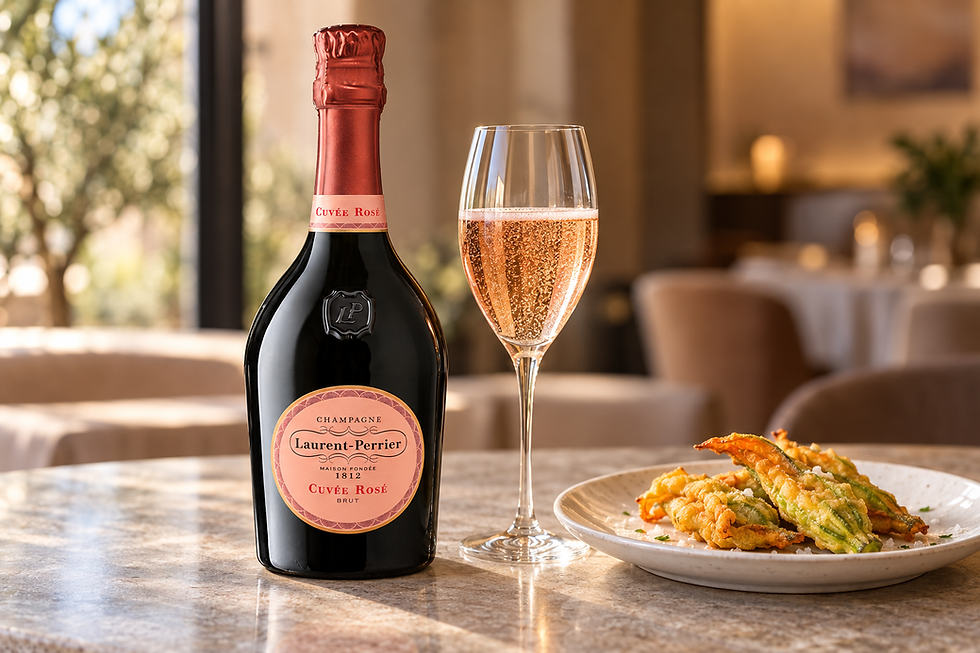
Laurent-Perrier Cuvée Rosé is one of the defining rosé Champagnes of the modern era. It is made entirely from Pinot Noir and gains its color through controlled maceration rather than by blending a small amount of still red wine into a white Champagne base. The result is a wine with the aromatic clarity of freshly picked red berries, the structure needed for the table and the freshness expected from Champagne.
Its appeal goes well beyond color. Cuvée Rosé can begin a meal, but its Pinot Noir foundation makes it especially persuasive with raw or marinated seafood, salmon, cured ham, fried vegetables, veal and gently spiced dishes. The bubbles refresh rich textures, while the wine’s red-fruit profile creates a bridge to savory ingredients that can be difficult for a lighter blanc de blancs.
Denomination and Official Identity
The official wine name is Laurent-Perrier Cuvée Rosé. It is a non-vintage Brut rosé Champagne produced in Tours-sur-Marne within the protected Champagne appellation of northeastern France. The current standard 750 ml bottle contains 100% Pinot Noir sourced from ten crus in the Montagne de Reims.
Because this is a proprietary non-vintage cuvée, the front label does not carry a harvest year. Laurent-Perrier blends and releases the wine to preserve a recognizable house style: intense red-fruit aroma, a supple and rounded palate, persistent freshness and enough vinous depth for food.
The Current Commercial Release
The current commercial release assessed here is the standard 750 ml Laurent-Perrier Cuvée Rosé Brut. A current retail bottling is based on the 2019 harvest, was disgorged in November 2024 and received a dosage of 8 grams per liter. Those details matter because non-vintage Champagne changes subtly from one disgorgement to the next even when the name and front label remain constant.
The dosage places the wine comfortably within the Brut category while keeping the finish dry and energetic. It does not taste austere: ripe Pinot Noir fruit and five years of cellar aging provide breadth, while the measured dosage supports balance without turning the red-fruit character sweet.
Pinot Noir, Crus and Origin
All of the fruit is Pinot Noir from ten crus in the Montagne de Reims. This broad chalk-based sector is central to structured Champagne, and Pinot Noir from its villages can combine red-fruit intensity with firm acidity and a mineral line. Laurent-Perrier selects plots for aromatic purity and ripeness rather than treating the rosé as a by-product of another blend.
The grape choice explains the wine’s character. Pinot Noir provides raspberry, red currant, strawberry and black-cherry tones, but it also gives the Champagne body and a lightly vinous texture. That combination allows Cuvée Rosé to meet meat, fish and fried preparations with more confidence than a very delicate aperitif-style sparkling wine.
Maceration, Vinification and Aging
The grapes are carefully sorted and destemmed before entering the vat. Skin maceration lasts from 48 to 72 hours depending on the harvest. During this controlled period, color and aroma are extracted from the Pinot Noir skins. The cellar team must stop the maceration at the point where fruit and structure are sufficient but bitterness and coarse tannin remain absent.
This technique distinguishes Cuvée Rosé from the more common Champagne method of adding still red wine to a white base. Maceration integrates color, aroma and texture from the beginning. It is technically demanding because Pinot Noir ripeness, skin condition, temperature and extraction must all be judged precisely.
After the second fermentation in bottle, Cuvée Rosé ages for five years in Laurent-Perrier’s cellars. That period builds fine mousse and textural integration while retaining the bright berry profile. The current bottling’s 8 g/L dosage is added at disgorgement, after the spent yeast sediment has been removed.
History and House Style
Laurent-Perrier was established in Tours-sur-Marne in 1812. The modern identity of the house was shaped by Bernard de Nonancourt, who championed freshness, elegance and technical innovation. In 1968, when rosé Champagne was far less prominent than it is today, he introduced Cuvée Rosé in its distinctive shield-shaped bottle.
That launch was not simply a packaging decision. Laurent-Perrier committed to macerated Pinot Noir at a time when rosé Champagne had little of its present prestige. Cuvée Rosé helped demonstrate that pink Champagne could be both aromatic and serious, with enough structure and precision to serve throughout a meal.
Appearance, Aroma and Palate
In the glass, the color moves from a clear raspberry tone toward salmon pink as the wine develops. The mousse is fine and persistent. The visual intensity signals Pinot Noir and maceration, yet the wine remains transparent and polished rather than dark or heavy.
The nose is direct and fresh, led by raspberry, red currant, strawberry and black cherry. In the current release, pomegranate, blood orange and bergamot add complexity. A light savory and spicy edge can appear as the wine warms, giving the fruit definition rather than confectionary sweetness.
The palate begins with a sharp, refreshing attack and then broadens. Ripe berry flavor fills the center, supported by lively acidity, a supple texture and youthful mousse. The finish is dry, persistent and vinous, with citrus and subtle chalky sensations keeping the fruit lifted.
Technical Profile
Appellation: Champagne AOC, France. Producer: Champagne Laurent-Perrier. Cuvée: Cuvée Rosé. Style: non-vintage Brut rosé Champagne. Grape: 100% Pinot Noir. Origin: ten crus in the Montagne de Reims. Rosé method: 48–72 hours of maceration after sorting and destemming. Cellar aging: five years. Current release base: 2019. Disgorgement: November 2024. Dosage: 8 g/L. Alcohol: 12% by volume. Bottle: 750 ml.
Zafferano & Co. Wine Rating
★★★★ — Zafferano & Co. Editorial Evaluation
Laurent-Perrier Cuvée Rosé earns four stars for the clarity of its Pinot Noir fruit, the precision of its maceration, its fine mousse and its exceptional usefulness at the table. The wine has immediate aromatic charm, but its real strength is structural balance: enough body for savory food, enough acidity for richness and enough restraint to remain refreshing through several courses.
Serving Temperature and Glassware
Serve Cuvée Rosé at 46–50°F (8–10°C), the range recommended by Laurent-Perrier for this wine. At the colder end, bubbles, citrus and acidity dominate. As the Champagne approaches 50°F, raspberry, black cherry, spice and its rounded Pinot Noir texture become more expressive.
Use a tulip-shaped Champagne glass or a small white-wine glass. A very narrow flute preserves the visual stream of bubbles but compresses the bouquet. A broad coupe releases aroma quickly and loses mousse. The ideal glass narrows slightly at the rim while leaving enough bowl space for the wine to open.
Routine decanting is unnecessary. Chill the bottle gradually, open it gently and pour modest servings so each glass remains lively. Allowing the wine to develop naturally in the glass is safer than exposing the entire bottle to oxygen.
Buying Advice and Current U.S. Price
Current verified U.S. retail pricing for one standard 750 ml bottle ranges from $77.99 to $95.99. Gift packaging, limited-edition metal jackets and local delivery charges can raise the price, so compare the wine itself rather than the presentation. The article refers to the standard bottle, not a magnum, gift box or decorative sleeve.
Choose a merchant with controlled storage and regular turnover. Inspect the foil and label for heat damage or seepage, and avoid bottles that have spent long periods under bright display lighting. For non-vintage rosé Champagne, provenance and recent, stable storage are more important than seeking an unusually old bottle.
Food Pairing Logic
Cuvée Rosé succeeds with food because three forces work together. Its acidity refreshes oil, butter, fried coatings and creamy sauces. Its mousse clears the palate between bites. Its Pinot Noir fruit connects with salmon, tuna, cured pork, veal and sweet shellfish without adding the tannin of a still red wine.
The wine favors dishes built on salinity, gentle richness and controlled seasoning. Citrus, fennel, capers and fresh herbs reinforce freshness. Prosciutto and aged cheese meet the Champagne’s savory side. Red fruit can work in a final course only when the dessert remains less sweet than the wine.
Avoid heavy smoke, aggressive vinegar, very hot chile, dense chocolate and sticky reductions. These can flatten the mousse or make the dry finish seem hard. The best pairings preserve contrast while allowing the wine’s raspberry and black-cherry character to remain recognizable.
Scallop Carpaccio with Sicilian Citrus, Crisp Fennel and Bronte Pistachios
Scallop Carpaccio with Sicilian Citrus, Crisp Fennel and Bronte Pistachios is a precise opening pairing. Raw scallop mirrors the wine’s smooth texture, Sicilian citrus follows its freshness, and fennel sharpens the aromatic line. Bronte pistachio adds a measured nutty richness that the mousse can refresh.
Italian Champagne Risotto with Seared Scallops, Oscietra Caviar and Chives
Italian Champagne Risotto with Seared Scallops, Oscietra Caviar & Chives | Risotto allo Champagne con Capesante Scottate, Caviale Oscietra ed Erba Cipollina gives Cuvée Rosé a richer stage. The bubbles and acidity lighten the risotto’s mantecatura, caviar reinforces salinity, and seared scallop follows the wine’s ripe fruit. Keep the final lemon and chive accents precise so they lift rather than dominate.
Italian Fried Zucchini Blossoms
Italian Fried Zucchini Blossoms | Fiori di Zucca Fritti provide a classic texture contrast. The Champagne cuts through the fried coating while its supple Pinot Noir core accommodates a delicate cheese or anchovy filling. Serve the blossoms immediately; stale frying oil will overwhelm even a structured rosé Champagne.
Vitello Tonnato Piemontese
Vitello Tonnato Piemontese (Italian Piedmontese Veal with Tuna Sauce) demonstrates the wine’s savory range. Pinot Noir gives enough body for chilled veal, while bubbles and acidity refresh the tuna sauce. Capers and anchovy connect with the Champagne’s mineral, saline finish, and the berry profile softens the dish’s umami intensity.
Prosciutto di San Daniele with Montasio
Prosciutto di San Daniele con Montasio (Italian San Daniele Prosciutto with Montasio) follows one of the house’s own recommended pairing directions for fine cured ham. The wine’s fruit meets the prosciutto’s sweetness, acidity balances its fat, and the mousse refreshes aged Montasio. Keep the cheese portion restrained so the Champagne remains central.
Building a Complete Italian Menu
A coherent menu can begin with scallop carpaccio, continue with fried zucchini blossoms, move to Champagne risotto and finish the savory sequence with vitello tonnato or prosciutto and Montasio. The sequence increases texture gradually without introducing a sauce that is heavier than the wine.
Serve the first pours near 46°F and allow later glasses to warm slightly. The early service emphasizes freshness with raw seafood; the later service reveals more Pinot Noir depth for veal, cured ham and cheese. One temperature progression lets the same bottle show different aspects across the meal.
Great Rosé Champagne Producers to Know
Laurent-Perrier is the sole producer of Cuvée Rosé. Within the wider rosé Champagne denomination, Billecart-Salmon, Ruinart, Bollinger and Charles Heidsieck are important reference producers. Their wines illustrate distinct methods and proportions: Billecart-Salmon emphasizes finesse, Ruinart uses Chardonnay for lift, Bollinger builds a broader Pinot Noir-led style, and Charles Heidsieck combines current-year wines with a significant reserve-wine component.
Laurent-Perrier remains distinctive because its flagship rosé is entirely Pinot Noir and is created by maceration. Comparing it with those houses makes the category easier to understand: rosé Champagne is not one flavor, color or weight, but a range shaped by grape selection, extraction, reserve wines, cellar time and dosage.
Bottle Recognition
The standard bottle is easy to identify. It has a dark, broad shield-shaped body, copper-pink foil, a pale neck band marked Cuvée Rosé, an embossed LP seal and a copper-pink oval label carrying Laurent-Perrier, Maison Fondée 1812, Cuvée Rosé and Brut. This is the exact bottle represented in the article image.
Do not confuse the standard bottle with the annual decorative metal-jacket editions. Those sleeves change presentation but contain Cuvée Rosé. Also distinguish it from Laurent-Perrier Alexandra Rosé Millésimé, a vintage prestige cuvée with a different blend, aging regime, price and label.
Storage and Development
Store unopened bottles horizontally in darkness at a stable 50–55°F (10–13°C), away from vibration and strong odors. Cuvée Rosé is released ready to drink, and the house’s guidance for rosé Champagne favors enjoying it within roughly three to five years when properly stored.
With additional time, the freshest raspberry and red-currant notes can move toward dried cherry, orange peel, pastry and spice. Cellaring should refine the wine rather than erase its central fruit identity. If the goal is maximum freshness and vivid berry aroma, drink the bottle closer to purchase.
After opening, use a proper Champagne stopper and refrigerate. The mousse and aromatic detail are best during the same meal, although a well-sealed bottle can remain enjoyable the following day. Avoid repeatedly warming and rechilling the wine.
Final Assessment
Laurent-Perrier Cuvée Rosé is a benchmark maceration rosé Champagne made from 100% Pinot Noir grown across ten crus of the Montagne de Reims. Forty-eight to seventy-two hours of skin contact shape its color and aroma, five years in the cellar integrate the mousse, and the current release’s 8 g/L dosage preserves a dry, balanced finish.
Raspberry, red currant, strawberry, black cherry, blood orange and gentle spice give the wine immediate personality. More importantly, acidity, mousse and Pinot Noir structure make it an unusually capable partner for Italian seafood, risotto, fried zucchini blossoms, vitello tonnato, prosciutto and aged cheese. It is a four-star Champagne whose strongest argument is made at the table.


Comments