
Wine Comparison: Barbera d’Asti DOCG vs Castel del Monte Nero di Troia Riserva DOCG: Scores, Differences, Pairings and Which Italian Red Wine to Buy
Updated: Aug 25
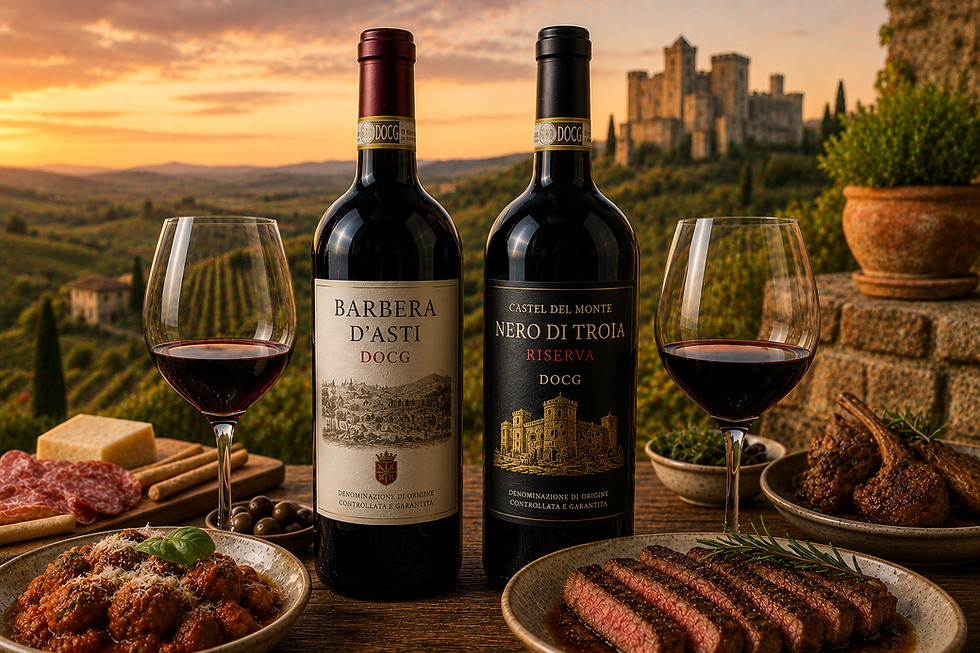
Barbera d’Asti DOCG vs Castel del Monte Nero di Troia Riserva DOCG
Barbera d’Asti and Castel del Monte Nero di Troia Riserva show two completely different ways to build a serious Italian red. Barbera relies on brilliant acidity, juicy cherry fruit and relatively moderate tannin. Nero di Troia relies on darker fruit, violet perfume, firm tannins and a much more muscular structure. Piedmont supplies energy. Puglia supplies grip.
Quick Answer
Choose Barbera d’Asti when you want sour cherry, raspberry, blackberry, very high acidity and a red that can handle tomato, sausage, duck and rich pasta. Choose Castel del Monte Nero di Troia Riserva when you want black cherry, blackberry, violets, tobacco, firm tannin and a wine built for steak, lamb, game and longer cellaring.
Barbera d’Asti DOCG
Region: Piedmont. Grape: Barbera. Body: medium to medium full. Acidity: high to very high. Tannin: low to medium. Typical aromas include cherry, sour cherry, raspberry, blackberry, violet, pepper and sweet spice.
The hills of Asti and Alessandria allow Barbera to ripen fully while preserving the acidity that defines the grape. That acidity is the engine of the wine. It cuts through fat, works naturally with tomato and gives even concentrated examples an energetic finish. Serious producers proved that Barbera can be far more than an everyday wine: low yields, strong vineyard sites and careful aging can create deep, age worthy bottles without losing freshness.
Castel del Monte Nero di Troia Riserva DOCG
Region: Puglia. Grape: Nero di Troia. Body: medium full to full. Acidity: medium high. Tannin: high. Typical aromas include black cherry, blackberry, black currant, plum, violet, licorice, star anise, tobacco and dark spice.
The limestone dominated landscapes around Castel del Monte and the Alta Murgia give Nero di Troia a firmer identity than many people expect from Puglia. Thick skins contribute color and tannin while the best sites preserve perfume and freshness. In Riserva form the wine becomes more savory and complex, with wood and bottle age helping the tannins integrate without erasing the grape’s naturally structured personality.
Key Differences
Barbera is acidity first. Nero di Troia is tannin first. Barbera tastes brighter, juicier and faster on the palate. Nero di Troia feels darker, broader and more architectural. Barbera is easier with tomato and fatty pork. Nero di Troia is stronger with grilled beef, lamb and game. Barbera is generally easier young. Nero di Troia Riserva has the advantage for traditional long term cellaring.
Most Famous Producers
Barbera d’Asti
Braida, Vietti, Michele Chiarlo, Coppo, Pico Maccario, Tenuta Olim Bauda, Bersano, Vinchio Vaglio, Scarpa and Marchesi di Barolo. Braida is especially important to the modern reputation of serious Barbera, while the denomination now includes styles ranging from bright and immediate to powerful single vineyard wines.
Castel del Monte Nero di Troia Riserva
Rivera, Torrevento, Santa Lucia, Conte Spagnoletti Zeuli, Botromagno, Cefalicchio, Crifo, Cantine del Colle, Carpentiere and Giancarlo Ceci. Rivera and Torrevento are particularly useful reference points for understanding how structured and age worthy Nero di Troia can become.
Food Pairing
Polpette di Carne alla Salsa di Pomodoro — Barbera’s acidity is exceptionally effective with tomato sauce and beef.
Salsiccia Toscana alla Griglia — Barbera cuts through sausage fat while its cherry fruit complements grilled flavors.
Anatra Arrosto alle Erbe — High acidity refreshes the palate after every bite of duck.
Bistecca alla Fiorentina — Nero di Troia’s tannic grip is ideal with beef protein and char.
Cinghiale Brasato al Vino Rosso — Wild boar has enough intensity for a structured Nero di Troia Riserva.
Serving, Decanting and Ageability
Serve Barbera d’Asti around 57 to 62°F (14 to 17°C). Young examples often need only 20 to 45 minutes of air, while powerful Superiore wines can benefit from longer aeration. Serious bottles can develop for 5 to 12 years or more. Serve Nero di Troia Riserva around 60 to 64°F (16 to 18°C) and give a young bottle 1 to 2 hours of air. Strong examples can develop for 10 to 20 years.
Which Wine Should You Buy?
Buy Barbera when you want freshness, juicy fruit, tomato friendliness and a red that can move across an entire Italian meal. Buy Nero di Troia Riserva when you want firm tannin, dark fruit, violets, grilled meat compatibility and greater traditional cellar structure.
Value for Money
Both remain compelling buys. Barbera delivers immediate gastronomic versatility, while Nero di Troia can offer the architecture of a serious cellar wine without the pricing attached to Italy’s most famous prestige denominations.
Zafferano & Co. Comparison Score
Barbera d’Asti DOCG — Aromatic Complexity 9.3/10, Structure 9.0/10, Elegance 9.2/10, Food Pairing 9.9/10, Ageability 9.1/10. Overall 9.4/10. Zafferano & Co. Rating: ★★★★★.
Castel del Monte Nero di Troia Riserva DOCG — Aromatic Complexity 9.4/10, Structure 9.7/10, Elegance 9.3/10, Food Pairing 9.7/10, Ageability 9.6/10. Overall 9.5/10. Zafferano & Co. Rating: ★★★★★.
Final Verdict
Choose Barbera d’Asti DOCG when you want acidity, cherry fruit, energy and exceptional food versatility. Choose Castel del Monte Nero di Troia Riserva DOCG when you want tannin, darker fruit, violets, structure and longer cellar potential. Barbera is more vibrant. Nero di Troia is more muscular.


Comments