
Italian Sardinian Risotto with Cuttlefish and Cannonau | Risotto con Seppie e Cannonau
Updated: 9 hours ago

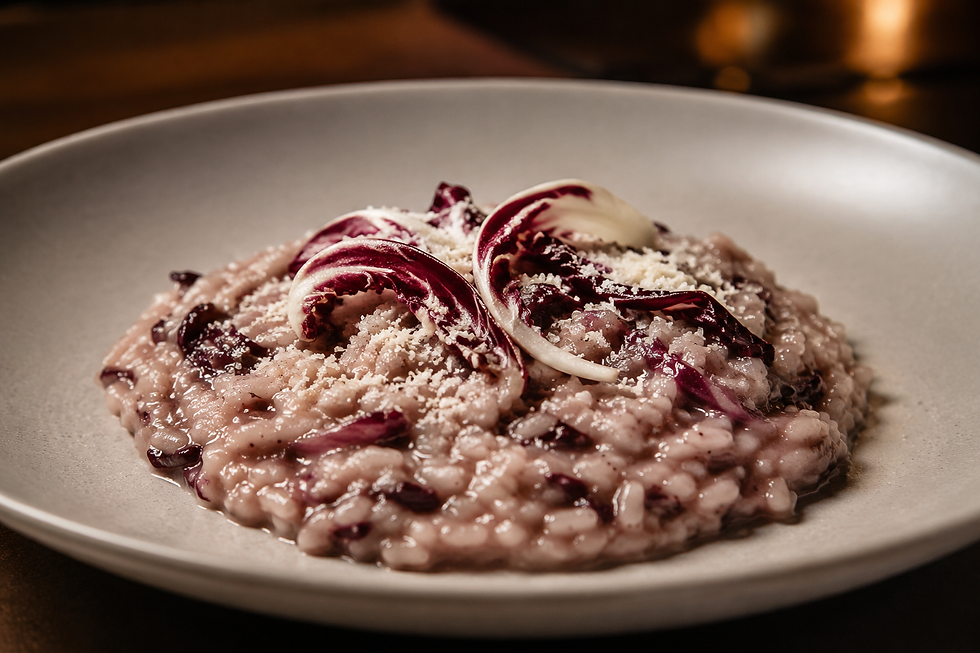
Risotto con Seppie e Cannonau is a Sardinian dish built on a northern Italian technique, and the tension between those two facts is the whole point. Cuttlefish and the red wine of the Ogliastra are as local as anything on the island. The rice, the steady stirring and the mantecatura are not. What comes out of the pan is deep garnet, faintly saline and far more delicate than its colour suggests.
Red wine risotto with seafood makes most cooks nervous, and it should, because the usual result is either grey and thin or aggressively tannic. Cannonau works where other reds fail: it is high in alcohol but low in hard tannin, and its dried fruit and macchia herb character sits naturally beside cuttlefish. The method here splits the wine into three additions and never lets the rice boil hard in any of them.
Yield: 4 servings. Prep: 35 minutes. Cook: 1 hour 10 minutes. Total: about 1 hour 45 minutes. Difficulty: intermediate. Course: primo piatto. Region: Sardinia, the Sinis peninsula and the Gulf of Oristano.
The Story
Cuttlefish are caught all around Sardinia, but this dish belongs to the west coast, to the Gulf of Oristano and the shallow lagoons behind the Sinis peninsula. Cabras and its stagno have been fished the same way since Phoenician times: fixed reed traps, flat bottomed boats and a season that runs through the cold months, when cuttlefish come inshore to spawn. The same water produces bottarga di muggine, the pressed grey mullet roe that finishes this plate, so the two ingredients have shared a shoreline for three thousand years.
Rice is the newcomer. Sardinia had no rice culture of its own, and risotto reached the island through administration rather than agriculture. From 1720 the Kingdom of Sardinia was governed by the House of Savoy, and Piedmontese officials, garrisons and their cooks arrived in Cagliari and Sassari in numbers, bringing northern rice cookery with them and finding a larder full of seafood. The cross is two centuries old now and thoroughly Sardinian.
Cannonau supplies the third element and the colour. Grown most seriously in the Ogliastra and the Barbagia, inland and uphill from the lagoons, it is the bottle a Sardinian household opens without thinking about it, and cooking with it is ordinary rather than daring. Pairing it with cuttlefish follows a real island habit: seppie are stewed in red wine here far more often than in white, in cassola and in the various seppie in umido of the southern coast.
Ingredients
For the cuttlefish
Whole cuttlefish, 1 1/2 lb (680 g) before cleaning
Extra virgin olive oil, 2 tbsp (30 ml)
Garlic cloves, lightly crushed, 2
Small dried chilli, 1
Cannonau di Sardegna, 1/2 cup (120 ml)
Fine sea salt, 1/2 tsp (3 g)
For the light seafood broth
Cuttlefish wings, trimmings and membranes, from above
Water, 6 cups (1.4 liters)
Yellow onion, halved, 1/2
Celery stalk, 1
Parsley stems, 5
Bay leaf, 1
Black peppercorns, 6
Fine sea salt, 1/2 tsp (3 g)
For the risotto
Carnaroli rice, 1 1/2 cups (320 g)
Extra virgin olive oil, 2 tbsp (30 ml)
Shallot, finely minced, 1 medium, about 2 oz (55 g)
Cannonau di Sardegna, 1 cup (240 ml), divided
Hot seafood broth, about 5 cups (1.2 liters)
Unsalted butter, cold and diced, 2 tbsp (28 g)
Extra virgin olive oil for the mantecatura, 1 tbsp (15 ml)
Fine sea salt, 1 tsp (6 g)
Freshly ground black pepper, to taste
For finishing
Flat leaf parsley, finely chopped, 1 tbsp (4 g)
Finely grated lemon zest, from 1/2 lemon
Bottarga di muggine, 2 tsp (6 g), grated at the table
Fresh myrtle leaves or wild fennel fronds, 4 small
Extra virgin olive oil, a few drops per plate
Preparation
Step 1: Clean the cuttlefish and separate the cuts
Pull the head and tentacles from each body, remove the cuttlebone, the beak and the eyes, and peel off the outer membrane. Rinse everything well. Cut two thirds of the bodies into strips about 1/2 inch (12 mm) wide for the braise, and set the remaining third aside with the tentacles for the final sear. Keep the wings, the trimmings and the membranes, because they are the broth.
Step 2: Build the light seafood broth
Put the wings and trimmings in a saucepan with the water, onion, celery, parsley stems, bay, peppercorns and salt. Bring it to a bare simmer and hold it there 30 minutes without ever letting it boil, then strain it through a fine mesh sieve and keep it hot. A hard boil turns cuttlefish trimmings cloudy and faintly bitter, and a cloudy broth shows up in the finished rice.
Step 3: Braise the cuttlefish strips
Warm 2 tablespoons of olive oil in a saute pan over medium heat with the crushed garlic and the dried chilli. When the garlic is fragrant, lift it out, add the cuttlefish strips and let them tighten for 2 minutes. Pour in the 1/2 cup (120 ml) of Cannonau, season with the salt, cover and cook at the barest simmer 35 to 40 minutes, until a strip gives easily under a knife.
Step 4: Reduce the wine for the rice
While the cuttlefish braises, pour 3/4 cup (180 ml) of the remaining Cannonau into a small pan and reduce it by half over low heat, then set it aside. Reserve the last 1/4 cup (60 ml) unreduced. Reducing separately lets you drive off the alcohol without holding the rice over heat while it happens, which is the usual cause of an overcooked red wine risotto.
Step 5: Sweat the shallot and toast the rice
In a wide heavy pan warm the other 2 tablespoons of olive oil over medium low heat and sweat the shallot 4 minutes, until translucent but not coloured. Raise the heat slightly, add the rice dry and stir it 2 to 3 minutes until the grains are hot to the touch and their edges have turned glassy while the centres stay chalky white. This is the tostatura and it seals each grain.
Step 6: Add the reduced wine
Pour in the reduced Cannonau and stir until the pan is almost dry again. The rice takes the colour at once and looks alarmingly dark, and it lightens as the broth goes in. All of the wine for the rice belongs at this stage rather than later, because acid slows the swelling of the starch granules and a late addition leaves the risotto thin and the grains chalky.
Step 7: Risottatura with the hot broth
Add the hot broth a ladle at a time, just enough to cover the rice, stirring steadily and waiting until each addition has nearly gone before the next. Hold the pan at a lively simmer and never a boil, and count 16 to 18 minutes from the first ladle. Taste from minute 14: the grain should be firm at the core with no chalk left in the middle. Salt at minute 12, not before.
Step 8: Fold in the braise and sear the rest
At minute 14 stir the braised strips and all of their cooking liquid into the rice. At the same time heat a dry pan until it is very hot, add a film of oil and sear the reserved cuttlefish pieces and tentacles for 45 seconds a side and no longer, so they take colour but stay tender. Season them and hold them aside for the top of the plate.
Step 9: Mantecatura off the heat
Pull the pan off the heat, add the last 1/4 cup (60 ml) of unreduced Cannonau, the cold butter and the tablespoon of olive oil, and beat the risotto hard with a wooden spoon for 45 seconds, then cover it and rest it 1 minute. No cheese goes in: this is a seafood risotto and pecorino would bury the cuttlefish completely. Correct the texture with a last splash of hot broth before it leaves the pan.
Plating
The risotto has to be all'onda, which means it moves. Tap the base of a warm flat plate with the loaded spoon and the rice should spread on its own into an even layer within two or three seconds. If you have to push it out with the back of the spoon it is too dry, and a splash of hot broth beaten in will fix it.
Use warm white plates at around 130°F (55°C), because the garnet colour reads badly on dark ceramic and a cold plate stops the wave within seconds. Lay the seared cuttlefish and tentacles across the top, scatter the chopped parsley and the lemon zest, grate the bottarga over at the table and finish with a few drops of olive oil and a single myrtle leaf or a frond of wild fennel.
Professional Technique
The technique that carries this dish is the handling of the Cannonau, and it rests on how starch behaves. Carnaroli gives up its amylopectin slowly, and that slow release is what makes a risotto creamy, but a strongly acidic pan interferes with it: starch granules swell reluctantly in acid and the grains stay chalky at the core however long you cook them. A full cup of raw red wine poured over toasting rice puts the pan in exactly that condition. Reducing the wine separately concentrates its sugar, colour and aromatics while driving off a good part of the volatile acidity, so everything worth having from Cannonau goes in and the brake does not.
The second technique is treating the cuttlefish as two different ingredients. Cuttlefish muscle is dense with collagen and behaves like squid: tender for the first two minutes of cooking, tough for the next twenty, and tender again only after roughly half an hour of slow moist heat. There is no useful middle ground. So two thirds of it goes into a 40 minute braise and comes out silky, while the last third gets 45 seconds in a searing pan and stays springy. One animal, two textures, neither of them compromised.
Texture and Moisture Control
All'onda is a measurement, not a mood. The finished risotto should hold a wave when the pan is shaken and then settle flat, which means the liquid around the grains has been thickened by starch rather than by reduction. Keep the broth simmering in its own pan throughout: cool broth drops the temperature of the rice and stalls the starch release, and every stall shows up later as a grainy, separated risotto that no amount of butter will rescue.
Cuttlefish releases a surprising amount of liquid during the braise, and that liquid is the second best thing in the recipe after the rice itself. Never drain it away. It carries collagen that has turned to gelatin over forty minutes, and gelatin is what gives this risotto body without cream and without cheese. Add the strips and their liquid together at minute 14, late enough that the extra moisture cannot loosen the rice past the point of no return.
Professional Mise en Place
Risotto is cooked to order and cannot be held, so everything except the last twenty minutes is done in advance. Braise the cuttlefish and strain the broth well before service.
Equipment and tools
Wide heavy risotto pan, 11 to 12 inches across
Saucepan to hold the broth at a simmer beside it
Small pan for reducing the wine
Saute pan for the braise and a dry pan for the final sear
Fine mesh sieve and a fine grater for the bottarga
Prepared ahead
Cuttlefish cleaned and cut, up to 1 day ahead, covered and cold
Broth made and strained, up to 2 days ahead, refrigerated
Cuttlefish braised, up to 1 day ahead in its own liquid
Cannonau reduced and cooled, up to 3 days ahead
Shallot minced, parsley chopped and lemon zested on the day
Service setup
Broth hot at a low simmer with the ladle in the pan
Reduced wine and the reserved unreduced wine measured out
Butter diced and cold, olive oil within reach
Braised cuttlefish warm in its liquid, raw pieces dry for the sear
Plates warming, bottarga and herbs ready at the pass
Chef Tips
Buy cuttlefish rather than squid, and buy them whole. The wings, the trimmings and the membranes are what give the broth its body, and a cleaned fillet from the counter leaves you making risotto with plain water. If the fishmonger has already cleaned them, ask for the trimmings back.
Choose a young Cannonau with no oak on it. A riserva that has spent two years in wood brings vanilla and dry tannin to a delicate seafood dish, and the risotto turns bitter as the wine reduces. The bottle you cook with should cost what you would happily drink on a Tuesday.
Do not add the ink. Cuttlefish ink is a fine ingredient but it fights the Cannonau for both colour and flavour, and a plate that is half garnet and half black reads as a mistake. Save the sacs for a black risotto or a pasta al nero another day.
Grate the bottarga at the table, over the finished plate. Its aroma is volatile and goes flat within a couple of minutes of meeting heat, so grating it into the pan wastes both the perfume and the money.
Common Mistakes
Pouring the wine in raw. A full cup of unreduced Cannonau over toasting rice leaves the pan too acidic for the starch to swell, and the grains stay chalky at the centre no matter how long you cook. Reduce it by half in a separate pan first.
Cooking the cuttlefish for fifteen minutes. That is the worst possible length of time: long enough to seize the muscle and far too short to break the collagen down. Either sear it for under a minute or braise it for a full forty.
Using a heavy oaked red. Tannin and toasted oak turn harsh as they concentrate in the pan, and both overwhelm delicate white fleshed seafood. A young unwooded Cannonau gives the colour and the fruit without the wood.
Adding cheese at the mantecatura. Pecorino or parmesan in a seafood risotto flattens the cuttlefish and clashes with the bottarga. Cold butter and good olive oil, beaten in off the heat, give all the gloss the dish needs.
Letting the broth go cold. Cool liquid drops the pan temperature and interrupts the starch release, and the result separates in the plate. Keep the broth simmering in its own pan and ladle it across hot.
Wine Pairing
Cannonau di Sardegna DOC: The wine in the pan, poured young and cool. Serve it at around 57°F (14°C), which tightens the alcohol and lifts the red berry and dried herb aromatics, and choose a bottling with no oak. At that temperature its light tannin stays clear of the cuttlefish and the glass simply repeats what is already in the rice.
Vermentino di Gallura DOCG: The choice for anyone who cannot accept a red with seafood, and a serious one. Grown on decomposed granite in the far north of the island, it has a saline bite and a citrus cut that lifts the gelatin and the bottarga, and its faintly bitter almond finish works against the sweetness the reduced wine leaves in the rice.
Nuragus di Cagliari DOC: The plain, high acid white of the Cagliari hinterland and the most everyday pairing here. It is lighter and more neutral than Vermentino, which is exactly its value: it refreshes between forkfuls of a rich risotto without adding a fourth flavour to a plate that already carries wine, cuttlefish and cured roe.
Bardolino DOC: A mainland red built for this kind of problem. Pale, low in tannin and high in red cherry acidity, it wants serving cool at about 55°F (13°C), and at that temperature it behaves almost like a rosato. It follows the garnet colour of the risotto without adding any weight to a seafood dish.
Faro DOC: From the hills above Messina, mostly Nerello Mascalese, and the most interesting bottle on the list. Its tannin is fine grained and the volcanic soil gives a smoky, saline edge that meets the bottarga head on, while the pale colour and modest body keep it honest alongside cuttlefish.
Storage & Reheating
Finished risotto does not keep and nothing improves it, so eat it the moment it leaves the pan. What does keep is everything underneath. The strained broth holds 2 days refrigerated or 3 months frozen in flat portions, and the braised cuttlefish holds 2 days refrigerated in its own liquid in a sealed container.
If you have leftover risotto, do not try to reheat it as risotto. Spread it on a tray, cool it fast and refrigerate it up to 2 days, then turn it into arancini or into a flat pan fried cake: press the cold rice into an oiled pan, brown it on both sides over medium heat and serve it in wedges. Both are better than a reheated bowl.
If you must reheat it as it is, use a wide pan over low heat with 1/3 cup (80 ml) of hot broth per portion, stirring constantly until it loosens, and beat in a knob of cold butter at the end. Never use a microwave, which cooks the outside of every grain a second time and turns the cuttlefish rubbery. Do not freeze cooked risotto.
Nutrition
Per serving, based on 4 servings:
Calories: 620 kcal
Total Fat: 19 g
Saturated Fat: 6 g
Trans Fat: 0 g
Unsaturated Fat: 12 g
Cholesterol: 260 mg
Sodium: 890 mg
Total Carbohydrates: 70 g
Fiber: 2 g
Total Sugars: 3 g
Added Sugars: 0 g
Protein: 32 g
Lactose: 0.2 g
Principal micronutrients: selenium, iodine, vitamin B12, phosphorus, copper, zinc, omega 3 fatty acids
These are estimates. Most of the alcohol in the Cannonau cooks off, and the sodium depends heavily on how much bottarga is grated at the table.



Comments