
Italian Grilled Horse Tagliata with Arugula, Parmigiano and Balsamic | Tagliata di Cavallo alla Griglia con Rucola, Parmigiano e Balsamico
Updated: 1 day ago

This Italian recipe is built around ingredient quality, controlled technique, and the regional logic of the original preparation.
Tagliata — thinly sliced grilled steak fanned over a plate — is one of Italy's simplest and most effective ways to showcase a good cut of meat. Using horse instead of beef follows a long tradition in parts of Northern Italy, where the meat is prized for being lean, iron-rich and quick to cook properly on a hot grill.
Ingredients
4 horse meat steaks, approximately 8 oz (225 g) each
3 tbsp (45 ml) extra virgin olive oil
2 fresh rosemary sprigs
2 garlic cloves, lightly crushed
1 tsp (4.93 ml) kosher salt
¾ tsp (3.7 ml) freshly ground black pepper
4 cups (80–100 g) fresh arugula
2 oz (55 g) Parmigiano Reggiano, shaved
2 tbsp (30 ml) aged balsamic vinegar
1 tbsp (15 ml) extra virgin olive oil, for finishing
Flaky sea salt, optional
Preparation
Step 1

Bring the horse steaks to room temperature for about 30 minutes, then pat them completely dry. Season evenly with salt and black pepper and prepare the rosemary, garlic and extra-virgin olive oil for grilling.
Step 2

Heat the grill to high direct heat. Brush the steaks lightly with olive oil and grill until a deep crust forms, turning only once and cooking the center to medium-rare.
Step 3

Transfer the steaks whole to a warm tray and let them rest for 5–8 minutes. Do not cut them yet: this pause allows the juices to redistribute through the meat.
Step 4

Place the rested steaks on a clean board and slice them thinly on a slight angle, always cutting against the grain to keep every piece tender.
Step 5
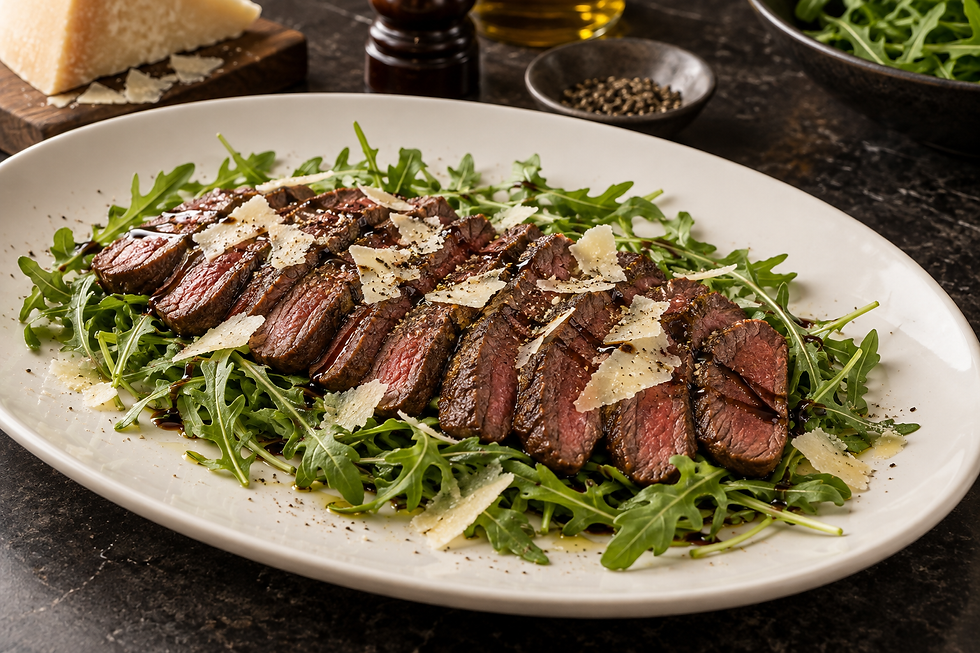
Arrange the sliced horse meat over fresh arugula. Finish with shaved Parmigiano Reggiano, a restrained drizzle of aged balsamic vinegar and extra-virgin olive oil, then add freshly ground black pepper and serve immediately.
Professional Technique
For consistent professional results, work in measured stages and keep the principal ingredient at the center of the preparation. Temperature changes affect seasoning, fat perception, starch behavior, protein texture, and aroma, so the final adjustment should be made only after the dish reaches its service consistency. Use visual and tactile cues throughout the process: observe how moisture evaporates, how sauces coat the spoon, how proteins resist gentle pressure, and how doughs or grains respond as they cook. Keep the cooking vessel appropriately sized so ingredients are not crowded, and allow each component enough contact with heat to develop flavor without drying. If the recipe contains a sauce, reserve a small amount of its cooking liquid or another compatible liquid so texture can be corrected at the end rather than by adding excess fat. Rest components only when the recipe benefits from resting; otherwise move directly to plating so crisp, delicate, or creamy textures remain intact. Before service, taste one complete bite containing the same proportions the guest will receive. Correct salt first, then acidity, then richness, and only then consider aromatic finishing elements. This sequence produces a cleaner and more repeatable result than adjusting several variables at once.
Horse meat's low fat content means moisture loss is the biggest risk — searing over high heat quickly seals the surface and limits how much juice escapes during cooking. Resting the meat before slicing is essential, since cutting into it too soon lets the juices run out onto the board instead of staying in the meat. Slicing thin, against the grain, also makes each piece easier to chew even if the cut itself isn't naturally tender.
Bring the meat to room temperature and season it before you light the grill, since horse meat cooks quickly once it hits high heat. Wash and dry the arugula and shave the Parmigiano in advance so the plate can be assembled the moment the meat finishes resting. Have the balsamic and olive oil measured and ready, since the final drizzle needs to happen right before serving.
For grilled tagliata, professional consistency depends on protecting texture at two points. First, dry the meat surface and build decisive grill browning. Treat that stage as the foundation of the recipe. Give the food enough working space, manage released moisture, and do not compensate for weak browning, poor structure, or excess liquid by simply extending the final cooking. Second, rest before slicing so the board does not fill with juices. Once the main component reaches the intended texture, protect it. If a sauce, broth, filling, or coating still needs adjustment, finish that component separately whenever possible, then bring the elements together only for the final glaze or assembly. This prevents the main ingredient from becoming overcooked while another element catches up. Taste the components together during the final pass rather than judging the sauce alone, because reduction, cooking juices, fat, acidity, and finishing ingredients change the perceived seasoning. The objective is a repeatable texture and an accompaniment that supports the principal ingredient without hiding it.
Chef Tips
Pat the meat completely dry before grilling for the best crust. Use the highest heat your grill can produce and do not move the meat while it sears. Rest the meat for at least five minutes before slicing. Shave the Parmigiano with a vegetable peeler for thin, elegant curls rather than grating it. Use balsamic vinegar sparingly — a little goes a long way against the other flavors on the plate.
For service, slice across the grain and add arugula, Parmigiano and balsamic only at plating. Keep that order intact instead of assembling early for convenience. Protect crisp, aerated, delicate, or aromatic elements from unnecessary heat and moisture until the plate is ready. Taste one complete bite before sending the dish and check that the accompanying moisture coats or supports rather than floods the food. Keep the main ingredient visually dominant, use garnish with purpose, and avoid adding extra richness or acidity merely to make the plate look more finished. If holding is unavoidable, hold components separately when their textures react differently to heat or moisture, then assemble as close to service as the recipe allows.
Common Mistakes
Do not cook horse meat past medium-rare, as its low fat content makes it dry out and toughen quickly. Do not skip resting the meat before slicing. Do not slice with the grain instead of against it. Do not drown the dish in balsamic vinegar. Do not add the arugula and cheese while the meat is too hot, or the greens will wilt completely instead of staying fresh.
The most damaging mistake with grilled tagliata is skipping the control needed to dry the meat surface and build decisive grill browning. When that step is rushed, extra sauce, cheese, garnish, reduction, or seasoning cannot rebuild the lost texture. Another error is failing to rest before slicing so the board does not fill with juices; the main component then keeps cooking while the accompaniment is being corrected. Finally, do not reverse the service logic: instead of slice across the grain and add arugula, Parmigiano and balsamic only at plating, assembling too early can soften, dilute, or mute the elements that should provide contrast. Avoid crowding, unnecessary stirring, repeated reheating, and long holding once the food is ready. Judge final seasoning only after the components are combined. Before service, confirm that the principal ingredient still has a clear texture, the sauce or cooking juices are controlled, and the finishing elements are still performing the role for which they were added.
Wine Pairing
Valpolicella Ripasso DOC — Valpolicella Ripasso is a Corvina-led Veneto red with cherry, dried-fruit and spice notes, refreshing acidity and added mid-palate depth from the ripasso method, giving richness without the weight of a full Amarone. The ripe cherry and spice meet the grilled meat, while acidity handles balsamic sharpness and Parmigiano salt; the wine has enough depth for horse meat without burying the peppery arugula.
Cannonau di Sardegna DOC — Cannonau di Sardegna is a Grenache-based Sardinian red with ripe red fruit, Mediterranean herbs, warm spice, moderate tannin and a savory finish; the best table examples balance warmth with enough freshness to stay energetic. Cannonau works through ripe fruit, herbs and savory warmth: those notes echo the grill and arugula, while moderate tannin grips the meat and the wine’s herbal side respects the salad-like freshness.
Chianti Classico DOCG — Chianti Classico is a Sangiovese-driven Tuscan red built on lively acidity, sour cherry, dried herbs and savory earth, with enough tannin to handle protein and cheese while remaining agile beside tomato and balsamic acidity. Sangiovese is excellent when balsamic and Parmigiano are prominent because its acidity answers both the vinegar and cheese, while cherry, herbs and firm tannin keep pace with the grilled protein.
Storage & Reheating
Tagliata is best eaten immediately, while the meat is still warm and the arugula fresh. If you must store leftovers, keep the sliced meat separate from the arugula and cheese, refrigerated in an airtight container for up to 2 days, and bring to room temperature before serving rather than reheating, which will overcook the thin slices.
Summary
Topped with peppery arugula, shaved Parmigiano Reggiano and a thread of good balsamic vinegar, this is a dish built on contrast: the char and richness of the seared meat against the bitterness of the greens, the salt of the cheese and the sweet-sour depth of the balsamic.
Nutrition
Estimated nutrition per serving, based on 4 servings:
Calories: 380 kcal
Total Fat: 20 g
Saturated Fat: 6 g
Trans Fat: 0 g
Unsaturated Fat: 13 g
Cholesterol: 120 mg
Sodium: 500 mg
Total Carbohydrates: 4 g
Fiber: 1 g
Total Sugars: 3 g
Added Sugars: 0 g
Protein: 45 g
Lactose: less than 1 g
Main micronutrients: iron 6 mg; zinc 7 mg; vitamin B12 4 mcg; calcium 180 mg
Values are estimates calculated from the stated recipe quantities and may vary with ingredient brands, trimming, cooking loss, retained sauce and final portioning.
Chef Gianluca Deiana Abis


Comments