
Italian Sicilian Pasta with Sardines | Pasta con le Sarde
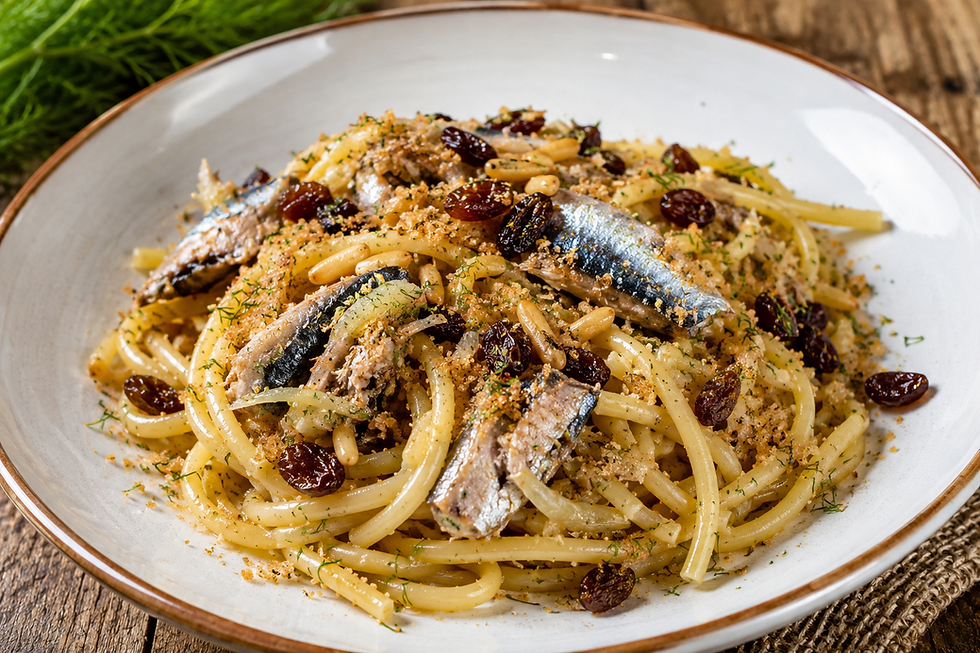
Pasta con le Sarde is the dish Palermo uses to explain itself. Fresh sardines, wild fennel, saffron, raisins, pine nuts, salted anchovy and a shower of toasted breadcrumbs go into one pan, and the result tastes of sea and mountain and sugar and salt at once. No other Italian first course carries that many contradictions and still reads as one flavour.
This is the classic Palermitan version, cooked the way the city cooks it. The fennel is boiled first and its green cooking water becomes the water the bucatini cooks in, the single decision that separates a real plate from a good imitation. Nothing is strained, nothing is smoothed, and the sardines collapse into the sauce instead of sitting on it.
It assumes you can find wild fennel and genuinely fresh sardines, because without those two the dish is something else. Everything else is a store cupboard ingredient and it is finished inside an hour. The difficulty is judgement: how far to let the fish break down, and when to stop tossing.
Yield: 4 first course servings. Prep: 30 minutes. Cook: 30 minutes. Total: about 1 hour. Difficulty: intermediate. Course: primo piatto. Region: Sicily, Palermo and the western coast.
The Story
Palermo claims this dish absolutely and the claim holds up. The legend places its invention in the ninth century, with a cook attached to the Arab general Eufemio landing near Mazara del Vallo and feeding his troops on what the shore and the hillside gave him: sardines from the water, wild fennel from the scrub. The anecdote is later than the dish, but the ingredients tell the same history more reliably. Raisins, pine nuts and saffron in a savoury fish preparation is an Arab grammar, absorbed through two centuries of Islamic rule and never given back.
Wild fennel, finocchietto selvatico, ties the recipe to the island rather than to a technique. It grows untended across the Sicilian interior and appears in early spring exactly when sardines are fat and cheap, and that overlap is why the dish exists. Bulb fennel is a different plant with a different job, sweet and crisp by comparison, and substituting it gives a pleasant pasta that is not this one.
The breadcrumb finish, muddica atturrata, carries the other half of that history. Cheese on fish pasta is not done in Sicily, and in a poor kitchen cheese was not there anyway, so dry bread toasted in oil supplied the crunch and savour grated Pecorino gives elsewhere. Palermitans call it the cheese of the poor and mean it as a compliment. The dish also has a fixed place in the calendar, around the feast of San Giuseppe in March, when sardines and finocchietto peak together.
Ingredients
For the fennel and the pasta water
Wild fennel fronds, finocchietto selvatico, 9 oz (250 g)
Water, 5 quarts (4.7 litres)
Coarse sea salt, 2 tbsp (35 g), for the pasta water
Bucatini, 14 oz (400 g)
For the sauce
Fresh sardines, whole weight, 1 1/4 lb (560 g), about 10 oz (285 g) filleted
Yellow onion, finely sliced, 1 medium, 6 oz (170 g)
Salted anchovy fillets, rinsed, 4
Golden raisins, 1 1/2 oz (40 g)
Pine nuts, 1 1/2 oz (40 g)
Saffron threads, 1 generous pinch, about 0.2 g
Extra virgin olive oil, 5 tbsp (75 ml)
Fine sea salt, to taste
Freshly ground black pepper, to taste
For the muddica atturrata
Coarse fresh breadcrumbs from stale country bread, 3 1/2 oz (100 g)
Extra virgin olive oil, 2 tbsp (30 ml)
Fine sea salt, 1 pinch
For finishing
Reserved sardine fillets, 4 of the best looking
Extra virgin olive oil, 1 tbsp (15 ml) for the pan
Wild fennel tips, a few per plate
Preparation
Clean the sardines
Pull the head of each sardine down and away and the gut comes with it. Open the fish along the belly with your thumb, press it flat, and lift the backbone out from the head end towards the tail in one movement, taking the tail with it. Dry the fillets completely on paper, because wet fillets go grey instead of colouring. Set aside the four neatest.
Boil the wild fennel and keep the water
Bring the 5 quarts of water to a rolling boil and salt it. Drop in the washed fennel and boil it 8 to 10 minutes, until the thick stems give under a fingernail. Lift it out with a spider and never drain the pot: that green water will cook the bucatini. Squeeze it lightly, chop it coarsely and keep it.
Bloom the saffron and soften the raisins
Ladle 4 tbsp (60 ml) of the hot fennel water into a bowl, drop in the saffron and leave it 10 minutes. Saffron gives up colour and aroma into warm liquid and very little thrown dry into hot oil. Cover the raisins with warm water for 10 minutes, then drain and squeeze them. Toast the pine nuts dry over medium heat for 2 minutes, shaking constantly.
Build the sauce base
Warm the 5 tbsp of olive oil in a wide saute pan over low heat and add the onion with a pinch of salt. Cook it 12 to 15 minutes until soft and translucent with no colour at all, because browned onion pushes the dish towards caramel and away from the sea. Add the anchovies and press them with a wooden spoon until they dissolve into the oil.
Add fennel, raisins and pine nuts
Stir in the chopped fennel and cook it in the oil 3 to 4 minutes so it gives its aroma to the fat. Add the raisins and most of the pine nuts, keeping a spoonful back for the plates, then pour in the saffron infusion. If the pan seems dry, add fennel water rather than oil.
Cook the sardines into the sauce
Lay the remaining fillets over the sauce, season lightly and leave them undisturbed 2 minutes. Break them up with a wooden spoon, not aggressively: you want half the fish dissolved into the sauce and half in recognisable flakes. Cook 4 to 5 minutes more over low heat, then taste before any salt goes in, because anchovy, sardine and salted pasta water carry the seasoning between them.
Cook the bucatini in the fennel water
Bring the fennel water back to a vigorous boil and drop in the bucatini. Cook it 3 minutes less than the packet time, genuinely undercooked and still chalky at the core. Before you move it, take out at least 2 cups (475 ml) of the water, because bucatini drinks a great deal in the pan.
Toast the muddica atturrata
While the pasta boils, heat the 2 tbsp of oil in a small pan over medium heat and add the breadcrumbs with a pinch of salt. Stir continuously 3 to 4 minutes until evenly deep gold and smelling of toast, then tip them out at once, because the residual heat of the metal takes them to burnt in under a minute.
Finish the pasta in the pan
Lift the bucatini straight from the pot into the sauce with tongs, heat to medium. Add a ladle of fennel water and toss continuously 2 to 3 minutes, adding more whenever the pan tightens. The starch coming off the pasta thickens the water and binds it to the oil, and the sauce goes from watery to glossy quite suddenly. Stop while the pasta is just al dente and the pan still looks slightly too loose.
Sear the reserved fillets
Warm the last tablespoon of oil in a small nonstick pan over medium high heat and lay in the four reserved fillets skin side down. Give them 45 seconds, until the skin is crisp and the flesh opaque from below, then turn them 10 seconds and take them out. They put clean whole fish on top of a sauce in which the rest has deliberately disappeared.
Plating
Warm the plates. Bucatini holds heat in its hollow core but the sauce is thin and oil based and goes dull within a minute on cold ceramic. Use wide shallow bowls: the pasta needs a wall to twirl against and the sauce needs somewhere to gather.
Lift a quarter of the pasta with tongs, twist it against the curve of the bowl and set it down as a loose nest rather than a tight tower. Spoon over the sauce left in the pan, making sure each plate gets its share of fennel, raisins and pine nuts. Lay one seared fillet across the top, skin upwards.
Scatter the muddica generously, then add the reserved pine nuts and a few raw fennel tips. Palermo heaps the breadcrumbs on rather than dusting them, so be less delicate than instinct suggests.
Professional Technique
The technique that defines this recipe is the reuse of the fennel blanching water as pasta water. Wild fennel gives up most of its aromatic compounds into boiling water within minutes, and in most kitchens that liquid goes down the drain. Here it cooks the bucatini, so every strand absorbs fennel aroma from the inside for its whole cooking time instead of meeting it only at the surface.
The second is deliberate partial destruction of the protein. Most fish pasta keeps the fish intact; this one does the opposite. About half the sardine is broken down until it emulsifies into the oil and the fennel water, which is where the dish gets its body, since there is no tomato, cream or cheese to provide it. Sardine flesh is high in fat and soluble protein, and in warm oil it thickens as well as flavours.
The third is the saffron. Blooming the threads in warm liquid for ten minutes extracts crocin and safranal into solution so they disperse evenly through 4 portions. Dropped dry into a hot pan, saffron scorches, turns flatly bitter and loses its perfume.
Texture and Moisture Control
This sauce has no thickener except starch, so the pan finish is where texture is decided. Bucatini extruded through bronze dies has a rough surface and sheds a great deal of starch, and pulling it 3 minutes early means the last of that starch is released into the pan rather than the pot. That is what turns fennel water and olive oil into a sauce that clings.
Moisture goes in by stages and is judged by eye: a ladle, toss until the pan tightens, another ladle. Bucatini keeps drinking for a minute after it leaves the heat and its hollow core fills with sauce, so a pan that looks correct on the stove looks dry in the bowl. Stop one notch looser than you think right; a spoonful of reserved water brings it back later, whereas oil only makes it greasy.
The contrast the dish depends on is wet sauce against dry crumb. Muddica loses its crunch on contact with moisture, so it goes on in the bowl and never in the pan. Toast it in oil rather than dry, since the fat seals each crumb, and keep it uncovered, because trapped steam under a lid softens a perfect batch in five minutes.
Professional Mise en Place
Everything except the pasta and the final toss can be done ahead, and in a service kitchen it always is. Only the bucatini and the seared fillets are truly a la minute.
Equipment and tools
Large pot, at least 6 quarts, for the fennel and then the pasta
Spider or slotted skimmer, to lift the fennel without draining the water
Wide saute pan big enough to toss the bucatini
Small nonstick pan for the fillets and a small pan for the crumbs
Tongs, wooden spoon, ladle and a heatproof cup for the reserved water
Prepared ahead
Sardines cleaned and filleted, on a rack over ice, same day only
Fennel boiled, squeezed and chopped, its water refrigerated, 1 day ahead
Sauce base built to the raisin stage, refrigerated, 1 day ahead
Breadcrumbs toasted and cooled, uncovered in a dry bowl, same day
Raisins soaked, pine nuts toasted, saffron ready to bloom
Service setup
Fennel water back at a rolling boil and correctly salted
Sauce warm in the wide pan, loosened with a ladle of water if set
Reserved water within reach of the pan
Muddica in an open bowl beside the pass, never covered
Bowls warmed, fennel tips and pine nuts portioned
Chef Tips
Buy sardines the day you cook them and smell them first. A fresh one smells of clean seawater and nothing more, its eye is domed and clear and its flesh springs back. Sardine fat oxidises faster than that of almost any other fish, and one day past its best the whole pan tastes metallic.
If wild fennel is unavailable, do not simply swap in bulb fennel. The nearest honest approximation is the green fronds of two bulbs, a heaped teaspoon of crushed fennel seed and a handful of dill, boiled together the same way.
Salt the pasta water after the fennel comes out, not before, and taste it. The fennel gives up sugars and salts of its own and the sardine and anchovy add more in the pan, so this is one of the few pastas where under salting the water is safer than the reverse.
Make a double batch of muddica atturrata. It keeps a week in a jar, it is the correct finish for every Sicilian fish pasta, and once it is on hand you stop reaching for grated cheese on dishes that should never see it.
Common Mistakes
Draining the fennel water. The costliest mistake and the easiest to make, because every instinct says to drain a pot of boiled greens. Lift the fennel out with a spider and keep the water. Bucatini cooked in plain water gives a pasta with sardines on it rather than pasta con le sarde.
Using bulb fennel instead of finocchietto. Same species, different ingredient. The bulb is sweet, crisp and mild, the wild fronds grassy, bitter and intensely aromatic. The substitution turns the dish flat, and no amount of saffron puts the aroma back.
Browning the onion. Colour on the onion brings caramel into a sauce that already has raisins in it and pushes the balance past savoury. Fifteen minutes over low heat with a pinch of salt, and no colour at all.
Throwing the saffron in dry. Saffron dropped into hot oil scorches in seconds and turns bitter, and the colour stays locked in the thread instead of spreading. Ten minutes in warm fennel water costs nothing and changes the whole plate.
Adding cheese. Grated Pecorino or Parmigiano flattens the sardine and fights the fennel, and in Sicily it is not done on fish. The toasted breadcrumb does that job with crunch instead of fat.
Wine Pairing
Grillo Sicilia DOC: The most natural bottle here and the one poured with the dish in Palermo. Grillo has real weight for a white, with ripe citrus and a faintly herbal edge that meets the wild fennel head on. Its acidity cuts the oil and the sardine, and its saline finish picks up the anchovy without amplifying the salt.
Etna Bianco DOC: Carricante on volcanic soil gives a tighter, more mineral wine than Grillo, and it is the choice when you want tension rather than body. Its green apple acidity and smoky length handle the raisins, keeping their sweetness from settling.
Cirò Bianco DOC: Greco Bianco from the Calabrian coast, for anyone who wants something off the obvious Sicilian path. Dry and moderately structured, it carries a bitter almond finish that runs alongside the toasted breadcrumbs and has enough grip to reset the palate.
Cerasuolo di Vittoria DOCG: The red option, from the south east of the island and lighter than most Sicilian reds. Nero d'Avola gives red cherry fruit, Frappato gives perfume and low tannin, and at around 57°F (14°C) it works with oily fish in a way heavier reds cannot.
Faro DOC: A rare wine from the hills above Messina built on Nerello Mascalese, and the most interesting bottle to open with this pasta. Pale, savoury and almost Burgundian in weight, its dried herb and orange peel aromatics meet the fennel and saffron rather than shouting over them, and its tannin is fine enough not to clash with the fish.
Storage & Reheating
Finished pasta con le sarde is a dish for the minute it is made. Cool leftovers quickly, put them in an airtight container and refrigerate for 1 day only. Cooked sardine develops a strong flavour on the second day, and this is not a pasta to keep until the third.
Reheat in a wide pan over medium heat with 2 tbsp (30 ml) of water per portion, tossing gently until the sauce loosens and the pasta is hot through, about 2 minutes. Never use a microwave: it drives moisture out of the bucatini and cooks the fish twice. Add fresh muddica at the end.
Components store better than the assembled plate. The sauce base without the sardines keeps 2 days refrigerated and freezes 1 month. The fennel and its water keep 1 day refrigerated or 2 months frozen, and the water is worth freezing alone. The muddica keeps a week in a sealed jar. Do not freeze the finished pasta.
Nutrition
Per serving, based on 4 first course portions:
Calories: 720 kcal
Total Fat: 31 g
Saturated Fat: 4.5 g
Trans Fat: 0 g
Unsaturated Fat: 25 g
Cholesterol: 55 mg
Sodium: 690 mg
Total Carbohydrates: 84 g
Fiber: 6 g
Total Sugars: 11 g
Added Sugars: 0 g
Protein: 29 g
Principal micronutrients: omega 3 fatty acids, vitamin B12, vitamin D, calcium, selenium, iron, magnesium
These figures are estimates. Most of the salt in the pasta water is discarded, and the final sodium depends on how salty the anchovies are and how much muddica goes on each plate.


Comments