
Italian Friulian Silene Risotto | Risotto con Sclopit
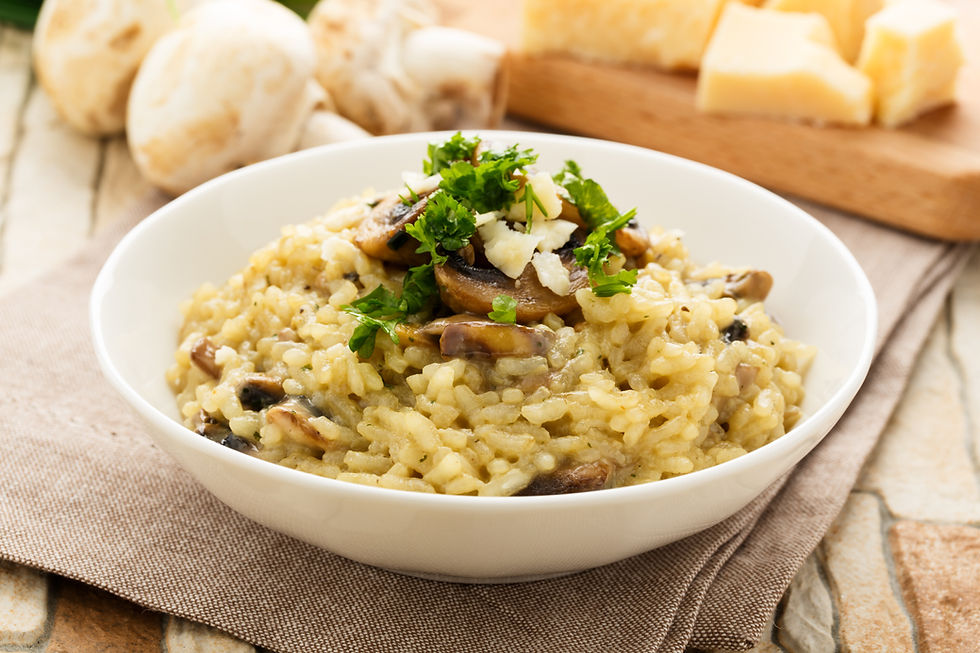
This is the bare version, the one without cheese. Sclopit, the Friulian name for Silene vulgaris, goes into the rice and nothing else follows it: no Montasio, no butter, no cream. What holds the risotto together is the starch of the rice itself, emulsified with olive oil and a cold green purée of the herb. Mantecatura all'olio began as a technique of necessity and turns out to be one of clarity.
Stripping the dairy out changes what you taste. A risotto finished with aged cheese is a savoury whole in which a wild herb is one voice among several. Take the cheese away and sclopit is the only thing in the bowl with a flavour: faintly sweet, green the way young peas are green, with a mineral bitterness at the end. Every mistake in it is visible.
The method protects that. The brodo is made from the sclopit stems most cooks discard, the rice is Vialone Nano for its wetter looser wave, and the green purée is blended with ice and folded in off the heat so it never cooks. Toasted buckwheat from Carnia gives the one hard texture.
Yield: 4 servings. Prep: 35 minutes. Cook: 30 minutes. Total: about 1 hour 5 minutes. Difficulty: intermediate. Course: primo piatto. Region: Friuli Venezia Giulia, the stony grasslands of the Tagliamento and the hills of Carnia.
The Story
The stony river plains north of Codroipo, the magredi, are the poorest land in Friuli Venezia Giulia. The Tagliamento laid down gravel there for millennia, water drains through within hours and nothing agricultural took hold. What grows on the magredi is dry grassland, and that is where sclopit grows best. The plant tolerates thin alkaline soil that would kill a vegetable, which is why the poorest families had the most of it.
Gathering it was spring work done by women and children. The season opened when the ground warmed, around the feast of San Giuseppe in March, and closed when the plant flowered. Sclopit was cut just above the crown so the root would push another flush, which kept the same patches productive for generations. Families had their own ground and never said where.
The cheese free version is the older one and it survived for two reasons. Latteria cheese in a rural Friulian house was a traded good, not a daily one, and the risotto fell inside Lent, when it was not eaten at all. So the herb went into rice with an onion and whatever fat there was. What was an economy now reads as a choice: the dish is free of lactose and tastes more of the magredi than the richer version could.
Ingredients
For the risotto
Vialone Nano rice, 1 1/2 cups (300 g)
Sclopit, Silene vulgaris, whole gathered bunches, 12 oz (340 g) before trimming
Spring onion, white part only, finely chopped, 2 oz (60 g)
Extra virgin olive oil, mild and fruity, 5 tbsp (75 ml), divided
Dry white wine, a lean Friulian white, 1/3 cup (80 ml)
Fine sea salt, about 1 tsp (6 g), added in stages
Freshly ground white pepper, to taste
For the sclopit stem brodo
Sclopit stems, reserved from trimming, all of them
Water, 7 cups (1.65 liters)
Spring onion greens, 2
Celery stalk, 1
Bay leaf, 1
White peppercorns, 6
Fine sea salt, 1/2 tsp (3 g)
For the cold green puree
Blanched sclopit leaves, squeezed, 4 oz (115 g)
Ice cubes, 3
Extra virgin olive oil, 3 tbsp (45 ml)
Fine sea salt, 1/4 tsp (1.5 g)
For finishing
Hulled buckwheat groats, 2 tbsp (24 g)
Sclopit shoots, raw and small, 12
Extra virgin olive oil, a few drops per plate
Lemon zest, finely grated, from 1/4 lemon
Freshly ground white pepper, to taste
Preparation
Sort the sclopit and save every stem
Pull the leaves and soft tips away from the stems, keeping the two piles separate. The stems are what most recipes throw out and here they are the backbone of the brodo, so rinse them well. Wash the leaves in three changes of cold water, lifting them clear each time, and spin dry. Set twelve small shoots aside raw.
Draw a brodo out of the stems
Put the stems, water, onion greens, celery, bay leaf, peppercorns and 1/2 tsp (3 g) of salt in a pan, bring to a bare simmer and hold it there 30 minutes without letting it boil. Strain through a fine mesh sieve, pressing gently. You want a pale straw coloured liquid that smells of the herb. Keep it hot and quiet at the back of the stove.
Blanch the leaves and shock them hard
Boil a wide pan of well salted water, drop in the leaves for 35 seconds and lift them into iced water. Shocking matters more here than in any version with cheese to hide behind, since the plate has no other colour on it. Once cold, squeeze the leaves until no more water runs, weigh out 4 oz (115 g) for the purée and chop the rest.
Blend the cold green puree
Put the squeezed leaves in a blender with the ice, the 3 tbsp (45 ml) of olive oil and the salt, and blend on full speed no longer than 45 seconds. The ice keeps the blade from heating the herb, which is what turns a bright purée khaki within a minute. Scrape it into a cold bowl, cover the surface and refrigerate. It must go into the risotto cold.
Sweat the onion and toast the rice
Warm 2 tbsp (30 ml) of the olive oil in a wide heavy pan over low heat and sweat the spring onion with a pinch of salt 6 minutes, keeping it pale. Raise the heat, add the rice and toast it 2 minutes until the grains squeak against the spoon. Oil coats a grain differently from butter and gives a drier toast, so keep the spoon moving.
Risottare with the stem brodo
Add the wine, let it go completely, then feed in the hot brodo a ladle at a time. Vialone Nano is shorter and rounder than Carnaroli and cooks faster, about 14 minutes, releasing its starch early, so keep the pan wetter throughout than you would for Carnaroli. Stir in the chopped blanched leaves at minute 10 and correct the salt then, not before.
Toast the buckwheat
While the rice cooks, put the buckwheat groats dry into a small pan over medium heat and shake them 3 to 4 minutes until they smell of hazelnut and darken a shade. Tip them onto a cold plate at once, since they keep colouring in a hot pan and go bitter. This is the grain Carnia turns into blecs, and the only crunch the dish gets.
Mantecare with oil and cold puree
Take the pan off the heat with the rice one notch short and visibly loose. Wait 30 seconds, then beat in the remaining 3 tbsp (45 ml) of olive oil hard, in a thin stream, until the surface turns glossy. Only now fold in the cold purée, quickly, so it colours and perfumes the rice without cooking. Check the salt, grind over white pepper and serve within a minute.
Plating
Use plain white plates and nothing patterned. The point of this version is a single flat green surface, and decoration under it fights a dish that has very little. Warm the plates only slightly: an oil bound risotto sets faster on a hot surface and loses its wave before the second mouthful.
Ladle rather than spoon. An oil emulsion flows more freely than a cheese one, so tip a quarter of the risotto into the centre of the plate and let it find its own edge. Give it five seconds. If it stops short of a clean round, add a spoonful of hot brodo in the pan before the next plate.
Finish with toasted buckwheat kept to one side of the plate rather than sprinkled all over, three raw sclopit shoots, a few drops of olive oil and the smallest amount of lemon zest. The zest sharpens the aroma and should not be tasted, so grate it high above the plate. Serve at once, with no cheese on the table.
Professional Technique
Everything here rests on mantecatura all'olio, and its physics differ from the dairy finish. Butter and hard cheese bring their own emulsifiers, milk proteins that hold fat and water together. Olive oil brings none, so the only emulsifier present is the amylopectin the rice has released. That is why the risotto comes off the heat visibly wetter than usual, why the oil goes in slowly in a thin stream, and why it is beaten rather than stirred: mechanical energy does the work casein would.
The second technique is the cold purée added last, a modern borrowing that solves an old problem. Green herbs lose colour through enzymic browning and pheophytin formation, and both accelerate with heat and time. Blending with ice holds the purée below the temperature at which those reactions run, and folding it in off the heat means the herb spends perhaps twenty seconds warm. The result is clear spring green rather than grey green.
The third is the stem brodo, a flavour decision as much as a thrifty one. Sclopit stems are fibrous and unpleasant to eat, but they hold the same aromatic compounds as the leaves and release them into water at a low simmer. That gives a cooking liquid which reinforces the herb instead of diluting it, and in a dish with no cheese it matters enormously. Boil it hard and it turns grassy and flat.
Texture and Moisture Control
Vialone Nano behaves differently from the long Carnaroli grain and the recipe is written around it. It is shorter, rounder and higher in surface starch, so it thickens the pan early and reaches the right bite in about 14 minutes. The reward is a loose flowing risotto with almost no effort; the risk is that it overshoots into porridge within ninety seconds. Taste from minute 11 and trust the grain, not the clock.
An oil bound risotto holds less water than a buttered one and tightens more sharply as it cools, so the target in the pan is looser than feels right. Off the heat the rice should barely hold a line drawn through it with a spoon. Once the oil is beaten in and the purée folded through, that line will hold. If it holds earlier, the risotto is already too dry to save with anything but more brodo.
Two things destroy the green. Water left in the blanched leaves dilutes the emulsion and dulls the colour, so squeeze them until they feel almost dry. Heat does the rest. Never return the pan to the flame after the purée goes in, never hold the risotto covered, and never plate it more than a minute before it is eaten.
Professional Mise en Place
The purée decides service, because it is the one element that will not wait. Everything else can be standing ready.
Equipment and tools
Wide heavy pan, 11 inches (28 cm), with low sides
Blender that runs cold and fast, plus a bowl chilled in the freezer
Fine mesh sieve for the brodo and a bowl of iced water for shocking
Small dry pan for the buckwheat and a cold plate to tip it onto
Prepared ahead
Stem brodo made, strained and held hot, up to 1 day refrigerated
Leaves blanched, shocked and squeezed, up to 4 hours ahead and kept cold
Buckwheat toasted and cooled, up to 2 days in a sealed jar
Onion chopped and oil measured into two separate small jugs
Service setup
Green purée blended no more than 30 minutes before service, kept over ice
Brodo at a bare simmer with its own ladle, never boiling
Plates barely warm, raw shoots and lemon within reach
Nothing folded in until the pan is off the heat and the oil is beaten through
Chef Tips
Choose the oil as carefully as the herb. A peppery Tuscan or Pugliese oil bulldozes sclopit, and with no cheese in the pan nothing absorbs it. Look for something mild and fruity, a Ligurian Taggiasca or a delicate Garda oil, and taste it on bread before committing 5 tbsp (75 ml) to the dish.
Gather more sclopit than the recipe asks for. Whole bunches lose close to half their weight once the stems come off, and the 12 oz (340 g) here is the weight before trimming. At a spring market in Udine, ask whether the bunches are already picked over, because trimmed ones sell at a different weight.
Make the purée last and make it once. It is best within half an hour of leaving the blender and dulls visibly by the second hour, so nothing is gained by preparing it early. If you must hold it, press plastic onto the surface and sit the bowl in ice.
Taste the risotto before the purée goes in and again after. The purée carries salt, oil and a bitterness of its own, so a risotto seasoned correctly beforehand is over seasoned once it is folded through. Correct at the end.
Common Mistakes
Treating this as the cheese version with the cheese left out. Remove Montasio from a risotto built around it and what is left is thin and hollow. This recipe compensates with a herb brodo, an oil emulsion and a raw purée, and all three are needed.
Stirring the oil in instead of beating it. Olive oil has no emulsifier of its own and separates into a slick unless mechanical energy drives it into the starch. Add it in a thin stream off the heat and work it hard for 30 seconds.
Blending the purée warm. A blender heats what it blends, and warm blanched greens turn khaki within a minute. Add three ice cubes, run it no longer than 45 seconds and refrigerate at once.
Returning the pan to the heat after the purée. Even 30 seconds over a flame cooks the raw herb, flattens the aroma and shifts the colour. Once the purée is folded in, the only place the pan goes is onto the plates.
Discarding the stems. They look like waste and they are the best source of sclopit flavour in the brodo. Simmered gently for 30 minutes they turn plain water into a liquid that tastes of the plant.
Wine Pairing
Riviera Ligure di Ponente Pigato DOC: The most exact match here, because Pigato comes from the one Italian region that cooks with as much olive oil as this dish uses. It has a herbal sage and thyme character, a faintly bitter almond close and the body to carry 5 tbsp (75 ml) of oil without being swallowed by it. No other white on the list meets the oil so directly.
Schioppettino Friuli Colli Orientali DOC: The Friulian red that can sit beside a green risotto, provided it is served cool at about 55°F (13°C). Its signature is black pepper and violet over light tannin and bright acidity, and that peppery lift continues the white pepper on the plate. Choose an unoaked bottling, since wood flattens everything here.
Lugana DOC: Turbiana grown on the clay of the southern Garda shore, with more substance than its pale colour suggests. Its waxy texture and saline finish give an oil bound risotto something to lean on, with almost no oak or overt fruit in the way. Young bottles suit it best; older Lugana turns nutty and dominates.
Erbaluce di Caluso DOCG: An alpine white from the moraine hills of northern Piedmont and the sharpest knife on this list. Erbaluce is high in acidity with green apple fruit and a stony finish, and it cuts through 5 tbsp (75 ml) of olive oil in a way rounder whites cannot. It carries a herbal undertone that sits comfortably next to sclopit.
Franciacorta DOCG: The choice when the risotto opens a meal rather than sitting in the middle of one. A brut nature has the bead to scrub oil off the palate and the lees character to answer the toasted buckwheat, without sugar to blur the herb. Serve it in a white wine glass, not a flute.
Storage & Reheating
Store the parts, never the finished dish. The stem brodo keeps 3 days refrigerated in a sealed jar and freezes for 3 months, and a double batch is worth making while the season lasts. Blanched squeezed leaves freeze for 2 months pressed flat with the air out. Toasted buckwheat keeps 2 weeks in a sealed jar away from light.
The green purée is the exception and does not keep. Refrigerated it holds its colour about 4 hours and its aroma rather less, and it cannot be frozen without the oil separating on thawing. Make it the same day and treat it as a service item.
Finished risotto keeps 2 days in an airtight container in the refrigerator and must not be frozen. To reheat, work in a wide pan over low heat with 3 tbsp (45 ml) of hot brodo per serving, stirring until it loosens, then beat in a teaspoon of fresh olive oil off the heat to rebuild the emulsion. The colour will have faded, and a spoonful of fresh purée is the honest fix. Leftovers are good crisped in oil as small cakes.
Nutrition
Per serving, based on 4 servings:
Calories: 480 kcal
Total Fat: 20 g
Saturated Fat: 3 g
Trans Fat: 0 g
Unsaturated Fat: 17 g
Cholesterol: 0 mg
Sodium: 520 mg
Total Carbohydrates: 68 g
Fiber: 4 g
Total Sugars: 2 g
Added Sugars: 0 g
Protein: 9 g
Lactose: 0 g
Principal micronutrients: vitamin A, vitamin C, vitamin K, folate, iron, magnesium, manganese
These figures are estimates. The dish contains no dairy and therefore no lactose and no cholesterol, and the fat is almost entirely monounsaturated because it all comes from olive oil.


Comments