
Italian Cremona Nougat | Torrone Classico di Cremona

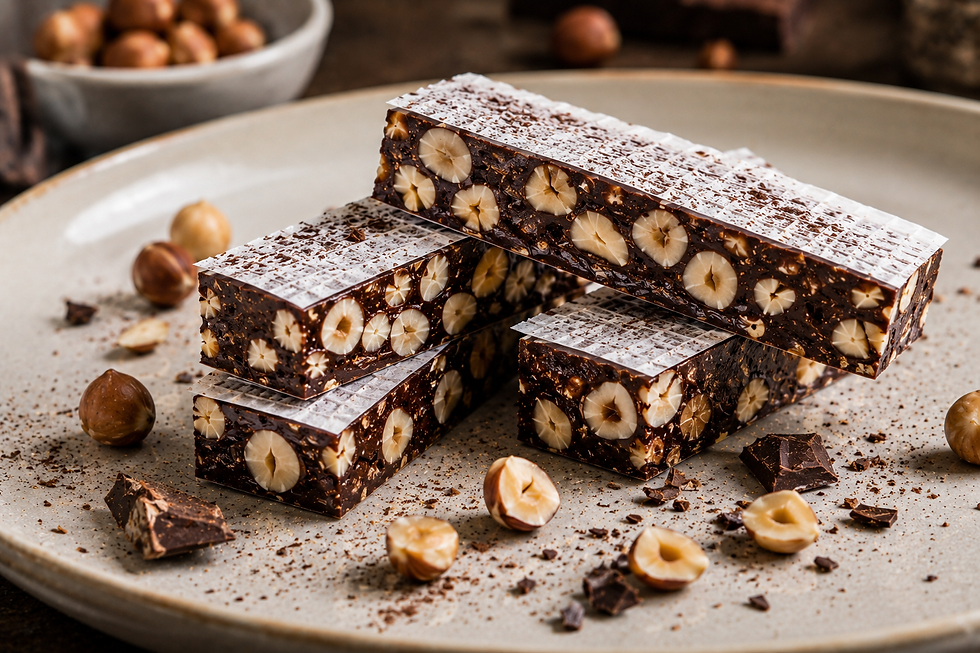
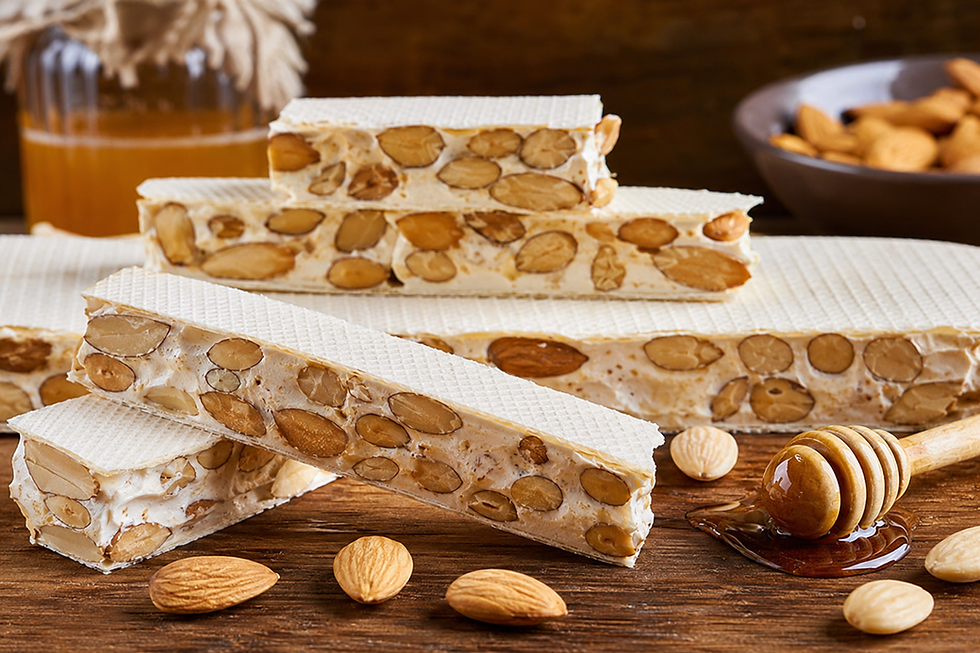
Cremona makes the nougat that snaps. Almost half the weight of this bar is whole blanched almonds, suspended in a pale honey and sugar mass dried until it behaves like glass rather than like candy. It is cut into rectangles, sealed above and below in edible wafer, and sold by the etto from December counters that have not changed their windows in a century.
Yield: about 2 lb 3 oz (1 kg), 24 bars. Prep: 40 minutes. Cook: 2 hours. Set: 24 hours. Total: about 27 hours. Difficulty: advanced. Course: dessert, Christmas confectionery. Region: Lombardy, the city and province of Cremona.
The Story
The story every Cremonese will tell you begins on 25 October 1441, when Francesco Sforza married Bianca Maria Visconti in this city and took the province as part of her dowry. The banquet is said to have closed with a confection of honey, egg white and almonds moulded in the shape of the Torrazzo, the vast medieval bell tower beside the cathedral, and the sweet is said to have taken its name from that tower. It is a splendid story and it deserves to be told with one caution attached: no contemporary account of that banquet describing such a sweet has ever been produced. The name is more soberly traced to the Latin torrere, to toast, or to the Arabic turun, and honey and nut confections had been made around the Mediterranean for centuries before the Sforza sat down to eat.
What Cremona genuinely did was industrialise the thing and then sell it to the rest of Italy. Enea Sperlari opened his workshop in 1836 and Vergani followed later in the same century, and between them they turned a local Christmas sweet into a product shipped the length of the peninsula in printed boxes. By the early twentieth century the city was known abroad for two things made by hand within a few streets of each other, violins and nougat, and the second paid considerably more wages than the first.
The tradition is still worked rather than remembered. Every November the Festa del Torrone fills Piazza del Comune, the wedding is staged again in costume, and the confectioners pour and press in the open air in front of whoever turns up. The trade distinction the festival assumes, hard against soft, is what places this recipe: Cremona built its reputation on the brittle bar, heavily loaded with almonds, and a Cremonese counter will sell you the soft sort under a different name entirely so that nobody goes home with the wrong one.
Ingredients
For the nougat
Whole blanched almonds, 1 lb (450 g)
Acacia honey, 10 1/2 oz (300 g)
Granulated sugar, 7 oz (200 g)
Water, 2 1/2 tbsp (38 ml)
Egg whites, from 2 large eggs, 2 1/2 oz (70 g)
Vanilla bean, split and scraped, 1
Fine sea salt, 1 small pinch
For assembly
Edible wafer sheets, cialde or ostie, 8 by 12 in (20 by 30 cm), 2
Neutral oil, for the frame and the spatulas
Two choices decide how this bar tastes. The honey should be acacia or another pale delicate one: chestnut and forest honeys are wonderful things and they will bury the almond completely. The almonds should be a variety with real flavour rather than the cheapest available, Avola or Tuono if you can find them, and they must be whole, because the fracture of the finished bar depends on them staying intact through the last fold.
Wafer sheets are sold by Italian grocers and online as cialde per torrone. Buy more than two, since they crack while you handle them. The sugar should be plain granulated with nothing added to it.
Preparation
Step 1: Toast the almonds through to the centre
Heat the oven to 320°F (160°C) and spread the almonds in one layer on a large tray. Give them 18 to 22 minutes, shaking twice, until they are the colour of pale straw and smell sweet. Break one open: the inside must be dry and evenly coloured, not white and damp.
Step 2: Hold the almonds hot
Drop the oven to 195°F (90°C) and leave the almonds in it until they are folded in. Cold almonds hitting a hot aerated mass chill it locally, stiffen it in patches and make the last fold a fight you will lose.
Step 3: Line the frame and set out the press
Oil a shallow frame or a loaf tin about 8 by 12 in (20 by 30 cm) very lightly, lay one wafer sheet on the base and trim it flush. Cut the second sheet to the same size and keep it beside the frame, with the board and the two weights.
Step 4: Warm the honey
Put the honey in a heavy saucepan over low heat and bring it to 240°F (116°C), stirring occasionally with a silicone spatula. Keep the heat gentle. Honey scorches on a hot spot before the thermometer notices it, and a scorched batch tastes of burnt sugar right through.
Step 5: Whip the whites and stream the honey in
Whip the whites with the pinch of salt until they hold a soft peak that just folds over, no further. With the machine on medium, pour the hot honey down the side of the bowl in a thin steady thread, then let it run 5 minutes more, until the mass is thick, glossy and climbing the whisk.
Step 6: Cook the sugar and add it
Meanwhile bring the sugar and water to 300°F (149°C) in the second pan, washing crystals off the sides with a wet brush. Pour it into the running mixer in the same thin thread. The mass tightens sharply and loses volume. That is expected: it is now a meringue carrying two cooked sugars.
Step 7: Dry the mass over steam
Set the bowl over barely simmering water and work the mass with an oiled spatula for 1 1/2 to 2 hours, scraping round and folding in. Test every 20 minutes from the first hour: a bead dropped into iced water must set hard and shatter. Add the vanilla seeds when the test comes close.
Step 8: Fold in the almonds and press
Tip the hot almonds in and fold with the spatula, cutting through rather than stirring round, until every nut is coated and nothing is loose at the bottom. Work fast. Scrape the mass into the frame, level it, lay the second wafer on top and press it down with the board.
Step 9: Weight the slab and wait a full day
Put both weights on the board and leave the slab at cool room temperature for 24 hours, away from radiators and away from steam. A slab cut after six hours bends instead of breaking, and it never recovers the snap afterwards however long it then sits.
Step 10: Cut with a warm blade
Turn the slab out, lay it wafer side down and run a large heavy knife under hot water, then dry it completely. Press straight down in one movement to cut bars about 3 1/2 by 1 in (9 by 2.5 cm). Rewarm the blade every three or four cuts and never saw back and forth.
Plating
This is confectionery, so plating means presentation rather than assembly. Serve the bars on wood or on marble, never on a chilled plate, and bring them out at 64°F (18°C) or a little above. Straight from a cold larder the sugar phase is at its most brittle and the bars shatter under the tooth instead of breaking cleanly, and the vanilla reads as almost nothing.
Count on one bar a person after a full meal and set a second board of broken pieces beside it, which is how it is actually eaten in Cremona. Coffee belongs with it, and so does a small glass of something sweet. As part of a dessert course, keep the accompaniments dry and bitter: candied orange peel, a few toasted almonds, a little dark chocolate. Nothing wet on the same plate.
Professional Technique
Torrone is made on dry days. That sounds like workshop folklore and it is not: it is the most useful piece of physics in the recipe. Cooked sugar is hygroscopic, and the invert sugars honey brings with it more so, so while the mass sits open over steam its surface exchanges water with the room in both directions. What you need is a net loss, and its rate depends on the gap between the water the mass holds and the water the air already carries. On a close humid afternoon that gap collapses toward nothing and the mass stops drying. Hold it three hours and it still will not arrive, because no temperature you can reach without caramelising the sugar moves water into air that is already full of it.
This is why a confectionery laboratory runs conditioned air rather than opening a window, keeping the room near 68°F (20°C) and 50 percent relative humidity or lower while a batch is on. The signal is mechanical and unmistakable once you know it. A mass drying properly starts to pull away from the sides of the bowl, leaving the walls clean behind the spatula and gathering into a dense body that follows the blade. A mass defeated by the room clings to the sides, smears rather than gathers, and closes back over the track the spatula has just cut.
At home you choose the moment instead of the equipment. Work on a cold clear winter morning, not after rain and not in August. Clear the kitchen of anything else boiling, run the extractor hood hard, and keep a fan moving air across the room rather than at the pan, which would cool the mass without helping it. If the test refuses to go brittle after two hours, stop: accept a softer bar and eat it within the week, because forcing the water out with more heat gives a brown bitter slab and no snap.
Texture and Moisture Control
The cold water test is the only gauge that tells the truth here, and it has to be read cold. Drop a bead of the mass into a glass of iced water, wait five seconds, lift it out and press it between finger and thumb. A finished bar gives nothing and cracks. A bead that flattens, or bends before it breaks, means more time over the steam. Judging the mass by how it feels hot in the bowl is how people convince themselves it is ready an hour early, because everything stiffens considerably as it cools.
Almonds carry their own moisture and it will find its way out. A nut toasted only on the surface still holds water at the centre, and over the first days that water migrates into the sugar immediately around it, leaving soft rings inside a bar that should be uniform. Toast them properly and the problem disappears. After cutting, watch the surface: a faint tack on day two means the bars are taking water back out of the room and want tighter wrapping straight away. Always cut at room temperature, never on a bar brought straight from the cold, which arrives wet with condensation.
Professional Mise en Place
Once the honey is on the heat there is no pause, so everything below is out and ready first.
Equipment and tools
Stand mixer with a whisk, and a second pair of hands if you have them
Two heavy saucepans and two probe thermometers
Heatproof bowl that sits stably over a pan of simmering water
Frame or loaf tin about 8 by 12 in (20 by 30 cm), a board that fits it, two weights
Oiled silicone spatulas and a large heavy knife
Prepared ahead
Wafer sheets cut to the frame, one in the base and one waiting
Frame oiled, board and weights beside the bench
Almonds toasted and holding in the oven at 195°F (90°C)
Vanilla bean split and the seeds scraped into a small dish
Sugar and water weighed into the second pan, wet brush in a glass of water
Service setup
Extractor hood on, nothing else boiling in the kitchen
Iced water in a glass beside the bain marie for testing
Timer set for 20 minute test intervals
Cutting board and hot water for the blade, ready for the following day
Airtight tins and greaseproof paper for the cut bars
Chef Tips
Weigh the egg whites rather than counting eggs. Two large whites can vary by 15 g between one box and another, and at this ratio that swing is the difference between a mass that aerates properly and one that never thickens over the steam. Use 2 1/2 oz (70 g) and no more.
Calibrate both thermometers in boiling water before you start. A probe reading four degrees low will take your sugar well past 300°F (149°C) without telling you, and by the time the colour shows in the pan the batch is already lost.
Oil the spatula rather than the mass. A film of neutral oil on the blade keeps the nougat moving and adds nothing you can taste, while oil worked into the mass itself softens the finished bar and dulls the fracture.
Make it two days before you want it. The slab needs its full day under weight and the cut bars are better after a further night in the tin, when the surface has settled and the vanilla has spread through the almonds.
Common Mistakes
Whipping the whites to a stiff peak. A fully stiff foam has no stretch left, and hot honey poured into it tears the structure instead of setting it. Stop at a soft peak that folds over on the whisk, even though it looks underdone.
Adding cold almonds. They chill the mass in patches, stiffen it where they land and make the fold impossible to finish evenly. Hold them in a low oven and tip them in hot.
Trusting the clock over the test. Ninety minutes is a guide, not a target. Room conditions, pan thickness and the water in your honey all move the real time, and only the iced water bead knows where you are.
Cutting the slab too early. Under 24 hours the bars bend rather than break, and the snap never comes back. This is the one wait in the recipe that has no shortcut at all.
Storing the bars loose. Left open on a plate, the finished nougat draws water out of the air within hours and turns sticky on the surface. Wrap each bar and close the tin.
Wine Pairing
Moscato d'Asti DOCG: The lightest way into a very sweet bar and the least tiring. It sits around 5 percent alcohol with a soft frothy bead and a sweetness that comes across as fresh grape and peach rather than as sugar, so it refreshes between pieces instead of adding to the load. Serve it properly cold, at about 46°F (8°C), and open it the same day.
Recioto di Soave DOCG: Garganega dried on racks through the autumn, which concentrates sugar and acidity together rather than sugar alone. That retained acidity is what lets it stand beside a mouthful of honey without either side going flat, and the variety finishes on a distinctly bitter almond note that lands directly on the toasted nuts in the bar.
Marsala DOC: A Superiore Dolce or a Vergine, in a small glass and lightly chilled. Fortification gives it the weight to follow something this dense, and the oxidative ageing brings walnut, dried fig and caramel notes that run with the honey rather than against it. Its faintly bitter finish keeps the pairing from turning into one long note of sugar.
Recioto della Valpolicella DOCG: The red option, and the one to pour if the meal has been a long one. Dried Corvina gives sweet cherry and dried plum fruit with genuine tannin behind it, and that tannin is useful here: it grips the fat of the almonds in a way no sweet white can, and the cool 61°F (16°C) serving temperature keeps the alcohol off the palate.
Storage & Reheating
Wrap each bar individually in greaseproof paper or cellophane and keep the parcels in an airtight tin at cool room temperature, 59°F to 64°F (15°C to 18°C). Kept that way the nougat holds its snap for about 6 weeks and stays perfectly good for 3 months, losing a little of the vanilla as it goes. Do not refrigerate it: the bars come out of the cold wet with condensation and the surface goes sticky within minutes.
Nothing here is reheated. If a bar has softened because the tin was left open, give the pieces 10 minutes in a 195°F (90°C) oven, cool them in a dry room and wrap them again at once. That recovers some of the snap, not all of it. The uncut slab freezes for up to 3 months, tightly wrapped, and must be thawed still wrapped so the condensation forms on the wrapping rather than on the sugar.
Nutrition
Per bar, based on 24 bars from the slab:
Calories: 205 kcal
Total Fat: 9 g
Saturated Fat: 0.7 g
Trans Fat: 0 g
Unsaturated Fat: 8 g
Cholesterol: 0 mg
Sodium: 12 mg
Total Carbohydrates: 28 g
Fiber: 1.8 g
Total Sugars: 26 g
Added Sugars: 20 g
Protein: 4 g
Lactose: 0 g
Principal micronutrients: vitamin E, magnesium, manganese, copper, phosphorus, riboflavin
These figures are estimates and depend on how thin you cut the bars.



Comments