Italian Vegan Sautéed Green Vegetables with Garlic, Chili and Lemon | Verdure Verdi Saltate in Padella Vegane

Verdure saltate in padella are the everyday side dish of the Italian home kitchen, and the measure of a cook's technique: vegetables blanched until just tender, then tossed in a hot pan with olive oil, garlic and chili until glossy, bright and lightly golden at the edges. This version brings together four green vegetables, broccoli, green beans, asparagus and peas, each blanched for its own exact time and then sautéed together, finished with lemon juice and zest and a scattering of toasted almonds. It is entirely vegan, as the Italian method has always been. The precision is in the timing and the heat, so every vegetable stays vivid green, tender with a slight bite and coated in a fragrant, savory oil.
Yield: 6 servings. Prep: 30 minutes. Cook: 20 minutes. Rest: none. Course: contorno. Region: all of Italy.
The Story
Saltare means to jump, and in the Italian kitchen it describes the movement of food tossed in a hot pan with a flick of the wrist, so that every piece lifts, turns and falls back into the fat. The technique is the base of countless vegetable dishes, and it is almost always paired with a second gesture, the blanching that comes first. In many regions vegetables cooked this way are called ripassati, passed again, because they go through the pot of boiling water and then pass a second time through the pan with oil and garlic.
The most famous examples are Roman and Neapolitan. In Rome cicoria ripassata, wild chicory boiled and then sautéed with garlic, chili and olive oil, is served beside almost every main course in the trattorie. In Naples friarielli, the tender shoots of a local broccoli, are sautéed the same way. Across the South, broccoli, cime di rapa, green beans and greens of every kind follow the same pattern. The trio of olive oil, garlic and chili, aglio, olio e peperoncino, is the dressing of the poor and the pride of the region: few ingredients, all of them in the kitchen year round, transformed by heat into something deeply aromatic.
The vegetables of this recipe belong to the Italian spring and early summer. Asparagus has been eaten in Italy since Roman times, and the agronomist Cato the Elder described its cultivation in the second century BC. Peas, broccoli and green beans fill the markets from April to July, and Italians traditionally cook them simply, to taste their freshness. The habit of finishing vegetables with lemon is typical of the South, where lemons grow in gardens and along the coasts of Campania, Calabria and Sicily.
This dish needs no replacements to be vegan: it is the Italian vegetable tradition as it has always been, built on olive oil instead of butter. What this recipe adds is method. Each vegetable is blanched separately in heavily salted water for a precise time, cooled quickly and dried, so that in the pan it only needs to heat through and take on the flavor of the oil. The garlic is cooked gently so it never turns bitter, and lemon goes in at the very end so it does not dull the green.
Ingredients
Buy the vegetables as fresh as possible and cook them within a day or two. Broccoli should have tight, dark green heads and firm stems; green beans should snap cleanly when bent; asparagus tips should be closed and the stems firm, of medium thickness, about 1/2 inch (1 cm). Fresh peas in the pod are best in season; good frozen peas are an honest alternative. Use a fruity, peppery extra virgin olive oil, fresh garlic with no green sprout and an untreated lemon, since you will use its zest.
For blanching
Water, 5 quarts (4.7 l)
Coarse sea salt, 3 tbsp (50 g)
Ice water, a large bowl, for cooling
For the vegetables
Broccoli, 1 large head, about 1 lb (450 g), cut into small florets, the stem peeled and sliced
Green beans, 10 oz (280 g), trimmed
Asparagus, 1 bunch, about 1 lb (450 g), woody ends removed, cut into 2 inch (5 cm) pieces
Shelled peas, fresh or frozen, 1 cup (150 g)
For the garlic and chili oil
Extra virgin olive oil, 1/4 cup (60 ml)
Garlic, 3 cloves, thinly sliced
Fresh red chili, 1 small, thinly sliced, or 1/2 tsp (1 g) crushed dried chili
Fine sea salt, 1/2 tsp (3 g), to taste
Freshly ground black pepper, to taste
For the finish
Lemon zest, finely grated, from 1 lemon
Lemon juice, freshly squeezed, 1 tbsp (15 ml)
Blanched almonds, sliced or slivered, 1/3 cup (35 g), toasted
Fresh mint leaves, a few, torn
Extra virgin olive oil, peppery, 1 tbsp (15 ml), to finish
Flaky sea salt, 1 pinch
Preparation
Step 1

Prepare the vegetables. Cut the broccoli into florets about 1 1/2 inches (4 cm) long, splitting large ones through the stem so all are the same size; peel the thick stem and slice it into coins 1/4 inch (6 mm) thick. Trim the stem ends of the green beans. Snap off the woody ends of the asparagus where they break naturally and cut the spears into 2 inch (5 cm) pieces on a slight diagonal, keeping the tips apart. Shell the peas if fresh. Uniform pieces are the basis of the dish: each vegetable will be blanched as a group, and pieces of the same size cook in the same time.
Step 2

Set up the blanching station. Bring 5 quarts (4.7 l) of water to a full rolling boil in a large pot and add the coarse salt; it should taste pleasantly salty, like a mild seawater. Next to the stove, prepare a large bowl of ice water and a tray lined with a clean towel. A large volume of water keeps the boil going when the vegetables go in, so they cook quickly and keep their color. The salt seasons them from the inside, which no amount of salt in the pan can do later.
Step 3

Blanch each vegetable separately. Cook the vegetables one group at a time, using a spider or slotted spoon to lift them out: green beans for 4 to 5 minutes, broccoli florets and stem coins for 2 1/2 to 3 minutes, asparagus stems for 2 minutes and tips for 1 minute, fresh peas for 2 minutes, frozen peas for 1 minute. Taste one piece of each before lifting them out: they should be tender on the outside and still slightly firm at the center. Wait for the water to return to a full boil before adding the next group. Different vegetables have different densities, and cooking them separately is the only way to get every one right.
Step 4

Cool and dry the vegetables. As soon as each group is lifted out of the pot, plunge it into the ice water for 1 minute, just until cold, then drain it and spread it on the towel. Pat the vegetables dry. The ice bath stops the cooking at once and fixes the bright green color, because the chlorophyll stays vivid while the vegetables are briefly cooked and turns olive green if they keep cooking in their own heat. Drying them is essential: wet vegetables make the oil spit and steam in the pan instead of sautéing.
Step 5

Make the garlic and chili oil. Put the olive oil, the sliced garlic and the chili in a large, wide frying pan or a wok, cold, and set it over medium-low heat. Cook for 3 to 4 minutes, swirling the pan, until the garlic is fragrant and just turning pale gold at the edges. Starting the garlic in cold oil lets it release its aroma slowly into the fat; garlic dropped into very hot oil burns in seconds and turns bitter. This flavored oil is the dressing of the whole dish.
Step 6

Sauté the vegetables. Raise the heat to high. Add the green beans and broccoli first and toss them for 2 minutes, then add the asparagus and the peas and toss for another 2 to 3 minutes, flicking the pan or stirring constantly, until all the vegetables are hot through, glossy with oil and lightly golden in a few spots. If your pan is smaller than 12 inches (30 cm), work in two batches with half the oil each. Season with salt and pepper. High heat and constant motion coat every piece with the oil and brown the edges without overcooking the inside.
Step 7

Finish with lemon and almonds. Take the pan off the heat. Add the lemon zest and the lemon juice and toss once more, then add half of the toasted almonds and the torn mint. Taste and adjust the salt. Acid turns green vegetables olive colored when it is heated with them for long, so lemon juice must go in only at the very end, off the heat, and the dish must be served right away. The zest brings the fragrance of the lemon, the juice its freshness, and the almonds a toasted crunch.
Plating
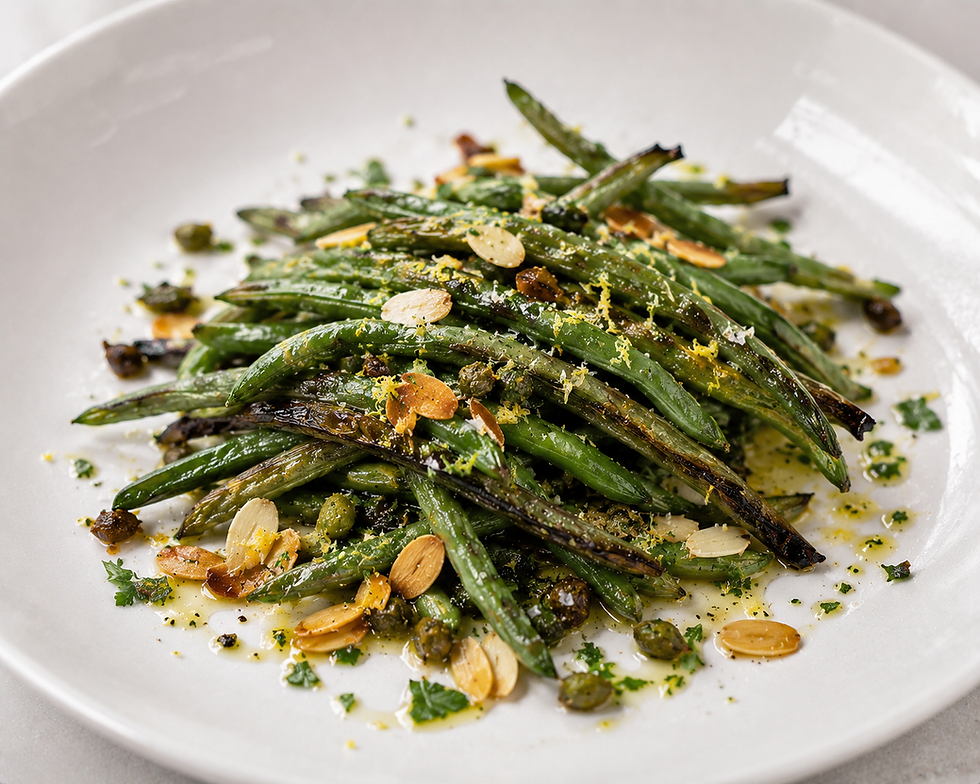
Serve at once on a warm platter or in warm shallow bowls, about 140°F (60°C), because sautéed vegetables lose their gloss and their aroma as they cool. Pile them loosely, with the asparagus tips and some broccoli florets on top, so the different shapes and shades of green are visible, and spoon the remaining garlic and chili oil from the pan over them.
Finish with the rest of the toasted almonds, a thin thread of peppery olive oil, a pinch of flaky salt and a few small mint leaves. Serve as a side dish to a main course, or with good bread and a bowl of beans as a light meal. The guest should feel the snap of the green beans, the tenderness of the broccoli and the warmth of garlic and chili in every forkful.
Professional Technique
The key numbers are the blanching times and the salt. For 5 quarts (4.7 l) of water, use 3 tbsp (50 g) of coarse salt, about 1 percent, which seasons the vegetables without making them salty. Respect the times for each vegetable and always confirm by tasting, because thickness and freshness change them by a minute either way.
The hidden variable is the size of the pan. Sautéing works only when every piece touches the hot metal. A pan that is too small fills with vegetables piled on top of one another, the temperature falls, and the moisture they release boils them instead of frying them. In a 12 inch (30 cm) pan, cook at most about 1 1/2 lb (680 g) of vegetables at a time; for the full recipe, use two pans or two batches.
The doneness test is in the color and the bite. Finished vegetables are bright, glossy green, with a few golden spots, and offer a slight resistance at the center when bitten. Olive green color, limp stems or broccoli that crumbles mean they have been cooked too long, usually in the blanching rather than in the pan.
Color and Texture Control
Green color is the first sign of quality in this dish, and it is controlled by time and acidity. Chlorophyll, the green pigment, is stable for the first few minutes of cooking and then changes into a dull olive pigment, a change that speeds up in acidic conditions. That is why the vegetables are blanched quickly in a large volume of boiling water, cooled in ice water and finished with lemon only at the end.
Texture depends on the structure of each vegetable. Green beans and broccoli stems are fibrous and need longer; asparagus tips and peas are tender and need only a minute. Blanching softens the cell walls just enough, and the hot pan finishes the job in a few minutes. Vegetables that arrive in the pan already soft can only get softer, so stop the blanching early rather than late.
Fat carries the flavor. Garlic and chili release their aromatic compounds into the oil, and the oil coats the vegetables. Use enough oil to give every piece a light, glossy film, about 2 tsp (10 ml) per serving, and finish with a little raw oil to bring back the fresh, peppery aroma lost in the heat.
Professional Mise en Place
The vegetables can be blanched, cooled and dried several hours ahead, so the final sautéing takes less than 10 minutes, as in a professional kitchen, where vegetables are blanched in the afternoon and finished in the pan to order.
Equipment and tools
Large pot of at least 6 quarts (5.7 l), spider or slotted spoon
Large bowl of ice water, colander, tray lined with clean kitchen towels
Wide frying pan of 12 inches (30 cm) or a wok, wooden spoon or tongs
Small dry pan for toasting the almonds, microplane for the zest
Prepared ahead
Vegetables cut and sorted by type, up to 4 hours ahead, refrigerated
Vegetables blanched, cooled, dried and refrigerated, up to 8 hours ahead
Almonds toasted, up to 3 days ahead, kept airtight
Garlic and chili sliced, lemon zested and juiced, within 1 hour of service
Service setup
Blanched vegetables out of the refrigerator 20 minutes before cooking
Pan with the cold oil, garlic and chili ready on the stove
Warm platter or bowls
Lemon, almonds, mint, finishing oil and flaky salt on the pass
Chef Tips
Toast the almonds in a dry pan over medium heat for 3 to 4 minutes, shaking constantly, until golden and fragrant, then move them to a plate at once. Nuts keep cooking in the hot pan and can burn within seconds.
Change the vegetables with the seasons, keeping the method. In autumn and winter use broccoli, cauliflower, cime di rapa and Tuscan kale; in summer, zucchini, runner beans and Romano beans. Blanch every vegetable separately and taste it before lifting it out of the water.
Keep a cup of the blanching water. If the pan looks dry while sautéing, a spoonful of this salted, slightly starchy water creates a light emulsion with the oil that coats the vegetables and makes them glossy.
For a deeper savory taste, add 1 tbsp of rinsed, chopped capers or a few chopped black olives with the garlic. Both are traditional in southern Italian vegetable dishes and bring a briny depth without changing the character of the dish.
Common Mistakes
Blanching all the vegetables together. Broccoli turns mushy while the green beans are still hard. Blanch each vegetable separately for its own time.
Using too little water. The boil stops when the vegetables go in and they cook slowly, losing their color. Use a large pot of water at a full boil.
Skipping the ice bath. Vegetables keep cooking in their own heat and turn olive green. Cool them in ice water for a minute.
Putting wet vegetables in the pan. Water makes the oil spit and steams the vegetables. Dry them well on a towel.
Burning the garlic. Brown garlic is bitter and ruins the dish. Start it in cold oil over medium-low heat and stop at pale gold.
Crowding the pan. Too many vegetables lower the heat and they boil instead of sautéing. Use a wide pan or cook in batches.
Adding lemon too early. Acid heated with green vegetables dulls their color. Add lemon off the heat, just before serving.
Wine Pairing
Gavi DOCG: The Cortese grape of southeastern Piedmont gives a white of green apple, citrus and a crisp, mineral finish. Its freshness mirrors the lemon and its light body respects the delicate green vegetables. Serve it at about 50°F (10°C).
Lugana DOC: From the southern shores of Lake Garda, Turbiana gives a white of citrus, almond and a soft, round texture with a firm backbone of acidity. Its almond note meets the toasted almonds, and its body handles the garlic oil. Serve it at about 50°F (10°C).
Fiano di Avellino DOCG: A white from the hills of Irpinia, in Campania, with pear, hazelnut and a gently smoky mineral note. Green vegetables like asparagus are notoriously difficult with wine, and the texture and aromatic depth of Fiano handle them well. Serve it at about 52°F (11°C).
Verdicchio dei Castelli di Jesi Classico Riserva DOCG: A structured white of the Marche, with citrus, herbs and the typical bitter almond finish. Its firm acidity and herbal notes match the chili, the mint and the green taste of broccoli and beans. Serve it at about 52°F (11°C).
Storage & Reheating
Refrigerator: sautéed vegetables keep for up to 2 days in an airtight container, but they lose some of their color and crunch. Blanched, unsautéed vegetables keep much better, up to 2 days, dried and stored in a container lined with paper towel. Freezer: not recommended for the finished dish, because the vegetables turn soft and watery; blanched broccoli, green beans and peas freeze well for up to 3 months, spread on a tray first and then packed in bags.
Reheat in a hot pan with a teaspoon of olive oil over medium-high heat for 2 to 3 minutes, tossing, until hot through. Add a fresh squeeze of lemon and a few toasted almonds before serving. The microwave softens them: if you use it, heat at 70 percent power for 1 minute, covered, and stir halfway. Leftovers are also excellent cold, dressed with a little more oil and lemon, as a salad.
Nutrition
Per serving, based on 6 servings:
Calories: 190 kcal
Total Fat: 14 g
Saturated Fat: 2 g
Trans Fat: 0 g
Unsaturated Fat: 12 g
Cholesterol: 0 mg
Sodium: 420 mg
Total Carbohydrates: 14 g
Fiber: 6 g
Total Sugars: 5 g
Added Sugars: 0 g
Protein: 7 g
Principal micronutrients: vitamin C, vitamin K, folate, vitamin A, vitamin E, manganese, potassium
These figures are estimates, calculated on the quantities listed and rounded to the nearest whole number, assuming that only a small part of the blanching salt is absorbed by the vegetables. They vary with the size of the vegetables and the amount of oil left in the pan.



Comments