
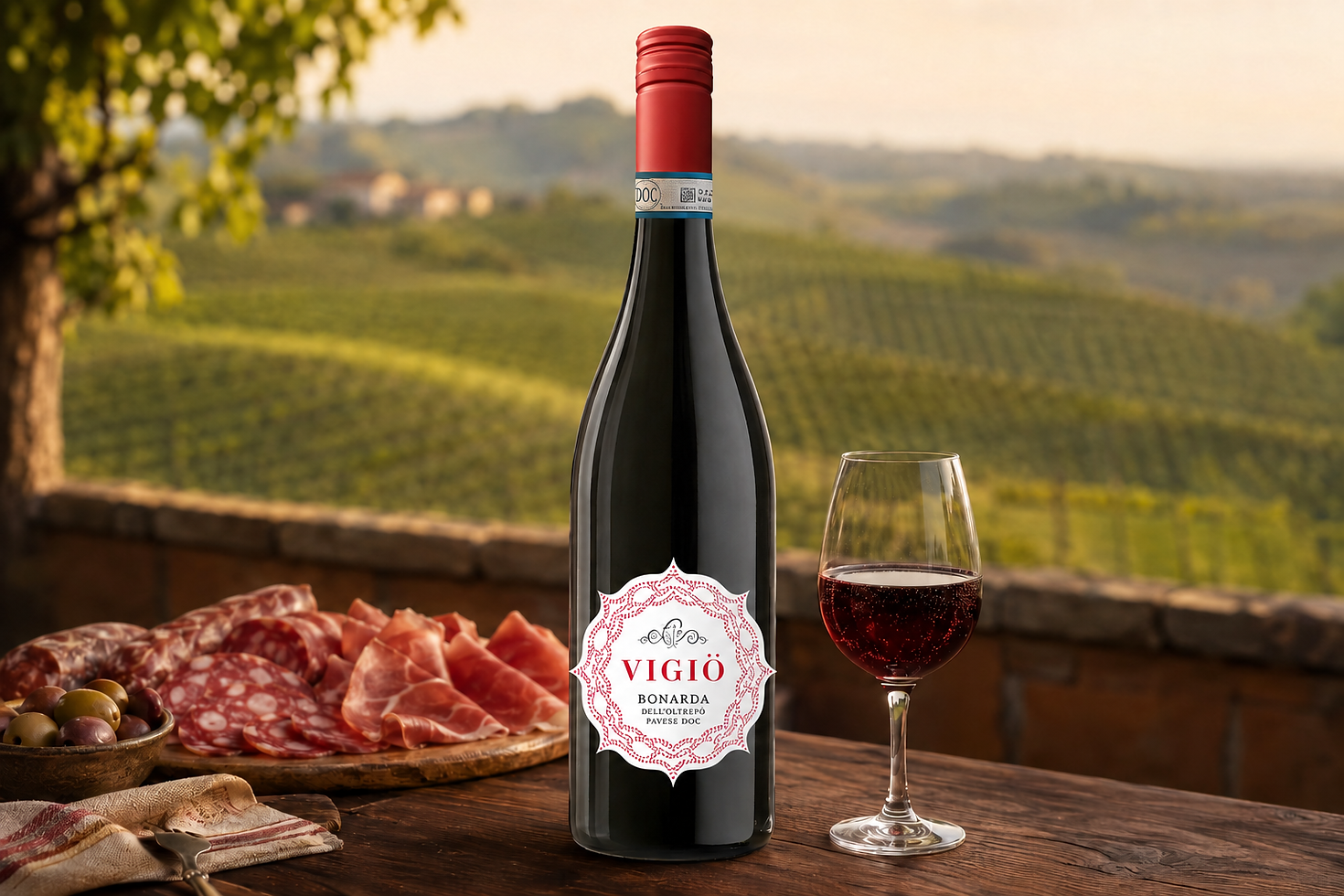
Wine Pairing: Bonarda dell’Oltrepò Pavese DOC
Updated: Aug 31
Bonarda dell’Oltrepò Pavese DOC is a dry or off-dry red, often frizzante whose value comes from a precise relationship between grape, place and table. From Oltrepò Pavese in the province of Pavia, it offers a regional identity that becomes clearer when the bottle is chosen for structure rather than fame. In General, the useful question for Bonarda dell’Oltrepò Pavese DOC is how the detail changes bottle choice, serving temperature, food weight or expected development in the cellar.
Typical aromas include black cherry, blackberry, violet, pepper, earth and a lightly tannic finish, sometimes lifted by gentle bubbles. Pairing depends on what supports those aromas: acidity, tannin, sweetness, alcohol and texture determine whether the wine refreshes the palate or weighs it down. For Bonarda dell’Oltrepò Pavese DOC, General becomes clearer when producer style and vintage are compared side by side, because the denomination allows more variation than a single tasting can show.
What Bonarda dell’Oltrepò Pavese DOC Is
Bonarda dell’Oltrepò Pavese DOC belongs to Lombardy and is best understood as a dry or off-dry red, often frizzante. The denomination or local wine identity defines origin, while producers still make meaningful decisions about harvest timing, extraction, drying, lees, wood and release. A restaurant context makes What Bonarda dell’Oltrepò Pavese DOC Is practical for Bonarda dell’Oltrepò Pavese DOC: the wine must remain balanced after several bites, not merely impressive in the first sip before food arrives.
A representative bottle shows black cherry, blackberry, violet, pepper, earth and a lightly tannic finish, sometimes lifted by gentle bubbles. Good examples remain coherent: fruit is clear, savory notes lengthen the finish and any sweetness or tannin stays proportional enough to work through a complete dish. Collectors should read What Bonarda dell’Oltrepò Pavese DOC Is together with provenance for Bonarda dell’Oltrepò Pavese DOC, since storage, importer selection and release timing can influence the bottle almost as much as regional reputation.
For U. S. buyers, producer and importer are more useful than a generic score. These wines often arrive in small quantities, so vintage and storage history can matter as much as the appellation name. The strongest examples of Bonarda dell’Oltrepò Pavese DOC make What Bonarda dell’Oltrepò Pavese DOC Is recognizable without exaggeration, preserving freshness and proportion while showing enough character to justify the denomination.
The Territory of Oltrepò Pavese in the province of Pavia
Oltrepò Pavese lies south of the Po in rolling Apennine foothills. Elevation, clay-limestone soils and cooler nights help Croatina retain acidity, while ripeness gives the grape enough fruit to balance its naturally firm skin structure. Comparing vintages of Bonarda dell’Oltrepò Pavese DOC is another test of The Territory of Oltrepò Pavese in the province of Pavia; recurring traits suggest territorial identity, while dramatic swings often reveal producer choices or unusual seasonal conditions.
Site changes ripening speed, aroma and structure. Exposure, wind, elevation and soil drainage determine whether fruit reaches full flavor while preserving the acidity needed for food and aging. For pairing, The Territory of Oltrepò Pavese in the province of Pavia matters because Bonarda dell’Oltrepò Pavese DOC should gain clarity beside food: acidity, tannin, sweetness, mousse or aromatic intensity must remain integrated rather than tiring.
Farming and cellar tradition complete the picture. Strong producers use technique to clarify place, not hide it. That is why two authentic examples can differ substantially without either becoming generic. When buying Bonarda dell’Oltrepò Pavese DOC in the United States, The Territory of Oltrepò Pavese in the province of Pavia can explain price differences because smaller allocations, longer maturation and more selective vineyard work often affect availability as well as cost.
Grapes and Production Rules
Bonarda dell’Oltrepò Pavese DOC is centered on Croatina. The denomination may be made still or frizzante, and residual sugar can vary, so the exact label matters. The characteristic combination is dark fruit, acidity, moderate tannin and an earthy-spicy finish. In Grapes and Production Rules, the useful question for Bonarda dell’Oltrepò Pavese DOC is how the detail changes bottle choice, serving temperature, food weight or expected development in the cellar.
Rules establish authenticity, but they cannot guarantee quality. Yield, sorting, fermentation temperature, oxygen and maturation still determine whether the finished wine is merely compliant or genuinely expressive. For Bonarda dell’Oltrepò Pavese DOC, Grapes and Production Rules becomes clearer when producer style and vintage are compared side by side, because the denomination allows more variation than a single tasting can show.
For practical buying, grape, style, vintage and producer are the most important facts because they directly affect serving, pairing and aging. Technical figures should be used when they clarify rather than obscure those decisions. A restaurant context makes Grapes and Production Rules practical for Bonarda dell’Oltrepò Pavese DOC: the wine must remain balanced after several bites, not merely impressive in the first sip before food arrives.
How Croatina Behaves Here
Croatina, locally associated with the Bonarda name. In this environment, composition should balance aroma, body and freshness. The defining grape must remain visible even when supporting varieties or maturation modify texture. Collectors should read How Croatina Behaves Here together with provenance for Bonarda dell’Oltrepò Pavese DOC, since storage, importer selection and release timing can influence the bottle almost as much as regional reputation.
The best bottles avoid over-ripeness and unnecessary oak unless the traditional style requires oxidative or sweet development. Restraint generally increases table flexibility and makes territorial character easier to recognize. The strongest examples of Bonarda dell’Oltrepò Pavese DOC make How Croatina Behaves Here recognizable without exaggeration, preserving freshness and proportion while showing enough character to justify the denomination.
Vintage changes the equation. Warm seasons tend toward broader fruit and softer acidity, while cooler or more ventilated years can emphasize flowers, herbs and firmer structure. Choose the year for the dish, not only for reputation. Comparing vintages of Bonarda dell’Oltrepò Pavese DOC is another test of How Croatina Behaves Here; recurring traits suggest territorial identity, while dramatic swings often reveal producer choices or unusual seasonal conditions.
Tasting Profile
Expect black cherry, blackberry, violet, pepper, earth and a lightly tannic finish, sometimes lifted by gentle bubbles. The finish is the clearest quality test: it should remain clean and energetic enough to invite another sip. For pairing, Tasting Profile matters because Bonarda dell’Oltrepò Pavese DOC should gain clarity beside food: acidity, tannin, sweetness, mousse or aromatic intensity must remain integrated rather than tiring.
Texture can range from delicate to structured depending on style. With food, match weight but preserve contrast; fat and cream need acidity, while tannic reds need protein and savory depth. When buying Bonarda dell’Oltrepò Pavese DOC in the United States, Tasting Profile can explain price differences because smaller allocations, longer maturation and more selective vineyard work often affect availability as well as cost.
Age can move fruit toward dried flowers, leather, nuts, tea, honey or spice. Mature complexity remains useful only while the wine keeps sufficient freshness. In Tasting Profile, the useful question for Bonarda dell’Oltrepò Pavese DOC is how the detail changes bottle choice, serving temperature, food weight or expected development in the cellar.
Serving Temperature, Glassware and Decanting
Serve at about 54–59°F (12–15°C). Use a medium tulip-shaped glass. Fresh whites and aromatic sweet wines rarely need decanting; structured young reds can benefit from air, while mature bottles should be handled gently. For Bonarda dell’Oltrepò Pavese DOC, Serving Temperature, Glassware and Decanting becomes clearer when producer style and vintage are compared side by side, because the denomination allows more variation than a single tasting can show.
Start slightly cool and allow the glass to open naturally.Shop the right glassandshop a decanter.
Pollo alla Cacciatora Marchigianaworks with Bonarda dell’Oltrepò Pavese DOC because the dish supplies enough salt, fat, starch, sweetness, browned flavor or protein to meet the wine without hiding its regional character. Acidity, tannin or gentle sweetness then resets the palate. Use frizzante Bonarda with rich casual dishes and a still, drier bottle for braised meat or aged cheese. After several bites, the best pairing should make both food and wine feel clearer.
Tagliatelle al Ragù alla Bologneseworks with Bonarda dell’Oltrepò Pavese DOC because the dish supplies enough salt, fat, starch, sweetness, browned flavor or protein to meet the wine without hiding its regional character. Acidity, tannin or gentle sweetness then resets the palate. Use frizzante Bonarda with rich casual dishes and a still, drier bottle for braised meat or aged cheese. After several bites, the best pairing should make both food and wine feel clearer.
Gnocchi di Patate Rivisitati con Ragù Bianco di Coniglio e Olive Taggiascheworks with Bonarda dell’Oltrepò Pavese DOC because the dish supplies enough salt, fat, starch, sweetness, browned flavor or protein to meet the wine without hiding its regional character. Acidity, tannin or gentle sweetness then resets the palate. Use frizzante Bonarda with rich casual dishes and a still, drier bottle for braised meat or aged cheese. After several bites, the best pairing should make both food and wine feel clearer.
Gnocchi di Patate con Radicchio Tardivo e Noccioleworks with Bonarda dell’Oltrepò Pavese DOC because the dish supplies enough salt, fat, starch, sweetness, browned flavor or protein to meet the wine without hiding its regional character. Acidity, tannin or gentle sweetness then resets the palate. Use frizzante Bonarda with rich casual dishes and a still, drier bottle for braised meat or aged cheese. After several bites, the best pairing should make both food and wine feel clearer.
Ossobuco alla Milaneseworks with Bonarda dell’Oltrepò Pavese DOC because the dish supplies enough salt, fat, starch, sweetness, browned flavor or protein to meet the wine without hiding its regional character. Acidity, tannin or gentle sweetness then resets the palate. Use frizzante Bonarda with rich casual dishes and a still, drier bottle for braised meat or aged cheese. After several bites, the best pairing should make both food and wine feel clearer.
Risotto alla Milaneseworks with Bonarda dell’Oltrepò Pavese DOC because the dish supplies enough salt, fat, starch, sweetness, browned flavor or protein to meet the wine without hiding its regional character. Acidity, tannin or gentle sweetness then resets the palate. Use frizzante Bonarda with rich casual dishes and a still, drier bottle for braised meat or aged cheese. After several bites, the best pairing should make both food and wine feel clearer.
Pecorino Stagionatoworks with Bonarda dell’Oltrepò Pavese DOC because the dish supplies enough salt, fat, starch, sweetness, browned flavor or protein to meet the wine without hiding its regional character. Acidity, tannin or gentle sweetness then resets the palate. Use frizzante Bonarda with rich casual dishes and a still, drier bottle for braised meat or aged cheese. After several bites, the best pairing should make both food and wine feel clearer.
Baccalà alla Livorneseworks with Bonarda dell’Oltrepò Pavese DOC because the dish supplies enough salt, fat, starch, sweetness, browned flavor or protein to meet the wine without hiding its regional character. Acidity, tannin or gentle sweetness then resets the palate. Use frizzante Bonarda with rich casual dishes and a still, drier bottle for braised meat or aged cheese. After several bites, the best pairing should make both food and wine feel clearer.
Pairing Principles
Match structure first: sweetness with sweetness, tannin with protein, acidity with fat and aromatic intensity with aromatic intensity. Regional tradition is useful guidance, but taste mechanics decide the result. A restaurant context makes Pairing Principles practical for Bonarda dell’Oltrepò Pavese DOC: the wine must remain balanced after several bites, not merely impressive in the first sip before food arrives.
Producer style is the second variable. Use frizzante Bonarda with rich casual dishes and a still, drier bottle for braised meat or aged cheese. Re-taste the wine after the dish has been on the table; the finish should stay refreshing rather than tiring.
Five Bonarda dell’Oltrepò Pavese DOC Producers to Know
Quaquarini, Giorgi, Monsupello, Frecciarossa, Calatroni are useful reference points for exploring the denomination or local wine culture. Names are left unlinked unless an official producer website has been verified; a retailer or importer should never substitute for the producer’s own site.
Compare producers by intent rather than chasing a single hierarchy. Some emphasize youth and aroma, others structure, drying, long maturation or site transparency.
With older releases, provenance matters. Rare Italian wines can remain in distribution for years, so storage history can outweigh a small difference in price.
U. S. availability is uneven and importer-driven. Specialist Italian merchants and restaurant-focused retailers are the most realistic sources, and listings change between vintages.
Price and Value
Typical U. S. retail pricing is about $16–$30. Scarcity, format and vintage can move that range, so compare similar bottlings before judging value.
Value is strongest when the wine delivers distinct regional character and useful food performance at a price below more famous Italian categories with comparable ambition.
Aging and Storage
Most frizzante examples are best young; still structured versions can age four to seven years.
Store bottles around 55°F (13°C), dark and vibration-free. After opening, reseal and refrigerate; judge daily because aromatic, sweet and tannic wines respond to oxygen differently.
Common Mistakes
Wrong serving temperature and buying only by score are common errors. Excess cold suppresses aroma; excessive warmth magnifies alcohol or sweetness. Prestige is not the same as pairing accuracy.
Another mistake is treating the denomination as one fixed flavor. Producer, vintage, maturation and exact style matter. Pair the bottle in front of you rather than a regional stereotype.
Wine Spectator and Zafferano & Co. Rating
Wine Spectator reviews individual bottlings and vintages, not Bonarda dell’Oltrepò Pavese DOC as a permanent denomination-wide score. Any score must stay attached to the exact producer and vintage reviewed.
Zafferano & Co. rating for the wine as a food-pairing category: ★★★★☆. The stars reflect identity, gastronomic range, value and interest, not a claim that every bottle performs equally.
Why Bonarda dell’Oltrepò Pavese DOC Matters
Bonarda dell’Oltrepò Pavese matters because it keeps Croatina central to everyday Lombard table wine and shows why a slight sparkle can be a practical gastronomic tool.
For a serious Italian cellar, the wine broadens the map beyond famous names and turns regional diversity into something practical at dinner. The best examples combine context, flavor and flexibility. Bonarda dell’Oltrepò Pavese matters because it keeps Croatina central to everyday Lombard table wine and shows why a slight sparkle can be a practical gastronomic tool. Comparing multiple vintages also helps separate enduring territorial character from temporary stylistic fashion.


Comments