
Wine Pairing: Piper-Heidsieck Brut Rosé
Updated: 4 days ago
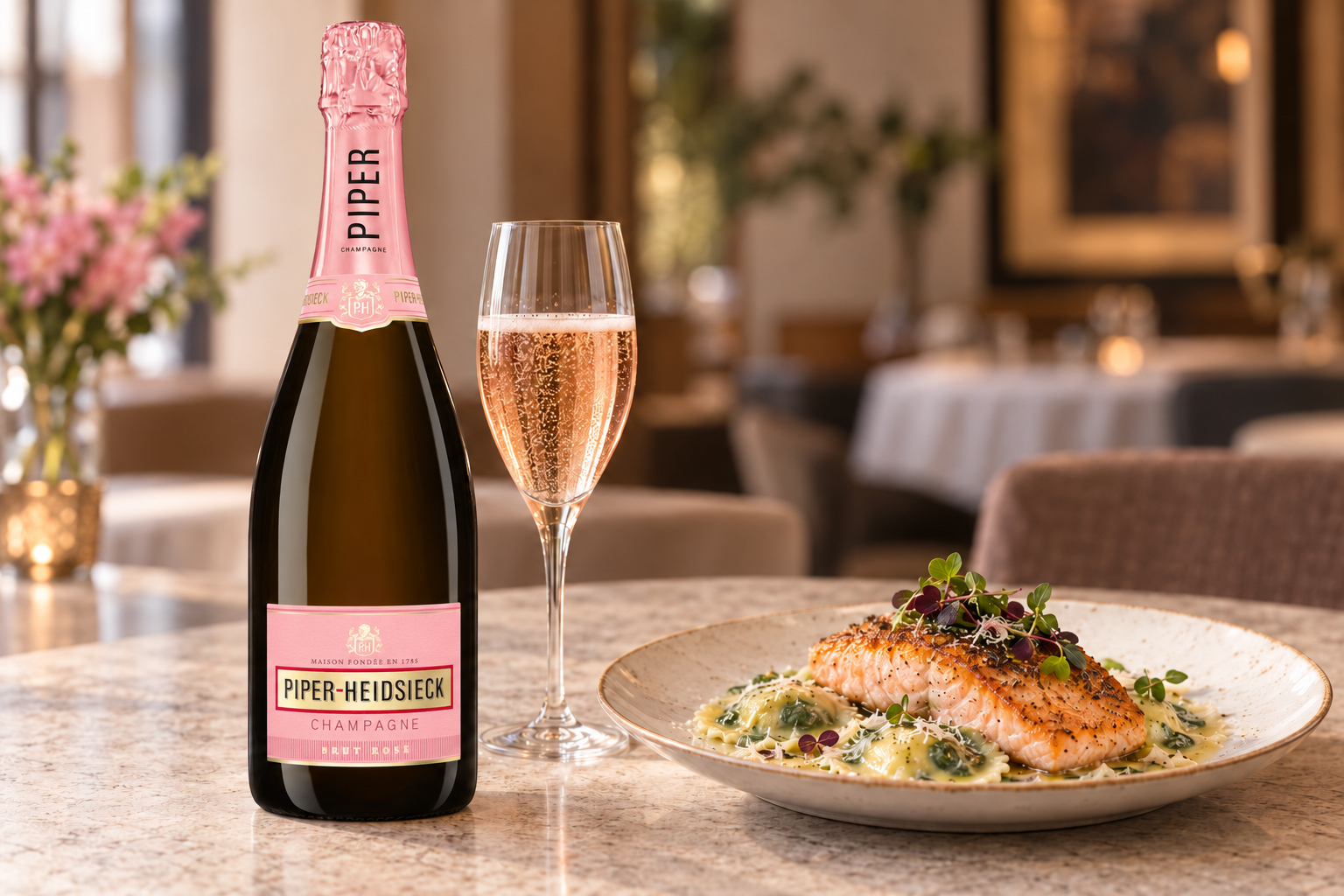
Piper-Heidsieck Brut Rosé is a vivid, gastronomic expression of rosé Champagne. The current cuvée combines a high proportion of Pinot Noir with Meunier and Chardonnay, then deepens the blend with red wine from selected plots located mainly in Les Riceys. The result is not a shy aperitif: it is a dry, energetic Champagne with ripe red-fruit flavor, citrus lift, toasted nuance and enough structure to remain persuasive through an Italian meal.
Its strongest quality at the table is contrast. Fine bubbles and bright acidity refresh rich fish, cheese, butter and fried textures, while blood orange, strawberry and dark-berry tones create bridges to salmon, prosciutto, tomato and lightly caramelized ingredients. Served at the correct temperature and in a glass that allows the bouquet to open, the wine moves easily from antipasti to a substantial seafood course.
Exact Product and Current Release
Piper-Heidsieck Brut Rosé is the current official name of this non-vintage, or multi-vintage, rosé Champagne. The bottle now used in the United States has pink foil, a vertical black “PIPER” neck inscription, a pink-and-gold collar and a pink front label marked “PIPER-HEIDSIECK,” “CHAMPAGNE” and “BRUT ROSÉ.” This exact presentation distinguishes the current release from older bottles carrying the Rosé Sauvage name.
The wine is produced under the Champagne appellation in northeastern France. It is a rosé d’assemblage, meaning that still red wine is blended into the base wines before the second fermentation in bottle. That method is traditional and legally permitted in Champagne, and it allows the cellar team to control color, fruit expression and structure with great precision.
Blend and the Role of Each Grape
The current blend is 50% Pinot Noir, including 15% red wine, 25% Meunier and 25% Chardonnay. A minimum of 25% reserve wines is included. Pinot Noir therefore defines the cuvée: it gives shape, ripe cherry and berry character, and the vinous backbone that allows the Champagne to accompany food rather than disappear beside it.
Meunier contributes roundness and immediate fruit, softening the wine’s central texture. Chardonnay supplies citrus energy, floral lift and a more linear finish. The minimum 25% reserve-wine component links successive harvests and helps maintain the Piper-Heidsieck house style even when the climatic personality of the base year changes.
Les Riceys and the Red-Wine Component
The still red wine comes mainly from selected plots in Les Riceys, in the Côte des Bar at the southern end of Champagne. This area is particularly associated with Pinot Noir and is also the source of the rare still wine Rosé des Riceys. In Piper-Heidsieck Brut Rosé, the red-wine component represents 15% of the finished blend, an unusually expressive proportion that helps explain the wine’s saturated fruit profile.
Red wine in rosé Champagne must add more than color. It can bring texture, savory depth and a gentle phenolic frame, but it must remain integrated with the acidity and mousse. Here, black cherry, wild strawberry and blackberry-like flavors are balanced by grapefruit bitterness and the freshness of Chardonnay, preventing the cuvée from feeling sweet or heavy.
Harvest, Vinification and Reserve Wines
The grapes are hand-harvested at full maturity. Pressing is slow and qualitative, performed close to the vineyards with separation of the different juice fractions. Static clarification prepares the musts for fermentation while preserving the clean, precise character required for the final blend.
Alcoholic fermentation takes place entirely in temperature-controlled stainless-steel vats with selected yeasts. Malolactic fermentation is largely used, although the decision is made lot by lot by the chief winemaker. This flexible approach lets the cellar team moderate sharp acidity while retaining enough tension for a lively Brut Champagne.
Piper-Heidsieck maintains a collection of more than 150 reserve wines, aged on fine lees and kept separately by cru. Drawing from that library gives the blend continuity and aromatic complexity. The house also limits unnecessary cellar treatments, including sulfur additions, so that balance is built through blending and maturation rather than cosmetic correction.
Bottle Aging, Disgorgement and Dosage
The current technical specification requires a minimum of 24 months of aging on the lees, followed by at least three months of rest after disgorgement. Lees maturation develops the fine mousse and introduces brioche, toasted almond and creamy notes. The post-disgorgement period gives the dosage and wine time to integrate before release.
Dosage is 8 grams per liter, placing the wine in the Brut category. This level is important to its style: it rounds the red-fruit concentration without turning the finish sweet. The wine retains a light grapefruit bitterness, energetic acidity and a clean, appetizing close. Alcohol is 12% by volume.
Appearance, Aroma and Palate
In the glass, Piper-Heidsieck Brut Rosé shows an elegant salmon-to-coral color with a persistent stream of fine bubbles. The bouquet is immediate and generous: blood orange and wild strawberry lead, followed by black cherry, cranberry and blackberry jam. Roses and fresh almond add detail, while a toasted-brioche note recalls the time spent on the lees.
The palate is lively, fruity and intense. Ripe berry flavor arrives first, but citrus acidity quickly gives the wine direction. Pinot Noir supplies breadth and a lightly savory center; Meunier makes the fruit feel supple; Chardonnay lifts the finish. The mousse is refined rather than aggressive, carrying the flavors without masking their detail.
The final impression is dry and energetic, with blood orange, toasted almond and a discreet bitter-grapefruit note. That combination of fruit, freshness and controlled bitterness is what makes the wine so effective with savory food.
Technical Profile
Piper-Heidsieck Brut Rosé is a non-vintage Champagne AOC rosé made by the blending method. Its blend is 50% Pinot Noir, including 15% still red wine, 25% Meunier and 25% Chardonnay, with at least 25% reserve wines. The red wine is sourced mainly from selected plots in Les Riceys. The wine receives a minimum of 24 months on the lees and at least three months of rest after disgorgement. Dosage is 8 g/L, alcohol is 12%, and the recommended serving temperature is 46–50°F (8–10°C).
Zafferano & Co. Wine Rating
★★★★ — Zafferano & Co. Editorial Evaluation
Piper-Heidsieck Brut Rosé earns four stars for its clear house identity, expressive red-fruit profile, refined mousse and broad usefulness at the table. The blend has enough Pinot Noir and red-wine character to handle salmon, cured meat and grilled vegetables, yet Chardonnay-driven freshness keeps it precise. Its balance is more important than sheer power, and its dry finish invites another bite.
Serving Temperature and Glassware
Serve the Champagne at 46–50°F (8–10°C). At 46°F, the emphasis falls on citrus, bubbles and mineral freshness. As the wine approaches 50°F, strawberry, black cherry, rose, almond and brioche become more expressive. Avoid serving it near freezing, because excessive cold suppresses the very aromatics that distinguish this cuvée.
Choose a tulip-shaped Champagne glass or a compact white-wine glass. The bowl should be wide enough to develop the bouquet and narrow enough at the rim to direct aroma and preserve the mousse. A very narrow flute shows the bubbles attractively but limits the red-fruit and floral complexity. Routine decanting is unnecessary.
Current U.S. Price and Buying Advice
Current verified U.S. retail listings place one standard 750 ml bottle of Piper-Heidsieck Brut Rosé at approximately $49.99–$65.99. Temporary promotions, local taxes and shipping can change the final price, so compare like-for-like 750 ml bottles rather than gift boxes or larger formats.
Buy from a merchant with temperature-controlled storage and healthy inventory turnover. The foil and label should be clean, the cork should show no sign of leakage, and the bottle should not have been held in a warm display window. Because this is a current non-vintage release intended to show freshness, provenance matters more than seeking an older retail bottle.
Food Pairing Logic
The wine’s acidity and mousse are natural partners for fat and crisp textures. Bubbles reset the palate after butter, cheese or frying, while the acidity keeps salmon and creamy fillings from feeling heavy. Red-fruit notes echo the richness and color of salmon and cured ham; citrus and grapefruit tones connect with shellfish, herbs and vegetables.
The 15% red-wine component also gives the Champagne enough structure for grilled or roasted flavors. It can handle browned fish, prosciutto and lightly charred eggplant, provided that sauces remain measured. Avoid heavy sweetness, aggressive vinegar and very hot chile. Those elements can flatten the fruit or make the Brut finish seem austere.
Scallop Carpaccio with Sicilian Citrus, Crisp Fennel and Bronte Pistachios
Scallop Carpaccio with Sicilian Citrus, Crisp Fennel and Bronte Pistachios is a precise opening pairing. Sweet raw scallop mirrors the Champagne’s silky texture, Sicilian citrus reinforces blood-orange freshness, and fennel keeps the aromatic profile clean. Bronte pistachio connects with the wine’s almond and brioche nuances without overwhelming its mousse.
Italian Champagne Risotto with Seared Scallops, Oscietra Caviar & Chives
Italian Champagne Risotto with Seared Scallops, Oscietra Caviar & Chives | Risotto allo Champagne con Capesante Scottate, Caviale Oscietra ed Erba Cipollina demonstrates the wine’s capacity for richness. Acidity and bubbles lighten the creamy rice, while caviar echoes the Champagne’s saline edge. Seared scallop meets the ripe fruit, and chives add a fresh herbal line that keeps the pairing focused.
Italian Fried Zucchini Blossoms
Italian Fried Zucchini Blossoms | Fiori di Zucca Fritti creates a classic contrast between crisp frying and lively mousse. The wine cleans the palate after each bite, while its floral note respects the delicacy of the blossom. Keep the filling savory and avoid excessive chile so that the rosé fruit remains clear.
Prosciutto di San Daniele with Montasio
Prosciutto di San Daniele con Montasio (Italian San Daniele Prosciutto with Montasio) brings together salt, sweetness and gentle richness. The Champagne’s bubbles refresh the fat of the prosciutto and cheese, while Pinot Noir fruit responds to the cured meat’s savory depth. Serve the Montasio in a measured portion so the wine retains the lead.
Pan-Seared Salmon with Asparagus
Italian Salmone Saltato in Padella con Asparagi (Pan-Seared Salmon with Asparagus) | Salmone Saltato in Padella con Asparagi (Pan-Seared Salmon with Asparagus) is the most direct main-course match. Salmon follows the cuvée’s color and rich red-fruit register, while browned edges engage its Pinot Noir structure. Asparagus and a restrained citrus accent reinforce freshness; avoid a sweet glaze that would make the Brut dosage seem severe.
Pairing a Complete Italian Menu
A coherent menu can begin with scallop carpaccio, continue with fried zucchini blossoms and move into Champagne risotto. Pan-seared salmon then serves as the central course, while prosciutto and Montasio can appear either as an opening plate or a small savory transition. The sequence works because richness rises gradually while the Champagne’s acidity and mousse remain constant.
Pour smaller servings and refresh them often. The first glass can be closer to 46°F for the raw seafood, while later pours may warm toward 50°F for risotto and salmon. This natural temperature progression reveals more rose, berry, almond and brioche as the meal develops.
Great Rosé Champagne Producers to Know
Piper-Heidsieck is the sole producer of Brut Rosé, but several houses provide useful reference points for the wider category. Billecart-Salmon is known for pale color and finesse; Laurent-Perrier emphasizes Pinot Noir and aromatic clarity; Ruinart brings a Chardonnay-led sense of elegance; Bollinger offers a broader, more vinous structure; and Taittinger balances red fruit with a polished house style. Among grower-producers, Paul Bara and Pierre Paillard are respected references for Pinot Noir-based rosé Champagne from Bouzy.
These producers do not make interchangeable wines. Comparing them shows how the proportion and origin of red wine, the reserve-wine program, lees aging and dosage can shift rosé Champagne from delicate and floral to structured and gastronomic.
The Piper-Heidsieck House
Florens-Louis Heidsieck founded the house in Reims in 1785. Henri-Guillaume Piper later became central to its international development, and the combined Piper-Heidsieck name came to identify one of Champagne’s best-known historic houses. Its modern range aims to unite an outgoing, fruit-driven personality with rigorous blending and long cellar experience.
Chef de cave Émilien Boutillat oversees the wines today. The reserve-wine collection and lot-by-lot decisions on malolactic fermentation are especially important for a multi-vintage rosé, where fruit intensity, color and freshness must remain recognizable from one release to the next.
Storage and Development
Store unopened bottles horizontally in darkness at a stable 50–55°F (10–13°C), away from vibration and strong odors. The current house guidance allows the wine to develop for about five years or longer according to taste, while the U.S. importer presents a more conservative three-year cellaring window. In practical terms, the wine is ready on release and does not require aging to be enjoyable.
Over time, fresh strawberry and blood orange may soften toward dried fruit, pastry and spice. Drinkers who value bright berry perfume should open the bottle sooner; those who enjoy more integrated lees character can wait. Once opened, seal the bottle with a proper Champagne stopper and refrigerate. It is best finished during the same meal or within the following day.
Why Champagne Can Only Come from Champagne
Champagne is a protected geographical appellation, not a generic term for any sparkling wine. Grapes must come from the delimited Champagne region, and the wine must follow the appellation’s rules for growing, pressing, secondary fermentation, bottle aging and release. Rosé Champagne may be made by blending still red wine with white base wines or through controlled skin contact, depending on the producer.
Piper-Heidsieck Brut Rosé uses the blending method. Its still red-wine component is not an afterthought: it shapes color, aroma, texture and food-pairing strength. Sparkling rosés from Franciacorta, Prosecco, Cava and other regions can be excellent, but they express different grapes, climates and production traditions and cannot be labeled Champagne.
Final Assessment
Piper-Heidsieck Brut Rosé is a confidently gastronomic Champagne built from 50% Pinot Noir, including 15% red wine, 25% Meunier and 25% Chardonnay. A minimum of 25% reserve wines, at least 24 months on the lees and an 8 g/L dosage create a balance of ripe fruit, refined mousse and dry freshness.
Its blood orange, wild strawberry, black cherry, rose, fresh almond and brioche profile makes it especially compelling with scallops, salmon, fried zucchini blossoms, risotto, prosciutto and moderately aged cheese. Served at 46–50°F in a tulip glass, it delivers the energy of an aperitif and the structure of a true table wine.


Comments