
Wine Pairing: Vilmart & Cie Grand Cellier Premier Cru Brut
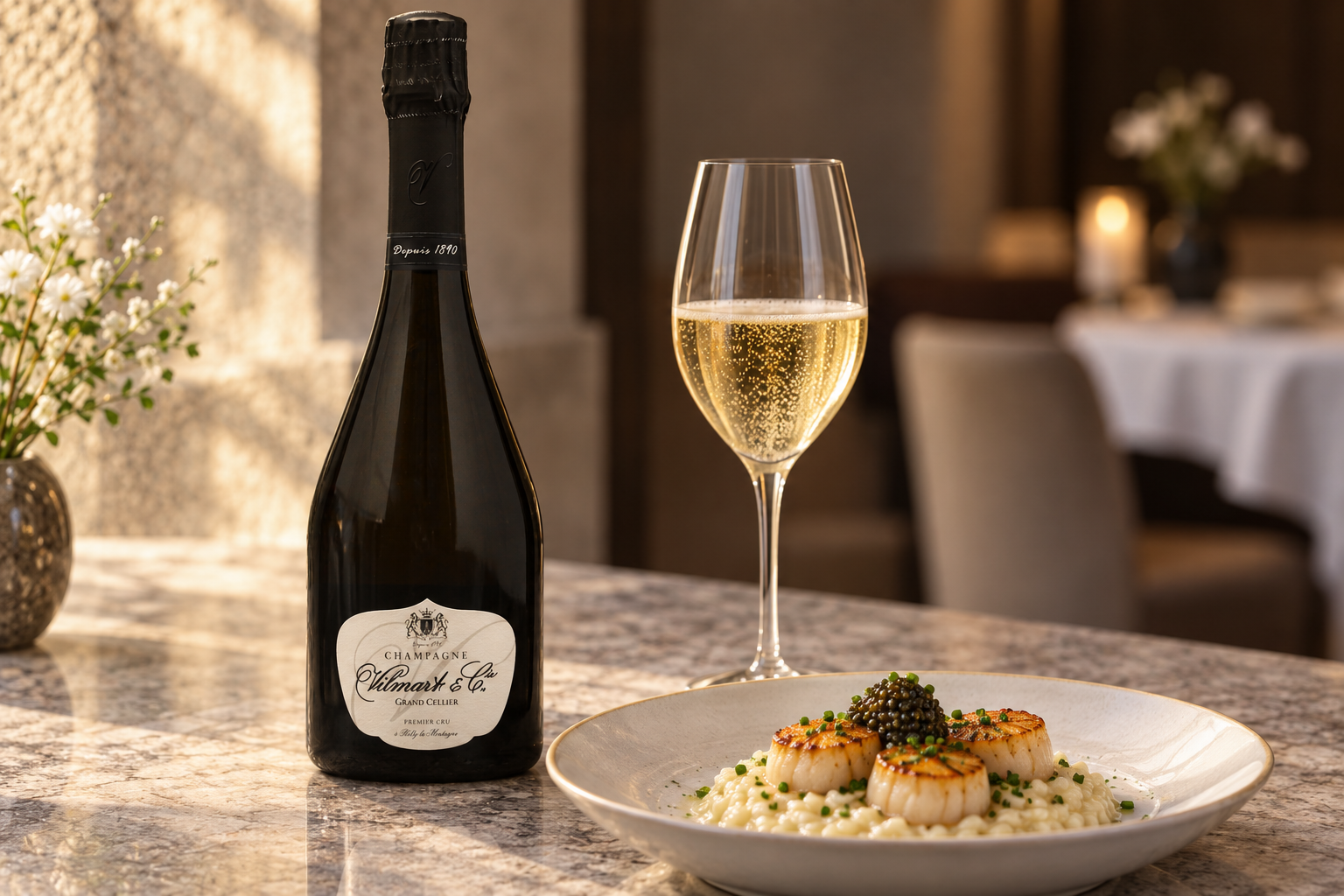
Vilmart & Cie Grand Cellier Premier Cru Brut is a grower Champagne with the proportions and cellar treatment of a serious table wine. Chardonnay supplies most of the blend, Pinot Noir provides shape, and maturation in large oak casks creates breadth without turning the wine into an overtly woody style.
The exact release examined here is based on the 2021 harvest, which represents 50% of the blend. Reserve wines from 2020 and 2019 provide the other half. The wine was disgorged in November 2023 with a dosage of 7 grams per liter, a combination that preserves the cool precision of 2021 while adding the concentration of the two preceding years.
Grand Cellier is not Vilmart’s vintage Grand Cellier d’Or and should not be confused with Grande Réserve. It occupies its own place in the range: a multi-vintage Premier Cru Brut led by Chardonnay, shaped by oak, protected from malolactic fermentation and built to accompany food.
Cuvée Identity and Exact Release
Grand Cellier is a non-vintage Brut Champagne produced by Vilmart & Cie in Rilly-la-Montagne. The estate is a récoltant-manipulant, meaning it grows the grapes and makes the wine under its own name.
For the current release documented here, the 2021 base wine represents 50% of the final blend. Reserve wines from 2020 and 2019 make up the remaining 50%. This three-year construction matters because the wine combines the brightness of a cool base season with material from two warmer, more concentrated harvests.
The bottle was disgorged in November 2023 and finished at 7 grams per liter dosage. Those details identify the release discussed throughout this article; technical data from older lots are not automatically applied to it.
Rilly-la-Montagne Premier Cru
Vilmart is based in Rilly-la-Montagne on the northern side of the Montagne de Reims. Although the wider subregion is strongly associated with Pinot Noir, Grand Cellier reverses the expected emphasis by placing Chardonnay at the center.
The wine draws on Premier Cru vineyards, including the Hautes Grèves sector. Vilmart’s important holdings also extend to Villers-Allerand, and the estate works a compact group of parcels rather than a highly fragmented collection scattered across Champagne.
Clay and chalk, slope exposure and careful ripening give the wine both volume and tension. Chardonnay expresses citrus, white flowers and chalky length, while Pinot Noir brings ripe fruit and enough structure for oak maturation and extended bottle development.
Blend and the Role of the Grapes
The blend is 70% Chardonnay and 30% Pinot Noir. No Meunier is used. This composition produces a style that is brighter and more linear than Vilmart’s Pinot-led Grande Réserve.
Chardonnay contributes lemon zest, pear, white peach, honeysuckle and mineral drive. Pinot Noir supports the middle palate with cherry, spice and texture, preventing the wine from feeling narrow even when served with substantial dishes.
Half of the cuvée comes from reserve wines. Their role is not merely to reproduce a house flavor; they add dimension and continuity, allowing the focused 2021 fruit to sit inside a broader and more complete structure.
Oak Vinification and Élevage
Grand Cellier is vinified and matured in large oak casks. The vessel size matters: large casks offer controlled oxygen exchange and texture with less direct wood flavor than small new barrels.
The oak regime broadens the palate and supports notes of almond pastry, meringue, cream and gentle spice. It does not replace the wine’s citrus and floral character. In a sound bottle, oak and fruit appear integrated rather than separate.
Vilmart is unusual in Champagne for the consistency of its wood-based cellar approach. This makes Grand Cellier particularly useful at the table, where its vinous shape can support risotto, firm fish, shellfish and delicate meat.
Blocked Malolactic Fermentation
Vilmart blocks malolactic fermentation. The sharper malic acidity present after alcoholic fermentation is therefore retained instead of being converted into softer lactic acidity.
This decision gives Grand Cellier its taut backbone. It also balances the richness created by ripe fruit, reserve wines and oak maturation, ensuring that the finish remains energetic rather than creamy in a heavy sense.
Because malolactic fermentation is blocked, serving temperature is important. Excessive cold makes the acidity dominate, while excessive warmth can make dosage and oak appear broader. The recommended range allows both sides to meet.
Bottle Aging, Disgorgement and Dosage
After the blend is bottled for secondary fermentation, the wine remains in contact with its lees until disgorgement. This stage refines the mousse and introduces bread, pastry and nut complexity.
The release discussed here was disgorged in November 2023. Its dosage of 7 grams per liter places it in the Brut category while keeping the finish balanced and dry.
Dosage should not be read as sweetness in isolation. In Grand Cellier, acidity, mineral tension, oak-derived texture and ripe fruit absorb the 7 grams, leaving a wine that feels complete rather than sugary.
History of Vilmart & Cie
Vilmart & Cie was founded in 1890 by Désiré Vilmart in Rilly-la-Montagne. The estate has remained family run through five generations and has always produced Champagne from its own vineyards.
Laurent Champs directs the domaine today. The holdings total roughly eleven hectares, principally in Rilly-la-Montagne and Villers-Allerand, and are planted to Chardonnay and Pinot Noir.
The estate holds sustainable viticulture and High Environmental Value certifications and is widely recognized for integrating oak into Champagne without sacrificing freshness. Its range moves from the accessible Grande Réserve through Grand Cellier to vintage wines such as Grand Cellier d’Or and Coeur de Cuvée.
Appearance, Aroma and Palate
The color is bright yellow-gold with green reflections. The mousse is fine and precise, forming a steady bead rather than an aggressive foam.
The aroma opens with lemon zest, white flowers and crisp pear. White peach, tangerine, lime blossom and verbena follow, joined by meringue, almond pastry, fresh cream and subtle ginger as the wine warms.
On the palate, the wine is medium to full-bodied, taut and polished. The mousse feels pinpoint, the acidity remains lively and the texture carries enough richness for food. A long mineral finish closes with citrus, spice and a quiet nutty echo.
Technical Profile
Appellation: Champagne AOC. Classification: Premier Cru. Producer: Vilmart & Cie. Cuvée: Grand Cellier. Style: non-vintage Brut grower Champagne. Origin: Rilly-la-Montagne, Montagne de Reims.
Blend: 70% Chardonnay and 30% Pinot Noir. Base harvest: 2021, representing 50%. Reserve wines: 2020 and 2019, together representing 50%. Vinification and maturation: large oak casks. Malolactic fermentation: blocked.
Disgorgement: November 2023. Dosage: 7 grams per liter. Standard bottle: 750 ml. Recommended serving temperature: 48–52°F. Practical drinking window: now through approximately 2034, with longer development possible under excellent storage.
Zafferano & Co. Wine Rating
★★★★☆ — Zafferano & Co. Editorial Evaluation
Grand Cellier earns four stars for the clarity of its Chardonnay-led blend, the precision of its mousse, the balance between oak and acidity, and its ability to move from aperitivo to a complete savory meal.
The evaluation applies to the base-2021 release disgorged in November 2023. It is deliberately editorial rather than borrowed from a critic’s score attached to a different disgorgement.
Serving Temperature and Glassware
Serve Grand Cellier between 48°F and 52°F. Begin near the cooler end, then allow the wine to rise gradually in the glass as the meal develops.
Use a tulip-shaped Champagne glass or a medium white-wine glass. The broader bowl makes room for lemon, pear, flowers, pastry and spice while still directing the mousse and aroma.
Do not decant by default. Open the bottle shortly before service, pour modest amounts and let oxygen work in the glass. Keep the bottle lightly chilled rather than submerged in ice for the entire meal.
Storage and Drinking Window
Store the bottle horizontally in darkness at a stable 45–55°F, protected from vibration, heat and strong odors. A consistent cellar is more valuable than chasing one exact temperature.
The release is ready to drink, but its acidity and oak-shaped structure support development. Through approximately 2034, citrus and flowers should move toward baked orchard fruit, toast, hazelnut and a more integrated creamy texture.
Once opened, seal the bottle with a proper sparkling-wine stopper and refrigerate it. It can remain enjoyable the next day, although the most precise mousse and floral detail belong to the first service.
Current U.S. Price and Buying Advice
Current United States retail listings observed on September 17, 2026 place one 750 ml bottle at approximately $74.99–$125, before tax and shipping.
The wide range reflects retailer, market and release differences. Ask the merchant for the base year or disgorgement when available, because older Grand Cellier lots can carry different reserve-wine proportions and dosage.
Buy from a retailer with credible temperature control. Check the foil, label and fill level for signs of heat, seepage or water damage. Provenance matters more than saving a few dollars on a Champagne whose balance depends on freshness.
Food Pairing Logic
Grand Cellier pairs through both contrast and continuity. Acidity and bubbles refresh fried food and creamy sauces, while Chardonnay follows shellfish, citrus and herbs. Pinot Noir and oak bring enough body for veal and roasted flavors.
The wine’s 7 gram dosage softens salt and bitterness without making the finish sweet. Caviar, capers, anchovy, Parmesan used with restraint and browned scallop surfaces all find an echo in its mineral, nutty and savory details.
Avoid sugary desserts, very hot chile and heavily smoked sauces. These can obscure floral precision and exaggerate oak or alcohol. The five Italian dishes below keep the wine’s structure visible.
Italian Champagne Risotto with Seared Scallops and Caviar
Italian Champagne Risotto with Seared Scallops, Oscietra Caviar and Chives is the most complete match for Grand Cellier’s oak-shaped texture.
The creamy rice follows the wine’s broad middle palate, while acidity and mousse prevent the dish from becoming heavy. Seared scallops echo white peach and ripe pear; caviar extends the mineral finish; chives reinforce the herbal lift.
Keep the risotto fluid and use cheese carefully. Excess butter or Parmesan can hide the Champagne’s floral detail.
Scallop Carpaccio with Sicilian Citrus
Scallop Carpaccio with Sicilian Citrus, Crisp Fennel and Bronte Pistachios reveals the cuvée’s Chardonnay precision.
Scallop sweetness meets white peach and pear. Sicilian citrus follows lemon zest and tangerine, fennel continues the wine’s freshness, and pistachio connects with almond pastry and the influence of lees and oak.
Apply citrus immediately before service so the scallop remains tender and the pairing does not become sharply acidic.
Fritto Misto di Mare
Fritto Misto di Mare demonstrates the practical power of Champagne acidity and mousse.
Bubbles clear the fried coating, while the wine’s creamy volume supports calamari, shrimp and small fish. A controlled squeeze of lemon repeats the citrus profile without stripping the wine of fruit.
Use clean oil, a light batter and immediate seasoning. Sweet sauces and heavy breading are unnecessary.
Italian Fried Zucchini Blossoms
Italian Fried Zucchini Blossoms | Fiori di Zucca Fritti provides a more delicate fried pairing.
The blossom’s vegetal flavor follows verbena and white flowers. The crisp coating activates the mousse, while a restrained cheese or anchovy filling meets the Champagne’s cream, salinity and subtle spice.
Serve the blossoms hot but not oily. Their lightness lets Grand Cellier retain its precision.
Vitello Tonnato Piemontese
Vitello Tonnato Piemontese | Italian Piedmontese Veal with Tuna Sauce shows why the 30% Pinot Noir and oak maturation matter.
Pinot Noir supports the veal, Chardonnay refreshes the tuna sauce and capers echo the mineral finish. The wine’s mousse lifts the creamy texture while its dosage cushions the dish’s salt.
Serve the veal cool rather than refrigerator-cold. A thin, balanced sauce gives both wine and meat room to express themselves.
Great Grower Champagne Producers
Vilmart & Cie is one of the reference grower-producers of the Montagne de Reims. Egly-Ouriet brings powerful Pinot Noir and long aging from Ambonnay, while Paul Bara and Pierre Paillard provide important Bouzy perspectives.
Bérêche et Fils works across multiple villages with energetic reserve-wine blending and detailed élevage. Chartogne-Taillet explores individual sites around Merfy, and Jérôme Prévost offers a singular Meunier expression from Gueux.
These producers do not share one formula. Vilmart’s identity is the union of Chardonnay-led blends, blocked malolactic fermentation and disciplined oak, giving Grand Cellier a distinctive place among gastronomic grower Champagnes.
How to Read the Label
“Vilmart & Cie” identifies the producer. “Grand Cellier” names the cuvée, “Premier Cru” indicates the classification of the source village, and “Brut” identifies the dosage category.
The absence of a vintage year means that the wine blends harvests. It does not mean that releases are identical. The base-2021 bottle discussed here contains reserve wines from 2020 and 2019.
The neck and back label can provide lot or disgorgement information. When comparing reviews, prices or drinking windows, match those details rather than assuming every Grand Cellier bottling is the same.
Why Champagne Can Only Come from Champagne
Champagne is a protected geographical appellation in northeastern France. Grapes must come from the delimited region, and production must follow rules governing vineyard work, pressing, secondary fermentation, aging and release.
Grand Cellier qualifies through both origin and method. Its Premier Cru fruit comes from Vilmart’s Champagne vineyards, and its bubbles are created by a second fermentation in bottle followed by lees aging and disgorgement.
Traditional-method wines from Franciacorta, Trentodoc, Alta Langa, Cava and other regions can be excellent, but they retain their own names and cannot accurately be called Champagne.
Professional Pairing Perspective
A complete menu can begin with scallop carpaccio, continue with zucchini blossoms and fritto misto, move to a small scallop risotto and finish the savory sequence with vitello tonnato.
The progression lets Grand Cellier expand. Raw shellfish and citrus show precision; fried dishes reveal the cleansing mousse; risotto brings out oak and reserve-wine texture; veal proves that the cuvée has genuine structure.
Serve the first glass near 48°F and let later pours approach 52°F. The change from citrus and flowers toward pastry, ginger and nuts is part of the wine’s value at the table.
Final Assessment
Vilmart & Cie Grand Cellier Premier Cru Brut is a Chardonnay-led grower Champagne with uncommon depth for a multi-vintage cuvée. The base-2021 release combines 50% current-harvest wine with 50% reserves from 2020 and 2019.
Large-cask maturation creates volume, blocked malolactic fermentation preserves tension, and a 7 gram-per-liter dosage completes the balance. The November 2023 disgorgement is expressive now while retaining enough structure for further development.
Its central achievement is control: oak without heaviness, fruit without sweetness and acidity without austerity. That balance makes Grand Cellier an adaptable partner for shellfish, fried seafood, creamy risotto and veal.


Comments