
Carciofi Croccanti con Fonduta di Pecorino Romano e Mentuccia (Italian Crispy Artichokes)
- 1 day ago
- 6 min read
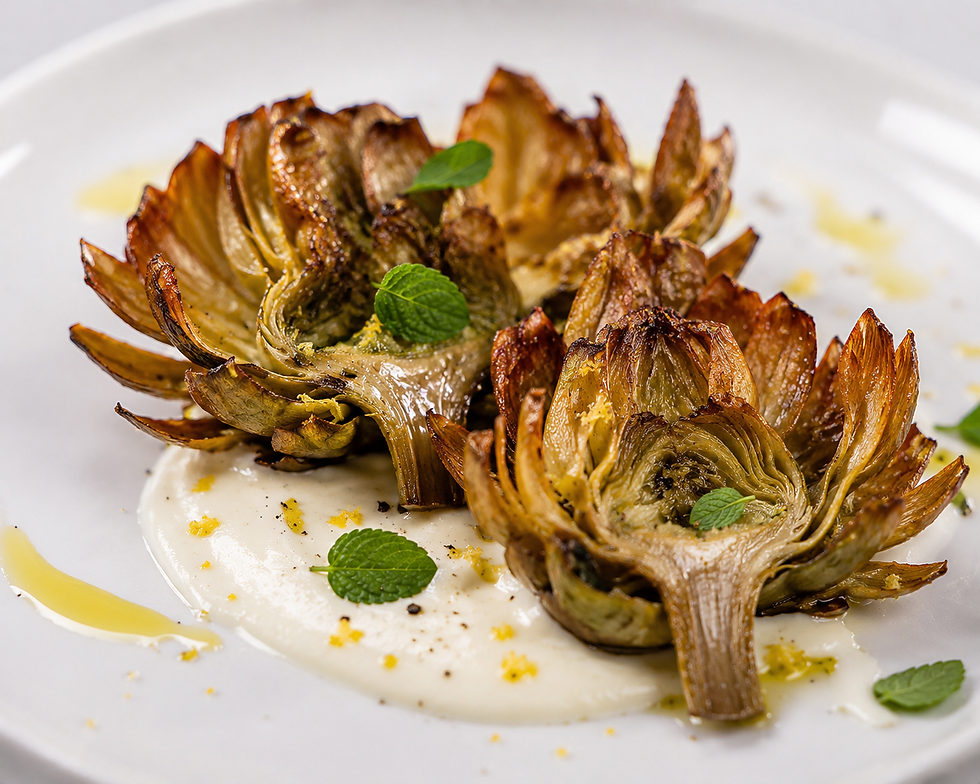
Artichokes reward precision more clearly than most vegetables. Their flavor can move from sweet and nutty to metallic or bitter depending on cleaning, oxidation, cooking liquid, and finishing heat. This preparation uses two separate cooking stages so the dense heart becomes tender while the outer leaves can later be pushed toward crispness.
Pecorino Romano fondue is kept light enough to support rather than cover the artichoke. Mentuccia, lemon, black pepper, and olive oil keep the flavor vocabulary firmly Roman, while the high-heat finish creates brittle edges without drying the heart.
Recipe Information
Servings: 4
Prep Time: 35 minutes
Cooking Time: 35 minutes
Total Time: About 1 hour 10 minutes
Difficulty: Moderate
Course: Artichoke Dish
Cuisine: Italian, Roman inspired
Best Season: Late winter through spring
Service Temperature: Hot
Ingredients
Artichokes
8 medium fresh artichokes
2 lemons
4 cups cold water (950 ml)
3 tbsp extra virgin olive oil (45 ml)
2 garlic cloves, lightly crushed
1/2 cup dry white wine (120 ml)
1 cup light vegetable stock (240 ml)
6 fresh mentuccia leaves, or small mint leaves
1 tsp kosher salt (5 g)
Freshly ground black pepper
Crisping
3 tbsp extra virgin olive oil (45 ml)
2 tbsp fine semolina flour (18 g), optional
Kosher salt, as needed
Pecorino Romano Fondue
3/4 cup heavy cream (180 ml)
3 oz finely grated Pecorino Romano (85 g)
1 tsp cornstarch (3 g)
1 tbsp cold milk (15 ml)
Freshly ground black pepper
Finishing
Fresh mentuccia leaves
Finely grated lemon zest
Fresh lemon juice
Extra virgin olive oil
Freshly ground black pepper
Step by Step Preparation
Fill a large bowl with 4 cups cold water and the juice of one lemon, adding the squeezed lemon halves. Keep it beside the cutting board so every cleaned artichoke can be protected from oxidation immediately.
Remove the toughest outer leaves until the paler tender leaves are exposed. Trim about 1 inch (2.5 cm) from the top, peel the fibrous exterior from the stem, halve each artichoke lengthwise, and remove the choke if developed. Transfer each piece directly to the lemon water.
Drain and lightly dry the artichokes. Heat olive oil in a wide sauté pan over medium heat, add garlic for about 30 seconds, then place the artichokes cut side down. Cook 2 to 3 minutes until the cut surface begins to color.
Add the white wine and simmer for about 1 minute, then add vegetable stock, mentuccia, salt, and black pepper. The liquid should reach only about one third of the way up the artichokes. Cover partially and braise over medium low heat for 15 to 20 minutes.
Turn the artichokes once and test the base of the heart with a small knife. It should enter easily while the leaves and stem still hold their shape. Remove the lid and allow most of the remaining braising liquid to evaporate.
Transfer the artichokes to a rack or towel-lined tray and cool for about 10 minutes. Their surfaces need to become relatively dry before the crisping stage; moisture trapped between the leaves will otherwise create steam in the oven.
Heat the cream for the fondue over low heat until steaming. Mix cornstarch with cold milk and whisk it into the cream, then reduce the heat to minimum and add Pecorino gradually. Whisk until smooth and lightly coating a spoon. Season with black pepper and keep warm without boiling.
Preheat the oven to 450°F (230°C). Open the artichoke leaves gently with your fingers, brush thoroughly with olive oil, and dust the outer leaves very lightly with semolina if using. Season with only a small amount of salt.
Roast for 10 to 14 minutes, turning the tray once, until the exposed leaves are golden and crisp while the hearts remain moist. If additional color is needed, finish under the broiler for 1 to 2 minutes while watching continuously.
Season the hot artichokes with only a few drops of lemon juice and black pepper. Spoon a small pool of warm Pecorino fondue onto each plate, set the crisp artichokes partly over the sauce, and finish with mentuccia, lemon zest, and olive oil.
Professional Technique
The heart and leaves require different cooking environments. Moist braising softens the dense base and reduces raw bitterness, while dry high heat later dehydrates and browns the leaves. Trying to achieve both in a single roast usually produces either a hard center or leathery burnt leaves.
Drying between stages is therefore not optional. Surface water blocks crisping, and moisture trapped between leaves can continue steaming even in a hot oven. A rack gives air access to more surfaces than a plate or deep tray.
Pecorino Romano needs careful heat control. Its protein and salt concentration make it less forgiving than many melting cheeses. The cream should never boil after the cheese is added, and the small cornstarch quantity acts as insurance for the emulsion rather than as a thickener.
For service, artichokes can be braised several hours in advance and refrigerated once cool. Bring them back toward room temperature and dry the surfaces before oiling and roasting. This split preparation is useful because the slow stage can be completed early while the crisping stage happens only when the order is fired.
Acid should be distributed in small amounts across the process. Lemon water prevents oxidation but should not be excessively strong, because too much acid can bleach flavor. Fresh lemon at the end is more important: a few drops sharpen Pecorino and artichoke without softening the crisp leaves.
Artichoke selection changes the timing substantially. Young compact artichokes with flexible inner leaves need less braising than large mature specimens, while the outer leaf tips of older artichokes require more aggressive trimming before cooking. After halving, examine the choke rather than removing flesh automatically: on young artichokes the choke may be undeveloped and can be left intact. Removing too much of the center wastes the sweetest portion of the heart and creates a hollow shape that dries faster during roasting. Uniform trimming is especially important when several artichokes share one pan because different sizes otherwise finish at different times.
The transition from braise to roast can be improved by allowing the cooked artichokes to cool cut side up on a rack. Steam leaves the heart while air reaches between the leaves, producing a drier exterior without dehydrating the center. For service, this stage can be completed several hours ahead. Before roasting, bring the artichokes closer to room temperature, brush oil into the opened leaves, and position them so hot air can reach the widest possible surface. The leaves should crisp from their edges inward while the heart stays supple enough to cut with a fork.
Pecorino fondue should be judged by flow at serving temperature, not while it is still very hot. Cheese sauces thicken as they cool on the plate, so a fondue that appears perfectly thick in the saucepan may become pasty by the time it reaches the diner. Keep it slightly looser than the final desired consistency and use warm plates to slow tightening. If the sauce needs correction, add warm milk a teaspoon at a time. Do not use additional cream automatically, because extra fat can mute the sharp Pecorino flavor and make the artichoke seem less vivid.
Chef Tips
Choose artichokes that feel heavy for their size with tight leaves.
Rub or submerge cut surfaces in lemon water immediately.
Do not overtrim the stems; peeled stems are excellent.
Keep braising liquid shallow.
Dry the artichokes well before roasting.
Open the leaves slightly before the final roast.
Add Pecorino gradually to warm cream.
Use fresh mentuccia when available.
Common Mistakes
Leaving tough outer leaves makes the finished artichoke fibrous.
Allowing cut artichokes to oxidize causes rapid discoloration.
Using too much lemon in the soaking water flattens flavor.
Boiling in excessive liquid makes later crisping difficult.
Skipping the drying stage produces steamed leaves.
A heavy semolina coating makes the surface dusty.
Boiling the Pecorino fondue creates graininess.
Serving and Presentation
Use a small pool of warm fondue and keep most of each browned artichoke exposed. The leaves should create the visual height of the plate rather than being flattened into sauce.
Add mentuccia, lemon zest, black pepper, and a few drops of olive oil. Additional fondue should remain around the base so the diner can combine crisp leaves and cheese selectively.
Wine Pairing
Frascati Superiore DOCG is a natural Roman pairing, with fresh acidity and restrained herbal character that respects the artichoke while balancing Pecorino.
Verdicchio dei Castelli di Jesi DOC is a more mineral alternative whose citrus and almond-like notes work especially well with crisp leaves and salty cheese.
Storage and Reheating
Braised artichokes can be refrigerated in an airtight container for up to 2 days before the final crisping stage. This is the preferred make-ahead point.
Already crisped artichokes can be reheated in a 400°F (205°C) oven for 7 to 9 minutes, but they are best freshly roasted. Store the fondue separately and reheat gently with 1 to 2 tablespoons milk if needed.
Nutrition per Serving
Calories: 390 kcal
Protein: 13 g
Carbohydrates: 24 g
Fat: 28 g
Saturated Fat: 11 g
Fiber: 10 g
Sugars: 4 g
Sodium: 690 mg
Cholesterol: 55 mg
Nutrition values are approximate and vary according to ingredient brands, trimming, reduction, and serving size.
Final Note
The success of this dish comes from treating a single vegetable as two textures at once: a tender, moist heart and dry, crisp leaves. Each stage is designed around one of those goals.
Pecorino, lemon, mentuccia, and black pepper reinforce the Roman identity without covering the natural flavor of the artichoke.


Comments