
Italian Ricotta Cake | Torta di Ricotta
Updated: Sep 14

Torta di ricotta is the plainest dessert in the Italian repertoire and one of the least forgiving. There is no crust to hide behind, no frosting, no chocolate, no soaking syrup. Four eggs, a little sugar, a spoonful of flour and a large quantity of fresh sheep or cow ricotta go into a tin, and what comes out is judged entirely on the quality of the cheese and on how well the baker controlled water and heat.
Ricotta is never the same twice. A soft cow ricotta from a supermarket tub can carry a third of its weight in whey, while a firm sheep ricotta from a dairy may be almost dry and distinctly aromatic. Most failed ricotta cakes come from treating those two as interchangeable and then correcting a loose batter with extra flour, which turns a delicate cake into a sponge.
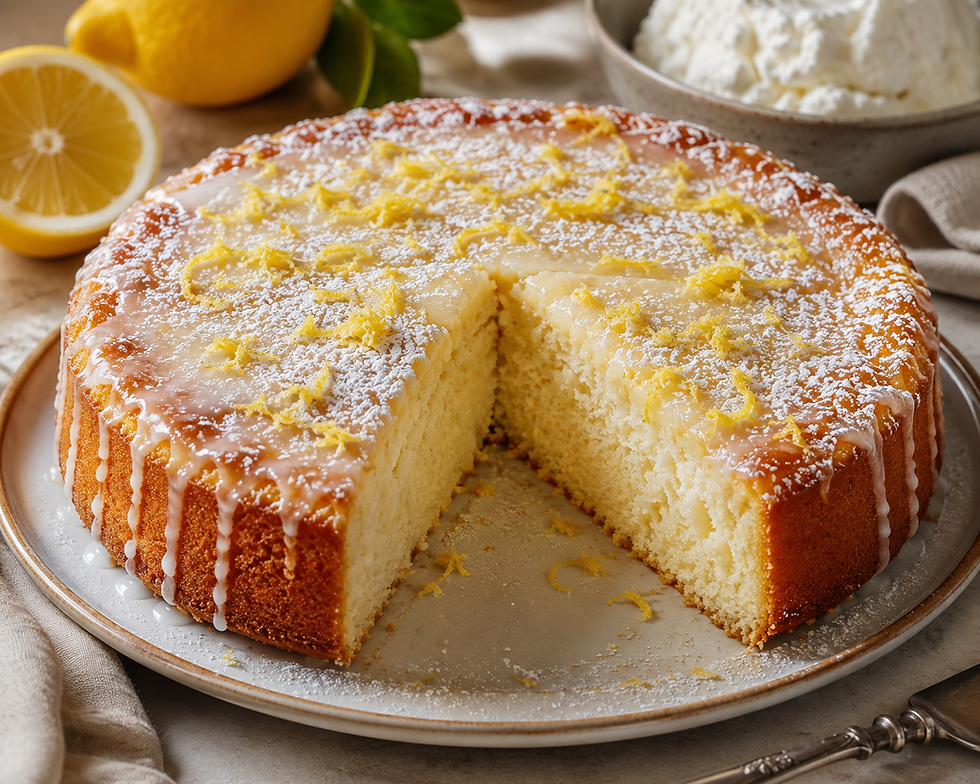
The version below keeps the cake crustless and fixes the variable at the start rather than the end: drain first, judge the cheese, then mix to fixed proportions. Lemon zest and vanilla stay in a supporting role, the sugar is restrained, and the only finish is a dusting of confectioners sugar added at the table. Served cool, the slice should be pale, fine grained and creamy, with no wet band at the base.
Yield: 8 servings. Drain: 4 hours, overnight is better. Prep: 25 minutes. Bake: 40 to 50 minutes. Cool and chill: at least 5 hours. Difficulty: intermediate. Course: dessert. Region: central and southern Italy.
The Story
Ricotta is not cheese in the strict sense and never has been. It is made from the whey left over after a true cheese has been drained, reheated until the residual proteins flocculate and lifted off in soft curds, which is what the name means: recooked. Columella and Varro describe the practice in Roman farm manuals, and it survived for two thousand years for the same reason it began, because whey was too valuable to throw away. In the great sheep territories of Lazio, Abruzzo, Campania, Sicily and Sardinia, ricotta was the byproduct of pecorino, made every morning while the whey was still hot and eaten within a day or two.
That short shelf life is why almost every ricotta sweet in Italy uses up a surplus, and why so many cluster around Easter, when the sheep are in full milk. Naples turns it into migliaccio with semolina and into pastiera with cooked wheat berries. Rome encloses it in pastry with bitter chocolate and cinnamon, Sicily beats it with sugar for cannoli and cassata, Sardinia folds it into pardulas with saffron and lemon. The crustless torta di ricotta sits underneath all of them: the same cheese, the same eggs and sugar, everything else stripped away. It belongs to household kitchens rather than pastry shops, which is why no two families make it the same way and why it has never been codified.
Ingredients
For the pan
Unsalted butter, softened, 2 tbsp (30 g)
Fine dry breadcrumbs or flour for dusting, 1 tbsp (8 g)
For the cake
Whole milk ricotta, 1 1/2 lb (680 g) before draining
Large eggs, 4, about 7 oz (200 g) without shells, at room temperature
Granulated sugar, 3/4 cup (150 g)
All purpose flour, 1/3 cup (45 g)
Fine sea salt, 1/4 tsp (1.5 g)
Pure vanilla extract, 1 tsp (5 ml)
Finely grated zest of 1 untreated lemon, about 1 tbsp (6 g)
Optional additions
Raisins, soaked and dried, 1/2 cup (75 g)
Ground cinnamon, 1/4 tsp (0.5 g)
For finishing
Confectioners sugar, 2 tbsp (15 g)
Preparation
Draining and sieving the ricotta
Line a fine mesh sieve with a double layer of cheesecloth, set it over a bowl, tip in the ricotta and refrigerate for at least 4 hours and preferably overnight. Discard the whey, which can run from two tablespoons to most of a cup depending on the cheese, and weigh what is left if you intend to bake the cake again. Push the drained curd through the sieve with a flexible spatula, twice if it is coarse. Do not use a food processor: the blade shears the curd into a pasty mass that bakes gummy. Let the ricotta and the eggs stand at cool room temperature for 30 minutes.
Preparing the pan and the oven
Heat the oven to 350°F (175°C) with a rack in the middle. Butter the base and sides of a 9 inch (23 cm) springform pan generously, line the base with a disc of parchment, then dust the sides with breadcrumbs or flour and knock out the excess. The dusting gives the batter something to climb and helps the cake release without tearing. Wrap the outside in foil if the ring does not seal tightly. For the optional raisins, soak them in warm water for 10 minutes, drain, dry them on a towel and toss them with a teaspoon of the measured flour.
Whipping the eggs and sugar
Beat the eggs with the sugar on medium speed for 3 to 4 minutes, until the mixture is pale, visibly thickened and falls from the whisk in a ribbon that sinks back within a few seconds. This is the only aeration the cake gets, so do not cut it short, but do not push it to a stiff sabayon either. Beat in the lemon zest and the vanilla at the end, with the cinnamon if you are using it. The zest goes in here because the sugar crystals abrade the oil out of it as they dissolve.
Folding in the ricotta and the flour
Drop the mixer to its lowest speed and add the sieved ricotta in three portions, stopping the moment each one disappears. Scrape the bowl and the base of the whisk, because dense cheese collects there and bakes as a seam. Sift the flour with the salt over the surface in two additions and fold them in by hand, cutting down and lifting from the bottom, until no dry streaks remain. Fold in the floured raisins last. Pour the batter into the pan, level it without pressing and rap the pan once on a folded towel. It should flow slowly and settle flat on its own.
Baking to the right set
Bake for 40 to 50 minutes on the centre rack, rotating the pan only after 30 minutes and only if the oven colours unevenly. The cake is done when the rim is set and lightly golden, the top has lost its shine, and the centre moves as one soft mass rather than rippling when the pan is nudged. An instant read thermometer should show about 165°F (74°C) in the middle. A skewer will carry a few moist crumbs, and it should: waiting for a dry skewer costs you the texture of the dessert.
Cooling, chilling and slicing
Turn the oven off, prop the door open with a wooden spoon and leave the cake inside for 10 minutes so the temperature drop is gradual and the top does not crack. Move the pan to a rack for 1 hour, then run a thin knife around the rim, release the ring and refrigerate uncovered for 1 hour before covering. Chill 4 hours in total. Temper 20 to 30 minutes before serving and cut with a long thin blade dipped in hot water and wiped dry between slices.
Plating
This is a cake spoiled by decoration, so the plating is mostly a matter of what you leave off. Take it out of the refrigerator 20 to 30 minutes before service, because cold mutes the lactic aroma that is the point of the dessert. Cut eight even wedges with a hot dry blade, drawing the knife straight down rather than sawing, and lift each one with a cake server so the pale top stays unmarked.
Set the slice slightly off centre on a small plate, point facing the guest, and brush crumbs away from the base. Dust the confectioners sugar through a small sieve at the last moment, holding it high so the fall is thin and even, and stop while the golden rim still shows through. If you want fruit, a few raspberries or two segments of blood orange to one side are enough, never a sauce and never whipped cream: both add water and sugar to a dessert built on restraint.
Professional Technique
The controlling technique here is drainage, not mixing, and it is the step most home recipes leave as an afterthought. Ricotta sold in tubs is packed wet because water is cheap and weight sells, and a cake formulated for drained cheese will flood if the whey stays in. Four hours in a lined sieve removes most of the free water and leaves the bound water inside the curd intact, which is what keeps the cake creamy. The professional habit is to weigh the drained curd once and write the number down, because the same brand loses roughly the same amount every time, and after two bakes you know your cheese and never have to guess at the flour again.
The second technique is structural and explains why this cake has so little flour. The set comes almost entirely from egg protein coagulating around suspended ricotta curd, with the 45 g of flour doing nothing more than binding stray moisture so the slice holds an edge. The batter therefore behaves like a baked custard, not a sponge, and must be treated as one: moderate heat so the outer centimetre does not tighten and turn rubbery before the middle sets, a gradual temperature drop to avoid the crack that comes from a contracting surface, and a long cold rest that lets the network relax and the moisture redistribute. Judge doneness by centre movement and internal temperature; surface colour tells you about the rim and nothing about the middle.
Texture and Moisture Control
Every fault in this cake is a water fault. Undrained ricotta releases whey as it heats, the free liquid sinks, and you get a dense wet band at the base with a pale ring of moisture around the rim. Wet raisins do the same thing on a smaller scale, which is why they are dried and floured. The instinct to fix a loose batter with more flour is the worst available answer, because flour absorbs the water but converts the crumb from creamy to cakey and the dessert stops tasting of cheese. If the drained ricotta is unusually dry and the batter sits in a stiff mound instead of levelling itself, go the other way and fold in 1 tbsp (15 ml) of whole milk.
Heat and time do the rest. The cake rises a little as the egg foam expands, then settles as it cools, and that settling is normal rather than a collapse. Carryover heat keeps setting the proteins for several minutes after the pan comes out, so the ten minute rest in the switched off oven is part of the bake. Cutting the cake warm tears it and lets steam escape, leaving the remaining slices drier. The full chill produces the smooth close texture, and the short temper afterwards restores aroma without softening the structure. A fine even grain is the target, but the cut should not look glassy like a commercial cheesecake.
Professional Mise en Place
Once the eggs are whipped the batter will not wait, so everything else is ready before the mixer starts. The only long item is the draining, done the day before.
Equipment and tools
Fine mesh sieve and cheesecloth for draining, second sieve for the curd
Stand or hand mixer, wide flexible spatula, microplane zester
9 inch (23 cm) springform pan, parchment disc, foil
Instant read thermometer, cooling rack, long thin knife
Small sieve for dusting confectioners sugar at service
Prepared ahead
Ricotta drained 4 hours or overnight, whey discarded and curd weighed
Raisins soaked, dried and tossed in a little of the measured flour
Pan buttered, lined and dusted, oven at 350°F (175°C)
Sugar, flour, salt, vanilla and zest measured into separate bowls
Eggs and ricotta out of the refrigerator 30 minutes ahead
Service setup
Cake chilled 4 hours, then tempered 20 to 30 minutes
Hot water and a clean cloth beside the board for the knife
Cold plates, cake server and a small sieve of confectioners sugar
Fruit garnish kept dry and separate until the slice is plated
Chef Tips
Buy the ricotta from a counter rather than a sealed tub, and ask for sheep milk ricotta if the shop carries it. It is firmer, higher in fat and far more aromatic, and gives the cake a savoury depth cow ricotta cannot reach. Taste it plain first: a ricotta that is even slightly sour only gets worse with sugar and heat.
Zest the lemon straight into the sugar and rub the two together with your fingertips before the eggs go in. The crystals tear the oil cells open and the aroma disperses through the whole batter instead of sitting in fragrant specks. Take only the yellow: the white pith turns bitter under heat.
Weigh the eggs rather than counting them. Four large eggs can vary by 25 g in total, and in a batter this lean that is the difference between a clean set and a loose middle. Target 7 oz (200 g) of whole egg without shells.
Bake the cake the day before you need it. An overnight rest improves both texture and flavour, the slice cuts far more cleanly, and it removes the timing pressure on the day. Dust it only when the plate goes down.
Common Mistakes
Skipping the drain. This is the one failure that cannot be recovered. Whey trapped in the batter sinks during baking and sets as a dense wet layer at the base, with a pale damp ring around the rim. Four hours in a lined sieve is the minimum and overnight is better.
Correcting a loose batter with flour. Adding two or three extra spoonfuls makes the mixture behave, then bakes into a firm cakey crumb that tastes of wheat rather than cheese. Fix the water at the draining stage and keep the flour at the stated 1/3 cup (45 g).
Blending the ricotta at high speed. A food processor shears the curd instead of dividing it, and the result is a sticky paste that bakes gummy and heavy. Push the cheese through a fine mesh sieve with a spatula, twice if it is coarse, and stop there.
Overbeating after the ricotta goes in. The egg foam is already built at that point, and further whipping both knocks it down and develops the small amount of flour. Add the cheese on the lowest speed in three portions and stop the moment each one disappears.
Baking until the skewer is dry. A dry skewer means the egg proteins have tightened and squeezed out their water, and the slice will be rubbery at the rim and crumbly in the middle. Pull the cake when the centre moves as one mass and reads about 165°F (74°C).
Wine Pairing
Vin Santo del Chianti Classico DOC: Dried on the vine and aged for years in small caratelli, it brings walnut, dried apricot and a faint caramel oxidation that meets the browned rim of the cake without overpowering the ricotta underneath. Its acidity stays high enough to cut the dairy fat, and because the cake is only lightly sweetened the wine can lead on sugar without the pairing turning heavy.
Romagna Albana DOCG: In its passito form Albana carries candied citrus peel and yellow plum over an unusually firm tannic grip for a white, which is what makes it work against a cake this creamy. The citrus runs directly alongside the lemon zest, and the texture keeps the palate from being coated. A drier late harvest bottling is the better choice if the raisins are left out.
Moscato di Scanzo DOCG: A rare red passito from a few hectares above Bergamo, perfumed with rose, dried strawberry and sage. The aromatic lift plays against the vanilla rather than repeating it, and the light tannin gives the pairing a structure that sweet whites cannot supply. Pour it in very small glasses: the concentration is considerable and the cake is delicate.
Colli Orientali del Friuli Picolit DOCG: Picolit is fine rather than powerful, with acacia honey, white peach and a distinctly bitter almond finish that echoes the faint savoury edge of sheep milk ricotta. Its sweetness is moderate and its body light, so it flatters a restrained cake instead of flattening it. Serve at around 50°F (10°C) and keep the pour small.
Storage & Reheating
Cool the cake completely, then cover it loosely and refrigerate for up to 3 days. Leave it on its parchment on a rigid plate rather than wrapping film against the surface, which pulls the crust away and leaves a damp patch. An airtight cake dome is ideal. Keep it away from anything strongly aromatic, since fresh dairy picks up refrigerator smells quickly. Cut only what will be eaten, and never leave a cake made with fresh ricotta and egg at room temperature for more than 2 hours.
For freezing, portion the cake first, wrap each slice in parchment and then in film and store in a rigid airtight container for up to 1 month, undusted. Thaw overnight in the refrigerator, never at room temperature and never in a microwave, then temper 20 minutes and dust before serving. There is no reheating step: the cake is served cool, and warming it loosens the set and dulls the flavour. If the cut face has dried after a few days, trim a thin sliver off before plating.
Nutrition
Per serving, based on 8 servings, without the optional raisins and cinnamon:
Calories: 350 kcal
Total Fat: 19 g
Saturated Fat: 11 g
Trans Fat: 0 g
Unsaturated Fat: 6 g
Cholesterol: 150 mg
Sodium: 280 mg
Total Carbohydrates: 30 g
Fiber: 0 g
Total Sugars: 21 g
Added Sugars: 19 g
Protein: 15 g
Lactose: about 2 g
Principal micronutrients: calcium, phosphorus, vitamin B12, riboflavin, selenium, vitamin A
These figures are estimates and move with the fat content of the ricotta, the whey lost in draining and the thickness of the slice. Allergens: milk, egg and wheat. The cake is vegetarian, contains gluten and is not suitable for a lactose free diet.



Comments