
Italian Classic Apricot Jam Tart | Crostata Classica alla Marmellata di Albicocche

A crostata di marmellata is the plainest cake in the Italian repertoire and the one that punishes carelessness fastest. There is nothing to hide behind: sweet short pastry, a jar of apricot preserve, a lattice on top. What decides whether it comes out crisp and cleanly sliced, or soggy and welded to the pan, is not the recipe at all. It is the behaviour of hot jam, which turns far more liquid in the oven than it ever looks in the jar.
Yield: one 9 inch (23 cm) tart, 10 slices. Prep: 25 minutes. Rest: 2 hours. Bake: 45 minutes. Cool: 2 hours. Difficulty: easy. Course: dolce. Region: central and southern Italy.
The Story
Pasta frolla, the sweet short pastry this tart is built on, arrived in Italian kitchens with cheap sugar. Before the sugar refineries of Sicily and the Venetian trade made it affordable, pastry in Italy was savoury or barely sweetened, and preserved fruit was thickened with honey or reduced wine must. By the seventeenth century the Neapolitan and Roman pastry schools were working a dough of flour, butter or lard, sugar and egg yolk that is recognisably the frolla of today, and the crostata built from it became the standard way to turn a jar of preserve into a cake without yeast, without leavening and without any equipment beyond a bowl and a rolling pin.
The apricot part belongs to the summer glut. Italy grows apricots seriously in two places above all: the slopes of Vesuvius, where the varieties known locally as crisommole ripen intensely sweet on volcanic soil, and the orchards of the Val Santerno around Imola in Romagna, where the fruit is grown on a commercial scale. Apricots are a short season fruit that bruises easily and will not travel far or wait, so what the family could not eat in July went into jars with sugar and lemon. The crostata is what those jars became in December, and that sequence, glut to jar to tart, is the whole reason the dish exists.
Its place in Italian life is domestic rather than professional. This is the cake that sits under a glass dome on the kitchen counter, eaten at breakfast with coffee and again at four in the afternoon, cut with the same knife for a week. The lattice is the one flourish, and it was never decoration for its own sake: strips of leftover dough covered the filling without wasting pastry, and a hand cut lattice tells anyone looking that the tart was made at home rather than bought. Every Italian region claims a version, and the argument is only ever about which preserve goes in.
Ingredients
For the pasta frolla
All purpose flour, 2 1/2 cups (300 g), plus a little for rolling
Cold unsalted butter, cut into cubes, 5 1/2 oz (150 g)
Granulated sugar, 2/3 cup (130 g)
Egg yolks, large, 3
Whole egg, large, 1
Finely grated lemon zest, from 1 lemon
Vanilla seeds, from 1/2 pod, or 1 tsp (5 ml) vanilla extract
Fine sea salt, 1/4 tsp (1.5 g)
Baking powder, 1/2 tsp (2 g), optional
For the filling
Thick apricot preserve, 14 oz (400 g), the firmest you can find
Lemon juice, 2 tsp (10 ml)
Apricot brandy or dark rum, 1 tbsp (15 ml), optional
For finishing
Egg yolk, 1, beaten with 1 tsp (5 ml) whole milk, for the lattice
Butter and flour for the pan, or one round of parchment
Confectioners sugar, for dusting, 1 tsp (3 g)
Preparation
Rubbing the cold butter into the flour and sugar
Whisk the flour, sugar, salt, lemon zest, vanilla and the optional baking powder together in a wide bowl. Add the cold cubed butter and rub it in with your fingertips, lifting and dropping rather than kneading, until the bowl holds coarse crumbs the size of peas with no loose flour left. Work fast and stop there. The butter must stay in visible pieces, because those pieces make the baked frolla sandy rather than hard.
Bringing the frolla together with the yolks
Make a well in the crumbs, add the three yolks and the whole egg, and bring the dough together with a fork and then one hand. Twenty seconds is enough. Turn it onto the counter, flatten it into a disc about 1 inch (2.5 cm) thick, and stop the moment it holds. Kneading frolla develops gluten and gives a pastry that shrinks in the pan and bakes tough instead of short.
Resting the dough cold
Wrap the disc and refrigerate it for at least 2 hours, or overnight. The flour hydrates evenly, so the dough rolls without cracking, and the butter firms up again after the warmth of your hands. Divide the rested dough roughly two thirds for the base and one third for the lattice, keeping the lattice portion cold while you line the pan.
Reducing the apricot preserve
This is the step most recipes leave out and the one that decides the result. Scrape the preserve into a small saucepan with the lemon juice, bring it to a simmer over medium heat and cook it for 4 to 6 minutes, stirring, until a spoon drawn across the bottom leaves a channel that closes slowly rather than instantly. Stir in the brandy if you are using it, then cool the preserve completely. A cold spoonful should mound on the spoon and refuse to run off it.
Lining the pan and leaving the free border
Roll the larger piece of dough to a thickness of about 1/8 inch (3 mm) and line a 9 inch (23 cm) tart pan, pressing the pastry into the corner without stretching it and trimming the top edge level. Spread the cooled preserve in an even layer and stop 1/4 inch (5 mm) short of the pastry rim all the way round. That narrow empty margin is not tidiness. It is the space the filling needs to expand into once it boils.
Cutting and laying the lattice
Roll the remaining dough and cut strips about 3/4 inch (2 cm) wide with a knife or a fluted wheel. Lay half of them across the tart, spaced a good finger apart, then lay the rest at an angle over the top, weaving them if the dough is cold enough to handle. Seal the ends onto the rim, then brush the strips only, never the filling, with the yolk and milk wash. Chill the tart for 15 minutes.
Baking and cooling before unmoulding
Bake at 350°F (175°C) on the middle shelf for 40 to 45 minutes, until the lattice is a deep even gold and the jam is visibly bubbling in the openings. Set the tart on a rack and leave it in the pan until it is barely warm, about 40 minutes, then unmould it and let it finish cooling completely. Cutting it hot tears the pastry and lets the filling run, since apricot preserve only sets back to a sliceable jam as it cools.
Plating
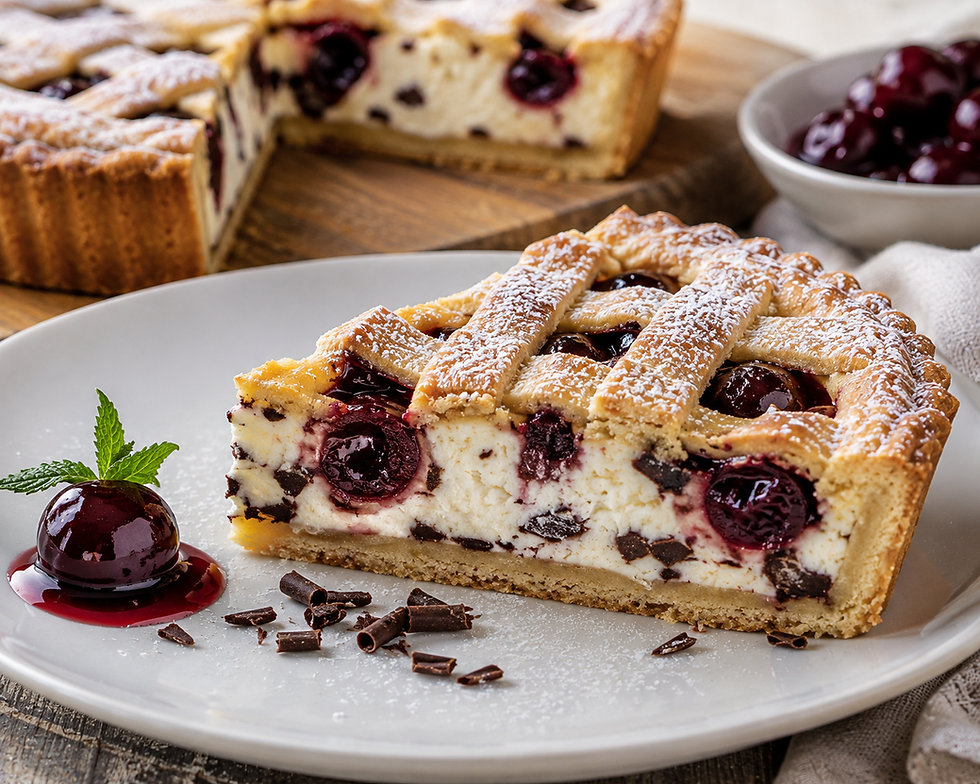
Serve the crostata at room temperature, on a flat plate or a wooden board rather than a cake stand, and cut it with a thin bladed knife wiped between slices. Warm from the oven it is impossible to portion cleanly; refrigerated it goes waxy and the apricot loses its perfume. Room temperature is not a compromise here, it is the only temperature at which the pastry stays sandy and the jam stays bright.
Dust the lattice with the smallest amount of confectioners sugar, sieved from high above and only across the pastry strips, so the jam windows stay dark and glossy against the pale lattice. Nothing else belongs on the plate. If you want something alongside, put a spoonful of unsweetened whipped cream beside the slice, never on top of it, where it would soften the crust within a minute.
Professional Technique
The technical heart of this tart is the viscosity of jam at temperature, and almost every failed crostata fails here. Preserve that mounds firmly on a cold spoon behaves like thin syrup once it passes about 175°F (80°C), because the pectin gel relaxes with heat and dissolved sugar loses viscosity fast. A filling that was merely soft in the jar turns mobile enough to climb, and it climbs through the only openings available, the gaps in the lattice. From there it runs over the rim and down the outside, where the sugar meets hot metal, caramelises past the point of caramel and glues the tart to the pan.
There are two controls and you use both. The first is a filling thick enough to survive that change: a firm preserve rather than a soft fruit spread, and a few minutes in a saucepan to drive off water and concentrate the pectin. The second is the empty 1/4 inch (5 mm) border at the rim, which gives the expanding filling somewhere to go sideways before it has any reason to go up and over.
The lattice belongs to the same problem, which is why it is structural rather than ornamental. A crostata sealed under a full sheet of pastry is a closed vessel holding a filling that is more than half water. That water turns to steam, the steam has no exit, and it inflates the lid, splits it at the weakest seam and forces jam through the crack. Open strips give the steam a continuous escape across the whole surface, so the filling reduces gently and the pastry above it crisps in moving air instead of steaming from below. That it also looks beautiful is a coincidence Italian cooks have been happy to accept.
Texture and Moisture Control
Baked frolla should be sandy and break cleanly under the fork, not hard and not biscuit dry. That texture comes from fat coating flour particles before any water reaches them, which is why the butter goes in cold and in pieces and why the mixing stops at the crumb stage. Once the yolks are added, every extra second of working builds gluten strands that make the pastry contract in the pan and eat tough. Yolks rather than whole eggs are part of the same logic: the fat and lecithin in a yolk shorten the crumb, while egg white brings water and protein that toughen it.
Moisture control runs in one direction only, from the filling into the pastry, and it is governed by how much water is in the jam when the tart goes into the oven. Preserve straight from the jar holds enough free water to keep the pastry under it at boiling point for the whole bake, and pastry held there steams rather than bakes. Reducing it first removes that water, so the base reaches a dry heat and sets. The same reduction is what lets the filling firm up on cooling: jam concentrated to the channel test will slice, while a loose one stays runny however long the tart rests.
Professional Mise en Place
This is a two day dish if you want it to be easy. The dough and the filling both benefit from a night in the refrigerator, and both can be ready before you think about rolling anything.
Equipment and tools
9 inch (23 cm) tart pan with a removable base, or a fluted ring on a tray
Wide mixing bowl, bench scraper and a rolling pin
Small heavy saucepan for reducing the preserve
Fluted pastry wheel or a long thin knife for the strips
Pastry brush, fine sieve and a cooling rack
Prepared ahead
Frolla mixed, wrapped and refrigerated, up to 2 days, or frozen up to 1 month
Apricot preserve reduced and cooled, up to 5 days, kept in a covered jar
Dough divided two thirds and one third, both discs kept cold
Pan buttered and floured, or a parchment round cut to size
Service setup
Oven at 350°F (175°C) with a shelf in the middle position
Tart assembled and chilled 15 minutes before it goes in
Cooling rack clear, and 2 hours of cooling time allowed for
Thin knife and a cloth for wiping the blade between slices
Chef Tips
Read the preserve before you buy it. Turn the jar upside down: a filling suitable for a crostata moves slowly or barely at all, while one that slides straight to the lid needs a longer reduction and will still fight you. Preserves labelled extra jam carry more fruit and less free water than a cheap spread.
Work the frolla on the coolest surface you have and keep the lattice portion refrigerated until the base is lined and filled. Warm strips stretch, tear and refuse to sit where you put them, and the temptation is then to reroll them, which is what turns short pastry tough.
If the dough cracks as you roll it, it is cold rather than dry. Let it sit for 5 minutes and press the cracks together with your thumb. Adding water there is the one irreversible mistake in the recipe.
Save the trimmings, press them into a small square and bake them alongside the tart for 12 minutes. They tell you how the frolla has turned out before anybody cuts the crostata itself.
Common Mistakes
Spreading the preserve straight from the jar. It carries too much free water, boils thin in the oven, floods over the rim and leaves a base that steamed instead of baking. Four to six minutes in a saucepan fixes it permanently.
Filling the tart right to the edge. With no free border the expanding jam has nowhere to go but up through the lattice and over the rim, where it burns onto the pan and welds the crostata in place. Leave 1/4 inch (5 mm) clear.
Kneading the frolla like bread dough. Frolla is brought together, not worked. Developed gluten makes the pastry shrink away from the pan during the bake and gives a crust that is tough rather than sandy.
Covering the tart with a solid sheet of pastry. The steam from the filling has no way out, so it inflates the lid, splits it and forces jam through the tear. The open lattice is what vents it.
Unmoulding or slicing it warm. Hot apricot filling is liquid and hot frolla is fragile, so the tart tears and the jam runs. Cool it in the pan until barely warm, then completely before the first slice.
Wine Pairing
Vin Santo del Chianti Classico DOC: The classic Tuscan answer to a jam tart. Grapes dried on racks and then aged oxidatively in small caratelli give exactly the dried apricot, walnut and toasted note that runs alongside both the preserve and the browned lattice. Its residual sugar sits just below that of the filling, so the wine reads as fresh rather than cloying, and the acidity underneath cuts the butter of the frolla off the palate.
Moscato d'Asti DOCG: The lightest option and the easiest at the end of a full meal. Moscato Bianco carries the same terpene aromatics found in ripe apricot and white peach, so this works by echo rather than contrast. Its gentle carbonation scrubs pastry fat from the tongue, and at around 5.5 percent alcohol it adds no weight to a dessert that is already rich.
Recioto di Soave DOCG: Garganega dried on racks through the winter, which concentrates sugar while keeping the variety's high natural acidity, and that acidity is why the bottle handles a sugary filling without turning syrupy. Candied apricot and bitter almond on the finish sit against the lemon zest and the toasted edge of the pastry. Serve it at 54°F (12°C) in a small glass.
Ramandolo DOCG: The interesting choice, from the hills above Udine in Friuli. Verduzzo Friulano is unusual among sweet whites in carrying real tannin, and that faint grip is what makes it work: it resets a palate coated in butter and sugar. Its flavours run to honey, quince and dried apricot skin, and the bitter finish keeps the pairing from collapsing into sweetness.
Storage & Reheating
A crostata di marmellata keeps better than almost any other dessert, and it improves on the second day as the moisture in the filling equalises through the pastry. Keep it at cool room temperature under a dome or loosely covered with a cloth, whole and uncut where possible, for up to 4 days. Do not refrigerate it: the cold makes the frolla waxy, dulls the apricot completely and does nothing that room temperature does not do better.
It freezes well, either whole or in slices, wrapped tightly for up to 2 months. Thaw it at room temperature, still wrapped, and then give it 8 to 10 minutes in a 300°F (150°C) oven to bring the pastry back to crisp. That same short warming revives a tart that has gone soft after a few days. Unbaked frolla also freezes for a month, and the reduced preserve keeps 5 days in the refrigerator in a covered jar.
Nutrition
Per slice, based on 10 slices from a 9 inch (23 cm) tart:
Calories: 355 kcal
Total Fat: 14 g
Saturated Fat: 8 g
Trans Fat: 0 g
Unsaturated Fat: 5 g
Cholesterol: 95 mg
Sodium: 65 mg
Total Carbohydrates: 54 g
Fiber: 1 g
Total Sugars: 30 g
Added Sugars: 26 g
Protein: 5 g
Lactose: 0.2 g
Principal micronutrients: vitamin A, vitamin E, potassium, selenium, folate
These are estimates. The sugar figure moves most, since it depends entirely on the preserve you use and on how far you reduce it.




Comments