
Italian Prune Tart | Crostata di Prugne

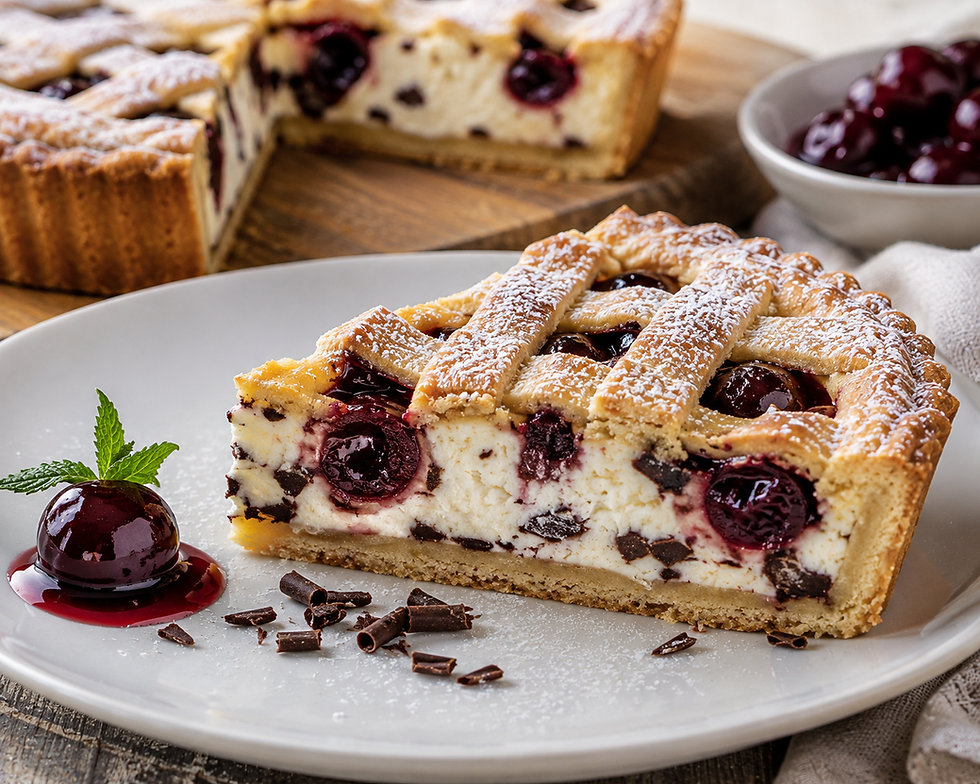
Crostata di Prugne is the tart Italian households bake in the two or three weeks when the plum tree gives more fruit than anyone can eat fresh. A shell of pasta frolla, ripe plums cut and laid tight, a lattice over the top, and nothing else asked of it. The whole difficulty of the dish sits in one place: fresh fruit releases juice in the oven, and that juice wants to soak the pastry underneath it.
Yield: one 9 inch tart, 10 slices. Prep: 30 minutes. Chill: 1 hour. Bake: 50 minutes. Cool: 2 hours. Total: about 4 hours 20 minutes. Difficulty: intermediate. Course: dolce. Season: late August to early October.
The Story
Italy has two words for the fruit in this tart and uses them loosely. Susina is the older term and the one still heard in the north, while prugna travelled south and eventually took over most of the peninsula, which is why a tart made with fresh fruit ends up on English menus as a prune tart even though nothing in it is dried. The confusion matters only in translation. In a Trentino kitchen in September, susine and prugne mean the same basket of purple fruit on the table, too soft to keep and too good to waste.
The plum has real geography in Italy. Trentino grows the Susina di Dro in the Valle dei Laghi, a small dark clingstone plum with concentrated flesh that the Slow Food movement stepped in to protect when the orchards were being pulled out for apples. Emilia Romagna is the industrial heart of Italian plum growing, with the Romagna plain around Faenza and Ravenna supplying most of the national crop. Further south the fruit shows up in Campania and in Sicily, where the intense sun pushes the sugars higher and the flesh drier. Each of those plums bakes differently, and a baker who knows the local fruit adjusts the sugar rather than following a number.
The crostata itself is older and broader than any single filling. Pasta frolla, the sweet short pastry that lines it, is documented in Italian cookery from the sixteenth century onward and became the standard property of the home kitchen rather than the pastry shop. For most of the year the crostata was filled with jam, because jam kept. The fresh fruit version belonged to the harvest weeks, when there was no reason to preserve anything and every reason to use the fruit immediately. That seasonal split still holds in Italian homes, and it is the reason a plum crostata tastes like a specific fortnight rather than a recipe.
Ingredients
For the pasta frolla
All purpose flour, 2 1/2 cups (300 g)
Cold unsalted butter, cubed, 5 oz (140 g)
Granulated sugar, 1/2 cup (100 g)
Egg yolks, large, 2
Whole egg, large, 1
Finely grated lemon zest, from 1 lemon
Fine sea salt, 1/4 tsp (1.5 g)
Vanilla seeds, from 1/2 pod, or 1/2 tsp vanilla extract
For the absorbent layer
Dry plain biscuit crumbs, savoiardi or amaretti, 1/3 cup (35 g)
Fine semolina, 1 tbsp (12 g)
Ground blanched almonds, 2 tbsp (14 g)
For the plum filling
Ripe firm plums, 2 lb (900 g), about 14 medium
Granulated sugar, 1/3 cup (65 g), adjusted to the fruit
Cornstarch, 2 tsp (6 g)
Finely grated lemon zest, from 1/2 lemon
Ground cinnamon, 1/4 tsp (0.5 g)
For finishing
Egg yolk beaten with 1 tsp milk, for the lattice
Turbinado or demerara sugar, 1 tbsp (12 g)
Apricot jam, 2 tbsp (40 g), for the glaze
Water, 1 tsp (5 ml)
Preparation
Making and resting the pasta frolla
Rub the cold cubed butter into the flour, sugar and salt with your fingertips until the mixture looks like coarse damp meal, working fast so the butter stays cold. Add the yolks, the whole egg, the lemon zest and the vanilla, and bring the dough together in as few movements as possible. Press it into a flat disc, wrap it and refrigerate for a full hour. Two discs, one slightly larger, save you dividing cold dough later.
Cutting the plums and leaving them dry
Halve the plums along the natural seam, twist the halves apart and lift out the stones. Cut each half into three wedges, or into halves again if the fruit is small. Put the wedges in a bowl and leave them exactly as they are. Do not add the sugar, the cornstarch or the zest yet. Every minute the cut fruit spends in contact with sugar is a minute it spends giving up water you will have to deal with later.
Lining the tin
Roll the larger disc to about 1/8 inch (3 mm) and line a 9 inch (23 cm) tart tin with a removable base, pressing it well into the angle where side meets bottom. Trim the edge level and refrigerate the lined tin for 20 minutes. Roll the smaller disc to the same thickness, cut ten strips about 3/4 inch (2 cm) wide and chill them flat on a tray.
Laying the absorbent veil
Heat the oven to 375°F (190°C) with a heavy baking tray on the lowest shelf. Mix the biscuit crumbs, semolina and ground almonds and scatter them over the chilled pastry base in a thin even veil, about 2 to 3 tablespoons in total. You want the base just shaded, not carpeted. This layer is what will catch the plum juice during the bake and hold it clear of the dough.
Seasoning and arranging the fruit
Now toss the plum wedges with the sugar, cornstarch, lemon zest and cinnamon, and move quickly. Arrange them over the crumb layer in tight concentric rings, standing each wedge with the cut face turned upward and the skin resting on the crumbs. Overlap them slightly, because they shrink. Taste one raw wedge first and take the sugar down a tablespoon if the fruit is very ripe, or up one if it is sharp.
Weaving the lattice and baking
Lay five strips across the tart at even intervals, then weave the remaining five over and under them at right angles. Press the ends onto the rim and trim them flush. Brush the lattice with the yolk and milk wash and sprinkle the coarse sugar over it. Slide the tart onto the hot tray on the lowest shelf and bake for 45 to 55 minutes, until the lattice is deep gold and the juice around the fruit is thick and bubbling slowly rather than running.
Cooling and glazing
Warm the apricot jam with the water until fluid, pass it through a small sieve and brush it over the exposed fruit while the tart is still hot. Then leave the tart in its tin on a rack for at least two hours. The filling sets as it cools and the base finishes crisping in its own residual heat. Unmould only when the tin is cold to the hand.
Plating
Serve the crostata at room temperature, on the day it is baked, from a flat plate or a wooden board rather than a cake stand with a lip, so the base stays dry underneath. Cut it with a thin knife in a single downward press instead of a sawing motion, wiping the blade between slices. Ten slices from a 9 inch tart give a portion that holds its shape on the plate.
Nothing needs to go on top, and anything wet placed beside a slice finds its way into the pastry within minutes. If you want a cream, put a spoonful of lightly whipped unsweetened cream or of cold mascarpone on the far side of the plate, not against the slice. A dusting of powdered sugar over the lattice is the only other flourish worth making.
Professional Technique
The whole technical problem of a fresh fruit crostata is a water problem. A plum is roughly eighty five percent water held inside intact cell walls. Heat ruptures those walls, the pectin between them softens, and the liquid runs out under gravity onto pastry that has not yet set. Raw pastry is thirsty: it absorbs the juice, the starch in the flour gelatinises in water instead of drying out, and the base steams rather than bakes. What comes out is a pale soft bottom that folds when you lift a slice.
The pastry answer is a barrier, and Italian kitchens have used the same one for generations: a thin absorbent layer spread over the raw base before the fruit goes on. Dry biscuit crumbs, fine semolina and ground almonds all work, and a mixture of the three works best, because the crumbs and semolina are dry starch that swells and traps liquid by capillary action while the almond flour brings fat that resists wetting. Two or three tablespoons over a 9 inch base is enough to shade the pastry, never enough to read as a sandy layer.
Two smaller decisions protect that barrier. Do not sugar the plums in advance. Sugar in contact with cut fruit sets up an osmotic gradient and pulls water out of the cells before any heat is involved, so fruit left to macerate arrives at the tin already sitting in syrup you then pour onto your pastry. Toss it at the last possible moment. And arrange the wedges cut face upward, skin against the crumbs: the cut surface lets juice evaporate and concentrate in the oven air, while the intact skin below acts as a small cup that holds back whatever still escapes.
Texture and Moisture Control
Three textures have to arrive together: a base that snaps, a lattice that is crisp and deep gold, and fruit that has collapsed into itself without turning to sauce. Bottom heat delivers the first. Preheating a heavy tray on the lowest shelf and setting the tin directly on it drives energy into the pastry from below during the first fifteen minutes, exactly the window in which the base has to set before the plum juice reaches it. A tart baked on a cold rack in the middle of the oven loses that race.
The cornstarch tossed with the fruit is the second control. Two teaspoons is a small amount on purpose: it thickens the juice that does escape into a glossy syrup that clings to the fruit instead of flooding the tin, without tasting floury. Judge the bake by that juice rather than by the clock. When it bubbles thickly and slowly at the edges of the fruit, the water has gone.
Cooling is not a formality. A hot crostata has steam still moving through the pastry, and cutting into it traps that steam under the slice and softens the base you spent an hour protecting. Two hours in the tin on a rack lets the moisture leave from underneath and the filling set enough to hold a clean edge.
Professional Mise en Place
This tart has one urgent moment, the stretch between sugaring the fruit and closing the lattice, and everything else can be lined up calmly in advance. Organise the bench so that stretch takes four minutes rather than fifteen.
Equipment and tools
9 inch (23 cm) tart tin with a removable base
Heavy baking tray, preheated on the lowest oven shelf
Rolling pin, pastry wheel or long knife for the strips, small sieve for the glaze
Bench scraper and a thin flexible palette knife
Prepared ahead
Pasta frolla in two discs, refrigerated up to 2 days or frozen up to 1 month
Tin lined and chilled, lattice strips cut and chilled flat on a tray
Crumb, semolina and almond mixture combined and kept in a sealed jar
Plums washed, dried and left whole until the last moment
Egg wash beaten, coarse sugar and sieved apricot glaze ready in small bowls
Service setup
Oven and tray fully up to temperature before the fruit is touched
Rack cleared and ready for the two hour cooling period
Thin knife and a clean cloth for wiping the blade between slices
Dry plates, no sauce pooled under the pastry
Chef Tips
Buy plums that are fragrant and give slightly under the thumb but still hold their shape when cut. Fruit already soft enough to bruise collapses into jam in the oven and floods the shell. If all you can find is firm, leave it on the bench for two days.
Weigh the sugar against the fruit, not against the recipe. Taste a raw wedge before you toss anything. A ripe Susina di Dro may need only two tablespoons, while an early supermarket plum picked green can take five. The filling sugar is a correction, not a fixed quantity.
Work the frolla as little as possible and never on a warm bench. Once the butter softens and smears into the flour, the pastry loses its short structure and turns leathery. If the dough feels greasy at any point, stop and put it back in the refrigerator for fifteen minutes.
Save the trimmings but do not patch the tart with them, since rerolled frolla bakes tough. Bake the scraps flat with a little sugar for eight minutes and you have biscuits, or crush them and keep them for the absorbent layer of the next crostata.
Common Mistakes
Macerating the plums in sugar first. Osmosis draws water out of the cut fruit before it meets any heat, and you then tip that liquid straight onto raw pastry. Sugar the fruit only once the shell is lined and the crumbs are down.
Skipping the absorbent layer. A bare base has no defence against the juice and no other adjustment compensates for it. Without two or three tablespoons of crumbs, semolina and almond the bottom stays soft and pale.
Baking in the middle of the oven. On a middle shelf the lattice colours while the bottom is still raw, and by the time the base catches up the fruit has overcooked. The tart needs direct bottom heat.
Laying the plums skin side up. The cut face then pours its juice down onto the crumbs while the waterproof skin traps the steam above it. Cut face up reverses both effects.
Cutting the tart while it is warm. The filling has not set, the slice slumps, and steam still inside the pastry condenses under the cut. Two hours in the tin is the minimum, and three is better.
Wine Pairing
Recioto di Soave DOCG: The most precise match here. Dried Garganega keeps unusually high acidity for a sweet wine, and that acidity lets it stand beside the tart plum skin instead of tasting flat next to it. Its candied apricot and almond notes run straight into the apricot glaze and the ground almond in the base.
Vin Santo del Chianti Classico DOC: Oxidative ageing in small barrels gives walnut, dried fig and caramel, flavours that read as cooked rather than fresh and sit comfortably with baked fruit. The residual sugar is moderate and the finish dry enough to cut the butter in the frolla, which a sweeter wine leaves sitting on the palate.
Moscato d'Asti DOCG: Low in alcohol, gently sparkling and openly grapey, the everyday Italian answer to a fruit tart. The soft bubble lifts the short pastry off the tongue and its peach and orange blossom aromatics sit alongside the plum without competing. Serve it very cold.
Ramandolo DOCG: Verduzzo Friulano from the hills above Udine, and the one wine here with noticeable tannin, unusual in a sweet white. That grip echoes the astringency of the plum skins, while honeyed pear and dried apple meet the caramelised sugar on the lattice. Best when the plums are dark and tannic.
Recioto della Valpolicella DOCG: The red option, logical for dark fleshed plums. Dried Corvina gives sweet black cherry and dried plum fruit that mirrors the filling directly, with fine tannin and enough acidity to keep it from cloying. Serve it at around 57°F (14°C).
Storage & Reheating
A fresh fruit crostata is at its best between two and eight hours after baking and it does not improve overnight, because moisture keeps moving slowly out of the filling and into the pastry. Keep it at cool room temperature under a loose paper or a cake dome, never sealed in plastic, which traps the last of the steam against the base. It stays good for two days. Do not refrigerate it: the cold makes the butter in the frolla hard and waxy and the base absorbs fridge moisture.
To bring back a base that has gone soft, put the tart directly on a tray in a 325°F (165°C) oven for eight to ten minutes and let it cool again before cutting. Slices reheat the same way for four minutes. The unbaked pasta frolla freezes well, wrapped tight, for a month and thaws overnight in the refrigerator. The baked tart freezes poorly, since the plum cells burst again on thawing and release everything at once.
Nutrition
Per slice, based on 10 slices from one 9 inch tart:
Calories: 330 kcal
Total Fat: 14 g
Saturated Fat: 8 g
Trans Fat: 0 g
Unsaturated Fat: 5 g
Cholesterol: 70 mg
Sodium: 65 mg
Total Carbohydrates: 47 g
Fiber: 2 g
Total Sugars: 24 g
Added Sugars: 16 g
Protein: 5 g
Lactose: 0.3 g
Principal micronutrients: vitamin C, vitamin K, vitamin A, potassium, copper, manganese
These figures are estimates and the sugar line moves most. Ripe fruit needs less added sugar and shifts the balance toward natural sugars.




Comments