

Around Italy: Emilia-Romagna | Food Valley, Cities and the Via Emilia
Updated: Aug 30

Emilia Romagna: A Fusion of Culinary Excellence, Automotive Heritage, and Cultural Richness
Emilia Romagna, a captivating region in Northern Italy, is often described as a treasure trove of culinary delights, automotive innovation, and historical significance. Known as the "Food Valley" of Italy, this area is famous for its traditional dishes and high-quality ingredients, but it also boasts a vibrant automotive industry that has produced some of the most iconic car brands in the world. From savoring exquisite local cuisine to exploring dynamic cities, Emilia Romagna offers an unforgettable experience for every traveler.
The Culinary Splendors of Emilia Romagna
1. **Bologna: The Gastronomic Heart**
Bologna, the capital of Emilia Romagna, proudly holds the title of Italy's gastronomic capital. Known for its rich culinary heritage, the city is home to beloved dishes such as ragù alla Bolognese, a hearty meat sauce that is often paired with fresh pasta. The traditional tagliatelle al ragù is a must-try for any food lover visiting the city. Bologna’s markets, such as Mercato delle Erbe, offer a delightful selection of local products, including fresh produce, artisanal cheeses, and cured meats, especially the famous mortadella.
2. **Modena: The Balsamic Vinegar Capital**
Modena is renowned for its high-quality balsamic vinegar, an essential ingredient in Italian cuisine. The production of traditional balsamic vinegar involves a careful aging t un process that can last for decades, resulting in a complex and rich flavor. Visitors can tour local acetaie (vinegar houses) to learn about the production process and enjoy tastings of this exquisite condiment. Additionally, Modena is home to the acclaimed Osteria Francescana, a three-Michelin-star restaurant led by chef Massimo Bottura, celebrated for its innovative approach to Italian cuisine.
3. **Parma: A Cheese and Meat Paradise**
Parma is synonymous with exceptional culinary products, particularly prosciutto di Parma and Parmigiano Reggiano cheese. The region's food tours allow visitors to sample these delicacies while gaining insight into their artisanal production methods. The surrounding countryside is dotted with farms and dairies, providing opportunities to savor fresh cheeses and cured meats in a picturesque setting.
4. **Ravenna: A Coastal Culinary Experience**
While Ravenna is famous for its stunning mosaics and historical significance, it also offers a delightful seafood experience, particularly with fresh catches from the Adriatic Sea. The local cuisine features a variety of fish and shellfish dishes, often prepared with a modern twist. Dining at a seaside restaurant not only tantalizes the taste buds but also provides beautiful views of the coastline.
The Automotive Heritage of Emilia Romagna
Emilia Romagna is not only a gastronomic hub but also a powerhouse in the automotive industry. The region is home to some of the world’s most prestigious car manufacturers, contributing significantly to Italy's reputation as a leader in automotive design and engineering.
1. **Ferrari: The Icon of Performance**
Located in Maranello, Ferrari is one of the most recognized luxury sports car brands globally. The Ferrari Museum offers an exhilarating glimpse into the history of the brand, showcasing iconic models and Formula 1 cars. Enthusiasts can also take guided tours of the factory, gaining insights into the meticulous craftsmanship that goes into each vehicle.
2. **Lamborghini: The Epitome of Luxury**
Just a short drive from Ferrari, the Lamborghini headquarters in Sant'Agata Bolognese is another must-visit for car enthusiasts. The Lamborghini Museum features a stunning array of exotic models and provides an opportunity to learn about the brand’s storied history and innovative designs. Visitors can also take factory tours to see how these high-performance vehicles are crafted.
3. **Ducati: The Motorcycle Legend**
For motorcycle aficionados, the Ducati Museum in Bologna offers an impressive collection of the brand's iconic motorcycles. The museum showcases Ducati’s racing heritage and technological advancements. Guided tours of the factory allow visitors to witness the production of these legendary bikes firsthand.
Best Places to Visit in Emilia Romagna
1. **Bologna**
Beyond its culinary fame, Bologna boasts an enchanting historical center filled with medieval architecture, lively plazas, and the prestigious University of Bologna. The Piazza Maggiore, with its stunning basilica and surrounding palaces, serves as a vibrant gathering place. The city’s porticoes, recognized as a UNESCO World Heritage site, provide a unique and charming walking experience.
2. **Modena**
Modena’s historic center is a UNESCO World Heritage site, featuring architectural masterpieces such as the Modena Cathedral and the Ghirlandina Tower. The city is also known for its lively markets and festivals, particularly the Modena Food Festival, which celebrates local cuisine and culture.
3. **Parma**
The picturesque city of Parma is home to beautiful churches, including the Parma Cathedral and the Baptistery. The vibrant cultural scene includes the Teatro Regio, an opera house renowned for its world-class performances. Visitors can also explore the local markets, filled with fresh produce and artisanal products.
4. **Ravenna**
Ravenna is a treasure trove of early Christian mosaics, with eight UNESCO World Heritage sites to explore. The Basilica di San Vitale and the Mausoleum of Galla Placidia are must-visit attractions for art and history enthusiasts. The city's charming streets, lined with cafes and shops, create an inviting atmosphere for leisurely exploration.
5. **Ferrara**
Ferrara, steeped in Renaissance heritage, features a well-preserved medieval center. The Estense Castle, with its moats and drawbridges, is a highlight, alongside the Palazzo dei Diamanti, an architectural masterpiece. The city is also known for its local pasta, cappellacci, traditionally filled with pumpkin and served with sage butter.
Conclusion
Emilia Romagna is a remarkable region that tantalizes the senses with its culinary treasures, showcases automotive excellence, and offers a wealth of historical and cultural experiences. Whether you’re indulging in the delectable flavors of Bologna and Modena, marveling at the artistry of Ravenna’s mosaics, or exploring the legacy of Ferrari and Lamborghini, Emilia Romagna promises an enriching journey that leaves a lasting impression on every traveler.
Wine Pairing
Choose an Italian wine with enough acidity to refresh the palate and enough body to match the richness of the dish. Delicate recipes generally benefit from lighter, fresher wines, while roasted, braised, aged-cheese, or deeply savory preparations can support more structured selections. Serve the wine at the correct temperature and avoid pairings that overpower the principal ingredient.
Chef Gianluca’s Recommendation
For the best result, prioritize ingredient quality and execute the basic technique cleanly before adding decorative touches. The finished recipe should taste balanced first; presentation comes second. Make the final adjustment for salt, acidity, sweetness, or texture immediately before service, then serve without unnecessary delay.
Territory Before Tourism
Emilia-Romagna should be read first through geography: the Via Emilia corridor, Po Valley agriculture, Apennine foothills, historic cities and the Adriatic coast. This physical structure explains far more than scenery. It shaped transport, agriculture, defensive settlement, market towns, cooking and even the pace of social life. A traveler who understands the territory can read a menu, a village street or a vineyard with much greater accuracy. The purpose of an Around Italy guide is to make those connections visible instead of presenting isolated attractions. When moving through Emilia-Romagna, pay attention to how quickly ingredients, architecture and local habits change as altitude, coastline or agricultural land changes. Those differences are the substance of regional Italy.
Food as Regional Evidence
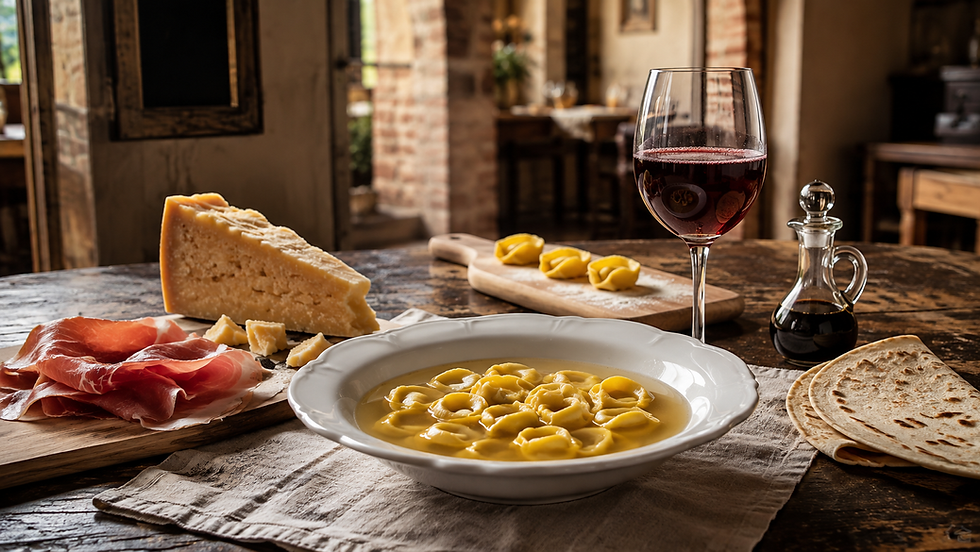
The core food vocabulary includes Parmigiano Reggiano, prosciutto, tortellini, tagliatelle, balsamic traditions, piadina and filled pasta. These foods are valuable not because they are famous, but because they reveal what local people historically had available and how they learned to preserve, transform and serve it. A serious food itinerary should include a market, bakery or producer in addition to restaurants. Observe how bread is used, which fats dominate, whether sauces are based on meat, vegetables or fish, and how seasonality changes the menu. When a preparation appears repeatedly across villages, that repetition is evidence of a regional system rather than coincidence.
Wine and the Table
Wine should be approached with the same regional logic. Important references here include Lambrusco, Sangiovese di Romagna, Pignoletto and regional sparkling wines. The best pairings are usually local because the food and wine evolved within the same agricultural environment. Rather than chasing the most expensive bottle, compare a regional wine with the dishes it traditionally accompanies. Acidity, tannin, salinity, bitterness and richness make more sense at the table than in an isolated tasting. A winery visit is especially useful when it includes discussion of soil, altitude, exposure and local grape varieties.
What to See and Why
A useful route includes Bologna, Modena, Parma, Ravenna, a food producer and one smaller Via Emilia city. These stops should not be treated as equal boxes to check. Choose one or two anchors each day and allow the movement between them to reveal the landscape. A small road through olive groves, a market town at midday or a hill village near sunset can be as important as a major monument. If a place is famous, arrive early or stay late enough to experience it outside peak visitor hours. The strongest regional itineraries create contrast between city and countryside, coast and interior, archaeology and everyday life.
How to Move
The practical transport strategy is excellent rail between cities and a car for countryside producers. Italy can look compact on a map while still requiring significant travel time, particularly in mountainous or rural areas. Avoid planning days that depend on perfect traffic, parking or ferry connections. If driving, group destinations geographically and leave time for unplanned stops. If using rail, build the itinerary around stations rather than forcing rail travel onto places it does not serve well. The goal is not maximum distance. The goal is enough time in each place to understand it.
Season and Rhythm
The strongest general period is spring and autumn, but season should be chosen according to the purpose of the trip. Harvests, food festivals, beach weather, snow, hiking conditions and religious celebrations all occur at different times. Seasonal travel also changes what appears on restaurant menus and market stalls. Morning is often best for markets and historic centers, midday for a long meal, and late afternoon for landscapes and smaller towns. This rhythm may look less efficient on paper, but it produces a much better experience on the ground.
What to Buy
Useful regional purchases include Parmigiano Reggiano, traditional balsamic products, cured meats, fresh pasta and regional wine. Buy fewer products with better provenance. Ask where something was made, which grape or milk was used, and whether the product is actually typical of the area. Specialist food stores, farm shops, enoteche and bakeries are usually more useful than generic souvenir stores. The purchase should help preserve a memory of territory, not simply carry an Italian flag on the packaging.
A Better Three-Day Structure
Day one should establish the main city or town and its food culture. Walk the historic core, visit one major cultural site, observe a market or commercial street and eat traditionally. Day two should move outward into the agricultural or natural landscape connected to the destination. Day three should introduce contrast: a smaller community, archaeological area, coast, mountain route, vineyard or craft tradition. This center–territory–contrast model is more useful than a list of attractions because it gives the traveler a working understanding of how the region functions.
Common Mistakes
The biggest mistake is trying to see too much. The second is eating without regional context. The third is assuming that the most photographed place is automatically the most representative. Leave room for ordinary life. Do not judge every town by nightlife or every restaurant by international service expectations. Local opening hours, meal times and traditions are part of the destination. Regional travel becomes richer when the visitor adapts to the place rather than demanding that every place behave the same way.
Why This Story Matters
Emilia-Romagna matters in Around Italy because it shows the country as a collection of territories rather than a single lifestyle brand. The food, architecture, agriculture and habits described here are specific responses to history and geography. That specificity is what makes Italian regional culture so durable. A complete guide should leave the reader able to explain not only what to visit, but why the place developed the way it did.
The Via Emilia as a Cultural Spine
The ancient road linking many of the region’s major cities remains one of the best ways to understand Emilia-Romagna. Piacenza, Parma, Reggio Emilia, Modena, Bologna and other centers developed distinct identities while remaining connected by trade and movement. Food traditions change along the route even when ingredients overlap. A traveler can therefore use the Via Emilia as an organizing principle: move city by city, compare pasta shapes, cured meats, cheeses, wines and civic architecture, and watch how local pride changes within relatively short distances.
Food Production Is Not a Theme Park
Parmigiano Reggiano, prosciutto, balsamic vinegar and fresh pasta attract culinary tourism, but the producers are working businesses. The best visits respect production schedules and focus on technique rather than staged entertainment. Seeing milk become cheese or understanding the difference between traditional balsamic and industrial condiment creates a much stronger appreciation of the final product.
Cities Beyond Bologna
Bologna deserves time, but Parma, Modena, Ravenna, Ferrara and smaller Via Emilia cities add essential contrast. Ravenna shifts the story toward Byzantine art and the Adriatic; Parma combines music, food and elegant urbanism; Modena connects craft food with modern industry; Ferrara presents a different Renaissance urban tradition. A complete regional trip should use at least two cities rather than treating Bologna as the whole region.
A Five-Day Emilia-Romagna Framework
Day one: Bologna for markets, porticoes and pasta. Day two: Modena for balsamic traditions, Parmigiano Reggiano context and the historic center. Day three: Parma for cured meats, cheese culture and elegant urban life. Day four: Ravenna for mosaics and the Adriatic side of the region. Day five: choose Ferrara, Reggio Emilia or a producer visit depending on interest. This structure works because it alternates major cities with food production and art rather than treating the region as one continuous eating tour. Rail makes the urban days easy, while a car or organized visit is useful when leaving the cities for dairies, acetaie or rural estates.
Why Emilia-Romagna Rewards Repetition
The region becomes more interesting when the traveler compares similar things in different places. Taste filled pasta in Bologna and again in Parma. Compare cured meats from neighboring provinces. Notice how Lambrusco changes across production zones. Look at the way Parmigiano Reggiano is discussed by a cheesemaker, a market vendor and a restaurant server. Repetition reveals nuance. This is the opposite of checklist tourism, where every meal has to be a completely new experience. Emilia-Romagna is built on a shared culinary language with powerful local accents. The more closely those accents are compared, the more sophisticated the region appears. That same principle applies to architecture and civic life. Porticoes, piazzas, medieval centers and Renaissance structures recur, but each city organizes them differently. A week along the Via Emilia can therefore feel coherent without becoming repetitive. The coherence is exactly what allows the traveler to notice difference.


Comments