
Italian Neapolitan Cauliflower Salad | Insalata di Rinforzo Napoletana

Insalata di rinforzo sits in the middle of the Neapolitan Christmas Eve table and refuses to leave it. Boiled cauliflower, pickled papaccelle, olives, capers and anchovies are turned together in a wide bowl, and that bowl stays out, covered with a cloth, through the days between the vigilia and the Epiphany. Whenever it empties a little, somebody adds more to it. That habit is the meaning of the name.
It is not a salad in the modern sense but a preserved vegetable dish built on acidity, salt and oil, closer to a sott aceto than to anything green. The cauliflower is boiled until it just yields and then left to take up vinegar for hours, which is why a plate served on the twenty sixth of December tastes rounder than the same bowl on the twenty fourth.
What follows is the version cooked in Naples, not a lightened interpretation. The cauliflower is salted in its water and cooled dry on a rack, the papaccelle are never rinsed, the anchovies are dissolved rather than laid on top, and the dressing is built in the bowl so the vegetable absorbs it while still warm. Everything else is timing.
Yield: 6 side servings. Prep: 35 minutes. Cook: 15 minutes. Rest: at least 4 hours, ideally overnight. Difficulty: easy. Course: contorno and antipasto. Region: Campania, Naples and its province.
The Story
The dish belongs to the cenone della vigilia, the long meatless dinner eaten in Naples on Christmas Eve. Catholic observance kept meat off the table, so the meal was built on fish, vegetables and preserves, and this salad was its vegetable anchor. It arrived alongside the capitone and the baccala, and it was expected to still be there at lunch the next day.
Rinforzo means reinforcement, and it names an action rather than an ingredient. As the bowl was eaten down over the twelve days of Christmas, cooks reinforced it: more olives, more pickled peppers, more capers, another splash of vinegar, sometimes fresh cauliflower boiled that morning. The salad was never remade, only extended, growing sharper as it went. That is preservation logic dressed as a Christmas tradition, and it worked because vinegar and salt kept the bowl safe on a cold larder shelf for a fortnight.
Papaccelle are what make it unmistakably Neapolitan. They are squat, ribbed, thick walled peppers grown around Acerra and the Vesuvian plain, preserved whole in wine vinegar in late summer and opened at Christmas, which is exactly why they appear in a December dish. Their vinegar is part of the recipe too, and without them the salad becomes generic pickled cauliflower. The cauliflower itself contributes texture rather than flavour, and that neutrality is its job: it lets the vinegar, the anchovy and the olive do the talking.
Ingredients
For the cauliflower
Cauliflower, 1 large head, about 2 1/4 lb (1 kg) untrimmed
Water, 4 quarts (3.8 l)
Coarse sea salt, 2 tbsp (36 g)
White wine vinegar, 2 tbsp (30 ml), for the cooking water
For the pickled and preserved vegetables
Papaccelle napoletane in vinegar, drained, 7 oz (200 g)
Gaeta olives, whole with pits, 3 1/2 oz (100 g)
Green Sicilian olives, pitted and halved, 2 1/2 oz (70 g)
Salted capers, rinsed, 2 tbsp (20 g)
Pickled carrot and celery, drained, 3 1/2 oz (100 g)
Pickled small onions, drained, 1 1/2 oz (40 g)
For the dressing
Anchovy fillets in olive oil, drained, 6
Extra virgin olive oil, 1/3 cup (80 ml)
White wine vinegar, 3 tbsp (45 ml)
Vinegar from the papaccelle jar, 2 tbsp (30 ml)
Garlic clove, peeled and left whole, 1
Freshly ground black pepper, 1/2 tsp (1 g)
For finishing
Flat leaf parsley, chopped, 2 tbsp (6 g)
Dried oregano, 1/2 tsp (0.5 g)
Extra virgin olive oil, 1 tbsp (15 ml), added at service
Crushed red pepper flakes, a small pinch, optional
Preparation
Step 1

Trim the outer leaves, cut the stalk flush with the base, then turn the head upside down and cut the florets away from the core from underneath rather than chopping through the top, which keeps them intact instead of shattering the head into crumbs. Aim for pieces about 1 1/2 inches (4 cm) across, splitting the large ones through the stem so each has a flat face. Peel the inner core, slice it into coins and cook it too.
Step 2
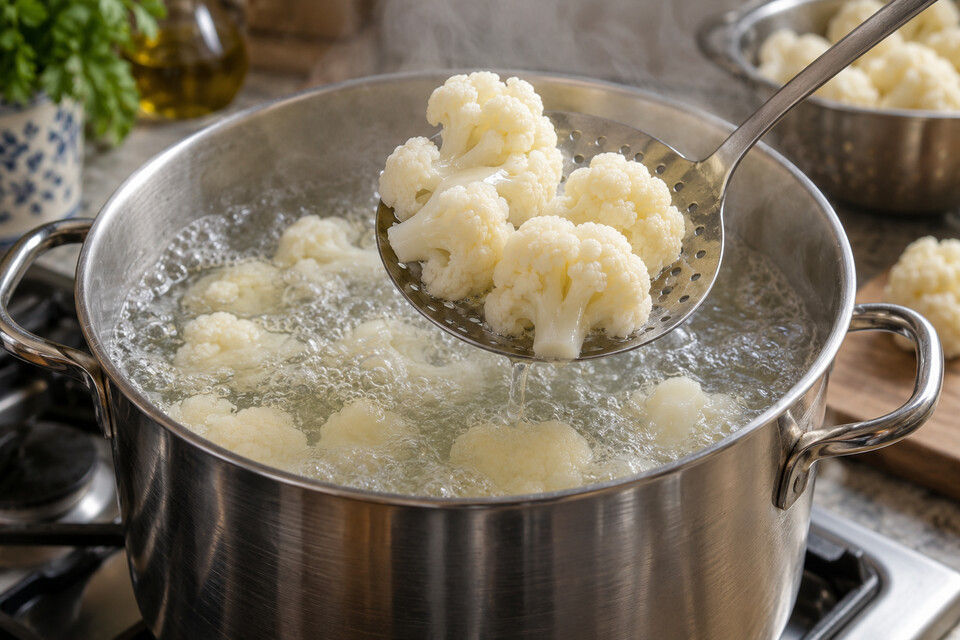
Bring the water to a rolling boil, add the coarse salt and the 2 tablespoons of white wine vinegar, then put in all the florets at once. The vinegar keeps the cauliflower pale rather than grey, and the salt has to be in the water because this is the only chance the vegetable gets to season from the inside. Boil uncovered 8 to 10 minutes, testing from 7, until a knife tip meets slight resistance at the stem.
Step 3
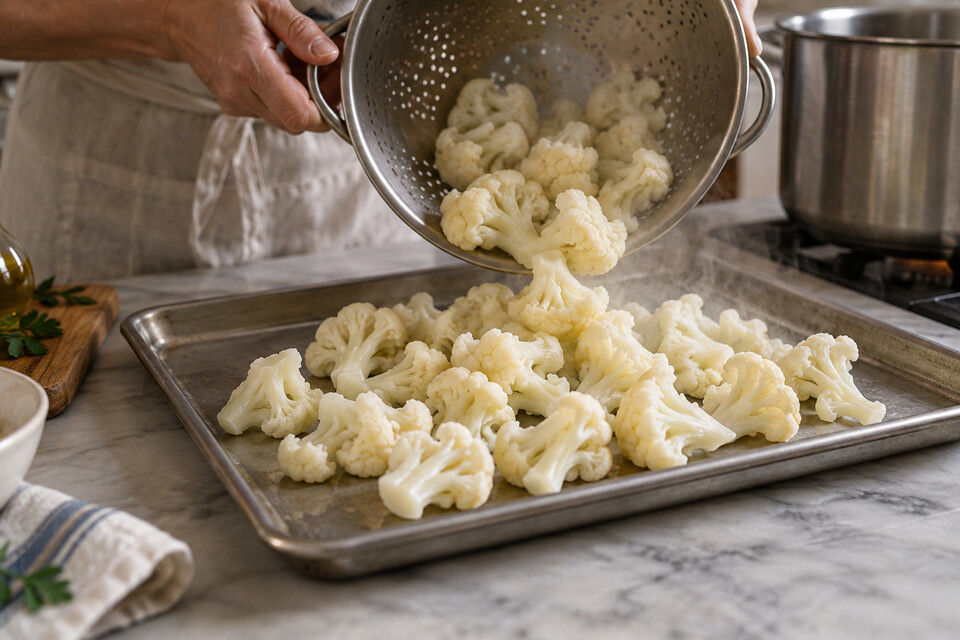
Lift the florets out with a spider and spread them on a wire rack over a tray, flat face down. Do not plunge them into cold water: an ice bath fills every crevice with water that later dilutes the dressing and puddles in the bowl. Air cooling lets the surface steam dry instead. Leave them about 10 minutes, until warm rather than hot.
Step 4

Lift the papaccelle from the jar, drain them briefly and cut them into wide strips about 1/2 inch (1.5 cm) across, discarding the seeds and pale inner ribs. Do not rinse them: the film of vinegar on the flesh is a seasoning, and washing it off removes the sharpness the dish is built on. Reserve 2 tablespoons of the jar vinegar for the dressing.
Step 5
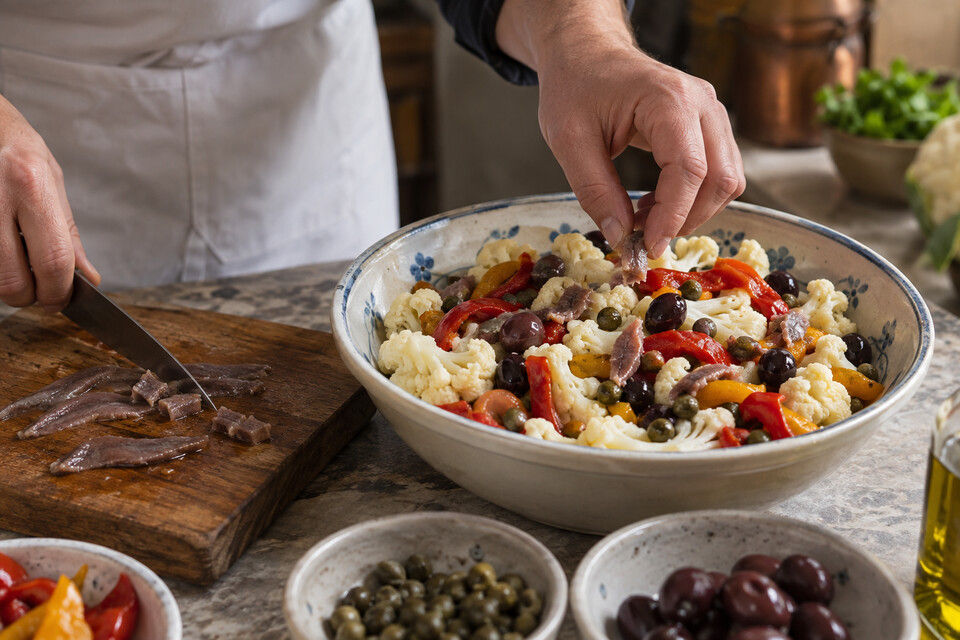
Rinse the salted capers under cold running water, then soak them in fresh cold water for 10 minutes and drain, since they carry far more salt than the recipe needs. Leave the Gaeta olives whole with their pits, since they hold texture and flavour much better that way, and halve the green olives so they take up dressing. Drain the pickled vegetables, pressing them lightly in a sieve.
Step 6
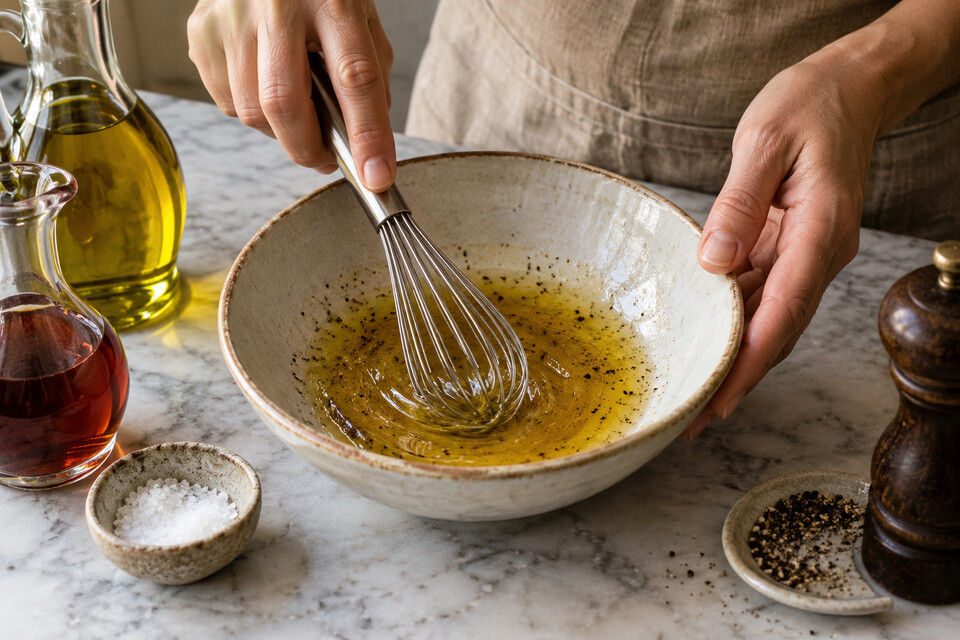
Rub the inside of a wide ceramic or glass bowl with the cut face of the garlic clove and discard it. Put the anchovy fillets in the bottom and crush them to a paste against the side with a fork, adding a spoonful of oil, until no fillet shapes remain. Whisk in the rest of the oil, both vinegars and the black pepper until the dressing turns slightly cloudy and holds together.
Step 7

Tip the warm florets into the bowl and turn them gently with two large spoons until every piece is coated. This is the most important timing decision in the recipe: warm cauliflower draws vinegar and oil into the stem, while cold cauliflower only wears the dressing. Now add the papaccelle, both olives, the capers and the pickles, and fold again, lifting from underneath rather than stirring so the florets stay whole.
Step 8
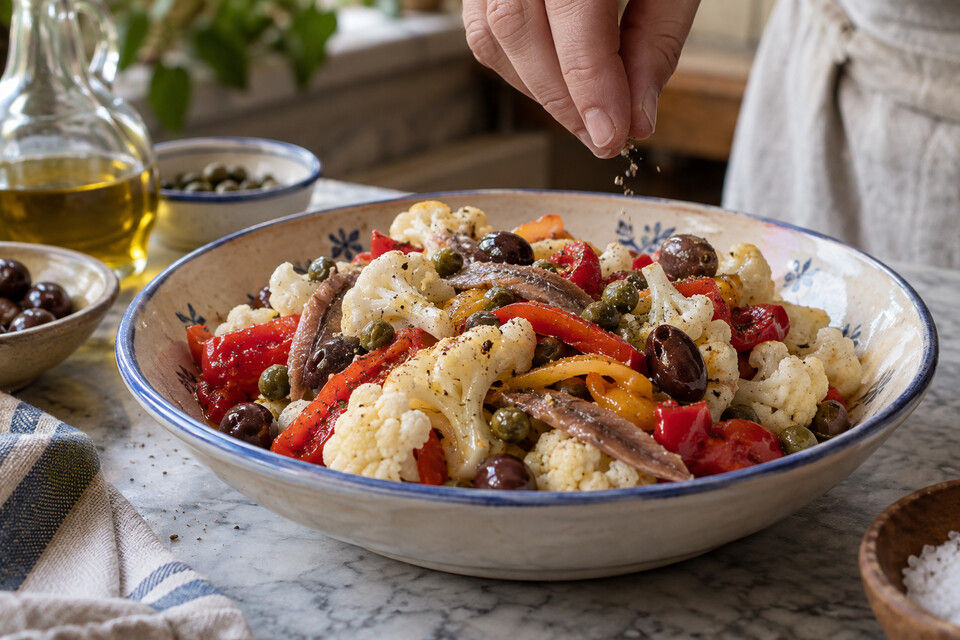
Taste and adjust, remembering that anchovies, capers and olives have already brought a great deal of salt and that the flavour concentrates as the salad sits. Scatter over the oregano and half the parsley, cover the bowl with a plate or a cloth and leave it at cool room temperature for at least 4 hours, or refrigerate overnight for a far better result. Turn it over once during the rest.
Plating
This is served at cool room temperature, never cold and never warmed. Take the bowl out 40 minutes before it goes on the table. Cold olive oil turns cloudy and thick, the vinegar smells sharper than it tastes, and the cauliflower reads as bland until it comes back to around 64°F (18°C).
Serve it in the wide bowl it rested in, not on individual plates. Turn it over one last time and lift the olives and pepper strips up through the cauliflower so the red shows near the surface.
Finish at the table: a spoonful of raw olive oil, the rest of the parsley, a pinch of chilli if the household likes it. Put out a small bowl for the olive pits. Plain crusty bread is the only accompaniment needed, because the liquid at the bottom of the bowl is the best part and has to be mopped up.
Professional Technique
The technical spine of this recipe is thermal absorption. Cauliflower straight out of boiling water has expanded cell walls and an open structure, and in that state it draws vinegar and oil into the stem tissue as it cools. Once it reaches room temperature the structure closes and the dressing can only coat the surface. Dressing the salad warm is the mechanism that seasons the vegetable through.
The second technique is emulsifying the anchovy. Crushed alone, fillets stay in visible fragments that distribute unevenly. Crushed against the bowl with a little oil, they break into a paste whose proteins and salt act as a weak emulsifier, giving a dressing that clings to the florets instead of separating into two layers. If you can still see pieces of anchovy, you stopped too early.
The third is the balance between three vinegars. The cooking water vinegar is about colour, since acid stabilises the flavones that turn grey in alkaline tap water. The dressing vinegar is structural. The pickle vinegar is aromatic and brings pepper flavour with it. Taking all the acidity from one bottle gives a salad that is sour without being complex.
Texture and Moisture Control
The usual failure here is water, from three places: the boiling, the pickles and the salt. Boiled cauliflower holds water in every crevice, pickled vegetables keep draining brine long after you think they are dry, and salt goes on pulling moisture out over the rest. Uncontrolled, all of it collects at the bottom and the salad sits in a thin pale liquid instead of a glossy dressing.
Control it at the source: press the pickles in a sieve, reserve the papaccelle vinegar deliberately, and cool the cauliflower dry. After the rest a little liquid at the bottom is correct, and turning the salad redistributes it. If it looks genuinely watery, spoon off the thin liquid sitting under the oil, add a tablespoon of fresh oil and turn again.
Texture is the other half. Acid gradually softens the pectin in the stem, so a floret perfect on day one is noticeably softer on day three; that is expected in a salad meant to change, and overcooking at the start simply removes the margin. The olives, papaccelle and pickled celery supply the contrast that keeps the bowl interesting: chewy, firm and crisp against yielding cauliflower.
Professional Mise en Place
This is a make ahead dish. Nothing about it improves in the last hour and almost everything improves overnight, so dress it a full day before it is needed and do nothing on the day except bring it back to temperature.
Equipment and tools
Large pot, 6 quart (5.7 l) or larger, for boiling uncovered
Spider skimmer and a wire rack set over a sheet tray for air cooling
Wide low bowl in ceramic or glass, never metal, since vinegar reacts with it
Small fork for crushing the anchovies and a whisk for the dressing
Fine mesh sieve for rinsing the capers and draining the pickles
Prepared ahead
The whole salad, dressed and covered, 1 day ahead and refrigerated
Cauliflower boiled, cooled and refrigerated undressed, up to 2 days
Papaccelle cut and their vinegar measured off, up to 3 days ahead
Capers rinsed and soaked, up to 2 days ahead, covered in a little olive oil
Anchovy and oil paste, up to 2 days ahead, refrigerated and covered
Service setup
Bowl out of the refrigerator 40 minutes before service, covered
Turned over once with two large spoons just before it goes to the table
Finishing oil, parsley and chilli held separately and added at the last moment
A small empty bowl on the table for olive pits, and bread alongside
Extra vinegar and oil within reach for reinforcing the bowl later
Chef Tips
Buy papaccelle rather than approximating them. Roasted red peppers, piquillo and fresh peppers in vinegar are not equivalents: they are too sweet, too soft or too thin walled. If you cannot find them, use a good pickled friggitello and accept a milder salad.
Reinforce the bowl the way the name intends. On the second and third day add a handful of preserved vegetables, a few more olives, a spoonful of vinegar and a little oil, then turn it over. A bowl reinforced twice tastes considerably better on day three than the same bowl left alone.
Taste for salt only after the rest, never before. Anchovies, capers, olives and brine each bring salt, and it migrates into the cauliflower for hours. A bowl that seemed slightly underseasoned when you covered it is very often right the next morning, while one that seemed right will be too salty.
Keep the olive pits in. A pitted olive floods with vinegar within hours and turns soft and washed out, while a whole one keeps its flesh firm across several days. Tell your guests, put out a bowl for the pits, and let the olives be olives.
Common Mistakes
Overboiling the cauliflower. Florets cooked to complete softness have no structure left to survive four hours of vinegar, let alone three days. Start testing at 7 minutes and pull them while the knife still meets slight resistance at the stem, because they keep softening in the acid.
Shocking it in ice water. It looks like the careful thing to do and it ruins the dish. Every crevice fills with water, which leaches into the dressing and leaves a thin pale liquid at the bottom of the bowl. Cool the cauliflower dry on a rack, cut side down.
Rinsing the papaccelle. The vinegar clinging to the peppers is an ingredient, not residue, and washing it away removes both acidity and the pepper aroma that carries it. Drain them briefly and reserve two tablespoons of the jar vinegar for the dressing.
Leaving the anchovies in pieces. Visible fillets laid over the top look rustic and season nothing. Crushed to a paste with a little oil they emulsify the dressing and spread salt and savour evenly through every floret, which is the only reason they are in the recipe.
Serving it straight from the refrigerator. Cold flattens the olive oil, sharpens the vinegar and mutes everything else, so the salad tastes harsh and dull at once. Forty minutes on the counter is the whole difference.
Wine Pairing
Falanghina del Sannio DOC: The bottle this salad is actually drunk with in Campania. Vinegar flattens soft wines instantly, and Falanghina has the brisk citrus and green apple structure to stand level with it. Its faintly bitter almond finish sits well against the capers and the anchovy salt.
Lacryma Christi del Vesuvio DOC: Grown on volcanic slopes a few miles from where the papaccelle are cultivated, so the pairing is geographic as much as gastronomic. The white has a mineral, faintly smoky edge from the ash soils that meets the sulphurous depth of boiled cauliflower.
Greco di Tufo DOCG: The most structured Campanian white, and the choice once the salad has been reinforced for two days and turned assertive. Greco carries real body and a stony character from the tuff soils of Irpinia that meets the anchovy head on, best served around 52°F (11°C).
Fiano di Avellino DOCG: A gentler partner for the first evening, when the vinegar has had only four hours to work. Fiano brings hazelnut and pear aromatics and a waxy texture that softens the salt of the olives instead of arguing with it.
Franciacorta DOCG: Not local, but technically the most effective option for a dish this acidic. A brut metodo classico brings carbonation and bready autolytic depth, and the bubbles lift the olive oil off the palate between mouthfuls. Choose brut or non dosage, never anything with visible sugar.
Storage & Reheating
This salad is built to be stored, and the storage is part of the recipe. Keep it covered in a ceramic or glass bowl in the refrigerator for up to 5 days. Never store it in metal or uncoated aluminium, since the vinegar reacts with the surface and puts a dull metallic taste through the bowl within a day.
It is never reheated. This is a contorno that belongs at cool room temperature, and heat destroys it: cauliflower that has sat in acid collapses completely when warmed, and the raw olive oil turns heavy. The only temperature management required is taking the bowl out 40 minutes before serving so the oil clears and the aromatics open. In a very cold kitchen, an hour is better.
Do not freeze it. Boiled cauliflower turns to watery pulp on thawing, the pickles lose all crispness and the emulsion separates irreversibly. The last of the bowl on day five, drained and chopped small, makes a very good filling for a savoury pie.
Nutrition
Per serving, based on 6 side portions:
Calories: 215 kcal
Total Fat: 17 g
Saturated Fat: 2.4 g
Trans Fat: 0 g
Unsaturated Fat: 14 g
Cholesterol: 5 mg
Sodium: 980 mg
Total Carbohydrates: 12 g
Fiber: 4.5 g
Total Sugars: 4 g
Added Sugars: 0 g
Protein: 5 g
Lactose: 0 g
Principal micronutrients: vitamin C, vitamin K, folate, potassium, vitamin B6, manganese
These figures are estimates. Sodium is the most variable number here, since it depends on how thoroughly the capers are rinsed and how salty the particular olives and anchovies are.




Comments