
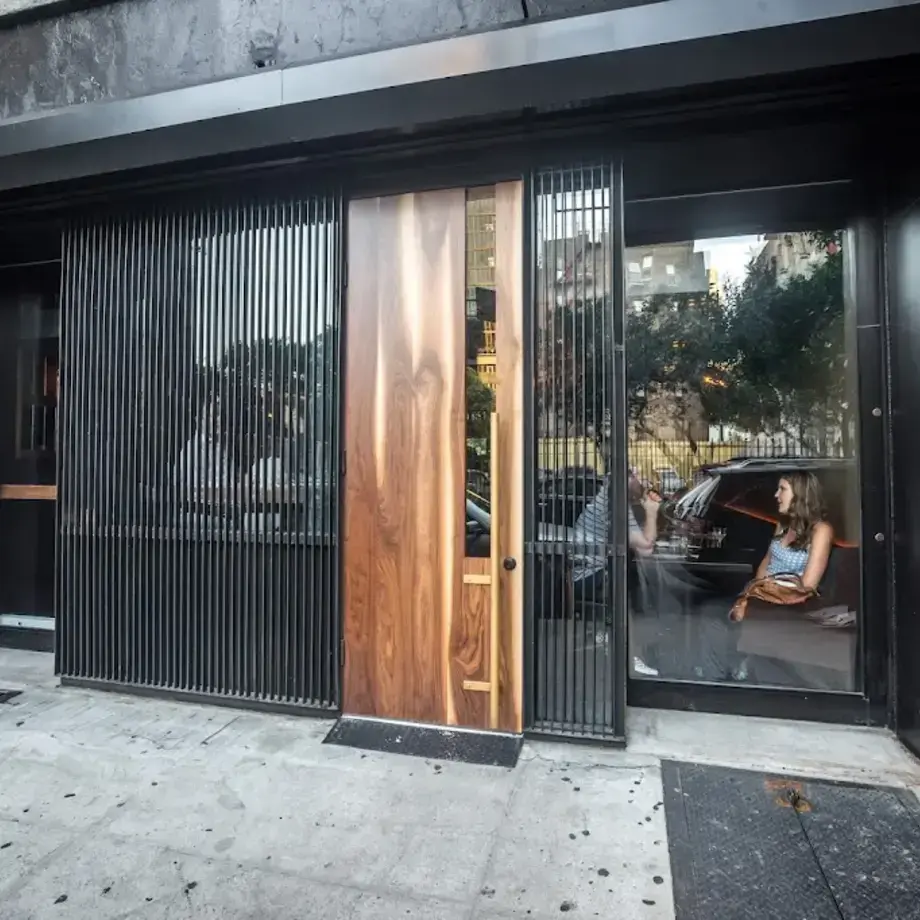
Restaurant Review: Forsythia New York
- 1 day ago
- 5 min read
Restaurant Review: Forsythia New York
★★★½☆ 3.5/5, Good
Forsythia is a serious Roman influenced Italian restaurant.
The identity is clear. The pasta is made in house. The menu is seasonal. The wine program is unapologetically Italian. And unlike many contemporary Italian restaurants in New York, Forsythia does not appear interested in hiding weak ideas under luxury ingredients.
That already earns respect. But Forsythia also has a problem. The restaurant sometimes moves too freely between Rome, broader regional Italy and contemporary New York interpretation. That does not destroy the identity. It simply prevents the restaurant from feeling completely disciplined.
Three and a half stars. Good.
Italian Identity
★★★½☆ 3.5/5
This receives the provisional maximum. Forsythia describes itself as a Roman trattoria, and the menu contains enough evidence to support that claim.
Cacio e Pepe. Gricia. Carbonara. Amatriciana. Supplì. Maritozzo.
Those dishes form a recognizable Roman backbone. More importantly, they are not isolated references placed onto an otherwise generic menu. The restaurant also works with handmade pasta, Italian cheeses, regional wines and preparations that broadly belong to Italian culinary logic.
The identity becomes less precise when dishes such as agnolotti, Busiate alla Trapanese or more broadly Northern Italian preparations join a menu positioned primarily around Rome. There is nothing wrong with cooking food from multiple Italian regions. But if a restaurant claims Rome as its central identity, Rome should remain the strongest voice.
Three and a half. Strong.
Antipasti
★★★½☆ 3.5/5
The antipasti are coherent and generally restrained. The Cacio e Pepe Supplì immediately makes sense. Fried rice, buffalo mozzarella and pecorino. It takes a Roman street food structure and pushes the cheese and pepper identity without turning the dish into something unrecognizable.
Fiori di Zucca with ricotta and salsa rossa also belongs comfortably in this restaurant. The current Panzanella is farther from Rome geographically, but still functions naturally within an Italian seasonal menu. Tomatoes. Cucumber. Roasted peppers. Mozzarella. Focaccia. Nothing requires a long explanation. That is a positive sign.
Three and a half.
Pasta
★★★★☆ 4.0/5
Pasta is the principal reason to come. The restaurant maintains a dedicated group of Roman Classics, including cacio e pepe, gricia, carbonara and amatriciana. That is an important commitment.
These are not forgiving dishes. Carbonara can become scrambled eggs. Cacio e pepe can become glue. Gricia can become greasy. Amatriciana can become an over sweet tomato sauce with guanciale dropped into it. When a restaurant places all four on one menu, it is inviting comparison. That requires confidence.
The seasonal side of the pasta program is also interesting. Busiate alla Trapanese with tomatoes, almonds and chile breadcrumbs has a clear Sicilian logic. Agnolotti with short rib, duck jus and chive is richer and more Northern in character. Spaghetti Puttanesca with Taggiasca olives, capers and ventresca tuna stays closer to recognizable Italian structure. Tagliatelle al Mattarello with zucchini, provolone and basil is another dish that does not need unnecessary complexity.
Four stars. Very good pasta program.
Secondi
★★★½☆ 3.5/5
The current secondi section is small. That is good. Forsythia does not need twelve main courses.
The Cotoletta with tonnato, green tomato and herbs is an interesting dish. The combination of fried veal and tonnato moves beyond traditional presentation, but the flavors remain Italian enough to make sense. Trota en Crosta with Umbrian lentils and dandelion is more restrained and perhaps more convincing. The Bistecca is exactly what it should be conceptually. Good beef. Seasonal vegetables. Do not overthink it.
Three and a half.
Desserts
★★★★☆ 4.0/5
Dessert is surprisingly strong conceptually. The Maritozzo is important because it reinforces the Roman identity. It also gives the restaurant something more interesting than the obligatory tiramisù.
Torta Barozzi brings another specifically Italian reference into the menu. Chocolate. Espresso. Almond. Crema inglese. Fruit. Then there is Zabaglione Gelato with Marsala. That is exactly the kind of dessert language we want to see in an Italian restaurant.
Four stars. Very good.
Service
★★★★☆ 4.0/5
Service appears to be a real strength. Recent public evidence repeatedly describes the staff as knowledgeable, attentive and genuinely engaged. Wine knowledge receives particular praise. That matters because Forsythia’s beverage program is serious enough to require staff who can actually explain it.
There are occasional reports of pacing problems and uneven hosting, but the broader service pattern remains positive. The restaurant also applies a significant service charge. That raises expectations. If the restaurant is explicitly charging for professional hospitality, professional hospitality must be delivered. The evidence suggests that most of the time, it is.
Four stars.
Atmosphere
★★★½☆ 3.5/5
Forsythia is small. That helps. The restaurant feels closer to a neighborhood place than a hospitality machine. Brick walls, a compact room and an intimate scale support the food. It does not attempt to manufacture Roman nostalgia. That is good. It simply provides a room where pasta and wine make sense.
Some operational complaints exist, particularly around seating comfort and occasional delays, so this stops at three and a half.
Wine Program
★★★★½ 4.5/5
This is one of Forsythia’s best categories. The restaurant does not treat Italian wine as a handful of famous names.
The program has shown real regional interest. Lazio. Sicily. Campania. Valle d’Aosta. Liguria. Marche. Tuscany. That is what an Italian wine program should do.
The list should support the menu and also teach people something. Cesanese should exist beside Aglianico. Bellone should exist beside more familiar whites. A serious Italian restaurant should make guests understand that Italy has hundreds of wines worth drinking. Forsythia moves in that direction.
Four and a half. Excellent.
Value
★★½☆☆ 2.5/5
This is the restaurant’s biggest weakness. The current five course dinner is $98. The pasta tasting menu is also $98. A la carte pasta generally sits around thirty to forty dollars. The cotoletta is $68. The trout is above fifty. Then there is the restaurant’s service charge.
That changes the value calculation immediately. Forsythia is not cheap neighborhood Roman cooking. It is expensive contemporary New York Italian dining. There is nothing inherently wrong with that. But the price has to be acknowledged.
Two and a half.
What We Would Order
Start with the Cacio e Pepe Supplì. Then Fiori di Zucca. For pasta, order one of the Roman classics. Gricia would be the first test. Then Amatriciana or Cacio e Pepe. If we wanted to see the kitchen move outside Rome, the Busiate alla Trapanese would be the choice. For the second course, the Trota. Finish with Maritozzo or Zabaglione Gelato. And absolutely use the wine program.
What We Would Skip
We would not automatically order the most expensive dishes. Forsythia’s strongest argument is pasta and Roman identity. Not luxury. The bistecca may be excellent, but it is not necessary to understand this restaurant. We would also avoid turning the meal into a tour of every Italian region. Stay close to Rome. That is where Forsythia becomes most convincing.
The Central Problem
Forsythia has a strong identity. It simply does not always trust it enough. The restaurant calls itself Roman. The Roman dishes are some of the most convincing parts of the menu. The supplì works. The pasta classics work conceptually. The maritozzo works. The Italian wine program works. That should be the center.
The farther the restaurant travels across Italy, the more the identity becomes general Italian rather than Roman. Again, that is not bad cooking. It is an editorial issue. A restaurant becomes stronger when the guest can understand its point of view without reading an explanation. Forsythia is almost there. The next step is not more creativity. It is more focus.
Zafferano & Co. Scorecard
Italian Identity: 3.5/5
Food Quality: 4.0/5
Technical Execution: 4.0/5
Menu Consistency: 3.5/5
Originality Without Distortion: 4.0/5
Service: 4.0/5
Wine Program: 4.5/5
Atmosphere: 3.5/5
Value: 2.5/5
Would We Return?: 4.0/5
Final Rating
★★★½☆ 3.5/5, Good
Forsythia is a serious Italian restaurant with one of the better pasta and wine combinations in downtown New York. The Roman foundation is convincing. The pasta program is very good. The wine program is excellent. Service is strong. The weakness is price and a menu that occasionally expands beyond the identity it should be protecting.
Good restaurant. Serious pasta. Excellent wine. It would become stronger by becoming even more Roman.
Three and a half stars.



Comments