

Restaurant Review: Via Carota New York
- 1 day ago
- 5 min read

Restaurant Review: Via Carota New York
★★★½☆ 3.5/5, Good
Via Carota has become one of those New York restaurants where separating the restaurant from its reputation is difficult.
The room is famous. The chefs are famous. The wait is famous. The salads are famous. At some point, almost everything surrounding the restaurant became part of the mythology of eating there.
None of that earns points.
What matters is whether Via Carota still behaves like the Italian osteria it claims to be. For the most part, it does.
The restaurant has a coherent philosophy built around seasonality, vegetables, simple preparations and an Italian idea of eating that is much more convincing than the standard Manhattan collection of luxury ingredients.
But simplicity deserves scrutiny too. When very simple food becomes expensive, difficult to access and culturally fashionable, it has to be exceptionally well executed.
Italian Identity
★★★½☆ 3.5/5
Maximum provisional score. Via Carota has credible Italian foundations.
The inspiration is connected directly to Tuscany and to Rita Sodi’s background, but the restaurant wisely does not trap itself inside a rigid regional menu. Instead, the identity comes through the style of cooking: seasonality, vegetables, olive oil, bitterness, simple grilling, braised and fried meats, food meant to be shared rather than photographed for twenty minutes.
That feels Italian. More importantly, the restaurant usually avoids the desperate luxury vocabulary that damages many expensive Italian restaurants in New York.
No need to put caviar on everything. No need to shave truffle over everything. No need to explain that a tomato is Italian six times.
Three and a half.
Antipasti and Vegetables
★★★★☆ 4.0/5
This is probably Via Carota’s most convincing category. And that says something important about the restaurant.
Vegetables are not treated as punishment for the person at the table who did not order meat. They are food.
The famous approach to greens, seasonal vegetables and restrained dressings represents exactly the kind of cooking that looks easy until someone does it badly. A serious vegetable dish requires selection, cleaning, blanching or grilling, seasoning, acid, oil and temperature to be right. There is nowhere to hide.
The Insalata Verde remains one of the dishes most closely associated with Via Carota. A salad becoming one of a restaurant’s signatures may sound ridiculous. It is actually a compliment.
Four stars.
Pasta
★★★½☆ 3.5/5
Pasta is important here without becoming the entire restaurant. That is healthy.
Too many Italian restaurants in New York act as though Italian cuisine begins with spaghetti and ends with rigatoni. Via Carota understands that pasta is part of the meal, not the whole country.
The restaurant’s pasta cooking has a strong reputation, but we are not giving it four stars simply because people wait outside to eat it. At this level, texture, seasoning and sauce integration have to be consistently excellent.
Without direct verification of the current pasta dishes, three and a half is the responsible score. Good.
Secondi
★★★½☆ 3.5/5
The restaurant becomes more interesting when it moves into preparations such as grilled octopus and fried rabbit.
The fried rabbit is particularly important conceptually. Rabbit is normal food in large parts of Italy. In America it is still treated as something exotic enough to require explanation.
A restaurant willing to keep preparations like this visible retains more culinary credibility than one that reduces Italian secondi to branzino and chicken Milanese.
Three and a half. Good.
Desserts
★★★☆☆ 3.0/5
Dessert is not the central reason to eat at Via Carota. That is perfectly acceptable.
A restaurant does not have to dominate every category. Three stars. Sufficient.
Service
★★★☆☆ 3.0/5
Via Carota’s popularity creates its biggest operational challenge.
The restaurant is extremely busy. There can be a wait. There is constant pressure on the room. That means service has to manage people before they even sit down.
And this is where famous restaurants frequently lose perspective. Customers should never feel lucky that a restaurant has agreed to feed them. The restaurant should still feel lucky that customers came.
Via Carota generally maintains a warm osteria philosophy, but the demand surrounding the restaurant inevitably creates friction. Three stars. Competent. No bonus for being difficult to get into.
Atmosphere
★★★½☆ 3.5/5
The room works. It feels lived in rather than designed by a hospitality company attempting to manufacture old Italy. That distinction matters.
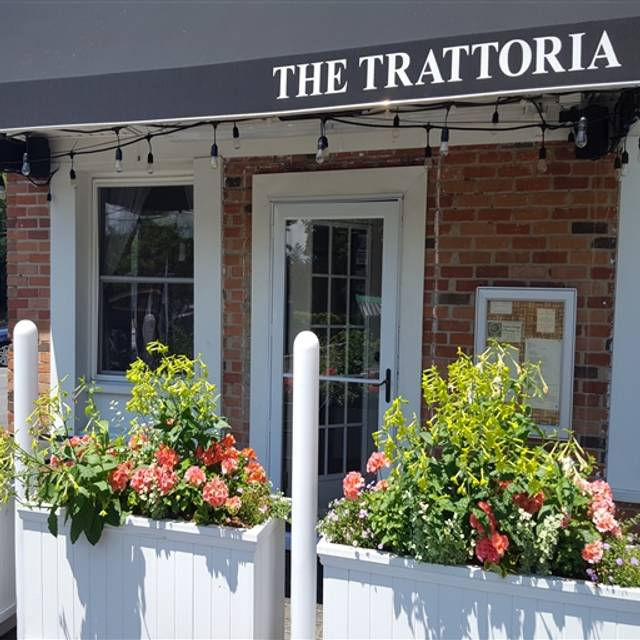
Wood. Objects. A slightly imperfect sense of organization. A real neighborhood setting. Outdoor tables on Grove Street.
The restaurant understands that an Italian dining room should not feel like a showroom. But the popularity can damage the very atmosphere people are coming to experience.
An osteria should feel spontaneous. Waiting forever to enter one is the opposite of spontaneous. Three and a half.
Wine Program
★★★½☆ 3.5/5
The wine program fits the restaurant. That is more important than having an enormous cellar.
A vegetable driven, seasonal Italian menu needs wines with acidity, freshness and enough diversity to move between vegetables, fish, pasta and meat. The program appears to understand that.
Three and a half.
Value
★★½☆☆ 2.5/5
Here we become considerably less romantic.
Via Carota is based on the vocabulary of simple Italian cooking: vegetables, pasta, beans, greens, rabbit, olive oil.
These foods can be extraordinary. But part of their beauty is that Italian cuisine historically makes extraordinary things from ordinary ingredients. When ordinary ingredients acquire fashionable West Village pricing, the calculation changes.
We are willing to pay for excellent sourcing. We are willing to pay for labor. We are willing to pay for New York rent. We are not willing to pretend price disappears simply because a restaurant is famous.
Two and a half.
What We Would Order
Insalata Verde. One or two seasonal vegetable preparations. A pasta selected from what the kitchen is doing best that day. Fried rabbit if available. Or grilled octopus. Then stop.
Via Carota should be eaten like an osteria, not attacked like an all you can eat restaurant.
What We Would Skip
Anything ordered simply because TikTok or Instagram says it is mandatory. Anything that seems disproportionately expensive relative to what is actually on the plate. And ordering six vegetable dishes just so the table can reproduce photographs everybody has already seen.
Food first. Hype second.
The Central Problem
Via Carota’s greatest achievement is also now its greatest danger.
It made simple Italian food desirable. Then New York turned that simplicity into luxury.
There is something almost absurd about people waiting extensively for the privilege of eating food inspired by a culture where the osteria is supposed to be one of the least pretentious forms of dining.
That contradiction is not entirely Via Carota’s fault. But the restaurant now lives inside it.
The kitchen therefore has to resist becoming impressed with itself. Keep the vegetables excellent. Keep the cooking restrained. Keep the seasoning precise. Keep the restaurant Italian in spirit rather than fashionable in vocabulary.
Because the moment Via Carota starts believing its mythology, the entire idea falls apart.
Zafferano & Co. Scorecard
Italian Identity: 3.5/5 Food Quality: 3.5/5 Technical Execution: 3.5/5 Menu Consistency: 3.5/5 Originality Without Distortion: 4.0/5 Service: 3.0/5 Wine Program: 3.5/5 Atmosphere: 3.5/5 Value: 2.5/5 Would We Return?: 3.5/5
Final Rating
★★★½☆ 3.5/5, Good
Via Carota is one of the more convincing Italian restaurants in New York because it understands something very simple: Italian food does not need to show off.
The vegetables matter. The season matters. The ingredient matters. The cooking matters.
The problem is everything that has accumulated around that simplicity: the hype, the wait, the prices, the mythology.
Strip those away and there appears to be a genuinely good Italian osteria underneath.
Three and a half stars. Good. Not sacred.



Comments