
Italian Lombard Milk Cake | Torta di Latte Lombarda
Updated: 7 days ago

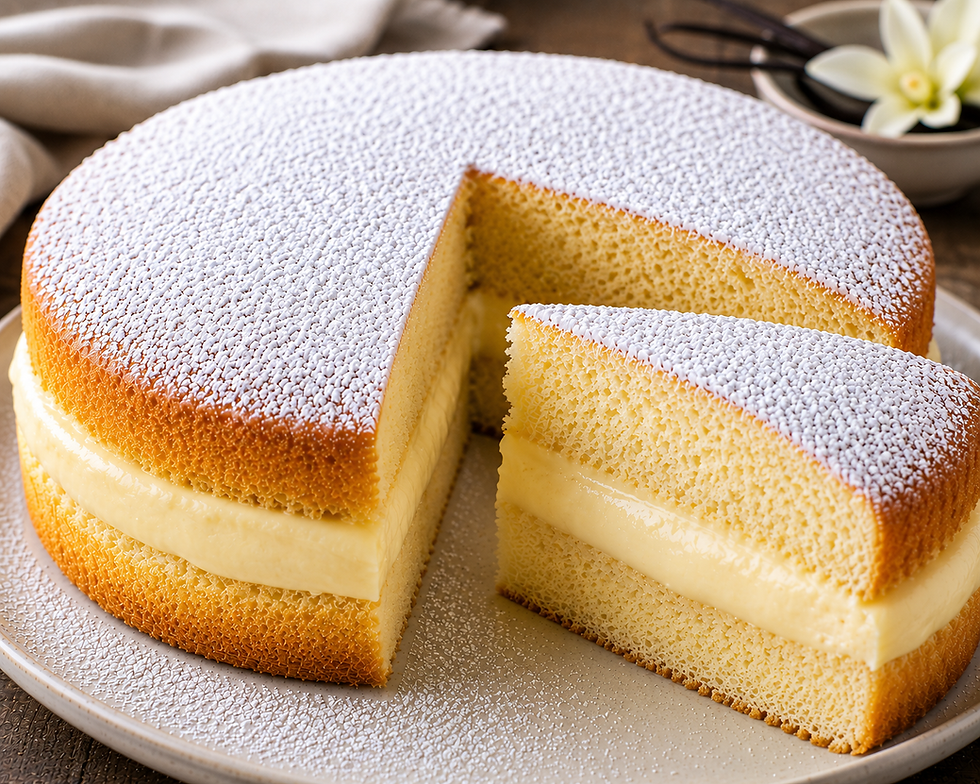
Italian Lombard Milk Cake — Torta di Latte Lombarda is built around Lombard bread-and-milk cake, supported by eggs, sugar, raisins, hazelnuts, caramel, and vanilla cream. The recipe succeeds when those elements remain distinct yet connected, producing golden cake with moist crumb, smooth cream, caramel, and crisp hazelnuts. This version retains the verified quantities attached to the original Zafferano & Co. recipe and organizes them into a professional workflow with US measurements first and metric equivalents in parentheses whenever the source provides them.
The critical instruction is to soak 25 to 30 minutes, hydrate 10 minutes, and bake at 350°F (175°C) until set but moist. It governs browning, moisture, doneness, and the service window. Read every stage before beginning, prepare the listed tools, and keep warm cake with caramel, vanilla cream, and hazelnuts ready before the principal component reaches its endpoint. Serve as soon as the specified rest, cooling, or finishing stage is complete.
The Story
Torta di Latte Lombarda is a Lombard bread-and-milk cake that turns everyday pantry ingredients into a moist baked dessert with strong regional economy and identity.
The dish's Italian name is more than a label: it identifies the ingredient relationship and the cooking logic that should remain recognizable on the plate. Lombard bread-and-milk cake provides the central flavor, while eggs, sugar, raisins, hazelnuts, caramel, and vanilla cream create depth, contrast, or structure. The ingredient list is therefore intentionally functional. Removing the main flavor under excessive sauce or garnish would weaken the recipe's identity rather than modernize it.
Italian cooking often achieves complexity through sequence instead of ingredient count. Browning, infusion, reduction, resting, and correct cutting change flavor and texture without adding components. That principle matters here because the goal is golden cake with moist crumb, smooth cream, caramel, and crisp hazelnuts. The professional method defines repeatable checkpoints while respecting the original formula.
Warm cake with caramel, vanilla cream, and hazelnuts should complete the plate without concealing the work established earlier. Correct cooking liquid, crust, crumb, set, or interior communicates the recipe's character clearly, naturally, professionally, and without any unnecessary decorative excess in the finished service presentation itself.
Ingredients
Main Components
8 oz day old bread, 225 g
3 cups whole milk, 24 fl oz (710 ml)
3 large eggs
1/2 cup granulated sugar, 3.5 oz (100 g)
Additional Ingredients
1/2 cup raisins, 2.6 oz (75 g)
1/2 cup toasted hazelnuts, chopped, 2 oz (55 g)
3 tbsp unsalted butter, melted, 1.5 oz (42 g)
1 tsp vanilla extract, zest of 1 lemon, pinch of salt
Salted caramel: 1/2 cup sugar, 3 tbsp heavy cream, 2 tbsp butter, pinch of sea salt
Vanilla cream: 1 cup milk, 3 yolks, 3 tbsp sugar, 1 tbsp cornstarch, vanilla
Optional Components
Toasted hazelnuts: 1/2 cup whole hazelnuts, lightly caramelized if desired
Preparation
Step 1

Tear the day-old bread into small pieces and place it in a large bowl. Pour the warm whole milk over the bread and let it rest for 25 to 30 minutes, until completely softened.
Step 2

Mash the soaked bread with a fork, keeping a little texture in the mixture rather than reducing it to a perfectly smooth paste.
Step 3

Add the eggs, granulated sugar, melted butter, vanilla extract, finely grated lemon zest, and salt. Fold until the ingredients are evenly combined.
Step 4

Fold in the drained raisins and toasted chopped hazelnuts. Let the mixture rest for 10 minutes so the bread hydrates evenly.
Step 5

Transfer the rested mixture to a buttered 8-inch (20-cm) round pan. Spread and level the surface without compressing the batter.
Step 6

Bake at 350°F (175°C) for 45 to 55 minutes, until the top is deeply golden and the center is set but still moist. Cool the cake completely.
Step 7

For the salted caramel, cook the sugar to a medium amber color. Carefully add the warm heavy cream, then whisk in the butter and sea salt. Cool until fluid but controlled.
Step 8

For the vanilla cream, heat the milk with the vanilla. Temper the egg yolks, sugar, and cornstarch with the hot milk, return everything to the saucepan, and cook until smooth and thick. Pass through a fine sieve and chill.
Step 9

Toast the whole hazelnuts until fragrant and let them cool completely. Cut the cooled cake into a clean rectangular portion and warm it gently before plating.
Step 10

Place the warm cake on the plate as the dominant element. Add one controlled pool of salted caramel, one vanilla-cream quenelle, exactly three toasted hazelnuts, and only a few coarse cake crumbs.
Final Plating and Presentation
Select the serving vessel before the final cooking stage. The plate must support Lombard bread-and-milk cake without forcing the sauce, garnish, or accompaniment underneath it. Portion with a clean spoon, spatula, or slicing knife appropriate to the texture, and maintain consistent weight from the first serving to the last.
Use warm plates for savory dishes and correctly chilled plates for cold desserts. Portion the principal ingredient first, then add only the sauce or accompaniment needed to show its texture. The finished presentation should emphasize golden cake with moist crumb, smooth cream, caramel, and crisp hazelnuts. Apply warm cake with caramel, vanilla cream, and hazelnuts with restraint, wipe the rim, and send every portion at the same temperature.
Use the first plate to establish the sauce and garnish quantities for every portion. Work efficiently so temperature and texture remain consistent.
Support delicate portions from below and keep crisp elements away from pooled liquid until the plate leaves the pass.
Professional Technique
The defining technical control for this recipe is to soak 25 to 30 minutes, hydrate 10 minutes, and bake at 350°F (175°C) until set but moist. Build the workflow around that point instead of treating every stage as equal. Dryness before searing, uniform size before cooking, stable temperature, and disciplined reduction directly affect the result. Taste seasoning after liquids reduce, because salt concentration changes as water evaporates.
Use the stated equipment—a soaking bowl, whisk, spatula, 8-inch (20-cm) pan, saucepans, strainer, rack, and knife—and avoid changing pan size casually. A crowded pan lowers heat and traps steam; an oversized pan may reduce liquids before the principal component cooks. Move ingredients with tongs or a flexible spatula rather than piercing or crushing them, and keep a clean tray available for any component that must leave the heat temporarily.
Professional consistency depends on repeating the same physical controls: measured portions, stable heat, clean utensils, and a defined stopping point. In this recipe, soak 25 to 30 minutes, hydrate 10 minutes, and bake at 350°F (175°C) until set but moist. Record the useful visual cue as well as time, because pan width, ingredient temperature, and batch size can change the rate of cooking without changing the desired result.
Texture and Moisture Control
The finished texture must be golden cake with moist crumb, smooth cream, caramel, and crisp hazelnuts. Wet surfaces inhibit browning, uneven portions cook at different rates, and cold centers extend heating. Prepare consistent dimensions and drain or evaporate excess moisture as directed.
Distinguish useful moisture from free liquid. A glaze, jus, sauce, custard, or crumb must support the principal ingredient rather than pool separately. Control evaporation through heat and lid position, add reserved liquid in measured increments, and follow the specified rest or cooling period so the structure stabilizes.
Texture is protected by controlling free water and residual heat. The required result is golden cake with moist crumb, smooth cream, caramel, and crisp hazelnuts. Dry components that need browning, reduce liquids before they dilute the plate, and avoid crowding. Resting, cooling, or immediate service must be treated as part of the method because the structure continues changing after direct heat stops.
Professional Mise en Place
Set up in cooking order. Separate raw proteins or eggs from ready-to-serve garnishes, measure the liquids, and reserve a clean landing area. Use a soaking bowl, whisk, spatula, 8-inch (20-cm) pan, saucepans, strainer, rack, and knife.
Equipment and Tools
a soaking bowl, whisk, spatula, 8-inch (20-cm) pan, saucepans, strainer, rack, and knife
Digital scale, US measures, heatproof spatula, clean towels, and labeled containers.
Pre-preparation Steps
Prepare Lombard bread-and-milk cake as listed.
Measure eggs, sugar, raisins, hazelnuts, caramel, and vanilla cream.
Review all time, temperature, and resting controls.
Keep finishing elements and reserved liquid separate.
Serving Setup
Prepare warm or chilled plates.
Set out the portioning utensil and a clean cloth.
Hold warm cake with caramel, vanilla cream, and hazelnuts separately.
Serve after the required rest, set, or reduction.
Chef Tips
Make the first batch or portion the reference for every one that follows; uniform size is the foundation of even cooking.
Do not rush the central control: control soaking, mixing, oven heat, and center moisture.
Taste after reduction or setting, not only at the beginning, because concentration and temperature change perceived seasoning.
Keep warm cake with caramel, vanilla cream, and hazelnuts separate until service so the final contrast remains clear.
Common Mistakes
1. Starting with disorganized mise en place. Once heat begins, delayed measuring interrupts browning, reduction, proofing, or setting and changes the result.
2. Ignoring the critical control. You must control soaking, mixing, oven heat, and center moisture; shortening or combining those stages produces uneven doneness.
3. Treating all moisture as beneficial. Excess water prevents the required result of golden cake with moist crumb, smooth cream, caramel, and crisp hazelnuts; drain, dry, reduce, or rest exactly as directed.
4. Over-finishing the plate. Warm cake with caramel, vanilla cream, and hazelnuts must support the principal ingredient, not hide its crust, shape, crumb, or natural sauce.
Wine or Beverage Pairing
For Italian Lombard Milk Cake — Torta di Latte Lombarda, Recioto di Soave DOCG offers the acidity and structure needed beside Lombard bread-and-milk cake. Its role is to refresh the palate after the dish's richer or more concentrated elements while preserving the flavor of eggs, sugar, raisins, hazelnuts, caramel, and vanilla cream.
Serve it at an appropriate cellar or cool temperature and choose a balanced example without excessive oak or sweetness. The pairing works because the wine meets golden cake with moist crumb, smooth cream, caramel, and crisp hazelnuts with lift rather than weight, allowing warm cake with caramel, vanilla cream, and hazelnuts to remain clear in the final bite.
For Italian Lombard Milk Cake — Torta di Latte Lombarda, Brachetto d'Acqui DOCG offers the acidity and structure needed beside Lombard bread-and-milk cake. Its role is to refresh the palate after the dish's richer or more concentrated elements while preserving the flavor of eggs, sugar, raisins, hazelnuts, caramel, and vanilla cream.
Storage and Make-Ahead Options
Refrigerate the wrapped cake for up to 4 days and rewarm portions at 275°F (135°C) for about 4 minutes as specified. Keep caramel, vanilla cream, and hazelnuts separately; the cream holds 48 hours and the nuts must remain dry.
For make-ahead work, complete only the stages that improve during holding and keep crisp, fresh, or emulsified finishes separate. Label and chill every component promptly. Reheat or temper the food once, finish it immediately, and discard any portion that has been held outside safe temperature control for an extended period.
Use shallow covered containers for rapid, even cooling and note the preparation date. Never mix a newly cooked batch with older leftovers, and do not return a reheated portion to long-term storage.
Nutrition Information
Approximate nutrition per customary plated portion, calculated from the complete verified ingredient formula: Calories: 690 kcal; Total Fat: 31 g; Saturated Fat: 16 g; Trans Fat: 0 g; Unsaturated Fat: 12 g; Cholesterol: 180 mg; Sodium: 360 mg; Total Carbohydrates: 90 g; Fiber: 4 g; Total Sugars: 54 g; Added Sugars: 36 g; Protein: 16 g. Lactose: present. Allergens: milk, eggs, wheat/gluten, and tree nuts. Values are estimates and vary with brands, trimming, oil absorption, sauce retention, and final portioning.
About the Recipe
Italian Lombard Milk Cake — Torta di Latte Lombarda is a complete working recipe for Lombard bread-and-milk cake. It uses the existing Zafferano & Co. ingredient formula and image while clarifying preparation, timing, moisture control, professional technique, plating, storage, nutrition, and wine service. The intended result is golden cake with moist crumb, smooth cream, caramel, and crisp hazelnuts. The bilingual identity, original URL, verified cover, and principal ingredients remain connected to the same published recipe, while the expanded method gives each component a defined purpose and stopping point.
Summary
Italian Lombard Milk Cake — Torta di Latte Lombarda succeeds when every stage protects Lombard bread-and-milk cake. Organize eggs, sugar, raisins, hazelnuts, caramel, and vanilla cream before cooking, maintain the correct vessel and heat, and never compress several checkpoints into one rushed step. Follow the original quantities and use visual and tactile cues with time. Above all, control soaking, mixing, oven heat, and center moisture. The finished result must be golden cake with moist crumb, smooth cream, caramel, and crisp hazelnuts. Complete the plate with warm cake with caramel, vanilla cream, and hazelnuts, respect the specified rest, cooling, or immediate-service window, and deliver every portion at the same temperature and consistency.




Comments