
Wine Pairing: Bérêche et Fils Brut Réserve
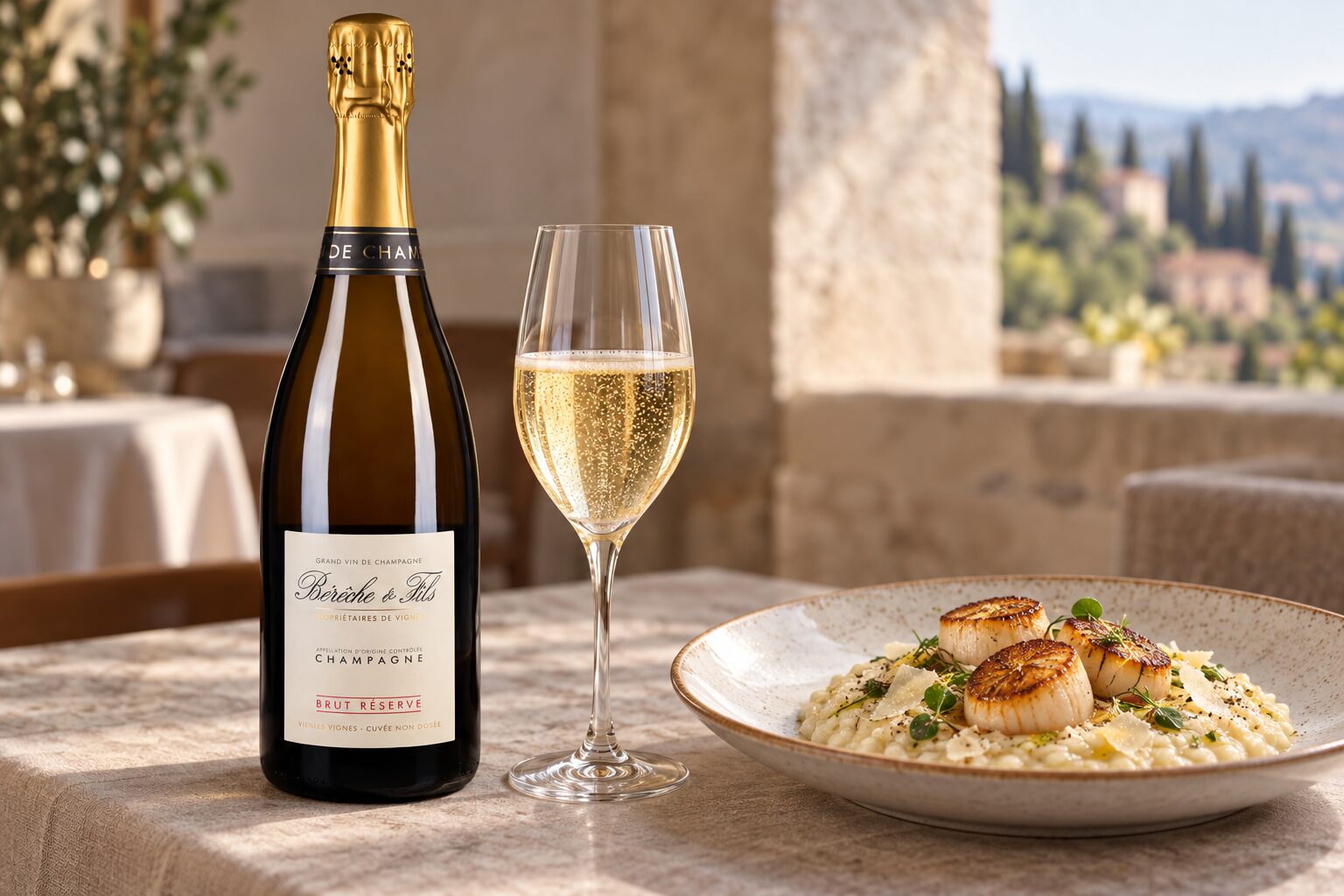
Bérêche et Fils Brut Réserve is a grower Champagne designed around precision, energy, and the character of several complementary villages. The current verified release is based on the 2022 harvest and combines ripe fruit from that warm, generous year with a substantial portion of perpetual reserve wine. The result is not a simple aperitif. It is a structured, dry, food-oriented Champagne with enough breadth for risotto and veal, enough acidity for raw shellfish, and enough effervescence to refresh fried food.
The 2022-base release brings together 40% Pinot Noir, 30% Chardonnay, and 30% Meunier. Forty percent of the blend comes from the estate's perpetual reserve, a continuously maintained collection of earlier wines that adds depth and continuity. Élevage was divided between cask and tank, with 70% in cask and 30% in tank. After its second fermentation and cellar maturation, the wine was disgorged in November 2024 with a dosage of 5.2 grams per liter. That restrained Brut dosage keeps the finish dry while preserving the wine's generous orchard-fruit center.
Denomination and Release Identity
Bérêche et Fils Brut Réserve is a non-vintage Champagne AOC produced by an independent family grower in the Montagne de Reims. The words Brut Réserve identify the cuvée, while the base year and disgorgement date identify the precise release. This article concerns the release built on the 2022 harvest and disgorged in November 2024.
Non-vintage does not mean anonymous. Champagne producers may combine a dominant harvest with wines held from previous years to maintain house style and improve balance. In this release, the solar character of 2022 is moderated by the freshness and complexity of the perpetual reserve. Buyers should therefore look beyond the front label and confirm the base-year or disgorgement information supplied by the merchant or printed on the back label.
Grape Composition and Origin
The blend is 40% Pinot Noir, 30% Chardonnay, and 30% Meunier. Pinot Noir supplies structure, red-apple fruit, and a subtle savory edge. Chardonnay contributes lift, citrus definition, and chalky tension. Meunier adds immediate fruit, roundness, and aromatic accessibility.
The fruit comes from the Bérêche family's holdings across contrasting sectors of Champagne, centered on the Montagne de Reims and including vineyards associated with Ludes, Ormes, and the eastern Montagne. This geographic range is important. Chalk, sand, clay, slope, and exposure influence ripening differently, allowing the final blend to combine richness with mineral freshness rather than expressing only one narrow parcel.
The cuvée is therefore best understood as the estate's broad regional portrait. Single-vineyard Champagnes isolate one site, but Brut Réserve assembles multiple villages, varieties, and years into a complete introduction to the Bérêche style.
Production, Reserve Wine, and Aging
The 2022 base accounts for the youthful center of the wine, while 40% perpetual reserve wine supplies mature aromatic detail and consistency. A perpetual reserve differs from a fixed collection of separately stored vintages. New wine is added as wine is withdrawn, so the reserve evolves while retaining a living connection to earlier harvests.
Élevage for this release was conducted 70% in cask and 30% in tank. The cask component develops texture and controlled oxygen exchange without turning the Champagne into an overtly woody wine. The tank component protects brightness and primary fruit. Their combination helps explain the contrast between creamy breadth and a firm, saline finish.
The wine completed its secondary fermentation and matured in bottle before disgorgement in November 2024. A dosage of 5.2 grams per liter places it comfortably within the Brut category but on the drier side of many commercial Brut Champagnes. Alcohol is 12.5%. The dosage is present to integrate acidity and texture, not to make the wine taste sweet.
History of Bérêche et Fils
The Bérêche family's Champagne history dates to 1847. The estate is based in Craon de Ludes, between Reims and the southern Montagne de Reims, and today is closely associated with brothers Raphaël and Vincent Bérêche. Their work helped make the domaine a reference point for the modern grower-Champagne movement.
The family's approach joins traditional cellar practice with detailed attention to vineyard origin. Native fermentations, patient élevage, restrained dosage, and careful use of reserve wine are tools for transparency rather than ends in themselves. Brut Réserve is the foundational cuvée because it translates that philosophy into the bottle most likely to introduce drinkers to the estate.
Although the domaine also produces highly specific parcel wines, the reserve blend remains important. It tests the cellar team's ability to make numerous components feel complete and coherent. In a strong release, no variety, village, vessel, or vintage dominates the whole.
Appearance, Aroma, and Palate
In the glass, the Champagne is pale to medium gold with a fine, persistent stream of bubbles. The appearance suggests concentration without excessive maturity. The mousse is active but becomes creamy as the wine rests in a tulip glass.
The aroma opens with lemon peel, yellow apple, pear, and cranberry. With air, it develops white pepper, dried flowers, warm bread, pastry crust, and a faint smoky note. The reserve wine contributes savory depth, while the 2022 base keeps the fruit generous and clearly defined.
On the palate, orchard fruit and citrus arrive first, followed by chalk, subtle spice, toasted grain, and a gently nutty accent. The texture is broad through the middle but never heavy. Acidity and salinity tighten the finish, and the dosage rounds the edges without obscuring the dry character.
This combination makes the wine versatile at the table. It has enough fruit for roasted or seared flavors, enough autolytic character for rice and pastry-like textures, and enough freshness to reset the palate after butter, oil, or creamy sauces.
Technical Profile
Appellation: Champagne AOC, France. Producer: Bérêche et Fils. Cuvée: Brut Réserve. Style: non-vintage grower Champagne, Brut. Base harvest: 2022. Blend: 40% Pinot Noir, 30% Chardonnay, and 30% Meunier. Perpetual reserve wine: 40% of the final blend. Élevage: 70% in cask and 30% in tank. Disgorgement: November 2024. Dosage: 5.2 g/L. Alcohol: 12.5%. Bottle size used for pricing: 750 ml.
The technical profile explains the wine's balance. Pinot Noir leads but does not dominate. Chardonnay and Meunier are present in equal proportions, while the perpetual reserve and mixed-vessel élevage add layers that a purely young, tank-raised blend would not have.
Zafferano & Co. Wine Rating
★★★★☆ — Zafferano & Co. Editorial Evaluation
This four-star evaluation recognizes the release's clarity, complexity, and gastronomic range. The wine combines the generous fruit of 2022 with the composure of the perpetual reserve, and its 5.2 g/L dosage supports rather than softens the finish.
The strongest qualities are balance and adaptability. The Champagne can begin a meal with raw seafood, continue through fried vegetables or creamy risotto, and still accompany delicate meat. It stops short of five stars because its role is deliberately foundational rather than monumental; its achievement is completeness and precision at the entry point of an important grower's range.
Serving Temperature and Glassware
Serve Bérêche et Fils Brut Réserve at 48–52°F, or 9–11°C. A bottle taken directly from a very cold refrigerator will initially hide the reserve wine, floral notes, and cask-derived texture. Allowing it to rise gradually through the recommended range reveals more apple, bread, spice, and mineral detail.
Use a tulip-shaped Champagne glass or a medium white-wine glass. The bowl should provide enough space for aroma to collect while the narrower opening preserves energy. A very narrow flute emphasizes bubbles but limits the wine's breadth; a broad coupe releases carbonation too quickly.
Open the bottle shortly before the first course. Decanting is unnecessary and risks unnecessary loss of pressure. Pour modest servings and refill as the wine develops. A chilled sleeve is preferable to keeping the bottle submerged in an ice bath throughout a long meal.
Storage and Drinking Window
Store the bottle horizontally in a dark, vibration-free place at a stable 50–55°F, or 10–13°C. Avoid repeated temperature changes, direct light, and warm kitchen storage. The cork and crown-aged Champagne have already completed the producer's intended cellar development, but sound home storage preserves the precision achieved before release.
The November 2024 disgorgement is expressive now and should develop well through approximately 2030. Early drinking emphasizes citrus, cranberry, flowers, and chalk. Additional bottle age should move the profile toward baked apple, hazelnut, toast, and a softer mousse. Buyers seeking maximum freshness should drink sooner; those who favor mature reserve-wine character may hold several bottles and compare them over time.
After opening, reseal with a pressure-rated sparkling-wine stopper and refrigerate. The Champagne is best on the day it is opened, although a well-sealed bottle can retain useful freshness into the following day.
Current U.S. Price and Buying Advice
Current verified United States retail listings place the 2022-base Bérêche et Fils Brut Réserve at approximately $69.98–$89.99 for one 750 ml bottle. Taxes, shipping, and local delivery charges are additional and vary by state.
Confirm that the offer identifies the 2022 base rather than only listing the cuvée as non-vintage. Retailers sometimes reuse one product page across successive releases. The disgorgement information is also useful because a later shipment may represent a different base year even when the front label appears unchanged.
Buy from a retailer that stores Champagne away from heat and direct light. A clean label, intact foil, appropriate fill, and credible shipping policy are more important than saving a few dollars on a bottle that may have been exposed to damaging temperatures.
Food Pairing Logic
The wine's three varieties and mixed-vessel élevage create several pairing bridges. Chardonnay provides the citrus and mineral line for shellfish. Pinot Noir supplies enough structure for seared scallops and delicate veal. Meunier and the warm 2022 base bring fruit that can meet sweet vegetables and browned flavors. Reserve wine, bread notes, and cask texture connect naturally with risotto, fried batter, and savory sauces.
Acidity and mousse are equally important. They refresh the mouth after olive oil, butter, cheese, and frying, while the dry finish prevents rich dishes from becoming tiring. Salt can make the fruit feel more vivid, but aggressively salty food should be avoided because it can flatten the wine's finer floral and chalky details.
Avoid very sweet desserts, heavy tomato reductions, and intense chile heat. Sugar makes dry Champagne seem severe, concentrated tomato can dominate the subtle reserve-wine complexity, and excessive heat exaggerates alcohol and carbonation.
Italian Champagne Risotto with Seared Scallops
Italian Champagne Risotto with Seared Scallops, Oscietra Caviar & Chives is the most complete pairing for this release. The creamy rice mirrors the Champagne's rounded mid-palate, while seared scallops echo its sweet orchard fruit and lightly toasted character. Caviar reinforces salinity and allows the chalky finish to remain vivid.
Keep the risotto fluid rather than dense, and use the caviar with restraint. The purpose is to build continuity between texture, salinity, and bubbles without making the dish more forceful than the wine.
Scallop Carpaccio with Sicilian Citrus
Scallop Carpaccio with Sicilian Citrus, Crisp Fennel and Bronte Pistachios highlights the fresher side of Brut Réserve. The scallop's natural sweetness follows the ripe 2022 fruit, citrus reflects the wine's lemon-peel note, and fennel supports its floral lift. Pistachio links to the reserve wine's developing nutty detail.
Use a restrained quantity of citrus juice. Too much acid can make the Champagne feel softer than it is, while a controlled dressing creates a precise and refreshing first course.
Fritto Misto di Mare
Fritto Misto di Mare uses the Champagne's bubbles and acidity as practical tools. The mousse clears the crisp coating, the dry finish controls the oil, and the blend has enough body to remain present beside squid, shrimp, and small fish.
Season immediately after frying and serve without a heavy sauce. A squeeze of lemon is enough to connect the dish to the Chardonnay component without masking the Pinot Noir and Meunier.
Italian Fried Zucchini Blossoms
Italian Fried Zucchini Blossoms | Fiori di Zucca Fritti offers a lighter fried pairing. The blossom's delicate vegetal sweetness works with Meunier, while the crisp batter meets the Champagne's bread and pastry notes. Effervescence restores freshness after every bite.
Choose a subtle filling and avoid excessive anchovy or strongly seasoned cheese. The wine can manage salinity, but the best version leaves space for its floral and mineral character.
Vitello Tonnato Piemontese
Vitello Tonnato Piemontese | Italian Piedmontese Veal with Tuna Sauce shows why this grower Champagne can continue beyond the opening courses. Pinot Noir supports the veal, acidity cuts the creamy tuna sauce, and the reserve wine's savory character meets capers and anchovy with confidence.
Serve the dish cool, not refrigerator-cold, and keep the sauce balanced. A moderate portion preserves the Champagne's detail and allows its texture to expand as it warms in the glass.
Great Producers of Grower Champagne
Bérêche et Fils belongs among the important reference growers of contemporary Champagne. Other verified producers that help define this category include Egly-Ouriet in Ambonnay, Pierre Péters in Le Mesnil-sur-Oger, Agrapart & Fils in Avize, Larmandier-Bernier in Vertus, Chartogne-Taillet in Merfy, Laherte Frères in Chavot, and R. Pouillon in Mareuil-sur-Aÿ.
These estates do not make identical wines. Egly-Ouriet is often associated with Pinot Noir depth and long aging. Pierre Péters and Agrapart emphasize Chardonnay and Côte des Blancs precision. Larmandier-Bernier combines mineral definition with biodynamic viticulture, while Chartogne-Taillet explores the geological diversity of Merfy. Laherte Frères works across multiple sectors and varieties, and R. Pouillon uses perpetual-reserve thinking to build layered, vinous Champagne.
Bérêche is distinctive for the way its foundational cuvée joins broad regional blending, cask texture, reserve-wine complexity, and energetic acidity. Tasting these producers side by side shows that grower Champagne is not one flavor profile but a collection of individual interpretations.
How to Read the Bottle
The front label identifies Bérêche et Fils, Champagne, and Brut Réserve. Brut is the sweetness category; Réserve is the cuvée name. The bottle does not present 2022 as a vintage because the wine includes perpetual reserve components from earlier years.
The base-year information remains essential for serious comparison. A 2022-base bottle and a later release may share the same front design while differing in harvest character, reserve percentage, dosage, vessel balance, and disgorgement date. For this article, the key identifiers are the 2022 base, November 2024 disgorgement, and 5.2 g/L dosage.
Final Assessment
Bérêche et Fils Brut Réserve, base 2022, is a precise and gastronomic introduction to one of Champagne's most respected grower estates. Its 40% Pinot Noir, 30% Chardonnay, and 30% Meunier blend is strengthened by 40% perpetual reserve wine, while 70% cask and 30% tank élevage balance texture with freshness.
The wine's cranberry, apple, citrus, white-pepper, bread, and chalk profile makes it especially effective with Italian seafood, risotto, fried vegetables, and delicately sauced veal. Served at 48–52°F in a tulip glass, it moves naturally from aperitivo through several savory courses.
At a verified current U.S. range of $69.98–$89.99 per 750 ml bottle, it offers a serious view of grower Champagne without requiring the price of a prestige cuvée. The release succeeds because every element—base year, reserve wine, cask, tank, dosage, and blend—contributes to a complete table wine rather than competing for attention.


Comments