
Wine Pairing: Pierre Gimonnet & Fils Cuis 1er Cru Brut Blanc de Blancs
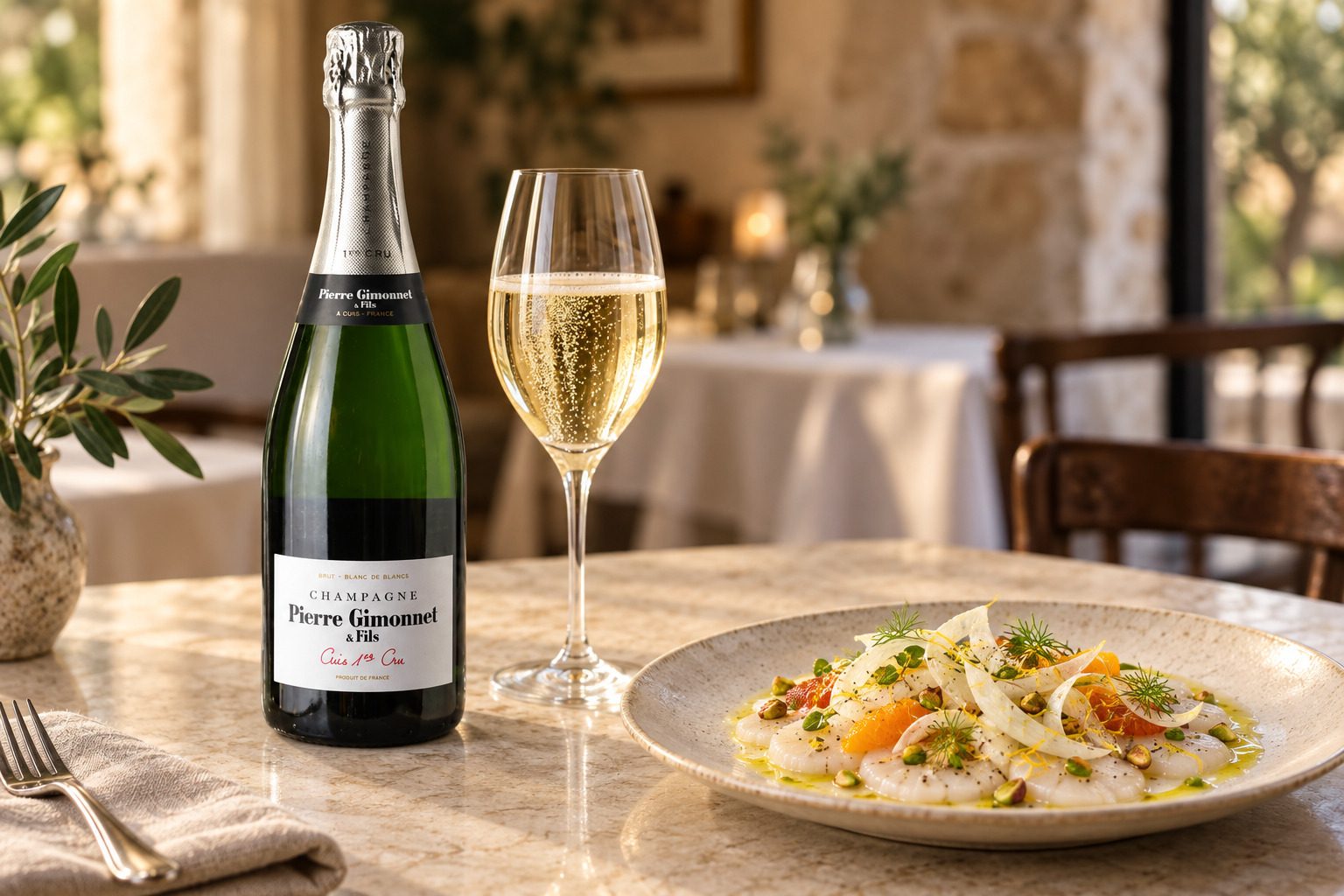
Pierre Gimonnet & Fils Cuis 1er Cru Brut Blanc de Blancs is a precise, energetic grower Champagne made entirely from Chardonnay in the northern Côte des Blancs. It is the estate's defining non-vintage cuvée: a bright, chalk-shaped wine designed to awaken the palate, show the cool character of Cuis and remain useful from the first aperitif through a carefully structured meal.
The current verified U.S. importer specification is centered on the 2021 harvest. That base wine represents 73% of the blend, while 27% comes from reserve wines spanning 2014 through 2020. This unusually broad reserve component brings texture and continuity without disguising the lemon, orchard-fruit and saline qualities that make the cuvée distinctive.
Denomination and Cuvée Identity
This wine is a non-vintage Brut Blanc de Blancs from Champagne AOC. Blanc de Blancs means that the cuvée is made only from white grapes; here the variety is 100% Chardonnay. Cuis is the estate's home village and holds Premier Cru status within the Côte des Blancs.
The official bottle identifies the producer as Pierre Gimonnet & Fils and the cuvée as Cuis 1er Cru. The importer presents the same wine as 1er Cru Blanc de Blancs Brut. These descriptions refer to one core bottling, not separate wines. The name should not be confused with Gimonnet's vintage Spécial Club Cuis, which has different vineyard selection, aging and release information.
The Grower and Côte des Blancs Origins
Pierre Gimonnet & Fils is a récoltant-manipulant, commonly called a grower-producer. The family cultivates its vineyards and bottles Champagne under its own name. Its history as winegrowers in Cuis reaches back to 1750, while Pierre Gimonnet began estate bottling in 1935. Didier Gimonnet now directs a domaine whose holdings are overwhelmingly planted to Chardonnay.
Cuis lies at the cool northern end of the Côte des Blancs. Its vineyards face conditions that tend to produce a lighter, more aerial and acid-driven expression than the broader profiles associated with villages such as Cramant or Chouilly. Chalk beneath the vines helps drainage and contributes to the tactile mineral impression that defines the finish.
The estate manages about 29.4 hectares across Premier and Grand Cru villages. Although celebrated parcels in Cramant, Chouilly and Oger appear in more concentrated cuvées, Cuis remains the philosophical center of the range. The family treats this non-vintage wine as the clearest introduction to its house style.
Exact Release Composition and Production
The verified release is composed of 73% wine from the 2021 harvest and 27% reserve wines from seven earlier years, 2014 through 2020. The resulting blend therefore brings together eight harvests. That range is consistent with the producer's practice of using at least five different years to reproduce the balance of the cuvée.
All fruit is Chardonnay from Cuis Premier Cru. Primary fermentation and élevage take place in stainless steel, preserving clarity rather than adding oak flavor. Malolactic fermentation is completed, softening the sharpest malic edge while leaving the naturally cool profile of the village intact.
A distinctive feature is the reserve-wine system. Part of the reserve collection is kept in 750 ml bottles and magnums under approximately 1.5 atmospheres of pressure for one to six years. This method protects freshness while developing the creamy, almond-like nuance needed to round the young base wine.
After the final blend and second fermentation in bottle, the Champagne spends at least 24 months on the lees. Dosage is 5.5 grams per liter, comfortably within Brut, but low enough for the chalk, citrus and saline finish to remain clearly defined.
Appearance, Aroma and Palate
In the glass, the wine is pale straw with green-gold reflections and a fine, persistent stream of bubbles. Its appearance signals youth and brightness rather than the deeper gold of a heavily matured or oak-influenced Champagne.
The aroma begins with lemon peel, crisp yellow apple, pear and white flowers. With air, it develops fresh almond, light pastry, chalk and a faint marine note. The reserve wines give the bouquet more dimension, but the profile never becomes heavy or oxidative.
The palate is slender, energetic and finely textured. Orchard fruit provides the center, while grapefruit pith and lemon sharpen the edges. The mousse feels controlled rather than aggressive. A chalky, lightly saline finish recalls oyster shell and leaves the mouth refreshed, which explains why the cuvée works especially well with seafood, fried foods and delicately creamy sauces.
Technical Evaluation
Appellation: Champagne AOC, France. Producer: Pierre Gimonnet & Fils. Cuvée: Cuis 1er Cru Brut Blanc de Blancs. Style: non-vintage grower Champagne, Brut, Blanc de Blancs. Village: Cuis Premier Cru, Côte des Blancs.
Blend: 100% Chardonnay; 73% from the 2021 harvest and 27% reserve wines from 2014 through 2020. Fermentation and aging: stainless steel, with malolactic fermentation. Reserve-wine method: bottles and magnums maintained under low pressure for one to six years. Lees aging: at least 24 months. Dosage: 5.5 g/L. Alcohol: 12.5% by volume. Bottle size evaluated: 750 ml.
The precise Wine Spectator evaluation used below concerns the December 2023 disgorgement of this 2021-dominant release. That distinction matters because later disgorgements and a 2022-based blend have their own compositions and critical records.
Zafferano & Co. Wine Rating
★★★★ — 93 Wine Spectator Points
The rating belongs specifically to the bottle disgorged in December 2023, reviewed for its detailed mousse, orchard fruit, almond, floral character and mineral, saline finish. It is not automatically transferable to later disgorgements.
Within the Zafferano & Co. scale, four stars recognize a Champagne of serious precision, typicity and gastronomic usefulness. The wine succeeds through proportion: reserve-wine complexity supports the cool Cuis profile, while low dosage and fine mousse keep the finish lucid.
Serving Temperature and Glassware
Serve at 46–50°F (8–10°C). A bottle taken directly from a very cold refrigerator can appear narrow and acidic, so allow a few minutes in the glass. During a meal, later pours may rise toward 52°F without losing balance; that slight warming reveals almond, pear and pastry notes.
Use a tulip-shaped Champagne glass or a medium white-wine glass. Both provide enough surface for the aroma to open while preserving the mousse. A very narrow flute emphasizes bubbles but suppresses the mineral and reserve-wine detail. A coupe disperses carbonation too quickly.
Decanting is unnecessary. Open the bottle shortly before service, control the cork with one hand and turn the bottle slowly with the other. Pour modest servings so the wine can warm gradually and remain fresh.
Storage and Drinking Window
Store unopened bottles horizontally in a dark, vibration-free place at a stable 50–55°F (10–13°C). Avoid kitchen cabinets, bright display shelves and locations beside appliances, because heat and repeated temperature changes age Champagne unevenly.
The December 2023 disgorgement is drinking well now and can remain expressive through approximately 2029 when provenance is sound. Additional bottle age will move the profile from lemon and flowers toward toasted almond, brioche and baked orchard fruit. Drink earlier for the clearest mineral tension; wait longer for greater secondary complexity.
After opening, a proper sparkling-wine stopper and refrigeration can preserve useful freshness until the following day. The wine is best on the day of service, when its mousse and saline finish are most articulate.
How to Read the Label
Pierre Gimonnet & Fils identifies the estate. Cuis 1er Cru identifies the home village and its Premier Cru classification. Brut describes the sweetness category, while Blanc de Blancs communicates that the Champagne is made exclusively from white grapes, in this case Chardonnay.
No vintage year appears because the wine combines multiple harvests. Non-vintage does not mean anonymous: the release discussed here has a defined 2021 base, a documented reserve-wine range and a specific dosage. When buying, the disgorgement information on the back label or retailer record is the best way to distinguish one release from another.
Buying Advice and U.S. Pricing
Current verified United States listings place a 750 ml bottle at approximately $58.99–$69.97. Local taxes, shipping and state availability can move the final price. The importer reference for the full bottle is FR-KPG-01-NV, which helps distinguish it from the 375 ml and magnum formats.
Confirm that the bottle says Pierre Gimonnet & Fils, Cuis 1er Cru, Brut and Blanc de Blancs. Avoid confusing it with Spécial Club Cuis, Oenophile Non Dosé, Fleuron or the estate's other vintage cuvées. At this price level, provenance matters more than saving a few dollars: choose a retailer with temperature-controlled storage and recent turnover.
Inspect the foil, fill level and label for signs of heat, leakage or prolonged damp storage. A clean bottle with reliable custody is the soundest purchase.
Food Pairing Logic
This Champagne is driven by acidity, fine mousse, chalk and restrained dosage. It is therefore strongest with foods that need refreshment rather than sweetness: raw shellfish, fried seafood, delicate fish, mild cheeses, rice dishes, eggs, young vegetables and light cream sauces.
The bubbles lift fried coatings and creamy textures. Citrus and saline notes echo seafood, while the reserve-wine almond character connects with nuts, browned butter and gentle roasting. Because the body remains light, avoid heavy tomato reductions, sugary glazes, aggressive chili heat and very mature blue cheese.
Pairing becomes most precise when the dish preserves natural sweetness and controls salt. Lemon, fennel, pistachio, capers and restrained anchovy can all work, but none should dominate the Champagne's fine structure.
Scallop Carpaccio with Sicilian Citrus, Crisp Fennel and Bronte Pistachios
Scallop Carpaccio with Sicilian Citrus, Crisp Fennel and Bronte Pistachios is the most transparent expression of the pairing. Raw scallop mirrors the wine's delicacy, citrus follows its lemon and grapefruit notes, and fennel reinforces freshness. Pistachio connects with the almond tone of the reserve wines without making the dish heavy.
Slice the scallops cleanly, use citrus with restraint and keep the oil light. Excess acidity can make the Champagne feel severe, while too much pistachio can obscure its chalky finish.
Italian Mixed Fried Seafood
Italian Mixed Fried Seafood | Fritto Misto di Mare uses the wine's bubbles and acidity as a textural counterweight. Each sip clears the fine fried coating, while the saline finish remains aligned with calamari, shrimp and white fish.
Keep the coating dry and delicate, fry in small batches and serve lemon alongside rather than squeezing it over the entire platter in advance. The goal is crispness, not aggressive acidity.
Italian Fried Zucchini Blossoms
Italian Fried Zucchini Blossoms | Fiori di Zucca Fritti provides a lighter fried pairing. The blossom's vegetal sweetness highlights the Chardonnay's floral side, while the mousse refreshes the palate after each bite.
Use a restrained filling and a thin batter. Strong blue cheese or excessive anchovy would overwhelm the cuvée; fresh ricotta, mozzarella or a small amount of mild anchovy is more appropriate.
Italian Champagne Risotto with Seared Scallops, Oscietra Caviar and Chives
Italian Champagne Risotto with Seared Scallops, Oscietra Caviar and Chives demonstrates how the cuvée handles creaminess and salinity. Acidity cuts through the risotto, the mousse lightens its texture, and caviar extends the wine's oyster-shell impression.
Keep the rice fluid and the cheese measured. A dense, heavily buttered risotto can bury the Champagne; correct mantecatura should create gloss and movement rather than weight.
Vitello Tonnato Piemontese
Vitello Tonnato Piemontese | Italian Piedmontese Veal with Tuna Sauce is the most savory pairing in the sequence. Chardonnay's acidity refreshes the tuna sauce, while almond and orchard-fruit notes soften the saline accents of caper and anchovy.
Serve the veal cool, not refrigerator-cold, and keep the sauce refined rather than thick. The Champagne has enough structure for the dish, but not for excessive mayonnaise, garlic or salt.
Reference Producers for Blanc de Blancs Champagne
Pierre Gimonnet & Fils belongs among the defining Chardonnay specialists of the Côte des Blancs. Other essential references include Pierre Péters, Salon, Delamotte, Agrapart, Larmandier-Bernier, Suenen and Diebolt-Vallois, as well as the Blanc de Blancs cuvées of Ruinart and Charles Heidsieck.
Their styles are not interchangeable. Pierre Péters often combines purity with a broad reserve-wine system; Agrapart can be more vinous and soil-driven; Larmandier-Bernier emphasizes low dosage and biodynamic viticulture; Salon represents long-aged vintage austerity and depth. Gimonnet's Cuis bottling is distinguished by cool-village lift, stainless-steel clarity and reserve wines preserved under low pressure in small formats.
Comparing these producers is most useful when bottle age, disgorgement and dosage are recorded. Blanc de Blancs is a category, not a single flavor profile.
The History of Pierre Gimonnet & Fils
The Gimonnet family has cultivated vines in Cuis since 1750. For generations the work centered on grape growing, as it did for many Champagne families. Pierre Gimonnet changed the estate's direction by beginning to bottle Champagne under the family name in 1935.
Later generations expanded holdings through Cuis and the Grand Cru villages of Cramant, Chouilly and Oger. The domaine now controls parcels of notable age, including some vines planted before the First World War. That patrimony supports a range extending from the accessible Cuis 1er Cru to vintage and Spécial Club bottlings.
Despite the prestige of those rarer wines, the non-vintage Cuis remains central. It must express the family identity every year, which explains the disciplined blending and extensive reserve collection.
Why Champagne Can Only Come from Champagne
Champagne is a protected geographical appellation in northeastern France. Grapes must come from the delimited region, and production must follow rules governing viticulture, pressing, secondary fermentation, bottle aging and release.
Blanc de Blancs sparkling wines from other regions can be excellent, but they cannot legally use the Champagne name. Cuis 1er Cru also carries a village classification that belongs specifically to Champagne's historic cru system.
The identity of this bottle therefore depends on more than method. Chardonnay, the cool exposure of Cuis, chalk soils, reserve wines and cellar practice combine to produce a profile that cannot be reduced to bubbles alone.
Professional Pairing Perspective
A complete menu can begin with scallop carpaccio, move to fried zucchini blossoms and fritto misto, then progress to Champagne risotto and a small portion of vitello tonnato. The sequence gradually increases richness while keeping salt, citrus and texture within the wine's range.
Start service near 46°F and let the bottle warm naturally toward 50°F. Earlier pours emphasize lemon and chalk; later pours reveal pear, almond and pastry. This evolution allows one bottle to change role across the meal without losing continuity.
The cuvée is less convincing with sweet desserts. Sugar makes the Brut dosage seem austere and suppresses the mineral finish. End the savory sequence with aged Parmigiano in a modest portion rather than a sugary course if the Champagne remains in the glass.
Final Assessment
Pierre Gimonnet & Fils Cuis 1er Cru Brut Blanc de Blancs is a clear introduction to one of the Côte des Blancs' important grower-producers. The 2021-dominant blend combines the energy of a cool harvest with 27% reserve wines, achieving depth without sacrificing precision.
Its 100% Chardonnay composition, stainless-steel élevage, bottle-and-magnum reserve system, 24-plus months on the lees and 5.5 g/L dosage produce a wine of lemon, pear, white flowers, almond and chalk. Fine mousse and a saline finish make it particularly effective with raw shellfish, delicate frying, risotto and cool savory dishes.
At a verified U.S. range of $58.99–$69.97 for 750 ml, it offers a serious and transparent expression of Cuis Premier Cru. Buy with attention to disgorgement and provenance, serve it in a tulip glass rather than an ice-cold flute, and let the wine's mineral detail emerge through the meal.


Comments