
Wine Pairing: Champagne Gatinois Brut Tradition Grand Cru
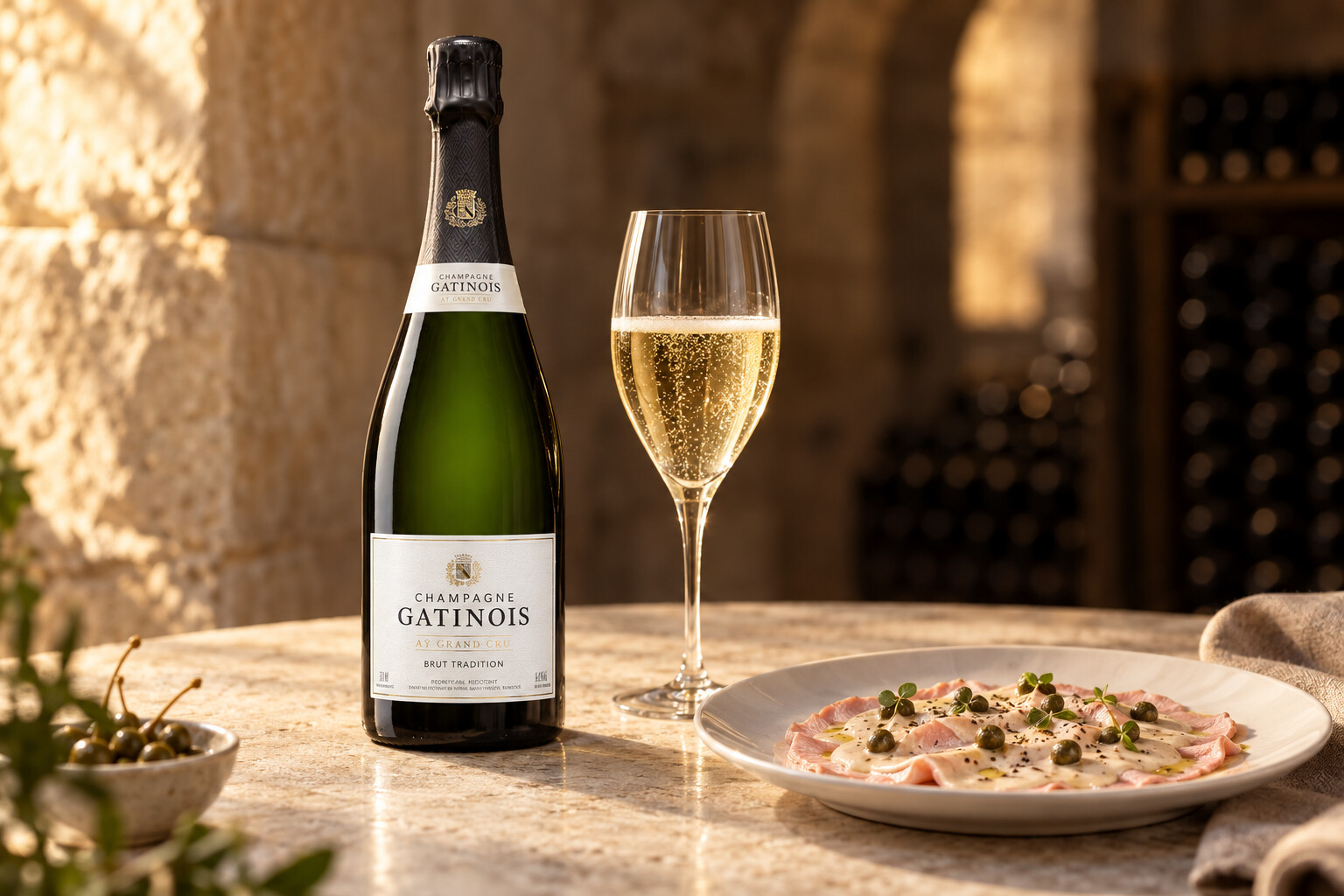
Champagne Gatinois Brut Tradition Grand Cru is a Pinot Noir-led grower Champagne from Aÿ, one of the historic Grand Cru villages of the appellation. Its combination of ripe orchard fruit, subtle red-fruit depth, chalky freshness and a rounded but dry finish gives it more table presence than a fragile aperitif Champagne. It can open a meal, yet it has enough structure to remain persuasive beside veal, seafood, fried vegetables and creamy risotto.
The current house specification is clear and stable: 80% Pinot Noir, 20% Chardonnay, 30% reserve wines, a minimum of two years of bottle aging on the lees and a dosage of 7 grams per liter. The U.S. importer describes approximately three years of aging before release, a longer commercial maturation that remains consistent with the producer's stated minimum.
This article concerns the non-vintage Brut Tradition Grand Cru in a 750 ml bottle. It does not substitute information from Gatinois Brut Réserve, Brut Rosé, Brut Millésimé or older disgorgements. Because the current bottle is not tied to one precisely verified Wine Spectator review, the rating below is the authorized Zafferano & Co. editorial evaluation.
Denomination and Cuvée Identity
Brut Tradition is a non-vintage Champagne AOC produced entirely from fruit grown in Aÿ Grand Cru. Aÿ lies near Épernay where the Vallée de la Marne meets the Montagne de Reims and Côte des Blancs sectors. Its south-facing and southeast-facing slopes are especially celebrated for Pinot Noir that combines ripeness, vinosity and mineral definition.
The words “Brut Tradition” identify the estate's core cuvée. “Brut” describes the regulated sweetness category, while “Tradition” signals the house's foundational multi-year blend. “Grand Cru” refers to the classification of Aÿ, not to a vineyard name or a vintage.
The Gatinois bottle is visually distinctive: dark green glass, a black capsule, a white neck band and an ivory label carrying Champagne Gatinois, Aÿ Grand Cru and Brut Tradition. Those exact identifiers matter when buying because the house also bottles Réserve, Rosé and vintage wines with related family presentation.
Aÿ Grand Cru and the Gatinois Family
The Gatinois family records twelve generations on the hillsides of Aÿ. The present family line traces its local history to the marriage of Nicolas Le Cacheur and Françoise Remy in 1696. The Gatinois name appeared on bottles after Marie Michel-Le Cacheur married Charles Gatinois in 1921.
Emile and Micheline Gatinois led the domaine after the Second World War. From 1980 to 2010, Marie Gatinois and Pierre Cheval directed the estate. Their son Louis Cheval, originally trained as a geologist, took responsibility in 2010 and now oversees the work from vineyard to cellar.
Gatinois holds Récoltant-Manipulant status: the family grows grapes and produces Champagne under its own name. Its vineyards extend over a little more than seven hectares in Aÿ. The domaine sells part of its crop while retaining selected fruit from old, well-situated parcels for its own wines.
Aÿ is one of Champagne's seventeen Grand Cru villages. Chalk and limestone beneath the hillside provide drainage and a mineral framework, while the exposures allow Pinot Noir to reach flavor maturity. The resulting wines are known for power, but the best examples preserve a disciplined freshness rather than simple weight.
Blend, Production and Aging
The blend is 80% Pinot Noir and 20% Chardonnay. Pinot Noir supplies the wine's broad shoulders, ripe pear, subtle cherry tone and savory length. Chardonnay contributes lift, citrus clarity and finesse. The proportion is important: this is not a neutral three-grape blend, but a recognizable expression of Aÿ built around Pinot Noir.
Reserve wines make up 30% of the cuvée. They soften the variations of a single harvest and introduce mature notes of toast, spice and dried orchard fruit. Because Brut Tradition is non-vintage, reserve wines are central to maintaining the Gatinois profile from release to release.
Grapes are harvested by hand and sorted in the vineyard. The producer emphasizes fruit from the heart of its terroir and uses a traditional vertical Dollat press installed in 1984. Musts are vinified in small vats, with careful rackings before the blend is bottled around the spring following harvest.
The producer guarantees at least two years of aging sur lattes, meaning the bottles rest horizontally with the fermentation lees before disgorgement. The U.S. importer states that the cuvée is aged for about three years before release. Gatinois still riddles bottles individually and performs disgorgement by hand à la volée.
Dosage is 7 grams per liter, placing the wine within Brut while remaining modest enough to show the salt, chalk and citrus of the finish. The dosage is integrated as balance, not as a sweet flavor. Alcohol is 12% by volume on the verified bottle reference.
Appearance, Aroma and Palate
The color is deep gold with copper reflections, a visual expression of the high Pinot Noir proportion. Bubbles rise in a fine, persistent stream, and the mousse feels creamy rather than sharp when the wine is served at the correct temperature.
The aroma opens with pear, yellow apple and lime blossom. Air introduces mandarin peel, red apple skin, light cherry, toasted bread and a discreet earthy note. The profile is generous but not oxidative; the reserve wines provide complexity without masking the freshness of the current blend.
On the palate, ripe orchard fruit meets a firm line of acidity. Pinot Noir gives width through the middle, Chardonnay keeps the edges clean, and the mousse lifts the texture. Toast, citrus peel and a suggestion of spice appear toward the finish.
The final impression is dry, saline and lightly chalky. That combination is the key to pairing: the wine has enough body for protein and creamy sauces, yet enough freshness to clean fried coatings, tuna emulsion, butter and rice starch.
Technical Evaluation
Appellation: Champagne AOC, France. Producer: Champagne Gatinois. Cuvée: Brut Tradition. Style: non-vintage Brut grower Champagne. Origin: Aÿ Grand Cru. Bottle evaluated: 750 ml.
Blend: 80% Pinot Noir and 20% Chardonnay. Reserve wines: 30%. Lees aging: minimum two years according to the producer; approximately three years before release according to the current U.S. importer portfolio. Dosage: 7 g/L. Alcohol: 12% by volume.
Production: hand-harvested estate fruit, rigorous vineyard selection, traditional vertical pressing, vinification in small vats, bottle fermentation, individual riddling and traditional hand disgorgement. The exact base year and disgorgement date should be read from the bottle or retailer record when available; they are not inferred here.
Zafferano & Co. Wine Rating
★★★★ — Zafferano & Co. Editorial Evaluation
Four stars recognize a Champagne of strong regional identity, technical coherence and serious gastronomic usefulness. Gatinois Brut Tradition shows the ripeness and structure expected from Aÿ Pinot Noir while retaining the finesse needed for seafood and delicate sauces.
The evaluation is editorial rather than borrowed from an unmatched critic review. Old Wine Spectator notes exist for earlier disgorgements, but they do not automatically describe the current commercial bottle. The four-star assessment therefore reflects the verified present specification and the established style of the cuvée.
Serving Temperature and Glassware
Serve Champagne Gatinois Brut Tradition at 48–52°F (9–11°C). Colder service suppresses its pear, floral and toasted aromas and can make the acidity appear harder than it is. During a meal, allow the bottle to rise gradually toward the upper end of the range.
Use a tulip-shaped Champagne glass or a medium white-wine glass. The bowl should give the wine enough air to reveal Pinot Noir structure while narrowing at the rim to preserve aroma and mousse. A very narrow flute hides complexity, and a broad coupe releases carbonation too rapidly.
Decanting is generally unnecessary. Open the bottle shortly before service, keep control of the cork and rotate the bottle slowly. Pour moderate servings so each glass can develop while the remaining wine stays cool.
Storage and Drinking Window
Store unopened bottles horizontally in a dark, vibration-free cellar at a stable 50–55°F (10–13°C). Avoid kitchens, bright display shelves and spaces beside appliances. Repeated heat cycles age Champagne unevenly and can flatten its fruit before secondary complexity develops.
The cuvée is enjoyable on release for its pear, citrus, toast and fine mousse. Sound bottles can develop for five to eight years after purchase, and the U.S. importer notes the style can age longer under ideal conditions. With time, fresh fruit moves toward baked apple, hazelnut, brioche and dried flowers.
For the freshest pairing style, drink within three years of purchase. For more mature tones with veal, mushrooms or roast poultry, hold a well-stored bottle longer. After opening, use a proper sparkling-wine stopper and refrigerate; the wine is best the same day but can remain useful until the following day.
How to Read the Label
“Champagne Gatinois” identifies the grower-producer. “Aÿ Grand Cru” gives the village origin and classification. “Brut Tradition” names the cuvée and its sweetness category. The absence of a vintage year confirms that wines from more than one harvest may be included.
The small Récoltant-Manipulant notation identifies an estate that grows grapes and makes wine under its own label. A 750 ml bottle is the standard reference used for the price range in this article. Half bottles and magnums should not be compared directly with standard-bottle pricing.
Check the back label for importer, lot or disgorgement information. Those details help distinguish current stock from an older release. The front label alone establishes the cuvée, but it does not prove a precise base year.
Buying Advice and U.S. Pricing
Current verified United States listings place a 750 ml bottle at approximately $52–$62 before tax and shipping. One national retailer listed it at $51.94, while current U.S. offers tracked at other merchants ranged from $56.97 to $62.00. Availability varies by state because Gatinois is produced on a small scale.
Confirm the exact words Gatinois, Aÿ Grand Cru and Brut Tradition. Do not confuse this wine with Gatinois Brut Réserve, which has a different selection and profile, or with Brut Rosé and vintage releases. A critic score attached to an older disgorgement should not be treated as the score of the bottle in hand.
At this price, provenance matters more than a small discount. Favor a retailer with temperature-controlled storage, recent stock rotation and clear fulfillment terms. Inspect the capsule, fill level and label for signs of heat, leakage or prolonged dampness.
Food Pairing Logic
Brut Tradition is broader than a delicate Blanc de Blancs. Its Pinot Noir component can accompany veal, tuna, roast poultry and browned seafood, while its acidity and mousse refresh butter, frying oil and creamy emulsions. Toasted notes connect naturally with crisp coatings and seared surfaces.
The dosage of 7 g/L rounds salt and citrus without making the wine taste sweet. This balance is valuable with capers, anchovy, shellfish and mild bitterness. Keep vinegar restrained, because aggressive acidity can make the Champagne seem thin.
Avoid heavily sweet desserts, very hot chile and deeply reduced red-wine sauces. These elements either exaggerate dryness or overpower the wine's floral and orchard-fruit detail. The best dishes are savory, moderately rich and precise.
Vitello Tonnato Piemontese
Italian Piedmontese Veal with Tuna Sauce | Vitello Tonnato Piemontese is the central pairing for this Champagne. Lean veal gives the Pinot Noir enough protein to engage, while the tuna, anchovy and caper sauce supplies salinity that follows the wine's chalky finish.
The bubbles loosen the sauce's creamy texture and the acidity keeps olive oil from feeling heavy. Pear and light cherry soften the dish's savory intensity without creating a sweet contrast. Serve the veal cool rather than ice-cold and pour the Champagne near 50°F.
Keep the sauce fluid and the caper garnish restrained. Too much lemon or vinegar can dominate both the veal and the wine.
Italian Mixed Fried Seafood
Italian Mixed Fried Seafood | Fritto Misto di Mare highlights the physical advantages of Champagne. The mousse clears the fried coating, while acidity resets the palate after each bite of squid, shrimp or small fish.
Gatinois has enough Pinot Noir body to remain present beside browning and oil. Its toast echoes the crisp crust, and its citrus notes replace the need for excessive lemon. Season the seafood immediately after frying and serve it hot, dry and lightly salted.
Avoid thick batter and sweet dipping sauces. A thin, crisp coating preserves the wine's mineral finish.
Scallop Carpaccio with Sicilian Citrus
Scallop Carpaccio with Sicilian Citrus, Crisp Fennel and Bronte Pistachios brings out the most refined side of Brut Tradition. Raw scallop mirrors the wine's soft texture, while fennel and citrus emphasize freshness.
Pistachio links with the Champagne's toasted and nutty development. The wine's ripe pear makes the scallop taste sweeter, and its saline ending joins the natural marine flavor. Use citrus as perfume and seasoning rather than as a pool of acid.
This is the best first course when the bottle will continue through a longer menu.
Champagne Risotto with Seared Scallops
Italian Champagne Risotto with Seared Scallops, Oscietra Caviar and Chives gives the cuvée a richer setting. Rice starch and butter need persistent acidity, while seared scallops welcome the breadth of Pinot Noir.
Oscietra caviar reinforces salinity and length. Toasted and yeasty notes in the Champagne echo both the browned scallop and the risotto's savory base. Keep the finished rice fluid and avoid excessive cheese, which can mute the wine's fruit.
Pour smaller servings and allow them to warm slightly in the glass as the risotto develops.
Italian Fried Zucchini Blossoms
Italian Fried Zucchini Blossoms | Fiori di Zucca Fritti offers a lighter fried pairing. The blossom's delicate vegetal flavor respects the wine's floral detail, and the bubbles remove oil without erasing the filling.
Choose a restrained mozzarella or ricotta filling and avoid heavy tomato sauce. A small anchovy can work because the Champagne has enough fruit and dosage to absorb its salt, but the filling should remain balanced.
Serve the blossoms immediately so the crust remains crisp and the contrast with the cool Champagne stays vivid.
Reference Producers for Pinot Noir-Led Champagne
Gatinois belongs in a discussion of producers that express Pinot Noir through place rather than sheer power. In Aÿ, Bollinger, Deutz and Gosset provide important historical reference points, while small growers show the village at a more intimate scale.
Philipponnat in Mareuil-sur-Aÿ offers another structured Pinot Noir perspective, often with greater intensity and reserve-wine depth. Egly-Ouriet in Ambonnay is a benchmark for long lees aging and vinous texture. R. Pouillon in Mareuil-sur-Aÿ explores parcel and perpetual-reserve approaches with a savory profile.
These wines are not substitutes for one another. Gatinois Brut Tradition is notable for direct Aÿ identity, traditional production, moderate dosage and a price that remains accessible within serious grower Champagne.
The Role of Champagne at the Italian Table
Champagne works with Italian food because it combines acidity, carbonation, yeast-derived savor and a range of body determined by grape and aging. A Pinot Noir-led cuvée can move beyond aperitivo and accompany a progression of antipasti, seafood, rice and delicate meat.
The pairing succeeds when the dish maintains clarity. Salt, crisp textures, gentle creaminess and measured citrus are allies. Excess sugar, aggressive vinegar and dense reductions are not. Temperature also matters: a Champagne served too cold becomes a beverage beside the food rather than a wine within the meal.
Although sparkling wines from Franciacorta, Trentodoc, Alta Langa and other regions can be outstanding, Champagne is a protected appellation. Gatinois may use the word because its grapes are grown and its wine is produced under the rules of Champagne AOC.
Professional Pairing Perspective
For a complete menu, begin with scallop carpaccio, continue with fried zucchini blossoms and fritto misto, then serve Champagne risotto. Finish the savory sequence with vitello tonnato. This order moves from raw delicacy through crisp textures and creaminess to a cool meat course without exhausting the wine.
Keep the bottle in a bucket with ice and water at the start, but do not leave it buried until the last pour. Allowing the wine to approach 52°F reveals pear, spice, toast and Pinot Noir depth. Refresh the ice only if the bottle becomes genuinely warm.
One 750 ml bottle provides approximately six moderate restaurant pours. For a five-course menu, two bottles for four guests permit attentive service without overfilling glasses and allow the later pours to develop.
Final Assessment
Champagne Gatinois Brut Tradition Grand Cru is a convincing introduction to Aÿ through an estate-grown, Pinot Noir-led blend. Its 80% Pinot Noir, 20% Chardonnay and 30% reserve-wine composition delivers ripe fruit and vinosity, while two or more years on the lees and 7 g/L dosage preserve freshness and balance.
The wine's strength is versatility. It has the lift for scallop carpaccio and fried zucchini blossoms, the texture for risotto and fried seafood, and the savory depth for vitello tonnato. It behaves as a table wine first and a celebratory symbol second.
Buy it for verified identity rather than an inherited score from an older disgorgement. Serve it in a tulip glass near 50°F, protect it from heat in storage and let its combination of Aÿ structure, fine mousse and saline finish guide the meal.


Comments