
Wine Pairing: Gaston Chiquet ‘Tradition’ Premier Cru Brut
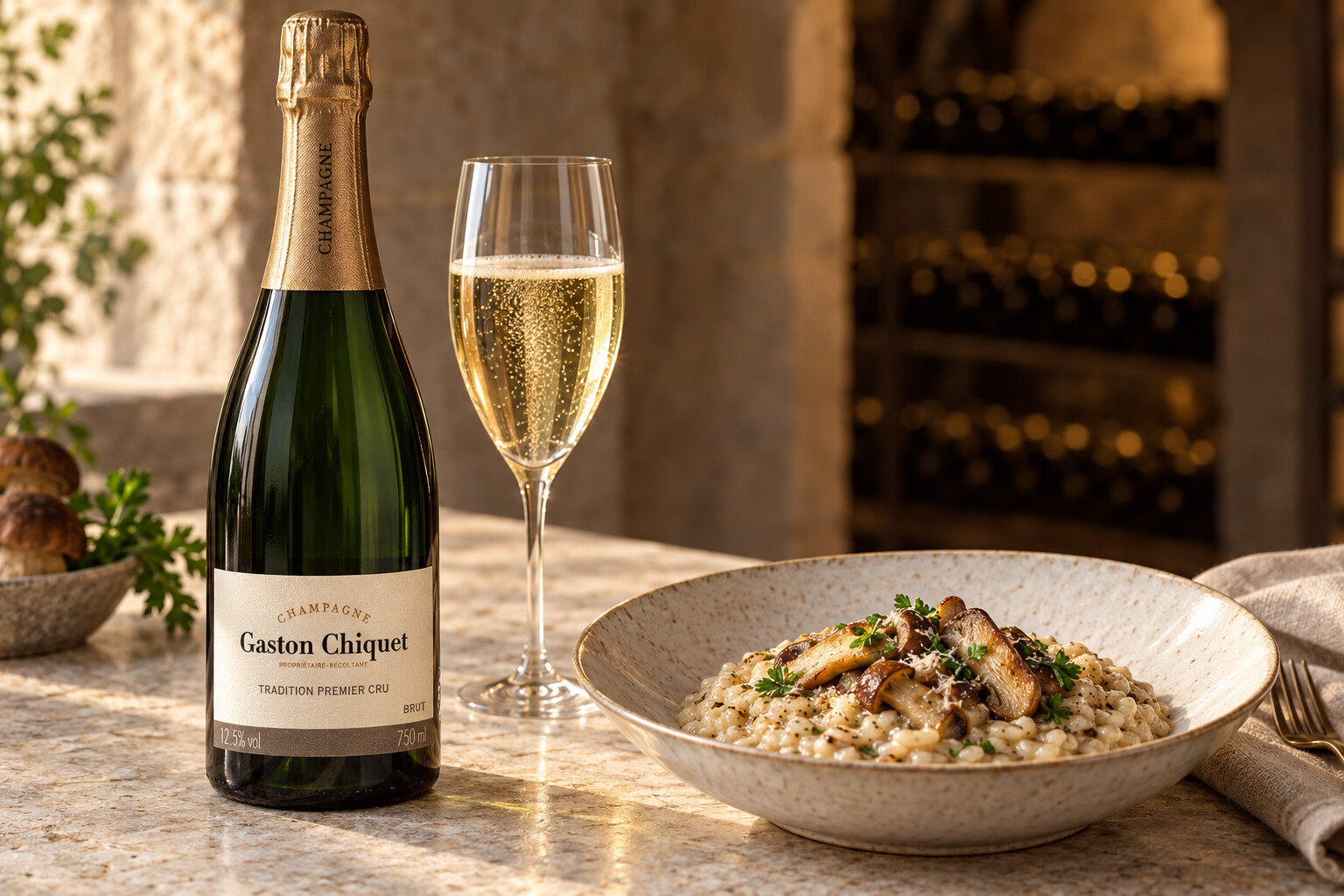
Gaston Chiquet ‘Tradition’ Premier Cru Brut is a generous, finely balanced grower Champagne from the Grande Vallée de la Marne. The blend gives Meunier the leading role, supported by Chardonnay and Pinot Noir, so the wine combines ripe orchard fruit and red-berry depth with citrus lift, a refined mousse and a mineral finish.
The precisely verified release is built around the 2021 harvest. Base wine from 2021 represents 68% of the blend, while 32% comes from reserve wines spanning 2018 through 2020. It is composed of 40% Meunier, 35% Chardonnay and 25% Pinot Noir, fermented and aged in stainless steel, completed through malolactic fermentation and matured for more than 48 months on the lees.
This is also the release tied to the 92-point Wine Spectator review dated December 15, 2024 and identified as disgorged in February 2024. Keeping the release precise matters: other disgorgements of Tradition can have different base-year proportions, dosage figures and critical records.
Denomination and Cuvée Identity
Tradition is a non-vintage Brut Champagne produced by Gaston Chiquet in Dizy. It draws fruit from Hautvillers Premier Cru, Dizy Premier Cru, Mareuil-sur-Aÿ Premier Cru and Aÿ Grand Cru. The cuvée therefore represents several important villages rather than one isolated parcel.
The official commercial name is Gaston Chiquet ‘Tradition’ Brut. U.S. merchants frequently add Premier Cru because most of the contributing villages hold that classification, while Aÿ is Grand Cru. The front label reads Tradition Premier Cru and Brut, giving the bottle a clear identity within the estate's range.
Do not confuse it with Gaston Chiquet Cuvée de Réserve, Blanc de Blancs d'Aÿ, Rosé, Millésime Carte d'Or or Spécial Club. Each has different grape proportions, origins, maturation and release information.
The Chiquet Family and Dizy
The Chiquet family's viticultural roots in Dizy reach back to 1746, when Nicolas Chiquet planted his first vines. Eight generations have worked the local soils, making the family one of the established grower lineages of the Grande Vallée de la Marne.
In 1919, brothers Fernand and Gaston Chiquet began producing and selling Champagne from their own grapes under the Chiquet Frères name. This was a pioneering decision at a time when many growers sold fruit to larger houses. Gaston registered his own company in 1935 and expanded the family's holdings in Aÿ, Cumières and Hautvillers.
Today Antoine and Nicolas Chiquet manage the estate. The domaine farms approximately 23 hectares, with Premier Cru holdings in Dizy, Cumières and Hautvillers and Grand Cru parcels in Aÿ. Annual production is about 14,000 cases, substantial for a grower but still closely connected to estate viticulture.
The vines average more than 45 years of age. Mature vines and predominantly south-facing crus provide concentration and fruit maturity, allowing the family to avoid oak and preserve the direct character of the villages through stainless-steel vinification.
Exact Release Composition
The current verified composition is 40% Meunier, 35% Chardonnay and 25% Pinot Noir. Meunier contributes supple fruit, immediate charm and mid-palate volume. Chardonnay supplies lemon, white flowers and structural lift, while Pinot Noir reinforces black cherry, spice and length.
Wine from the 2021 harvest accounts for 68% of the blend. Reserve wines from 2018, 2019 and 2020 make up the remaining 32%. This four-year construction gives the cuvée both the freshness of its base year and the continuity expected from a house non-vintage Champagne.
All contributing fruit comes from Premier or Grand Cru villages. The soils are described as clay and limestone over chalk, a combination that supports fruit generosity while preserving drainage, acidity and a mineral impression in the finish.
The exact proportions distinguish this release from older editions. A previous bottling could contain a different dominant harvest and different reserve years, so technical data and scores should never be transferred automatically from one disgorgement to another.
Production and Cellar Aging
Parcels are harvested and vinified separately. The estate uses two large vertical PAI presses, selected for the fine quality of the must. Fermentation and élevage take place in stainless steel, with no oak aging.
Malolactic fermentation is completed. This converts sharper malic acidity into softer lactic acidity, helping the wine feel rounded and approachable while the chalk-based structure remains intact. The decision fits a cuvée led by ripe Meunier and supported by mature fruit.
After blending and the second fermentation in bottle, Tradition remains on the lees for more than 48 months. Four years or more of contact with spent yeast builds biscuit, bread and almond complexity and refines the mousse without sacrificing the primary fruit.
Dosage is 6 grams per liter, at the dry end of the Brut category. It softens the edges of the wine without hiding lemon peel, mineral tension or the lightly savory finish. The verified full bottle is 750 ml and carries importer reference FR-KCQ-01-NV.
Appearance, Aroma and Palate
The Champagne is bright straw-gold with a fine, persistent mousse. Its color is deeper than an austere Blanc de Blancs but remains luminous, reflecting a blend that includes all three principal Champagne grapes.
The aroma opens with ripe black cherry, blackberry paste, pear and peach. Meyer lemon peel, white blossoms and biscuit bring contrast. With air, the wine develops apricot, chamomile, almond and a discreet chalky note.
On the palate, the mousse is refined rather than aggressive. Meunier provides juicy fruit and breadth, Pinot Noir gives darker berry structure, and Chardonnay keeps the center energetic. The wine feels generous without becoming heavy.
The finish is long, mineral-driven and lightly savory. Citrus peel and chalk return after the fruit, leaving the palate ready for another bite. That balance explains why the cuvée can serve as an aperitif and continue through a meal.
Technical Evaluation
Appellation: Champagne AOC, France. Producer: Gaston Chiquet. Cuvée: ‘Tradition’ Premier Cru Brut. Style: non-vintage grower Champagne. Winery village: Dizy, Grande Vallée de la Marne. Bottle evaluated: 750 ml.
Blend: 40% Meunier, 35% Chardonnay and 25% Pinot Noir. Base harvest: 68% from 2021. Reserve wines: 32% from 2018 through 2020. Vineyard origins: Hautvillers Premier Cru, Dizy Premier Cru, Mareuil-sur-Aÿ Premier Cru and Aÿ Grand Cru.
Soils: clay and limestone over chalk. Fermentation and élevage: stainless steel. Malolactic fermentation: completed. Lees aging: more than 48 months. Dosage: 6 g/L. Alcohol: 12.5% by volume. Disgorgement tied to the Wine Spectator evaluation: February 2024.
Zafferano & Co. Wine Rating
★★★★ — 92 Wine Spectator Points
Wine Spectator's 92-point evaluation belongs precisely to the February 2024 disgorgement of the 2021-based release. The review identifies ripe black cherry, blackberry paste, Meyer lemon peel, biscuit, white blossoms, refined mousse, integrated acidity and a lingering mineral finish.
Within the Zafferano & Co. scale, four stars recognize a Champagne with clear regional identity, strong technical execution and notable table versatility. The wine is expressive enough for immediate pleasure but sufficiently focused to support carefully built savory pairings.
The score is not applied to the February 2025 disgorgement or to older base-year blends. Those are distinct commercial releases and require their own verified critical references.
Serving Temperature and Glassware
Serve Gaston Chiquet Tradition at 46–50°F (8–10°C) for the aperitif and allow later pours to approach 52°F (11°C) with food. At refrigerator temperature the wine can appear narrower and more acidic; a few minutes in the glass reveal pear, black cherry, flowers and biscuit.
Use a tulip-shaped Champagne glass or a medium white-wine glass. The bowl gives the Meunier-led aroma room to open, while a narrower rim preserves the mousse and directs the bouquet. A very tight flute hides texture, and a broad coupe releases carbonation too quickly.
Decanting is unnecessary. Open the bottle shortly before service, hold the cork securely and rotate the bottle slowly. Pour modest servings so the wine can develop in the glass without warming too rapidly.
Storage and Drinking Window
Store unopened bottles horizontally in darkness at a stable 50–55°F (10–13°C), away from vibration and strong odors. Avoid kitchens, display shelves and areas beside appliances, where repeated temperature changes can flatten fruit and accelerate aging unevenly.
The February 2024 disgorgement is ready to drink now. Its ripe fruit, refined mousse and four-plus years on the lees already provide harmony. Under sound storage, it should remain expressive through approximately 2030, moving gradually toward dried pear, hazelnut, brioche and deeper spice.
Drink earlier for the clearest cherry, peach and lemon character. Hold longer for greater autolytic and savory development. Once opened, close the bottle with a sparkling-wine stopper and refrigerate; the Champagne is best the same day but can retain useful freshness until the next.
How to Read the Label
“Gaston Chiquet” identifies the producer. “Propriétaire-Récoltant” communicates the estate-grower identity. “Tradition Premier Cru” names the cuvée and its village classification, while “Brut” identifies the sweetness category.
The label also states 12.5% alcohol by volume and 750 ml. These details help confirm the standard bottle used for the price range in this article. Half bottles and magnums carry different importer references and should not be compared directly on price.
Because the front label does not name the base year, check the back label, importer record or retailer description for disgorgement information. The February 2024 disgorgement is the reference required for the precise Wine Spectator score used here.
Buying Advice and U.S. Pricing
Current verified United States listings place a 750 ml bottle at approximately $41–$62 before tax and shipping. One New York retailer listed an introductory price of $41.23, another specialist merchant listed $46.99, and a national retailer listed $61.99. State availability and promotions can change the final cost.
Confirm the words Gaston Chiquet, Tradition Premier Cru and Brut. Verify that the merchant is selling a 750 ml bottle and, when the score matters, that the stock is the February 2024 disgorgement or is explicitly tied to the 2021-based blend.
Choose a retailer with temperature-controlled storage and recent turnover. Do not pay a premium merely because an older Wine Spectator score appears beside the product; the exact release and provenance are more important than a mismatched review.
Food Pairing Logic
Tradition is broader and fruitier than a very lean Chardonnay-only Champagne. Meunier and Pinot Noir allow it to meet veal, tuna, mushrooms, roast poultry and browned seafood, while Chardonnay and dosage keep the finish fresh.
The refined mousse clears butter, olive oil and fried coatings. Lemon-peel acidity brightens creamy sauces, and the mineral finish reinforces shellfish, anchovy and caper salinity. Biscuit and almond notes connect naturally with toasted crusts and seared surfaces.
Avoid sugary desserts, very hot chile and heavily reduced red-wine sauces. Sweetness makes the Champagne appear severe, extreme heat suppresses nuance, and dense sauces can overwhelm the floral and citrus detail.
Italian Champagne Risotto with Seared Scallops
Italian Champagne Risotto with Seared Scallops, Oscietra Caviar and Chives is the richest pairing in the sequence. Rice starch and butter need the wine's integrated acidity, while seared scallop follows its ripe peach, biscuit and lightly toasted character.
Oscietra caviar amplifies the mineral finish and gives the mousse a saline counterpoint. Meunier supplies enough breadth to stay present beside the creamy rice, and Chardonnay prevents the pairing from becoming heavy.
Keep the risotto fluid and avoid excessive cheese. Serve the Champagne near 50°F and allow it to open as the dish cools slightly.
Vitello Tonnato Piemontese
Italian Piedmontese Veal with Tuna Sauce | Vitello Tonnato Piemontese shows why this grower Champagne works beyond seafood. Meunier and Pinot Noir provide enough body for veal, while the bubbles and acidity refresh the tuna emulsion.
Capers and anchovy connect with the mineral finish. Black cherry and pear soften the dish's savory intensity without adding sweetness. Serve the veal cool rather than refrigerator-cold so its aromas remain visible.
Use a thin, fluid sauce and restrained lemon. Excess vinegar can make the Champagne taste abrupt.
Italian Mixed Fried Seafood
Italian Mixed Fried Seafood | Fritto Misto di Mare uses the mousse as a cleansing tool. Each sip lifts frying oil and resets the palate after squid, shrimp and small fish.
Biscuit notes echo the crisp coating, while Meyer lemon and mineral acidity sharpen the seafood without requiring heavy citrus. The wine's fruit concentration prevents it from disappearing beside browning.
Keep the batter thin, the oil clean and the seasoning immediate. Sweet dipping sauces should be avoided.
Scallop Carpaccio with Sicilian Citrus
Scallop Carpaccio with Sicilian Citrus, Crisp Fennel and Bronte Pistachios emphasizes the cuvée's aromatic precision. Raw scallop reflects the refined mousse, while citrus and fennel bring out lemon peel and white flowers.
Bronte pistachio connects with almond and biscuit notes developed during long lees aging. The Champagne's ripe peach and pear make the scallop taste sweeter, and the chalky finish keeps the course clean.
Use citrus as a measured seasoning, not as a dominant marinade. This pairing works best as the opening plate.
Italian Fried Zucchini Blossoms
Italian Fried Zucchini Blossoms | Fiori di Zucca Fritti offers a delicate fried pairing. The blossoms preserve the wine's floral detail, and the bubbles remove oil while leaving the filling intact.
A restrained mozzarella or ricotta filling suits the creamy mousse. A small amount of anchovy can echo the mineral finish, but the salt must remain controlled.
Serve immediately after frying. The contrast between hot crisp coating and cool Champagne is central to the pairing.
Reference Producers for Grower Champagne
Gaston Chiquet is a reference point for the Grande Vallée de la Marne and for grower Champagne that balances accessibility with clear origin. The estate's stainless-steel approach contrasts with producers that use barrel fermentation for a more oxidative or spicy signature.
Philipponnat and R. Pouillon provide nearby comparisons for structured Vallée de la Marne Champagne. Bérêche et Fils offers a broader multi-terroir perspective with greater emphasis on barrel work. Egly-Ouriet in Ambonnay is a benchmark for Pinot-led depth and extended maturation.
Pierre Gimonnet and Pierre Péters show the more linear Chardonnay language of the Côte des Blancs, while Larmandier-Bernier explores low-dosage precision. These producers are relevant comparisons, but Tradition remains distinctive for its Meunier-led, multi-village balance.
Why the Release Matters
Non-vintage Champagne is not technically anonymous. Base harvest, reserve wines, lees aging, dosage and disgorgement date shape the bottle as decisively as a vintage year. Two bottles with the same front label may represent different blends.
For this Tradition release, the essential identity is 68% from 2021, 32% reserve wines from 2018 through 2020, more than 48 months on the lees, 6 g/L dosage and February 2024 disgorgement. Those details support the precise tasting profile and critical score.
Later stock may be equally good but should be evaluated on its own terms. Keeping the release exact protects both the reader and the integrity of the producer's work.
Professional Pairing Perspective
For a complete menu, begin with scallop carpaccio, continue with fried zucchini blossoms and fritto misto, then serve Champagne risotto. Finish the savory sequence with vitello tonnato. The order moves from delicate raw texture through frying and creaminess to a cool meat course.
Start service at 46–48°F and allow later pours to approach 52°F. The rising temperature releases black cherry, peach, chamomile, biscuit and almond. Do not keep the bottle buried in ice through the entire meal.
One 750 ml bottle provides roughly six moderate restaurant pours. Two bottles for four guests are more appropriate for a five-course pairing menu, allowing consistent pours without overfilling the glasses.
Final Assessment
Gaston Chiquet ‘Tradition’ Premier Cru Brut is a serious, approachable expression of the Grande Vallée de la Marne. Its 40% Meunier, 35% Chardonnay and 25% Pinot Noir blend combines fruit generosity with citrus lift and mineral precision.
The 2021-based release gains complexity from reserve wines dating to 2018 and more than 48 months on the lees. A dosage of 6 g/L keeps the wine balanced, while the February 2024 disgorgement supports the precisely verified 92-point Wine Spectator evaluation.
Serve it near 50°F in a tulip glass, protect it from heat in storage and use it as a table wine rather than only a toast. Its ability to move from raw scallop and fried vegetables to risotto and veal is the clearest measure of its quality.


Comments